July 29 - Stocks are choppy, but generally higher at midday as Wall Street waits for key tech earnings reports, an updated monetary policy statement from the Fed and the monthly jobs report this week. The VIX is trading just above 16 at midday, while the dollar index is trading at an 18-day high near 104.6. Yields on 10-year Treasuries are trading near 4.18%, while yields on 2-year Treasuries are trading near 4.38%. Crude oil prices 2% lower at fresh seven-week lows on demand worries amid a sluggish Chinese economy, while the grain and oilseed market came off overnight lows to trade mixed at midday.
U.S. wheat prices traded higher at midday, led by the winter wheat markets, despite ongoing weakness in European prices as Black Sea cash prices remain cheap. Yet, recent weakness in the U.S. markets invited fresh buying interest to provide support. The weakness in the grain and oilseed complex continues to be in the soybean complex as August weather looks more favorable for the Midwest, and over concerns about Friday's ruling by the U.S. appeals court that asked the Environmental Protection Agency to review again its block of biofuel blending waiver requests from small refineries in 2022 that reflects negatively on future biofuel demand. Corn prices are caught between higher wheat and weaker soybeans, leaving them mixed to firm. Corn prices found some support from the ability to hold support at recent lows on the charts, leading to some end user buying and speculative short covering this morning. However, the grain and oilseed complex is still handicapped by the lack of a bullish demand story amid ample supplies currently available to the market. Fundamentally, the next inputs will come via private production estimates in August, starting with StoneX's estimates on Thursday afternoon.
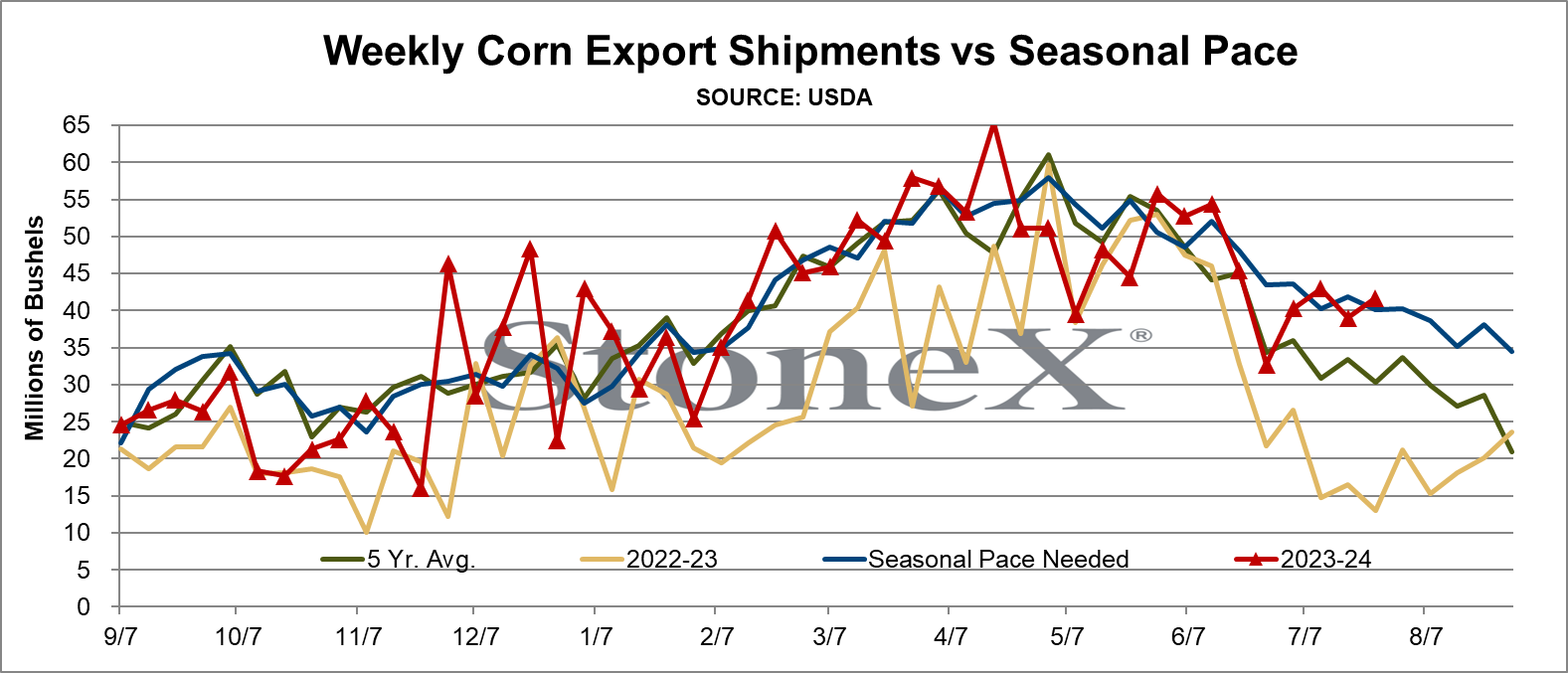
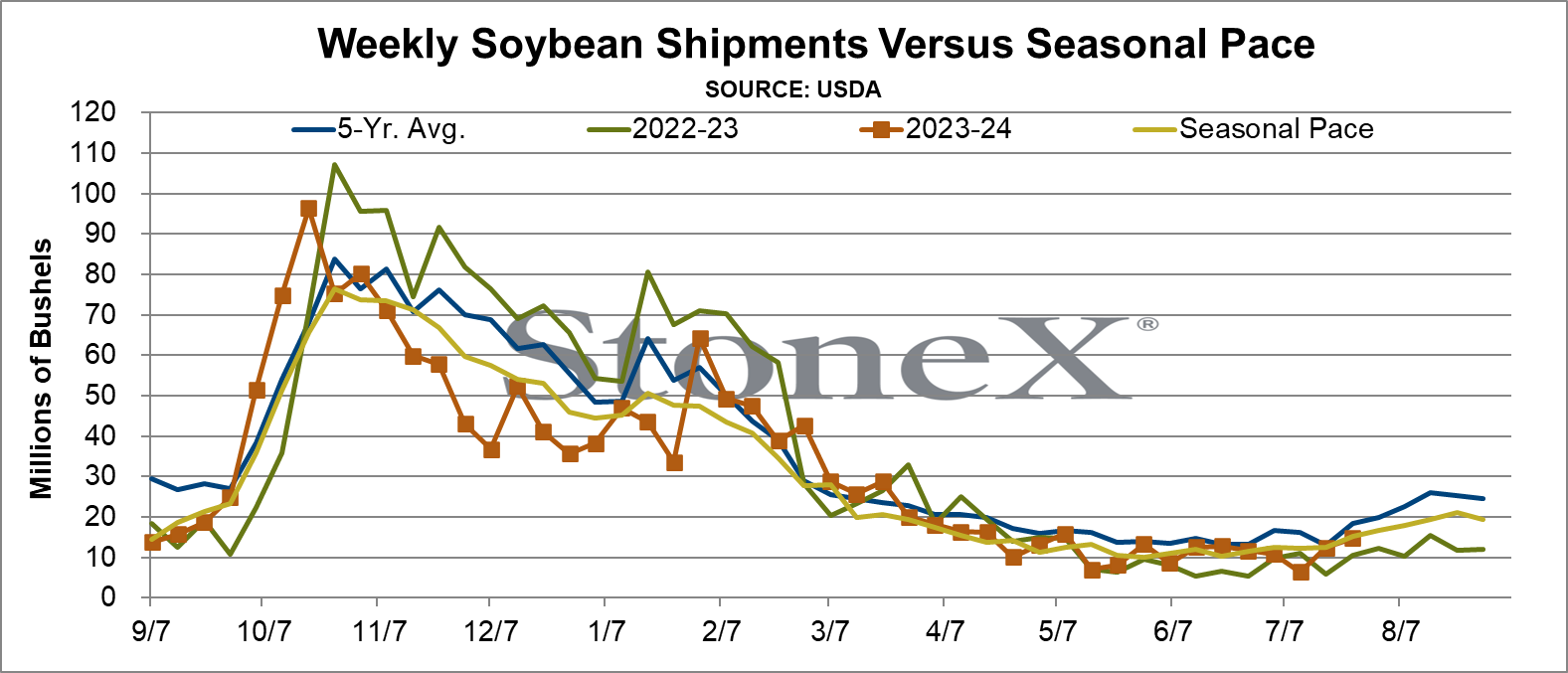
USDA inspected 41.7 million bushels of corn for export shipment in the week ending July 25, as shown below, along with 14.8 million bushels of soybeans, 15.8 million bushels of wheat and 2.1 million bushels of grain sorghum. The portion of the above that was inspected for shipment specifically to China included 2.1 million bushels of grain sorghum, and miniscule amounts of corn, soybeans and wheat. Grain sorghum shipments for the marketing year to date now match the seasonal pace needed to hit USDA's target for the year that ends August 31, although they are losing ground. Marketing year to date wheat export shipments through the first eight weeks of its marketing year are slightly behind the seasonal pace needed to hit its target.
Marketing year to date corn export inspections total 1.837 billion bushels, up 466 million bushels or 34% from the previous year's pace, largely due to a strong shipment pace to Mexico this year following a drought-shortened crop there last year. However, that has largely been built into USDA's higher export target this year. Yet, marketing year to date inspections fall short of the seasonal pace needed to hit USDA' target by 39 million bushels after USDA pushed that target 75 million bushels higher in the July WASDE crop report. Marketing year to date soybean export inspections total 1.571 billion bushels, down 285 million bushels or 15% from the previous year's pace, largely due to a loss of market share to Brazil over the past year as China shifts its buying to south of the equator. That's largely reflected in a lower export target this year, although marketing year to date export inspections are still 23 million bushels above the seasonal pace needed to hit that lower target, and late-year shipments are holding better than I anticipated due to a slowdown in farmer selling at current price levels that has firmed basis in Brazil, providing a window of opportunity for U.S. soybeans to move into China.