Today's featured video perspective: Update on Middle East Conflict & EPA's Biofuel Mandates
June 16 - Stocks continue to post notable gains at midday amid easing fears that the conflict between Iran and Israel will spread regionally. There were reports that Iran was interested in peace talks, but Iran now denies those reports. Traders are also keeping their eyes on this week's Federal Reserve meeting, as well as on the ongoing tariff war as negotiations continue with multiple countries. The VIX is trading near 19 at midday, while the dollar index is trading near 97.9. Yields on 10-year Treasuries are trading near 4.42%, while yields on 2-year Treasuries are trading near 3.95%. Crude oil prices are nearly 2% lower on easing fears from the Middle East, while the grain and oilseed markets are mixed. Corn prices are posting double-digit losses ahead of this afternoon's weekly USDA crop progress report on expectations that we'll see another boost in the condition of the crop, while wheat is under pressure as harvest progress progresses, and on expectations that we could see crop ratings rise for the spring wheat crop. Soybeans received a boost from soyoil prices early on follow-through buying from Friday when the U.S. Environmental Protection Agency released its new biofuel mandates - significantly increasing demand for biomass diesel production.
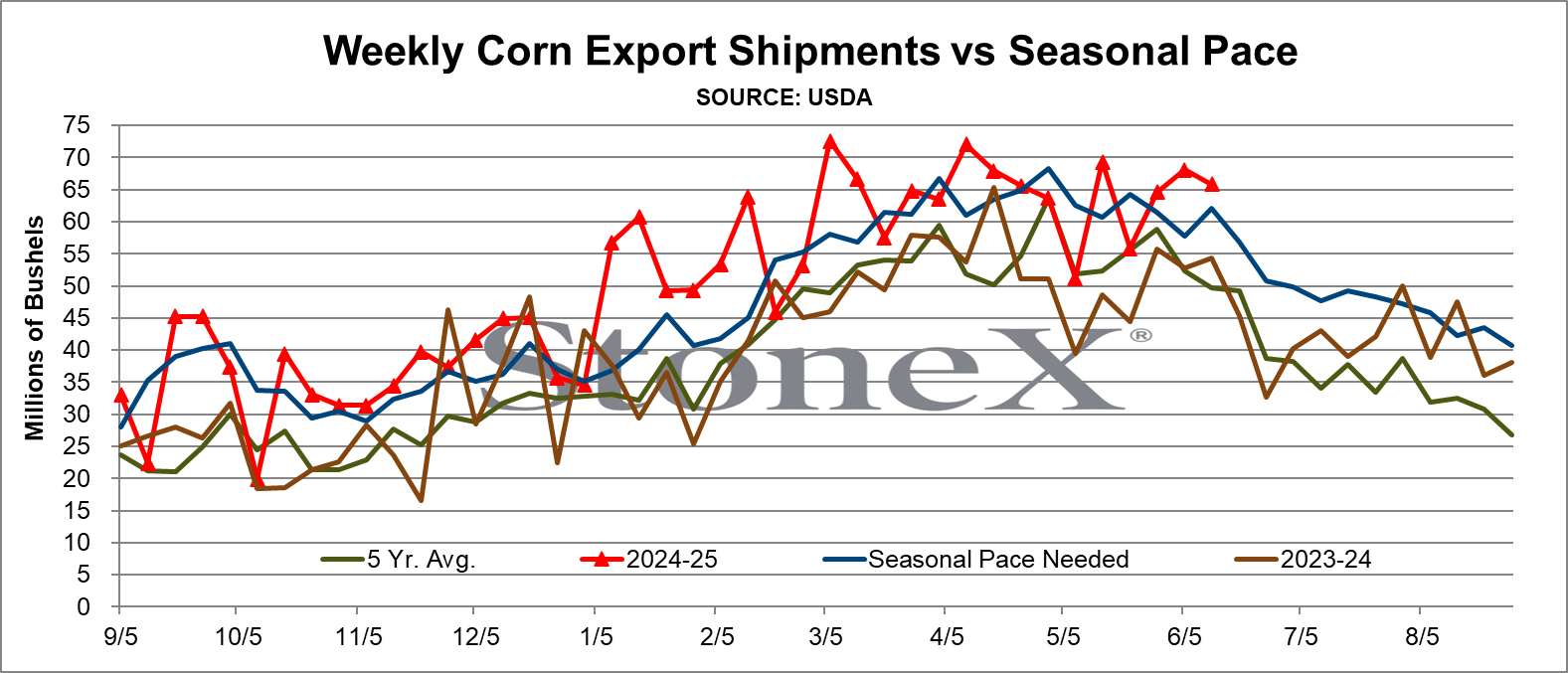
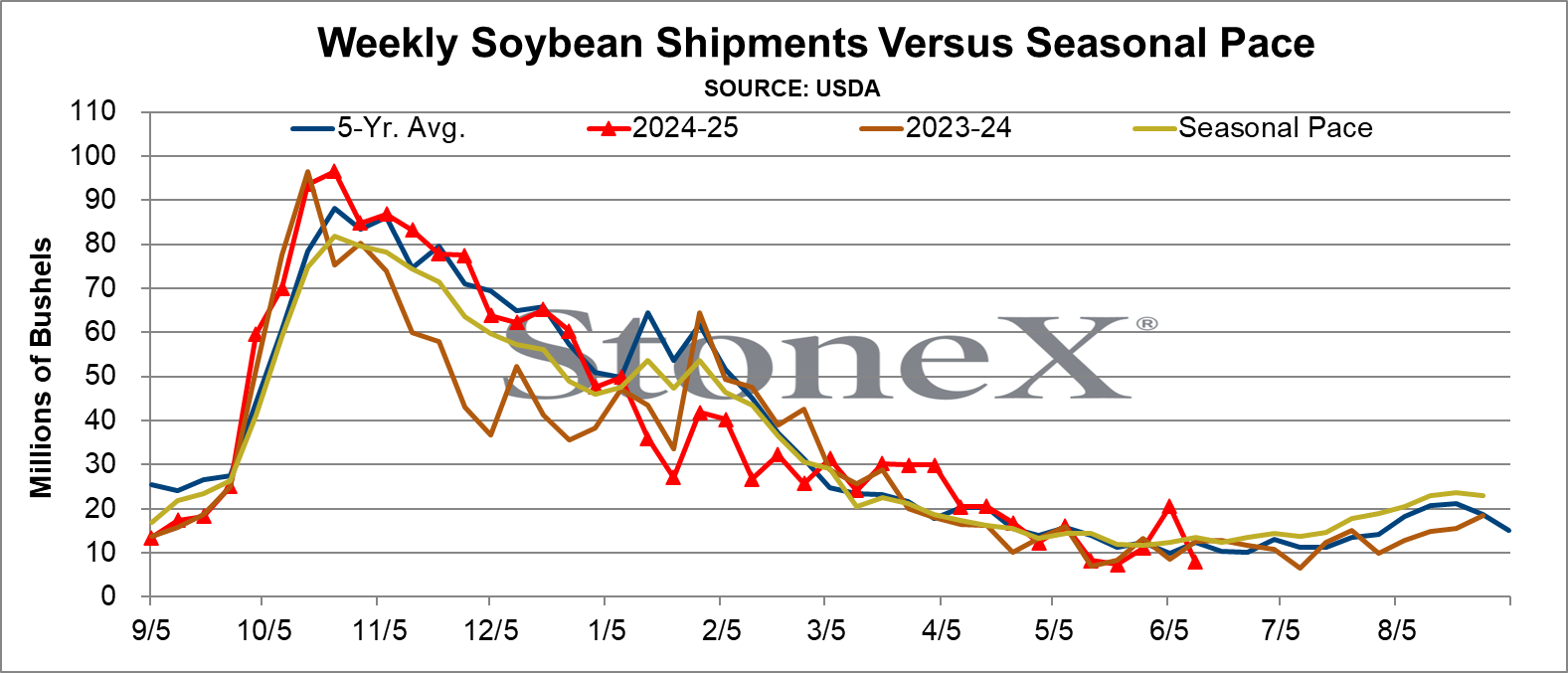
USDA inspected 65.9 million bushels of corn for export shipment in the week ending June 12, along with 7.9 million bushels of soybeans, 14.3 million bushels of wheat, and 1.1 million bushels of grain sorghum. None of the above again was inspected for shipment to China during the week. Corn shipments remain quite strong at a time when they seasonally tend to slow due to the increase availability of cheaper supplies from Argentina, as well as the start of harvest in Brazil.
Yet, demand for U.S. corn remains strong. Marketing year to date corn export inspections total 2.049 billion bushels, up 454 million bushels or 28% from the previous year's pace, and 132 million bushels above the seasonal pace needed to hit USDA's target for the year. USDA just increased that target by another 50 million to 2.650 billion bushels, but the gap continues to grow between this year's inspection pace and the seasonal pace needed to hit that target. As such, we can anticipate another increase in current-year exports by USDA. The seasonal pace for corn export inspections tends to decline to about 40 million bushels per week by the end of August. Marketing year to date soybean export inspections total 1.669 billion bushels, up 166 million bushels or 11% from the previous year's pace, and 76 million bushels above the seasonal pace needed to hit USDA's target by August 31. It should be noted that that latter gap continues to shrink as well due to a dramatic slowdown in new sales in recent weeks. In fact, the sales pace has fallen below the seasonal pace needed to hit USDA's target, so we anticipate that shipments will continue to slow as well.
The National Oilseed Processors Association reports that its members crushed 192.8 million bushels of soybeans in May, up from 190.2 million in April, and up from 183.6 million bushels crushed the previous May. NOPA crush tends to account for roughly 94% of total crush. The May total was a new record for the month of May, although below the average trade guess of 193.5 million bushels. This puts soybean marketing year to date crush at 1.733 billion bushels, which is roughly 5 million bushels below the seasonal pace needed to hit USDA's target. The current spike in soyoil prices helps to boost crush margins, which should help to rejuvenate the crush industry in light of Friday's updated EPA biofuel mandate announcement. I project more than a 100 million bushel increase in crush in the next year.