Today's Perspective Video: U.S. Strikes Iran: Oil, Fertilizer & Market Fallout
June 23 - Stocks were mixed to firmer at midday, with traders cautious while waiting for a possible retaliatory attack on U.S. interests in the Middle East due to its strike on Iranian nuclear sites over the weekend. The VIX is trading near 21.5 at midday, while the dollar index is trading near 98.7. Yields on 10-year Treasuries are trading near 4.30%; its lowest level since May 8 as investors seek a safe-haven asset, while yields on 2-year Treasuries are trading near 3.82%. Crude oil prices are modestly higher above $74 at midday, while the grain and oilseed markets are largely posting double-digit losses. Wheat harvest is picking up momentum in the South. Quality problems are definitely seen, but the bushels are there and global cash wheat prices are low. This afternoon's USDA weekly crop progress and condition report is expected to once again reflect corn and soybean crops that are in relatively good condition, with the two week outlook supporting their continued development. Cattle futures are lower today after retailers blinked on Friday, with a lower choice cutout print seen, raising concerns about demand.
Iranian media reports suggest that a retaliatory attack on U.S. military bases in the Middle East will occur within hours. Iran still has the capability to mount such an attack, including through its proxies, although that capacity has been significantly impaired by recent events. Qatar has reportedly closed its airspace on the possibility of something happening. I still question whether Iran wants to escalate the conflict, which a direct attack that takes American lives would do. However, it also needs to maintain an appearance of strength for its proxy groups and others that support it. Iran found itself in a similar position 5 years ago, when it needed to retaliate for President Trump ordering a drone strike that killed Qasem Soleimani for supporting proxy attacks on U.S. bases in the Middle East. At that point, it reportedly warned the United States through channels that it would strike near a U.S. military base, but that it would not strike the base itself. That provided the appearance of retaliation without escalating the conflict. It has more to fear if it spurs escalation now than it did in 2020, unless it feels like "the ship is already going down." In that case, it may decide to go out in a "blaze of glory," knowing that it will surely pay the price. Let's pray that is not the case. That said, my base case assumption is still that Iran's mode of action over the past 40 years is to threaten, but to also delay action via negotiations that never go anywhere. It has a history of using proxy groups, because it doesn't want direct war with the United States, and its ability to do so today is much less than it was a month ago. That is why the markets are trading rather calmly thus far today, after initially pricing in some risk when they opened yesterday evening.
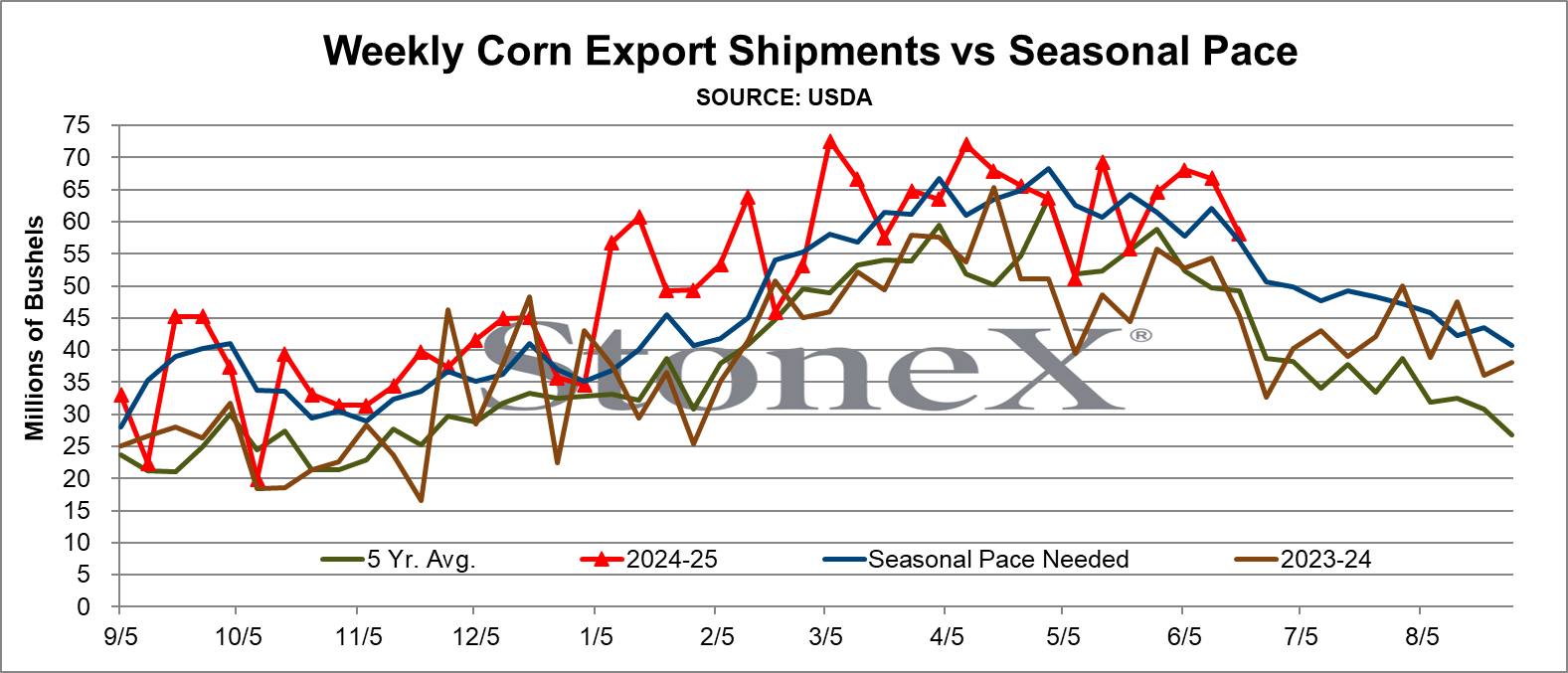
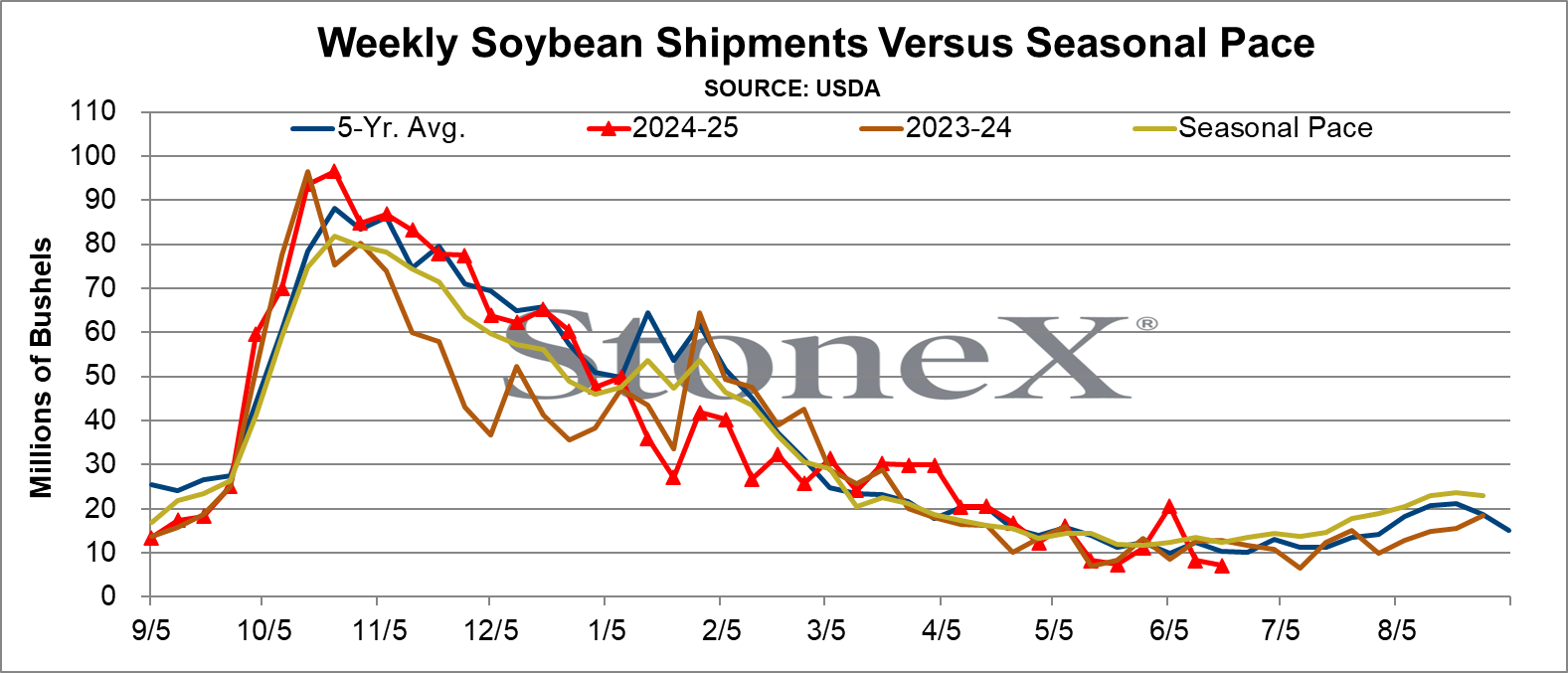
USDA inspected 58.1 million bushels of corn for export shipment in the week ending June 19, along with 7.1 million bushels of soybeans, 9.4 million bushels of wheat and 3.2 million bushels of grain sorghum. Mexico continues to be a strong importer of U.S. grain and oilseeds, although Spain was the taker of the above mentioned grain sorghum this week. Nonetheless, the inability of Mexico to ship 30,000 head of feeder cattle north into the United States each week to fill our feedlots due to the New World Screwworm means that it needs more corn to feed those cattle down there. Marketing year to date corn export inspections to all destinations total 2.108 billion bushels, up 468 million bushels or 28% from the previous year's pace, and exceeding the seasonal pace needed to hit USDA's target by August 31 by 134 million bushels - and that gap continues to grow. Marketing year to date soybean export inspections total 1.676 billion bushels, up 161 million bushels or 11% from the previous year's pace, and exceeding the seasonal pace needed to hit USDA's target by August 31 by 71 million bushels. Yet, that gap has been shrinking in recent weeks as Brazil continues to dominate the global market with cheaper supplies.