March 17 - The Dow rallied while the Nasdaq slipped this morning after fresh economic data showed retail sales rebounding, but so are inflationary pressures. The VIX continued to slip lower today as anxieties ease on Wall Street, trading near 21 at midday. The dollar index is trading near 103.4. Yields on 10-year Treasuries slipped lower to trade near 4.27%, while yields on 2-year Treasuries are trading near 4.01%. Crude oil prices are modestly higher. They found buying interest in recent days when prices dipped into the $65 to $67 area, but they found additional support this morning when President Trump stated that he would hold Iran directly responsible for any additional attacks on ships by the Houthi Rebels. The grain and oilseed markets are mixed to higher.
Wheat prices continue to lead the way higher on some end user buying combined with speculative short covering after wire stories over the weekend highlighted wildfires and massive dust storms originating in the drought-stricken Southern Plains winter wheat belt. That combines with lower export estimates for wheat out of Russia, as well as ongoing dry conditions in Russia's winter wheat belt to provide support. That provided modest support for corn prices as well. This morning's NOPA soybean crush report came in below trade expectations at just 177.87 million bushels crushed in February, down from 200.383 million in January, and down from 186.194 million bushels the previous year. Meanwhile, soyoil stocks continued to surge upward as biomass diesel production remains slow amid a lack of clarity yet on the 45Z credit guidelines, along with a few weather disruptions. Additional slowdowns are likely as U.S. soyoil exports face competition from new crop Argentine supplies if we don't get 45Z clarity to boost domestic demand soon.
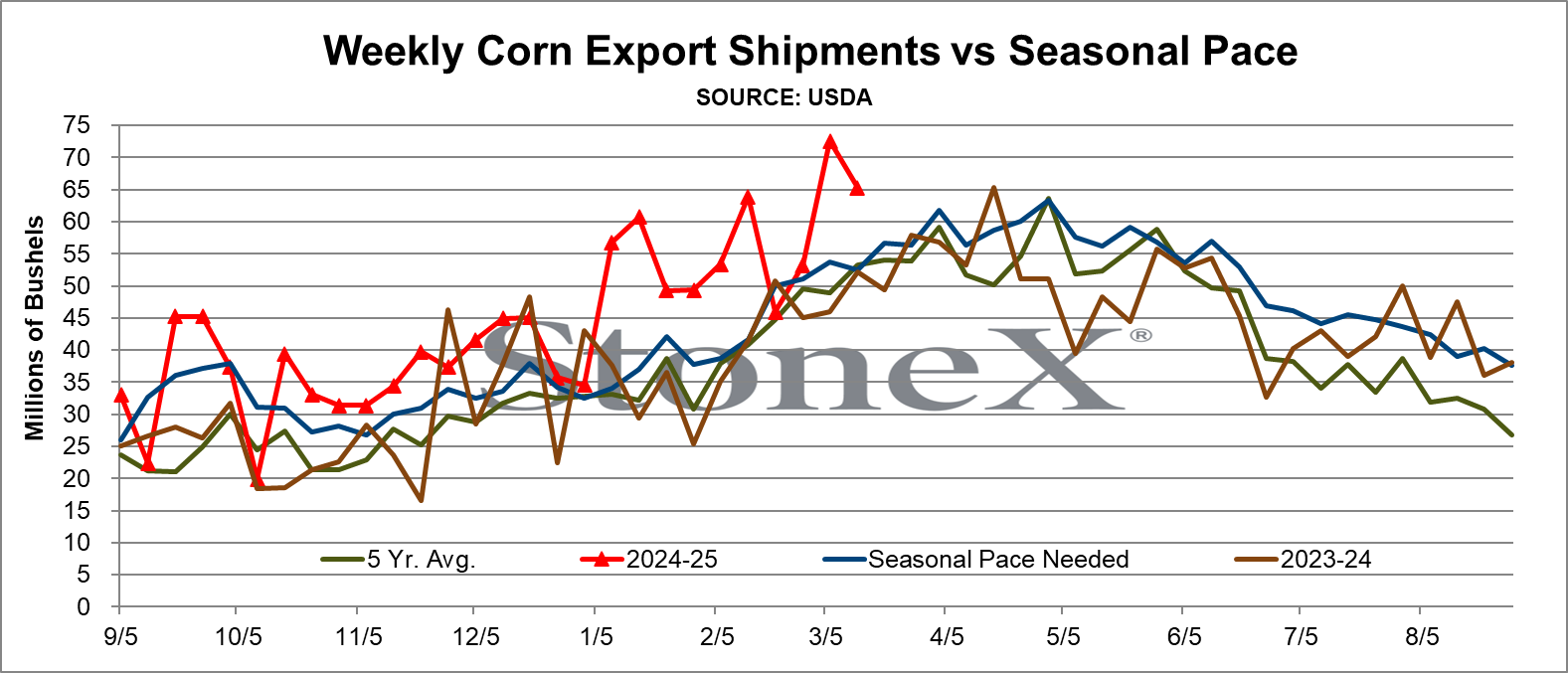
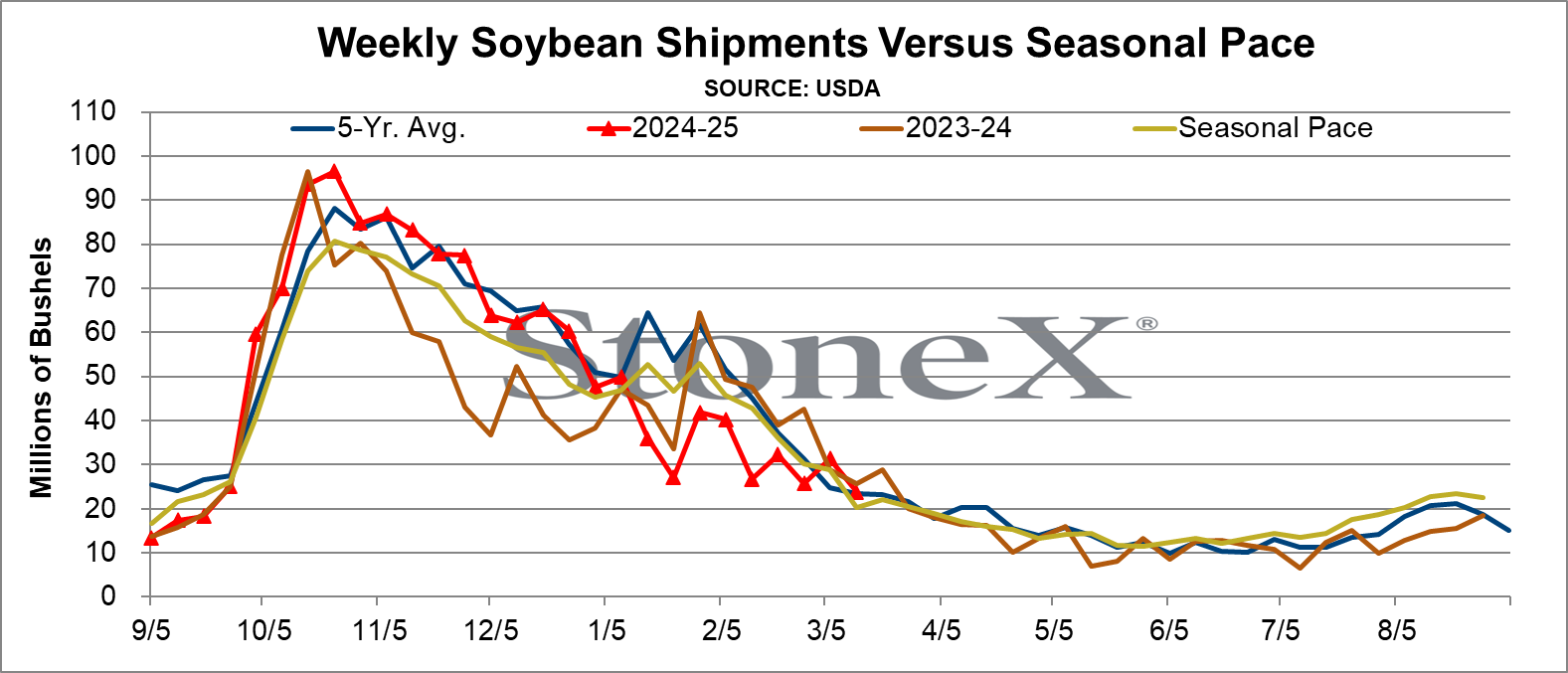
USDA inspected 65.3 million bushels of corn for export shipment in the week ending March 13, as shown below, along with 23.8 million bushels of soybeans, 18.1 million bushels of wheat, and 0.5 million bushels of grain sorghum. Grain sorghum inspections for the marketing year to date exceed the seasonal pace needed to hit USDA's target by 10 million bushels after USDA recently slashed 70 million bushels from its target, but that gap is slowly disappearing again. Wheat marketing year to date export inspections fall short of the seasonal pace needed to hit USDA's target by 14 million bushels, but the deficit is slowly closing there.
Marketing year to date corn export inspections total 1.211 billion bushels, up 298 million bushels or 33% from the previous year's pace, and 193 million bushels above the seasonal pace needed to hit USDA's target. And that gap continues to grow. USDA disappointed the trade in each of the past two WASDE crop reports by not increasing its export target. It doesn't need to go the whole distance, but it makes no sense to me why the agency wouldn't at least boost its export target by 75 to 100 million bushels, which would obviously lower its ending stocks estimate as well. Export shipments of corn remain extremely strong. They should top out in the weeks ahead, with new crop Argentine supplies starting to hit the market over the coming month plus, but the current pace still shouts for an increase in the target. Marketing year to date soybean export inspections total 1.437 billion bushels, up 122 million bushels or 9% from the previous year's pace, and 66 million bushels above the seasonal pace needed to hit USDA's target. I am a bit more understanding on why USDA has not boosted its soybean export target, considering the large crop currently being harvested in South America. I could still see a 20 to 30 million-bushel increase at the current pace, although I expect USDA to remain patient here a bit longer.