May 13 - Stocks are choppy and mixed ahead of this week's inflation data, which may go a long way toward setting the tone for the commodity markets as well in the days and weeks ahead. The VIX continues to trade near 13 at midday, while the dollar index is trading near 105.2. Yields on 10-year Treasuries are trading near 4.47%, as they continue to consolidate just below 4.5% ahead of that inflation data, while also consolidating just below the bottom of this year's upward trending channel on the charts. Yields on 2-year Treasuries are trading near 4.85%, as they too climb along the bottom of that upward trending channel. Crude oil prices are modestly higher at midday, while the grain and oilseed markets are mostly higher as well.
Wheat prices surged higher again in today's trade, fueled by speculation about the Russian crop, which continues to get smaller due to dryness and to recent freeze damage. Local analyst IKAR help fuel the latest round of buying when it lowered its Russian wheat production estimate to 86 million metric tons, down from 91 mmt previously. There are a lot of mixed messages out there about the Russian crop, while our sources on the ground tend to show the greatest concerns at this point. Historically, the wheat market seems to trade Black Sea fundamentals with more emotion than it does U.S. fundamentals, so this is something that we need to watch. A crop below 85 mmt would likely start to impact global trade patterns, shifting market focus toward tighter stocks among other major exporters. But overall money flow continues to have a positive bias for much of the commodity sector. That could change with this week's inflation data, but for now breaks are generally being bought by managed money, with farmer selling primarily slowing the pace at which prices rise - especially for corn and for soybeans. One key to watch tomorrow will be whether the Biden Administration includes tariffs on used cooking oil being shipped to the U.S. for production of Renewable Diesel and Sustainable Aviation Fuel, displacing soyoil demand. Soyoil prices have been pushing higher on market chatter that UCO will be on the tariff list.
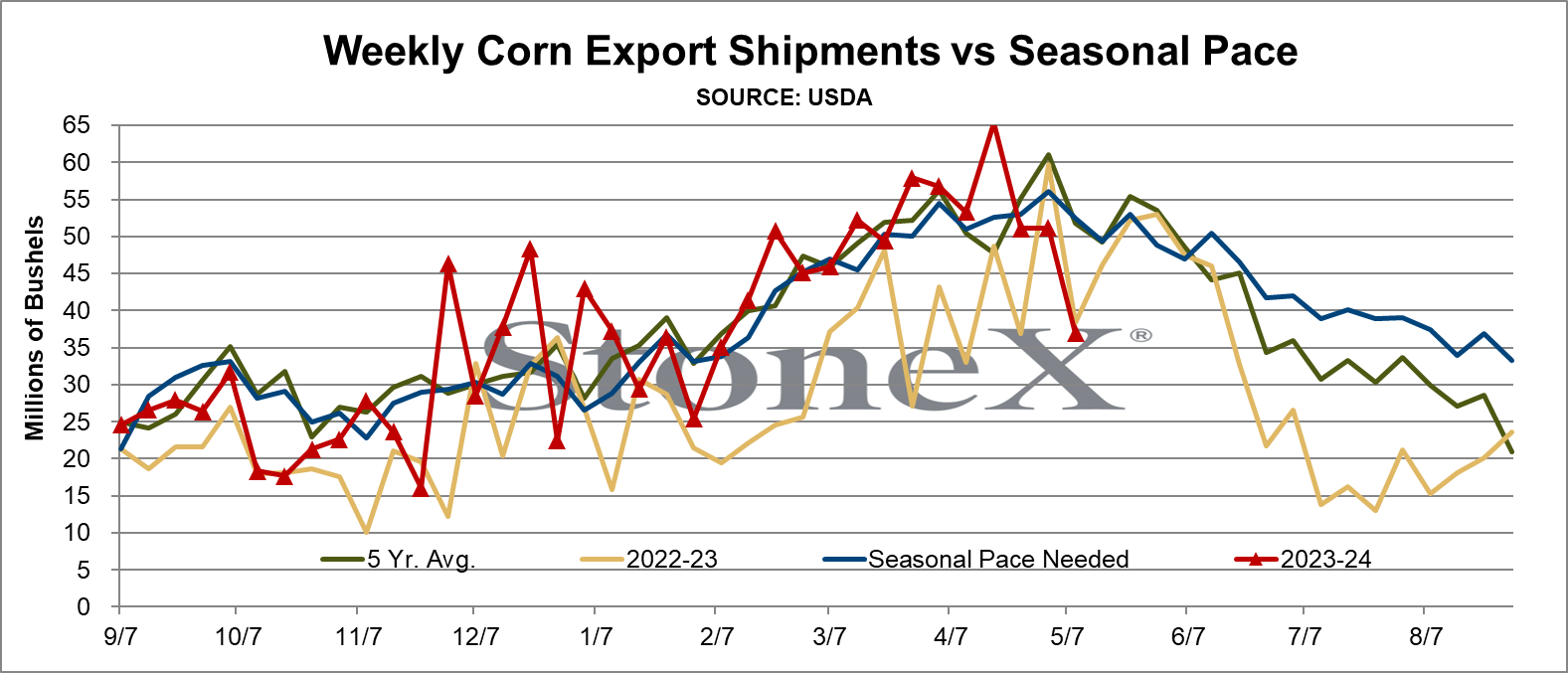
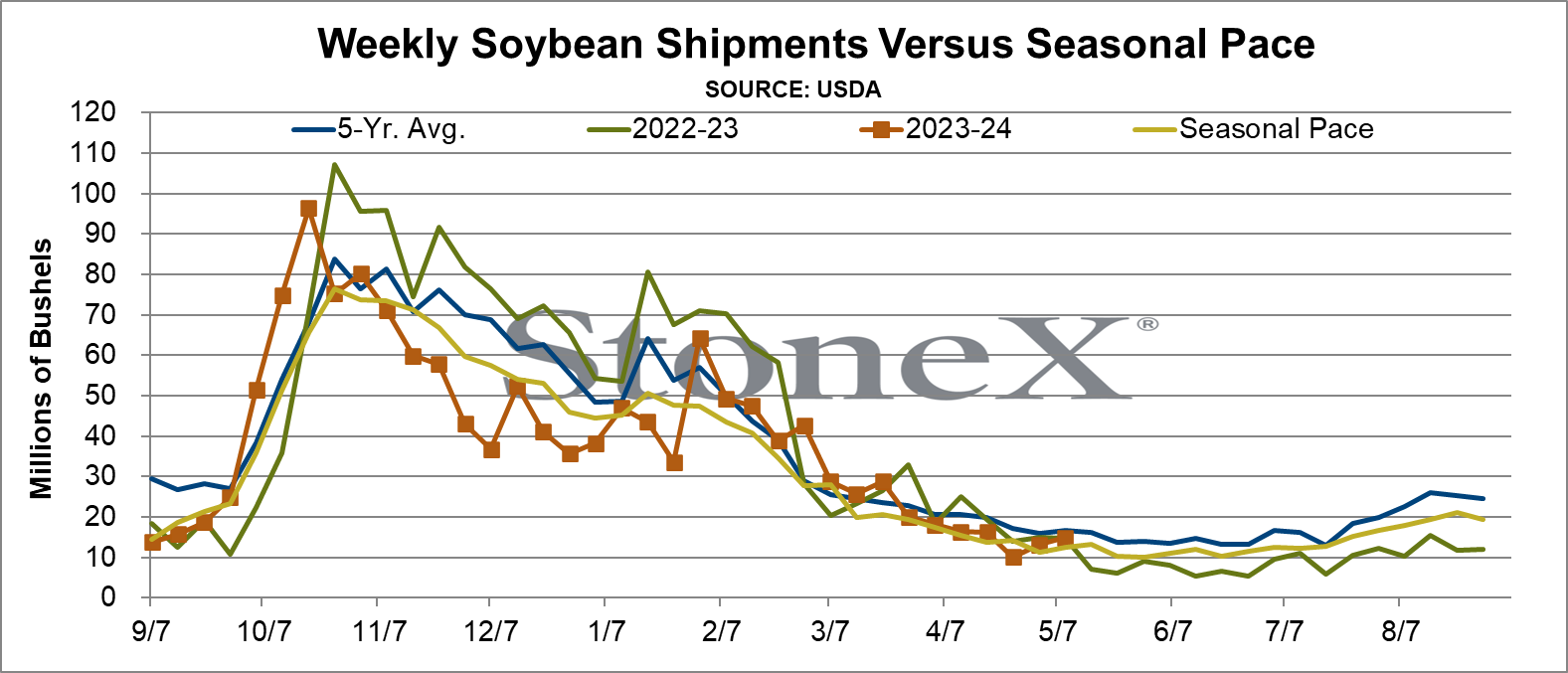
USDA inspected a three-month low 36.9 million bushels of corn in the week ending May 9, as shown below, along with 14.9 million bushels of soybeans, 13.5 million bushels of wheat, and 5.5 million bushels of grain sorghum. The portion of the above that was inspected specifically for shipment to China included zero corn, 2.7 million bushels of soybeans, 4.3 million bushels of wheat, and essentially all 5.5 million bushels of grain sorghum. This brings wheat inspections very close to where you'd expect them to be to hit USDA's export target by the end of the marketing year on May 31. Grain sorghum inspections still exceed the seasonal pace needed to hit USDA's target by 15 million bushels, but the bulk of those shipments are to China, which can be quite erratic, so USDA will likely be slow to change its target.
Marketing year to date corn export inspections total 1.336 billion bushels, up 310 million bushels or 30% from the previous year's pace, largely due to a very active year for shipments to Mexico. The past week's inspection total included another 12.3 million bushels destined for Mexico. Year to date corn commitments to Mexico are up 40% year-on-year, supporting this year's strong export pace. Marketing year to date corn export inspections to all destinations exceed the seasonal pace needed to hit USDA's revised target by 20 million bushels, but that is down from 35 million the previous week due to a slower week of inspections. Marketing year to date soybean export inspections total 1.453 billion bushels, down 313 million bushels of 18% from the previous year's pace, but 35 million bushels above the seasonal pace needed to hit USDA's target for the year.