May 27 - Stocks continue to show impressive gains today, bolstered by news that President Trump will not raises tariffs to 50% on products coming from the European Union - at least not before July 9, which is the end of the original 90-day pause created in April. Additional support came from data released this morning showing a surge in consumer confidence this month. The VIX is trading near 19 at midday, while the dollar index is trading near 99.5. Yields on 10-year Treasuries are trading near 4.45%, while yields on 2-year Treasuries are trading near 3.98%. Crude oil prices are 1% lower, while the grain and oilseed markets are mixed. The soybean complex continues to find support from expectations that we will soon (next couple of weeks?) hear the EPA's RVO numbers for biomass diesel production. Wheat prices are lower as selling of last week's rally is aided by good rains for the winter wheat crop. Corn is caught between the soybean and wheat markets, but generally expectations are that today's USDA weekly crop progress report will confirm that the feed grain crop is off to a great start.
The consumer confidence index surged to 98.0 for May, up from 85.7 previously, and up from analyst expectations of 87.3. The present situation index rose 4.8 points to 135.9, while the expectations index surged 17.4 points to 72.8. In other words, the recent very low consumer numbers had less to do with their current situation, and more to do with the fear they had about the future, based on a) the headlines they were reading, and b) the stock market volatility. The headlines have been constantly harping on the inflation message. That may still happen, although it somewhat hinges on the success of the trade negotiations during this 90-day window. However, the stock market largely recovered its April losses to trade back to levels last seen in February and March. The Conference Board noted that the cutoff date for the preliminary results was May 19. Roughly half of the survey responses were received before the announced 90-day reciprocal tariff suspension with China, and half came in after that. However, the Conference Board noted that the rebound in consumer confidence was already evident prior to the May 11 agreement with China. The May rebound was seen across all age and income groups, and across political affiliations. Write-in responses indicated that tariffs are still on top of consumer concerns, but those concerns have eased somewhat. Twelve-month inflation expectations eased back to 6.5%, down from 7% in April.
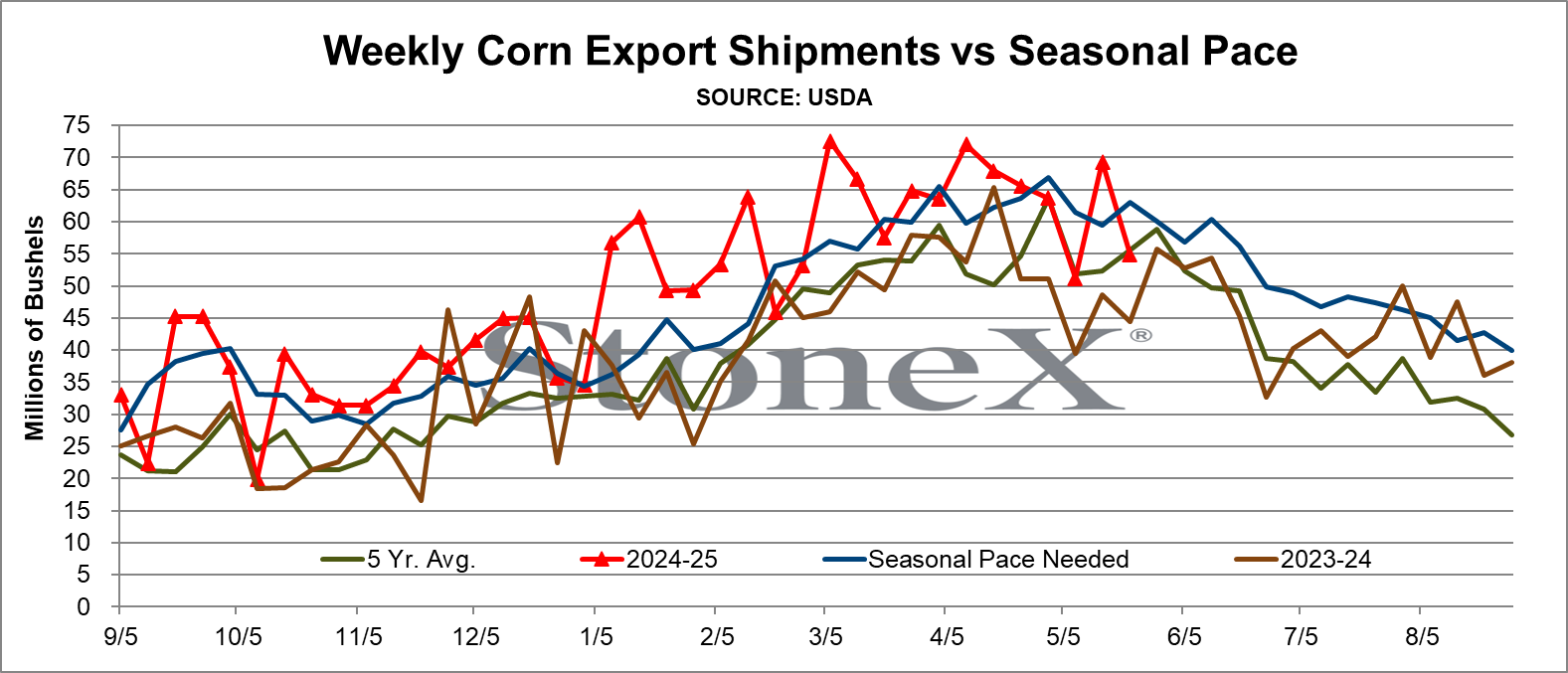
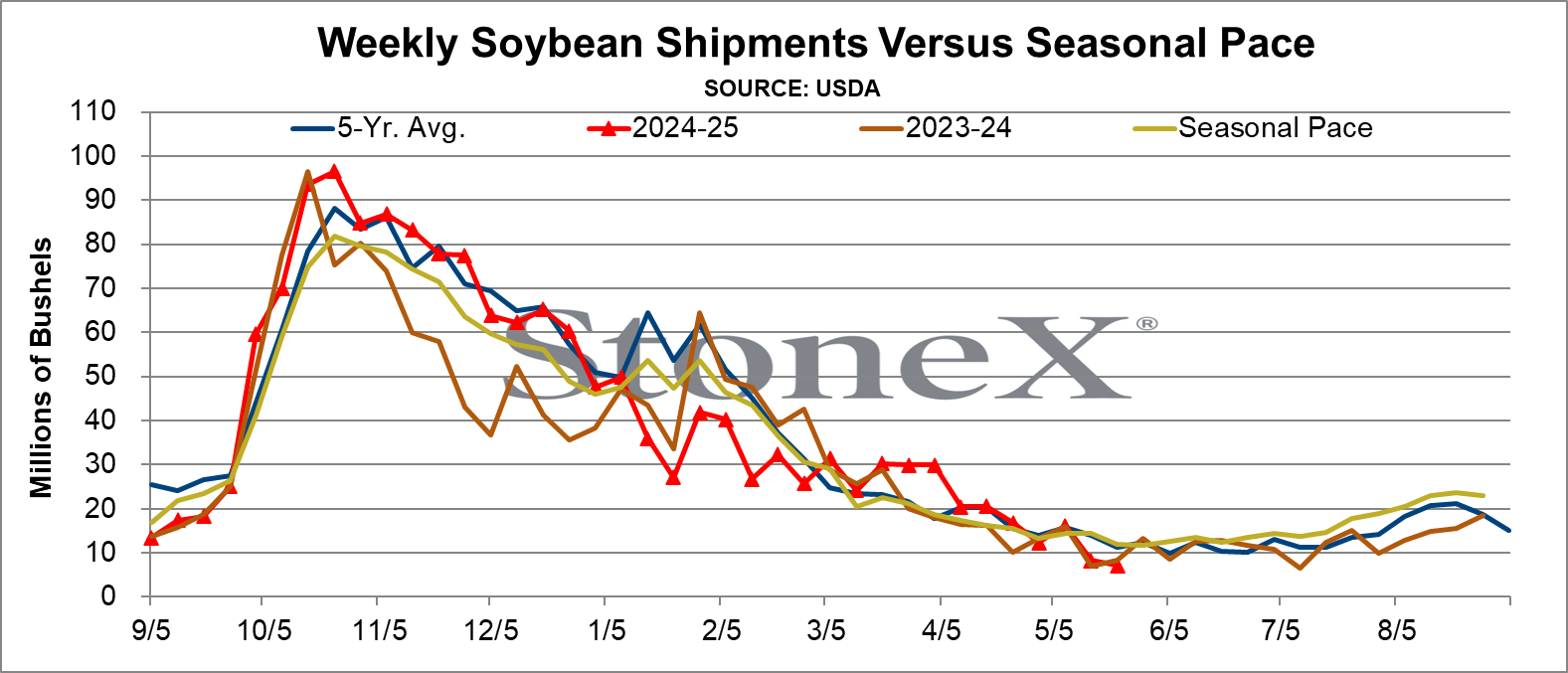
USDA inspected 55 million bushels of corn for export shipment in the week ending May 22, as shown below, along with 20.6 million bushels of wheat, 7.2 million bushels of soybeans and 2.0 million bushels of grain sorghum. None of the above was inspected specifically for shipment to China. We're coming up on the end of the marketing year at the end of May for wheat. Year-to-date inspections total 782 million bushels, versus USDA's target of 820 million bushels. However, the inspections do not include non-inspected shipments, such as USDA donations. Year-to-date inspections actually exceed the typical pace for hitting USDA's target by 18 million bushels, but we'll need to see where final donations come in. Marketing year to date corn export inspections total 1.850 billion bushels, up 417 million bushels or 29% from the previous year's pace, and 146 million bushels above the seasonal pace needed to hit USDA's target by the end of the marketing year on August 31. Marketing year to date soybean export inspections total 1.629 billion bushels, up 161 million bushels or 11% from the previous year's pace, and up 74 million bushels from the seasonal pace needed to hit USDA's target by August 31. Weekly soybean export inspections are expected to remain sluggish through the summer as the world takes advantage of cheaper new crop supplies coming from Argentina and Brazil.