May 7 - Lingering rate cut hopes fueled modest gains in stocks this morning in generally quiet trading. The VIX is trading between 13 & 14 today, while the dollar index is trading near 105.2. Yields on 10-year Treasuries are trading lower at nearly four-week lows at 4.43%, while yields on 2-year Treasuries are trading near 4.81%, with the inverse wider once again. Crude oil prices remain weak today, as rising global supplies trump geopolitical risks for now. Grain and oilseed prices quietly firmed off overnight lows this morning, with just the hard wheat markets currently posting modest losses on the day. Grain and oilseed traders are positioning for a major USDA WASDE crop report on Friday.
The soybean market cooled down a bit today as it approaches over-bought territory, after trading more than a dollar above its mid-April low. I addressed the weather problems in southern Brazil in my morning commentary, but I want to add another comment after visiting some more with our team in Brazil today. The problems with the excessive rains are focused on far southern Brazil in Rio Grande do Sul, where catastrophic flooding has been taking place, taking the lives of nearly 100 people, while more than that are missing. RGDS was expected to be the second largest producer of soybeans in Brazil behind Mato Grosso this year with 23.05 mmt or 847 million bushels of production. We know that 70% of that was already harvested, leaving roughly 6.9 mmt still in the field. Persistent rains tend to lead to increased pod shattering that results in harvest losses, as well as sprouting in the pod. We won't know the portion of the remaining soybeans that have been lost to shattering or due to quality issues until the rains stop, which isn't expected for at least another 10 days, and likely longer. We also do not know the scope of losses from previously harvested soybeans that may have been in storage in flooded areas. Generally, beans quickly move to the port after harvest, but more than likely some were caught by flood waters before being transported. All we can do at this point is monitor the cash market for signs of Brazil's export market worrying about running out of soybeans. We've seen some firming, but nothing to indicate rationing yet at this point, nor have we seen evidence of a change in Chinese buying yet either.
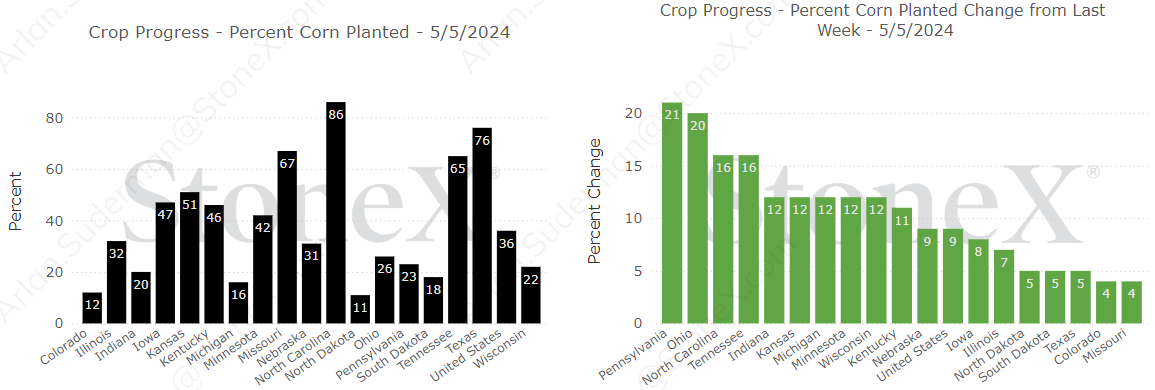
USDA pegs corn planting progress at 36% as of Sunday, up 9 points on the week, but down 6 points from the same week last year, and down 3 points from the five-year average pace at this point in the first week of May. The graphic on the left below shows state by state corn planting progress for the season to date, whereas the graphic on the right below shows progress just during the past week. Note that the most progress was seen in drier eastern areas of the Midwest over the past week, while wetter western areas saw much slower progress. In fact, some of that weekly progress in the wetter western areas was more likely USDA catching up after under-reporting progress the prior week.
This morning's radar shows strong storms moving across the Mississippi River into the eastern Midwest, but that then signals a change in the pattern going forward. There will still be occasional storm systems crossing the Midwest, but the pattern doesn't look as wet the next couple of weeks, which should allow for active planting to resume again by late this week. Cool temperatures currently in the northwestern Corn Belt will sweep across the Midwest, with warmer readings returning to most areas by the weekend. Big soil moisture deficits across much of the Midwest this winter have, for the most part, been erased. Soil profiles have largely been refilled. Yesterday, I outlined the changes seen in the Euro-monthly forecasts for the summer that were updated over the weekend. Those forecasts look very favorable for growing conditions for the summer. Confidence in forecasts that far out is low, and those forecasts may certainly change in the weeks ahead. But for now, there is little fodder for the bulls in the domestic supply and demand fundamentals. The average trade guess for 2024-25 ending corn stocks is 2.284 billion bushels, which is modestly higher than projected current-year stocks. That's about 7 - 800 million bushels above levels where the market gets concerned. My projected new-crop corn ending stocks estimate is 2.125 billion bushels.