November 27 - Stocks are consolidating lower from their recent record highs as we head into the Thanksgiving holiday. The markets will be closed tomorrow for Thanksgiving, and only have a short trading session with likely thin volume on Friday. The VIX is slowly inching upward toward 15 late-morning, while the dollar index is trading notably lower near 106.1 as the euro rallies. Yields on 10-year Treasuries are trading near 4.26%, while yields on 2-year Treasuries are trading near 4.23%. Crude oil prices are choppy in quiet trade today, while the grain and oilseed markets are mixed, with soyoil and wheat prices giving back yesterday's gains, while corn and soybean prices firm. The markets are starting to get that holiday malaise feel to them, which will likely linger into next month.
Feeder cattle futures continued their trek higher today, reflecting tighter supplies / stronger demand. Mexico's president said that she hopes that discussions with the United States about the recent discovery of a New World Screwworm in an animal in Mexico will allow feeder supplies to start flowing north again soon, but incoming President Trump's promised 25% tariff on Mexico might again cut off that flow come January 20. Meanwhile, exceptional improvement in wheat pasture opportunities has dramatically increased demand for stockers, leaving fewer feeders available for feedlots. This week's cash trade is still trying to establish itself, but it is generally believed to be firmer again. In fact, we've seen some cash trade open up in Texas at $190 per cwt, up several dollars from last week's trade, and just below the record from early July of $192 per cwt.
Personal income rose by 0.6% in October, doubling analyst expectations that it would continue the previous month's 0.3% growth rate. Personal consumption expenditure rose at 0.4% month-on-month in October, matching analyst expectations, but slipping from the 0.5% growth seen in September. Personal income was up 2.7% year-on-year in October, while consumer spending rose 3.0% year-on-year. The headline PCE price index rose by 0.2% month-on-month in October, matching analyst expectations, and matching the previous month's growth. The headline PCE inflation indicator rose 2.3% year-on-year in October, again matching analyst expectations, but rising from 2.1% the previous month. The core PCE price index that excludes the more volatile food and energy sectors rose by 03% month-on-month in October, matching analyst expectations, and matching the previous month's inflation pace. The core PCE inflation indicator rose 2.8% year-on-year in October, matching analyst expectations, but rising from 2.7% year-on-year. Treasury yields initially rose on the above data release, but they've since slipped back to pre-report levels. The year-on-year data shows that the lingering effects of inflation continue to be a risk, but the market largely dismissed this data, because it was "expected."
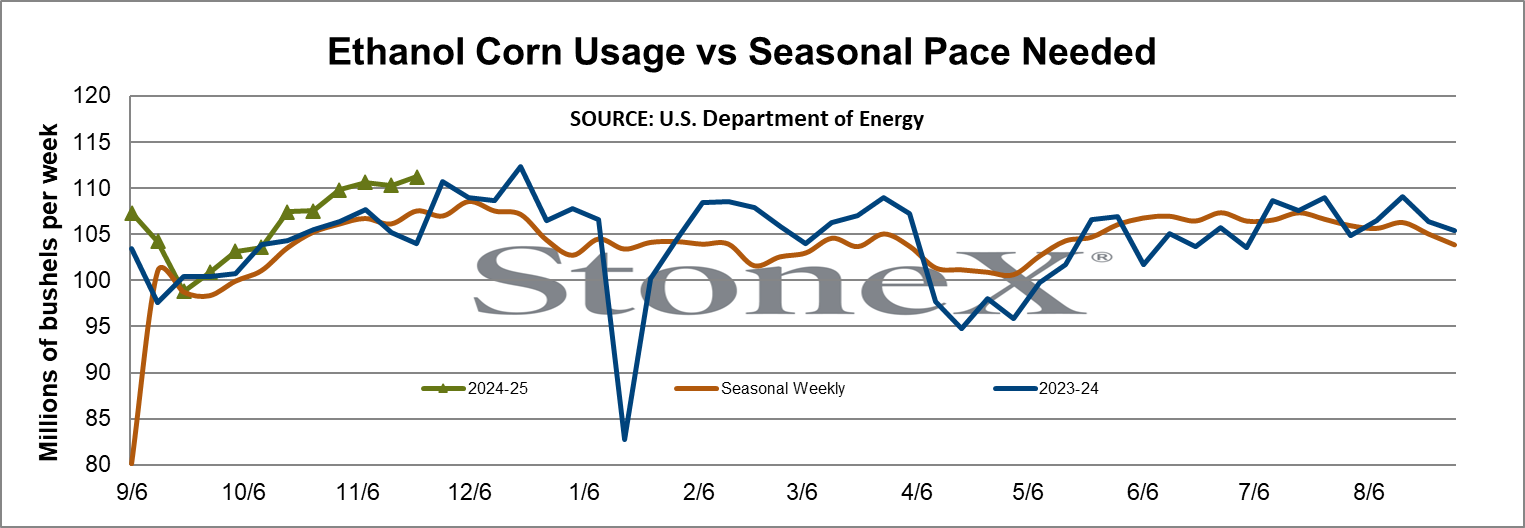
U.S. commercial crude oil stocks (excluding the Strategic Petroleum Reserve) fell by 1.8 million to 428.4 million barrels in the week ending November 22, putting them 5% below levels typically seen at this time of year. Gasoline stocks rose by 3.3 million barrels, putting them 3% below the five-year average for the week. Distillate stocks increased by 0.4 million barrels last week, leaving them still 5% below seasonal levels for the week. Ethanol stocks rose to 22.9 million barrels in the week ending November 22, up from 22.6 million barrels the previous week, and up from 21.4 million barrels in the same week last year. Ethanol production rose to a record high 1,119K barrels per day during the week, up from 1,110K bpd the previous week, and up from 1,011K bpd in the same week last year. The production of ethanol utilized an estimated 111.2 million bushels of corn in the week ending November 22, up from 110.3 million bushels the previous week, and up from 104.0 million bushels the previous year. Marketing year to date estimated corn use for ethanol production totals 1.260 billion bushels, which is up 6 million bushels from the previous year's pace, with the reporting period having 2 fewer days last year. That leaves us 45 million bushels above the seasonal pace needed to hit USDA's target for the year.