September 18 - Stocks are mixed at mid-day, struggling to find direction ahead of this week's Fed meeting, while the VIX rises slightly to hover around 14.3, above recent levels but still reflecting a relative sense of calm on Wall Street for the time being. The U.S. dollar is off slightly to start the week, trading near 105 at the time of writing. Treasury markets are starting the week off very hot, with 10-year yields attempting to push to their highest level in nearly 16 years near 4.34%, while 2-year yields are pushing towards 5.06%. Crude oil is continuing its move higher, with the nearby WTI contract putting in a high above $92 this morning, while the ags are largely in the red.
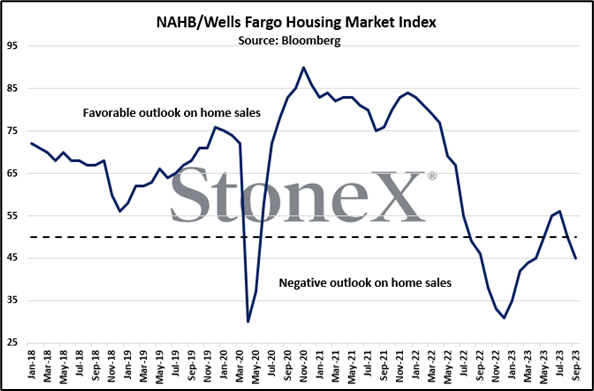
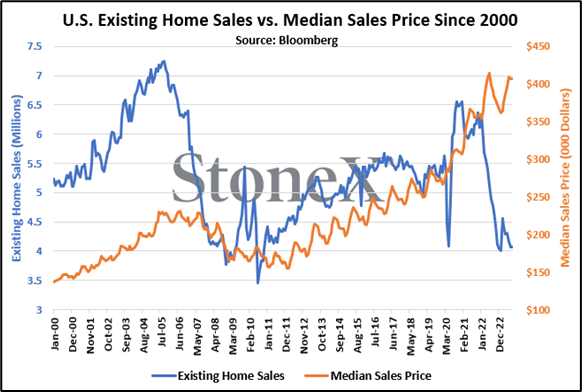
U.S. homebuilders are turning more pessimistic, with today's National Association of Home Builders (NAHB) Housing Market Index showing an unexpected decline back into contractionary territory with a reading of 45 for September, falling well below expectations of remaining unchanged from the month prior at 50. This is the lowest reading seen since April and marks the second consecutive monthly decline, reversing trend after sentiment had gradually been improving since bottoming out at 31 back in December 2022. The subindex for current single-family home sales fell 6 points month-on-month down to 51, while the outlook for home sales over the next six months dropped into contractionary territory at 49. The subindex for prospective buyers' conditions tanked to a reading of only 30, with a combination of mortgage rates climbing above 7% and nagging inflationary pressures at the consumer level making purchases less and less affordable. Despite the huge slowdown in sales, U.S. home prices have been able to hold firm, as shown below, with available supplies low as homeowners with low interest mortgages already locked in remain unwilling to sell. This is a big week for the U.S. housing market, with August housing starts and building permits set to be released tomorrow, mortgage applications and refinance data to be released Wednesday, and existing home sales coming on Thursday.
Ukrainian troops are reportedly nearing Bakhmut once again, recapturing the nearby villages of Andriivka and Klishchiivka over the weekend as their offensive slowly inches forward. While the change in territory has been limited, a recapture of Bakhmut would be a significant morale boost for the Ukrainians after the heavily fought over town fell into Russian hands in May, the lone prize of Russia's most recent offensive. However, with the heart of fall rapidly approaching, Russia's defense looks to gain an advantage from Ukraine's infamous "mud season" before the winter freeze, creating major hindrances to movement. As the war of attrition continues, more reports of shortages within Russia make their way out. The most notable has been fuel, with Russian producers favoring exports at the expense of the domestic market, reportedly slowing wheat harvest and winter crop plantings. Shortages have been reported for a wide range of other products as well, from paper and tires to airplane parts and tech. These issues, combined with increasing attacks inside the Russian border, are bringing the war closer to the Russian people and slowly eroding support for it within the country.
U.S. and Chinese diplomats met over the weekend, with U.S. National Security Adviser Jake Sullivan and China's Foreign Minister Wang Yi holding two days of talks in Malta regarding tensions over Russia/Ukraine, Taiwan, and the Korean peninsula. While there were no major breakthroughs, the two sides said the talks were "candid, substantive, and constructive." Tensions don't seem to be cooling, however, with the Chinese military reportedly flying over 100 warplanes toward Taiwan in a 24-hour period from Sunday to Monday as their military drills around the island continue. Additionally, Wang Yi is now headed to Russia for four days of meetings with officials including Foreign Minister Sergei Lavrov, shortly after Kim Jong Un's departure from the country.