September 9 - There's a mild "risk-on" mood on Wall Street today, with both stocks and commodities feeling the tailwinds of rate-cut optimism. Ironically, traders trimmed back the odds of a 50-basis point rate cut following last week's mixed jobs data - which I believe is more realistic - but yet today's focus remains on the expectations that the upcoming rate cuts will stimulate the economy. And they likely will. Fed Fund futures are still trading expectations of up to 225 basis points of cuts by the June meeting, which I believe is much more aggressive than is appropriate or likely at this point. Nonetheless, that sense of optimism tied to the upcoming rate cuts provided positive money flow to both stocks and commodities today.
The major stock indices are 1 - 1.5% higher at midday on that optimism. The VIX is trading near 19, while the dollar index is trading firmer near 101.5. Yields on 10-year Treasuries are trading near 3.70%, while yields on 2-year Treasuries are trading near 3.67%. Crude oil prices are nearly 2% higher on expectations that a hurricane will soon be developing in the Gulf of Mexico, as well as on Wall Street's positive economic expectations. Tropical Storm Francine is expected to develop into a category 1 hurricane before landing somewhere on the Louisiana coast Tuesday night. It is expected to adversely impact crude oil and natural gas production in the Gulf before coming on shore, where it may be disruptive to refinery activity, and possibly export activity at New Orleans ports. However, the remnants are then expected to linger over currently dry areas of the Southeast for several days, bringing much needed rain to the region, although maybe not so good for cotton that is in the open boll stage of development, as well as mature soybeans. The grain and oilseed markets are mostly firmer at midday. The waters of the Gulf of Mexico are quite warm, so this storm will need to be monitored for more significant development.
Soybean prices led the grain and oilseed sector higher this morning with double-digit gains. It's yet to be seen whether soybeans can successfully challenge the 50-day moving average on the November charts, but they have support for now from modest seasonal Chinese buying and ongoing dryness in Center-West Brazil. Soybean planting will be delayed until those rains return to the region. Forecast models don't see that happening in September, but they continue to show the rains returning as we turn the calendar to October. That's later than farmers would want, but it is soon enough to avoid crop risks. Yet, the market continues to add some weather risk premium because confidence is low in forecast models that far out. The question is, will this rally be able to sustain itself in the face of a record harvest that is just getting started in the United States with limited storage availability?
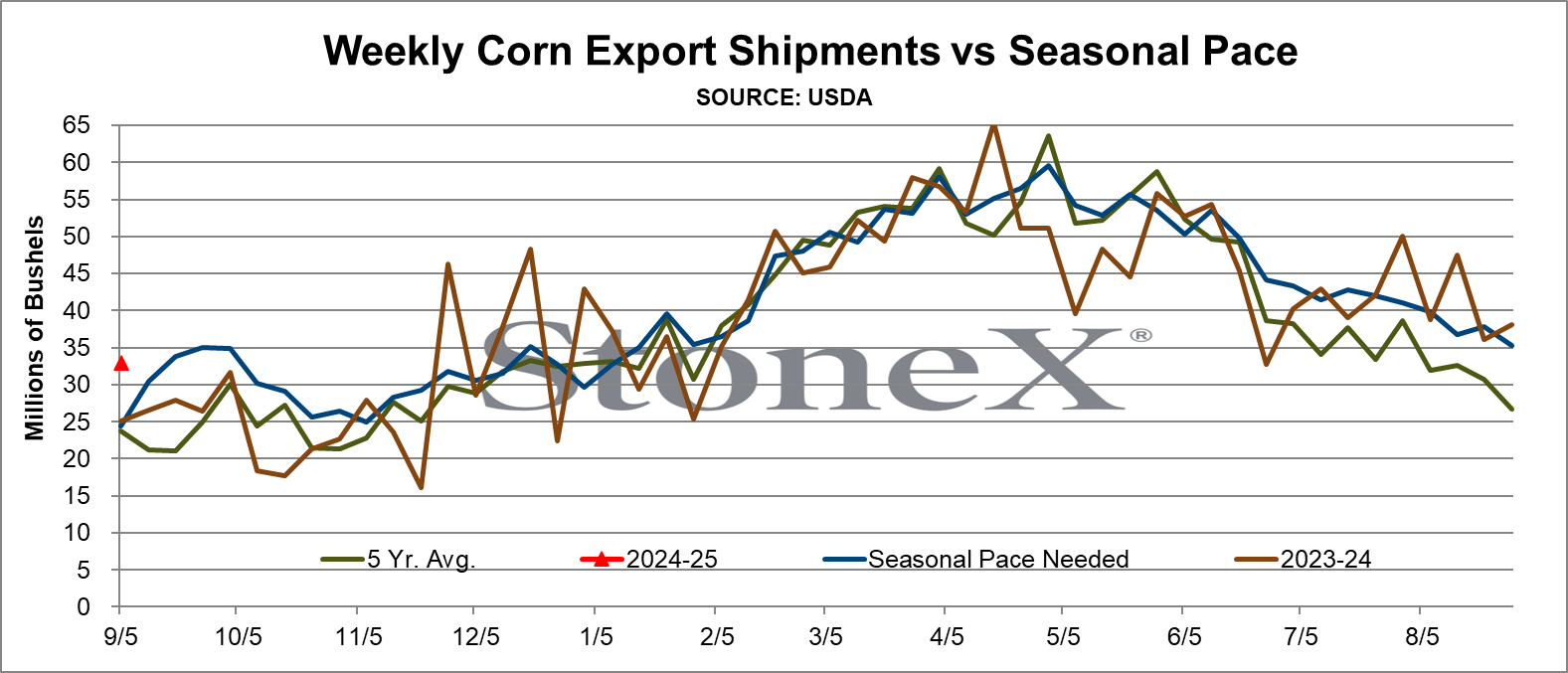
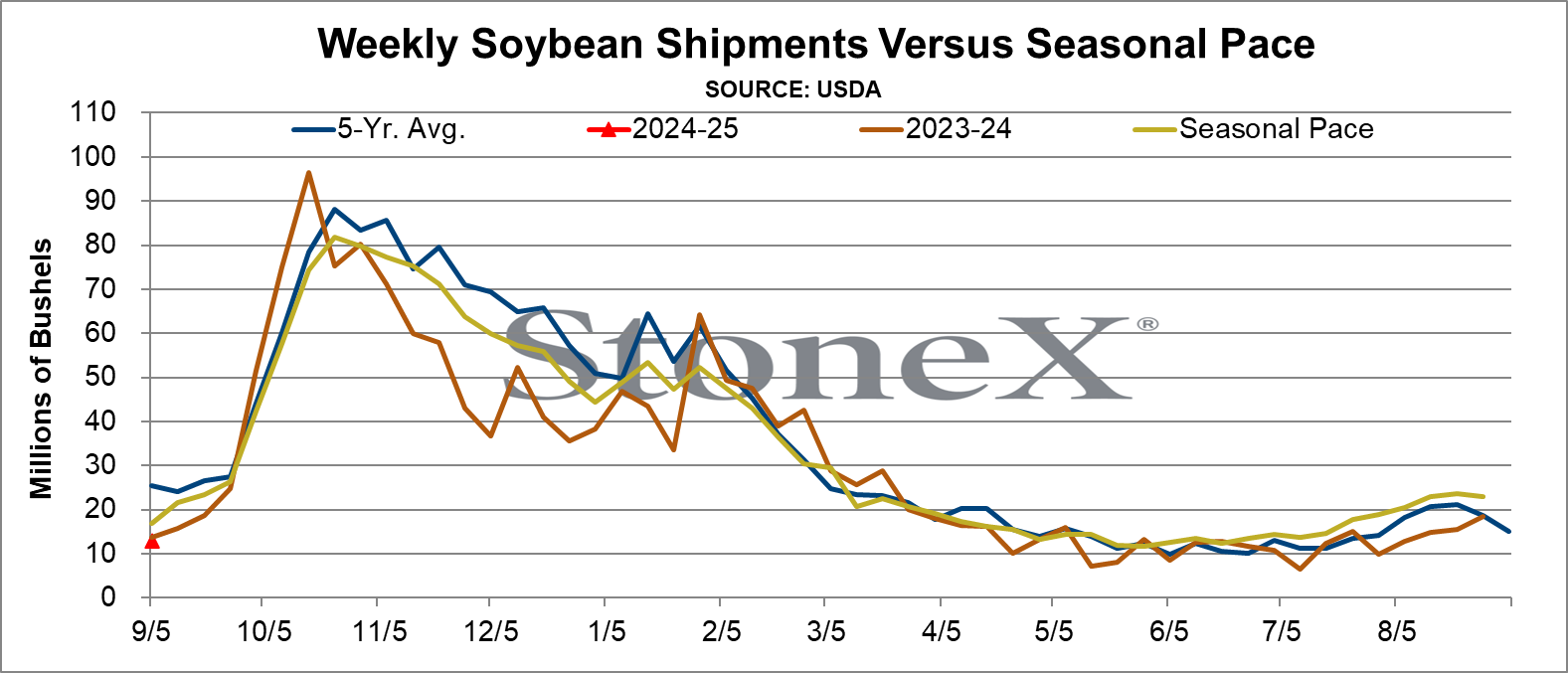
USDA inspected 32.9 million bushels of corn in the week ending September 5, as shown below, along with 13.0 million bushels of soybeans, 21.6 million bushels of wheat, and 0.1 million bushels of grain sorghum. Of that total, 2.1 million bushels of soybeans were destined for China, while only miniscule amounts of corn and grain sorghum were headed to China. The new marketing year for corn, soybeans and grain sorghum began on September 1st, so looking at marketing year to date shipment paces doesn't mean much until we start getting more weeks of data. That said, corn shipments continued their seasonally strong pace that they saw at the end of the old-crop marketing year. Soybean shipments in the first week of the marketing year were similar to year ago levels, which were also sluggish due to the Panama Canal being essentially shut down to bulk traffic. That's not the case this year, although the Mississippi River water levels are now more of a concern.