The automotive sector is typically just 4% of TSMC’s net revenue, less than a tenth of net revenue from Smartphone demand. In Q3 2020 it was just 2%. TSMC is the world’s largest semiconductor chip producer.
The recovery in the mining sector and the implosion of the auto industry are shifting the balances in the PGM sector. As the semiconductor chip delivery dislocation is showing little signs of waning, vehicle producers are cutting output left right and centre and we have revised our PGM demand projections accordingly.
The bottom line is that for this year as a whole we are now expecting palladium to throw off a surplus equivalent to 4.5 weeks’ global industrial demand, and potentially a surplus of five weeks’ in 2022. Platinum fares slightly better, with a balanced market this year and a surplus of approaching 1-1.2 weeks’ demand, while rhodium looks likely to generate three weeks’ surplus this year and four weeks’ next year.
Breaking this down a little further points to a swelling in surpluses in H2 2021 and H1 2022 as the semiconductor shortage works its way through the system. So the PGM prices could still have a way to go before they are back on an even keel.
Lying behind this of course is the auto industry and its reliance on semiconductor chips. We have noted before that in the third quarter of last year some semiconductor foundries were warning that a shortage was looming. This is due in no small part to the fact that over 70% of semiconductors are manufactured in the Far East. The auto companies, who were already working hand to mouth, either chose not to, or couldn’t, adjust their buying schedule and so they fell towards the back of the queue behind the communications giants as lockdowns massively expanded demand for devices. Some senior executives in the communications industry say they see conditions easing towards mid 2022 – which may well mean that the auto makers will have headaches well into the second half.
So much for the anecdotal evidence (of which, more to follow); here are some hard numbers.
Semiconductor crisis? Autos in the back seat
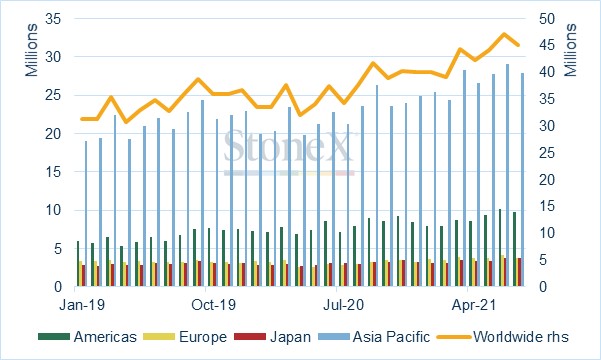
First: the semiconductor industry. Now these numbers need to be interpreted with care, because they are dollars, not units, but they do tell a story.
Semiconductor Billings, $ October 2020 – crunch starting
Source: Semiconductor Industry Association
On a global basis, sales in the first eight months of 2021 were up by 15% against January – August 2020, but down by 9% against the equivalent period of 2019.
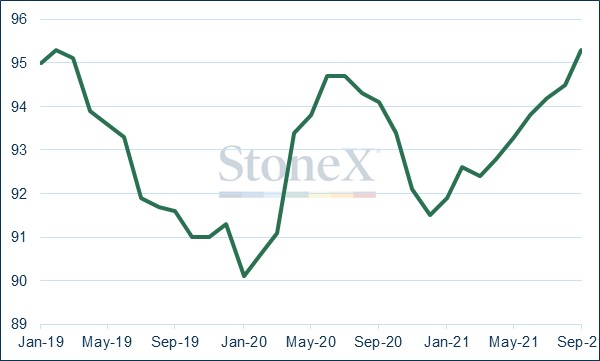
Bearing in mind that this is value not volume, these are essentially best-case figures since prices have been on the rise; for example the U.S. import price index for Pacific Rim Semiconductors and other equipment since the start of 2019 looks like this, with a 4.2% rise since the start of this year.
Index of U.S. prices of semiconductors and other equipment imports from the Pacific Rim
Source: Bloomberg, U.S. Labor Statistics
This doesn’t look especially dramatic, but the key here is where those parts are headed. The latest quarterly earnings results from TSMC, the world largest semiconductor chip producer, reports healthy earnings, a steady margin rate at just over 40%, and strong demand from four growth platforms, namely Smartphone, HPC, Internet of Things (IoT) and Automotive-related applications. In Q3 2021, Smartphone and HPC represented 44% and 37% of net revenue respectively, IoT was 9% and Automotive, just 4%. Typically the sector commands between 4% and 5% of TSMC’s revenue; in Q3 2020 it dropped to just 2%. So we can see who has the muscle here.
Auto sales falling and producers now cutting output
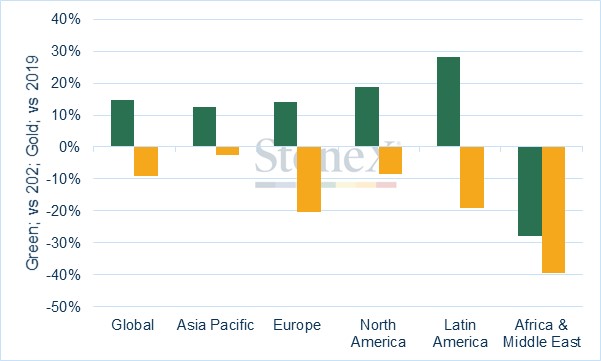
Bloomberg Intelligence’s latest vehicle sales numbers are complete for August and September is currently being populated. The picture unfolds as follows:
January-August Y/Y change in auto sales by region
Source: Bloomberg Intelligence, StoneX
Meanwhile EU new car sales in September were down 23% year-on-year to just below 720,000. Elsewhere Toyota is to cut production in November by 15%, while Volkswagen’s deliveries dropped 24.5% in Q3 (and 32.9% in September) – but deliveries of battery-powered vehicles grew by 109% Y/Y, reflecting the double whammy of how the virus has accelerated progress towards decarbonisation and the fact that the inventories were there to be sold – which is not so much the case in the internal combustion engine sector. In the United States, for example, business inventories rose 7.4% Y/Y in August, but motor vehicle inventories fell 1.4%. Once again, China is in the vanguard when it comes to electric vehicles, with Citigroup estimating that EV market share in September was 20%.
Summary expectations
Extrapolating from the hard numbers that we have and accounting for a degree of platinum substitution from palladium in some internal combustion engines leads us to our supply and demand balances.
In summary: -
|
000 ounces
|
2021
|
2022
|
|
Platinum
|
|
|
|
Supply
|
7,392
|
7,798
|
|
Demand
|
7,380
|
7,588
|
|
Balance
|
12
|
210
|
|
In terms of weeks’ demand
|
0.1
|
1.4
|
|
|
|
|
|
Palladium
|
|
|
|
Supply
|
10,074
|
10,606
|
|
Demand
|
9,234
|
9,682
|
|
Balance
|
840
|
924
|
|
In terms of weeks’ demand
|
4.5
|
5.0
|
|
|
|
|
|
Rhodium
|
|
|
|
Supply
|
999
|
1,058
|
|
Demand
|
942
|
980
|
|
Balance
|
57
|
78
|
|
In terms of weeks’ demand
|
3.0
|
4.1
|
These numbers, coupled with the longer-term outlook for the electrification of the global vehicle fleet, points to some upside for platinum prices next year, but palladium may continue to struggle, at least to mid-year.