Has the market grown impervious to fundamental concerns through sheer force of momentum? Despite persistent Iran, inflation and growth worries; risk appetite has pushed benchmarks to like the S&P 500 to historical tempo and spread more broadly across markets.
Talking Points:
The three top US equity indices hit record highs this past week as other measures of ‘risk appetite’ followed the steadfast bid
As a ‘tolerance’ of US-Iran headlines build, the potential to source further enthusiasm from negotiations progress may flag
Themes remain mixed and uneven heading into the 23rd week of the year with outlier Japanese intervention and US oil inventory insights comingling with NFPs as top event risk
Watch the Full Video
S&P 500 Keeps Putting Up Incredible Stats
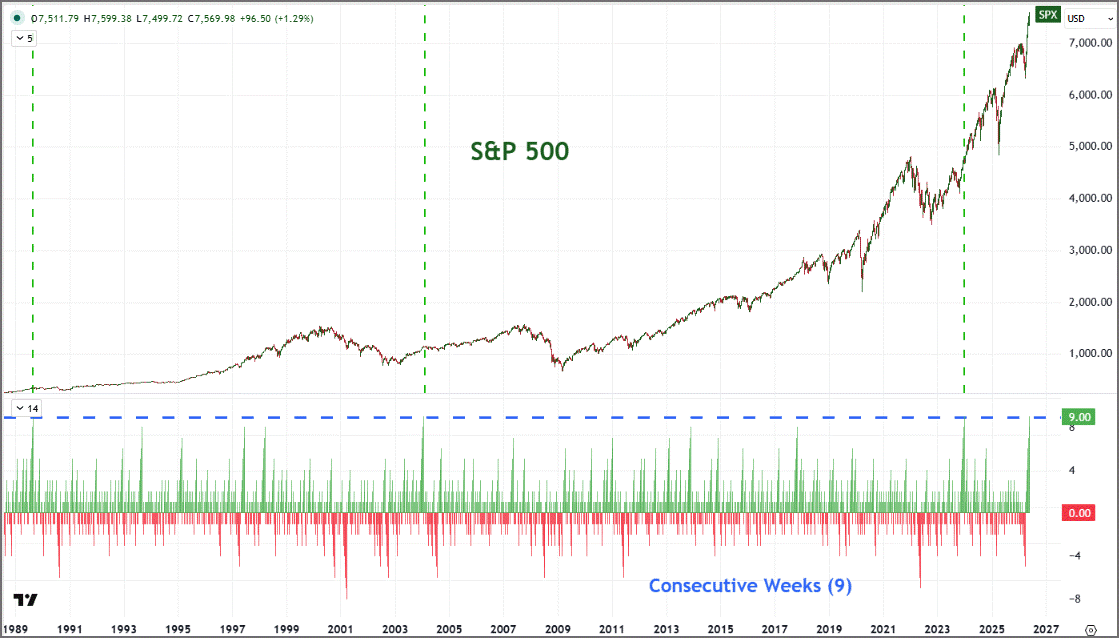
I wouldn’t exactly call the market roaring with risk appetite, but conditions remain steadfast enough that opportunism continues to run rampant. Whether confidence in stability is built on assumptions of a ‘Fed Put’, a Presidential ‘TACO’ announcement or simply a penchant by the market to shift priority to suit a prevailing sentiment; the investing rank looks more than comfortable with taking advantage of the consistent climb. Still leading the climb are the major US indices – the S&P 500, Nasdaq 100 and Dow Jones Industrial Average – which all notched record highs this past week. And, while the mega-cap, tech-concentrated Nasdaq stands out for pace with its 31 percent, nine-week advance; a moment of reflection is owed for the more heavily traded (through its many derivatives) S&P 500.
This ubiquitous index has managed to climb for nine consecutive weeks, which is the longest stretch since December 2023 and only the fourth time we have seen such consistency in four decades. There are likely more remarkable stats that will be notched so long as this bullish compass setting is maintained, but tempo and breadth will offer more insight on the foundations of a tradable/investible market going forward. We have seen the reticence of other, unrelated risk benchmarks – such as global indices, emerging markets, carry trade and others – fall away and drag more of the market higher. On the other hand, the pace of the climb by the leaders has flagged, almost out of necessity, and the markets playing catch up are not enjoying the same extreme charge on a delayed basis.
Chart of the S&P 500 with Consecutive Weekly Moves and 8-Week Rate of Change (Weekly) Source: TradingView.com; John Kicklighter
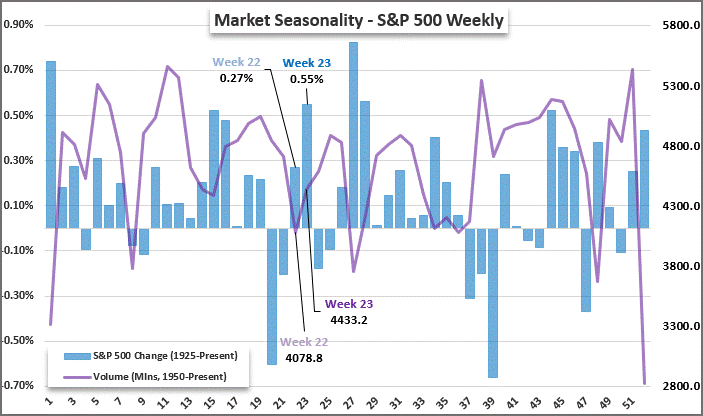
A market that is inching higher and dogged by concerns of a fundamental threat toppling an uneven reach should be approached very differently than one that is charging forward as the assumption that a discount must be worked off offers momentum that overrides other concerns that pop up along the way. There are plenty of proximate threats that can could draw our attention given how thin our conviction is on the fundamental merits of our trajectory, from a flare up in the US-Iran war to growing concerns over inflation and central bank corrective action to reminders of troubled fiscal conditions. Yet, what if the headlines don’t show up – or the market chose not to bite? If we resort to norms, seasonal conditions offer perspective on traditionally comfortable circumstances. For the S&P 500, the 23rd week of the year presents a modest recovery in volume from the Labor Day shortened week that precedes it as well as the fourth best weekly performance of the calendar year going back a century. Previous performance is not indicative of future results, as always; but tendencies should be considered alongside current circumstances.
S&P 500 Averaged Performance and Volume by Calendar Week Source: John Kicklighter
Increasingly Shifting Themes with Different Scenario Paths
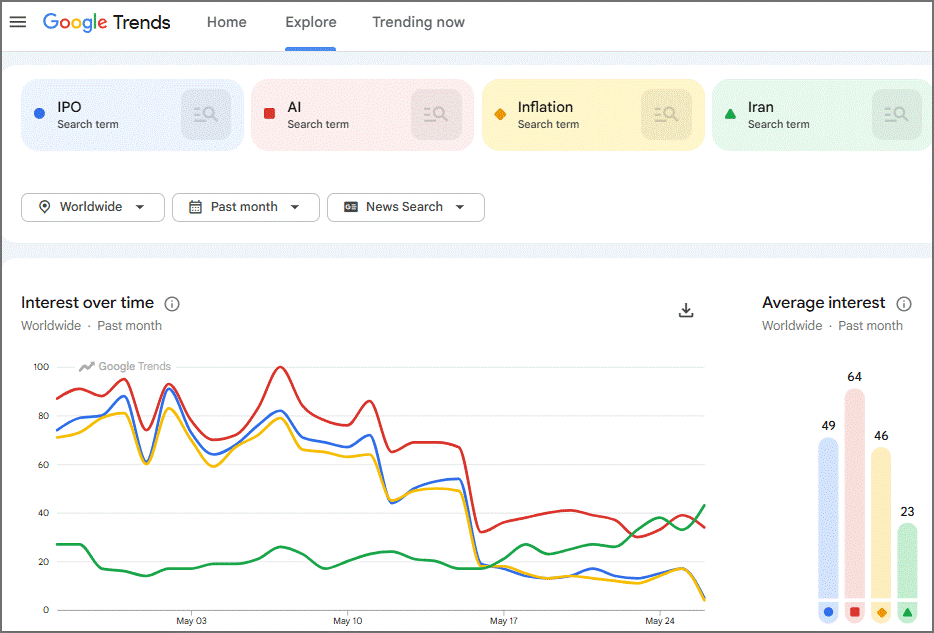
I believe that we have seen market conditions such that sentiment sets the grade first and fundamentals – whether discrete event risk or underlying themes – are interpreted through the speculative prism. This override can change quickly, either by shifting to prioritizing bearish justifications or relinquishing influence to more traditional catalysts; so it is always worth keeping tabs on the undercurrents guiding the fundamental narrative. Looking to Google Trends, we have seen both ‘good’ and ‘bad’ sources of trading conversation have flagged in search worldwide. Despite the approaching mega “IPOs” (SpaceX, Anthropic, etc), interest has flagged there; but so has downstream “inflation” concerns from elevated energy prices. Both “Iran” and “AI” are holding up relatively speaking, but not compared to interest/concern over the past eight weeks.
Chart of Google Trends Search Interest for "IPO", "AI", "Inflation" and "Iran" Source: Google Trends; John Kicklighter
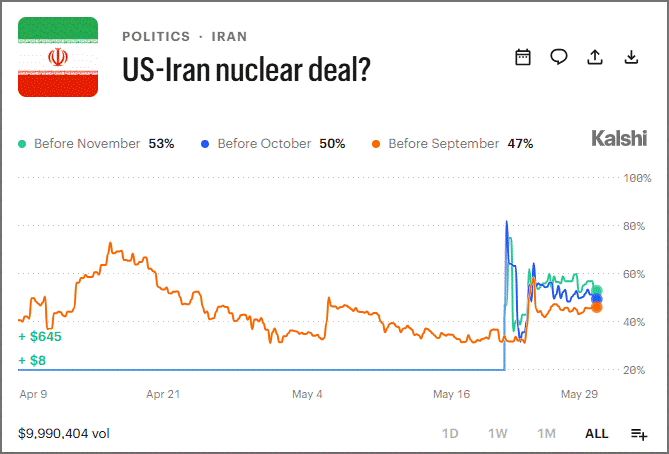
Of these various fundamental matters that can see volatility accelerate from their rolling start, the situation in the Middle East carries with it the greatest potential between the capacity for a dramatic change in tack that can amplify its global influence. We went into this past weekend once again with headlines suggesting negotiations were on the cusp a breakthrough, only to see walk backs by two sides that seem keen to leverage their bombast for a superficial win in the headlines. The reversal is not particularly surprising, nor is the market being jerked along for the ride. That said, the back-and-forth is leading markets to a more predictable outcome that ultimately drags this situation out and eats into long-term stability.
While the US and Iran may eventually reach an interim agreement in terms, it is ostensibly to buy more time (expected 90 days) to negotiate on terms that the two sides seem to adhere to diametrically different beliefs on their long-term rights. That will likely significantly cut into the cheer a ‘deal’ – and more accurately on a Memorandum of Understanding – would otherwise leverage if it happened two months ago. As stated before: it is worth considering what kind of market conditions would follow should the market retreat immediately after a supposed breakthrough.
Prediction Markets Pricing of US-Iran Nuclear Deal Source: Kalshi.com
Some Alternative Themes May Steal the Thunder of the More Traditional
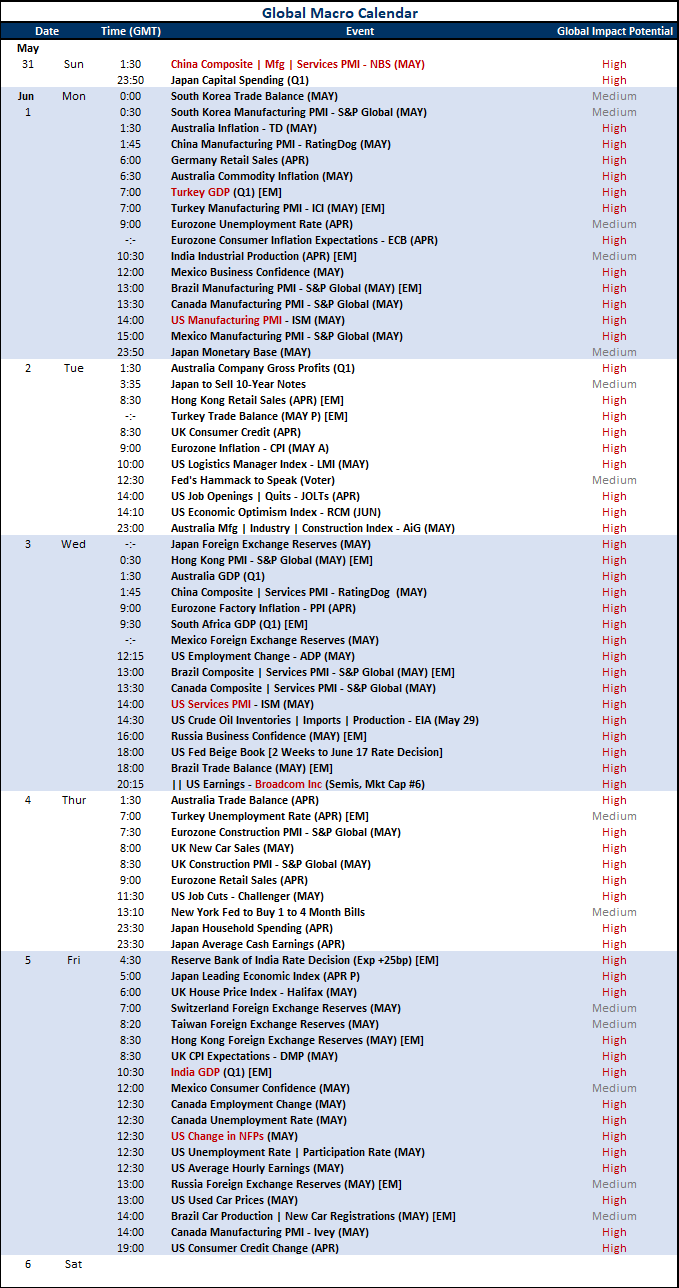
If the markets are sentiment first, we will need to consider what that will do to the potency of scheduled event risk that we face over the coming week. Looking through the listings for broader themes, we have events that could cater to interest rate expectations and those that would readily leverage an interest in growth potential. And yet, both of those elements have struggled to amplifying the prevailing bullish interest or offer any material traction when a counter-trend update come across the wires. As such, direct monetary policy watch fodder like the Eurozone CPI or indirect like the inflation components of the PMIs should be digested but not set the foundations for action. Similarly, Indian, Australian and Turkish 1Q GDP readings may struggle to sway the rupee, Aussie Dollar or lira respectively – much less global risk trends. Yet, not all event risk will be so impotent.
Calendar of Top Global Macro Event Risk Source: John Kicklighter
The Lingering Threat of BOJ Hikes and Intervention Elevates Japan’s Data
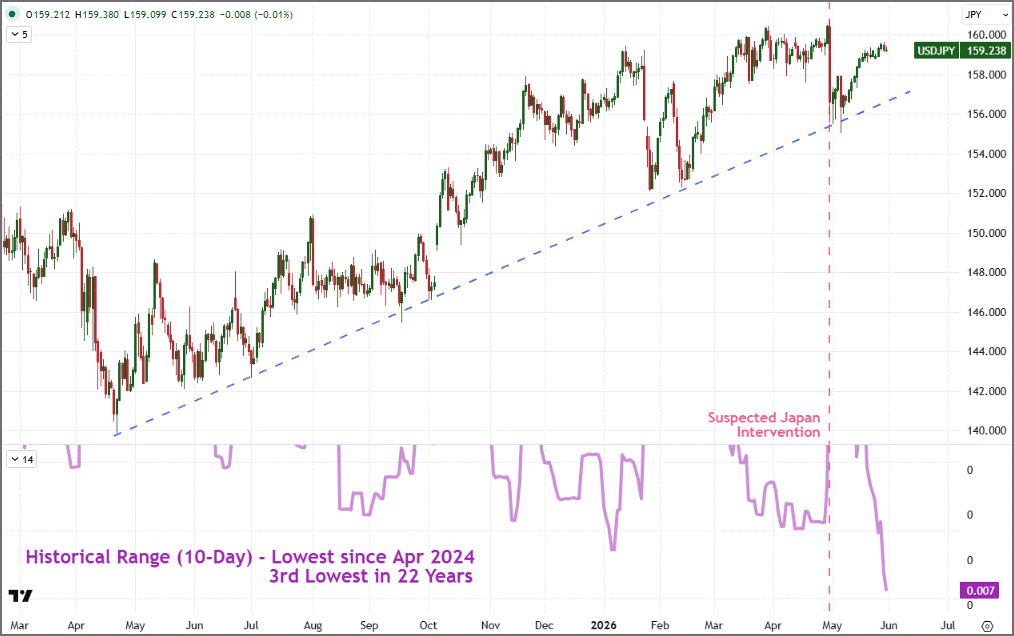
There is some noteworthy Japanese scheduled event risk on tap for the coming week, but none of it truly elevates to the level of being definitively headline – much less volatility – worthy. Then again, the backdrop may change that calculus. Just as sentiment is altering the lens used to evaluate key event risk, the threat of another Japanese intervention could draw more attention to the docket’s listings. The country’s FX reserves update due Wednesday morning will offer some degree of insight into how much treasure is being used in the – thus far failed – attempts to prop up the yen. According to historical trneds, we are due insight from the Ministry of Finance to verify the likely intervention effort on April 30th; but we have all but retraced that influence in the past month. How much did it ‘cost’? The risk of another intervention is high with USDJPY near 160 yet again. With each unsuccessful effort to cap the market’s natural flow, the authorities are stunting the potential of future efforts. At this juncture, only a broad retreat in risk appetite or allowing the Bank of Japan to close the yield gap to major counterparts is likely to materially change the course of the nation’s currency.
Chart of USDJPY and 10-Day Historical Range (Daily) Source: TradingView.com; John Kicklighter
US Oil Inventories May Offer Clarity on When Supply-Demand Hits
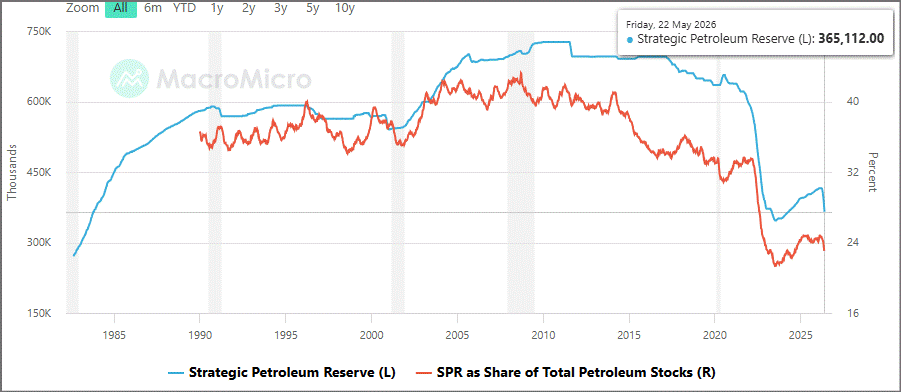
There are multiple, weekly energy inventory reports that are released; but they have rarely garnered as much global market attention as they have lately. Towards the beginning of the US-Iran conflict, there were various assessments made regarding the supplies of vital energy reserves major economies had to weather the closure of the vital Strait of Hormuz. Remarkably, the reference to those very finite inventories has faded from headlines and the White House in particular has attempted to maintain a narrative that the blockade has no impact on its own energy circumstances – in part to avoid political criticism domestically but to also maintain a position of strength in negotiations with Iranian officials keen to wait out a resolution. That said, the evidence of supply-side pressures is hard to miss. The headlines around weekly drawdowns on regular inventories and record outflows from the Strategic Petroleum Reserve. The pricing dynamics will not abide an attempt to contradict with narrative for long.
Chart of US Strategic Petroleum Reserves Inventories (Weekly) Source: MacroMicro.me; US Energy Information Administration
Nonfarm Payrolls Will be Top Billing with Plenty of Debate
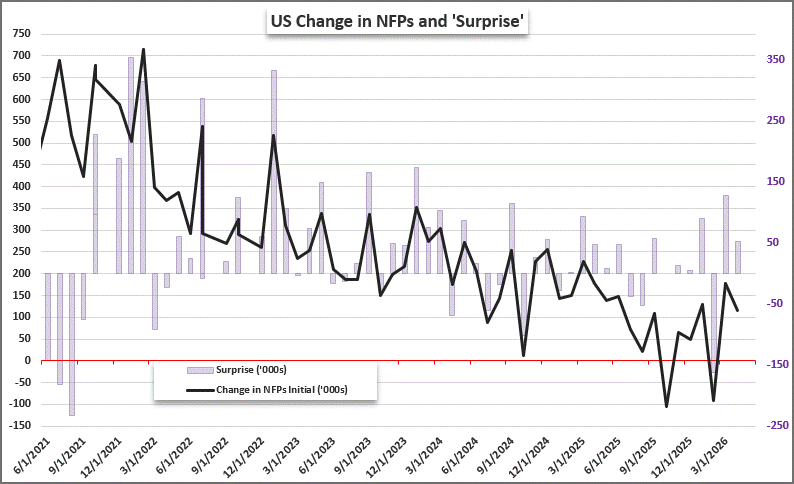
Among the run of events on tap for next week, the most recognizable update for market-moving capacity is the Friday release of the May employment situation report. There is a lot of data that comes from this monthly US Bureau of Labor Statistics update, but the markets and financial media have taken to a quick evaluation of the nonfarm payrolls (NFPs). The economist consensus calls for an approximate 100,000 jobs added to the world’s largest economy, and the first reaction will be dictated by whether we significantly ‘beat’ or ‘miss’ that mark. However, behind this data, we have a lot more to consider. The jobless rate is still very low historically, but it is climbing as the participation rate is dropping back to levels commensurate with the immediate aftermath of the pandemic. Furthermore, wage growth is flagging the charge in inflation consumers see in the necessary goods they pay for, which has led markets to price in a rate hike as the next Fed move rather than the cut expected just a month ago. That situation is further complicated by debates over the veracity of the labor data with significant revisions over the past few years as well as the pressure expected to come from new Chairman Kevin Warsh, appointed by President Trump who openly called for massive rate cuts and aggressively criticized Warsh’s predecessor for not doing more to ease the benchmark.
Chart of Change in NFPs and Surprise Relative to Consensus (Monthly) Source: John Kicklighter; US Bureau of Labor Statistics
Access More Global Macro Insights, Forecasts and Tools
Stay connected to timely global macro analysis designed to help market participants navigate shifting economic conditions and evolving risk. Gain access to regular market commentary, updated quarterly forecasts, a comprehensive two-week forward economic event calendar, and specialized tools built to support informed trading and risk management decisions.
The subsidiaries of StoneX Group Inc. provide financial products and services, including, but not limited to, physical commodities, securities, clearing, global payments, risk management, asset management, foreign exchange, and exchange-traded and over-the-counter derivatives. These financial products and services are offered in accordance with the applicable laws in the jurisdictions in which they are provided and are subject to specific terms, conditions, and restrictions contained in the terms of business applicable to each such offering. Not all products and services are available in all countries. The products and services offered by the StoneX Group of companies involve risk of loss and may not be suitable for all investors. Full Disclaimer. This content is not intended for residents of any particular country, and the information herein is not advice nor a recommendation to trade nor does it constitute an offer or solicitation to buy or sell any financial product or service, by any person or entity in any jurisdiction or country where such distribution or use would be contrary to local law or regulation. Please refer to the Regulatory Disclosure section for entity-specific disclosures. No part of this material may be copied, photocopied or duplicated in any form by any means or redistributed without the prior written consent of StoneX Group Inc. The information herein is provided for informational purposes only. This information is provided on an ‘as-is’ basis and may contain statements and opinions of the StoneX Group of companies as well as excerpts and/or information from public sources and third parties and no warranty, whether express or implied, is given as to its completeness or accuracy. Each company within the StoneX Group of companies (on its own behalf and on behalf of its directors, employees and agents) disclaims any and all liability as well as any third-party claim that may arise from the accuracy and/or completeness of the information detailed herein, as well as the use of or reliance on this information by the recipient, any member of its group or any third party.
Our market expertise, advanced platforms, global reach, culture of full transparency and commitment to our clients’ success all set us apart in the financial marketplace.
Reach
With access to 40+ derivatives exchanges, 180+ foreign exchange markets, nearly every global securities marketplace and numerous bilateral liquidity venues, StoneX’s digital network and deep relationships can take clients anywhere they want to go.
Transparency
As a publicly traded company meeting the highest standards of regulatory compliance in the markets we serve, our financials and track record are matters of public record. StoneX’s commitment to “doing the right thing over the easy thing” sets us apart in the industry and helps us build respect, client trust and new partnerships.
Expertise
From our proprietary Market Intelligence platform to “boots-on-the-ground” expertise from award-winning traders and professionals, we connect our clients directly to actionable insights they can use to make more informed decisions and achieve their goals in the global markets.