September '25 UREA
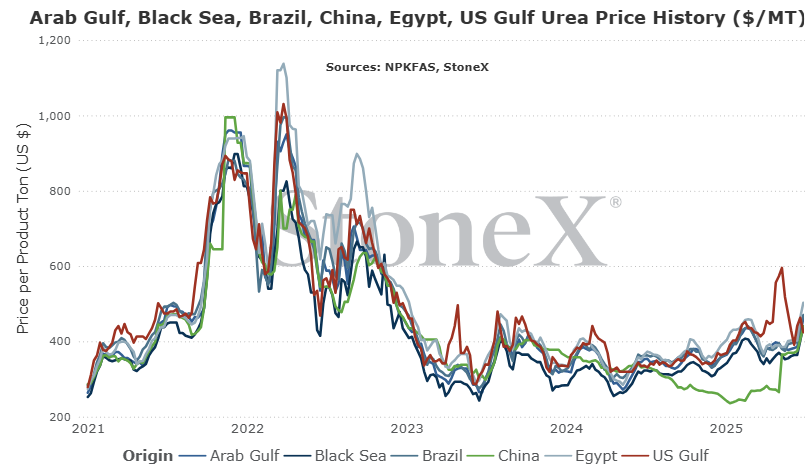
Major Global Urea Export Location Price Graphs
The intention of the below graphs are not to use to say "my price should be X based on this graph". These prices are derived from an FOB price point average. The intent is to show major global price movement trends. Your values will likely have significant basis difference (similar to your local grain price being different than the traded market price).
This graph is labeled as MT in USD currency.
What everyone wants to know first, what do we think will happen going forward
GLOBAL
The global urea markets are in a very interesting place today.
India was successful in hitting their 2M ton goal on their last purchase tender. It really looked like the market was set to start lowering as the globe moved into its typical Q3 dead demand period. This was hitting even harder as Chinese exports, which were expected, started to find their way into the world.
Then, India surprised everyone with a near immediate purchase tender for yet another 2M tons. Few were surprised that they needed more tons. In fact, after the last tender, we estimated that they needed an additional 3M tons through January. So the need of tons was nothing new, we were just not expecting such a short turnaround.
The world market acted accordingly and prices jumped a bit.
However, it seems that not many outside of India want to do much buying and that could weigh on the market short-term. This is doubly true with Chinese exports picking up.
But do not lose sight of the Russia/Ukraine peace talks. Failure could mean that the U.S. leads the charge in shutting the world off from Russia goods. Now, Russia has plenty of friendly nations that will likely ignore the U.S., but it could disrupt global trade patterns.
On the other side, actual peace could usher in the global urea market finding normal/efficient trade flows once again. This could be massive for Australia, Canada, and Europe who all have blocked Russia.
Very short-term, let's say the next month or three, could very well see global prices lower. Current values are high vs grain pricing. Buyers are in no rush and typically speaking there isn't much that happens this time of year.
Longer-term, it depends on production rates and exports. If global production rates were to normalize and exports from countries like China return to normal, it could mark the current market is close to a top. Given the last few years, I'm not holding my breath that this plays out but weirder things have happened.
NORTH AMERICA
North America is still in a position where it will see its price ebb and flow with the world. The issue is that if NOLA values get too high vs the world, massive imports will start to arrive and overrun the market. If the NOLA price gets too cheap, we could start losing supply to exports and supplies are already too tight. For the most part, what happens to world prices happen to North American prices.
One thing that should have nearby values a little firmer vs the world is current supplies. Today, supplies are extremely tight. Multiple North American production plants have downtimes planned for repairs. We also ended spring season very low on inventories. That is a bad one-two punch for buyers.
However, on the flip side, demand may not be what some expect. Current prices of urea are high and grain values stink for 2025...2026 doesn't improve much. The market may expect "normal" demand cycles, but might be surprised if/when they are not there. An example would be year end tax spending. Paying year end money to offset taxes only happens if you make money...
N.A. urea values are going to ebb and flow with the world with a tendency to be a bit more firm on tight supplies.
General Global Urea Information
What has happened in the last 30 days?
Russia/Ukraine peace talks could have global urea implications
Given the fact that we have no idea how the entire Russia/Ukraine story will play out, the fertilizer story is massive as we have to look at the multiple things that could happen. It could be great for global nitrogen markets. It could be bad for global nitrogen markets.
It could be really bad for global nitrogen markets.
My current POV on the options:
- Russia/Ukraine find peace - this seems like a stretch but we have seen weirder things happen before. The fact that Trump and Putin had in person meetings in Alaska was a situation I didn't think possible a few months earlier. Let's assume that we wake up tomorrow and peace has been found. Russia has continued to be a major urea exporter since the war began. Originally, the urea world feared that Russian exports would stop but what it found was that they just started targeting friendly nations. There are plenty of urea importing nations around the world willing to ignore western country restrictions. So we wouldn't see a sudden surge of supplies, but we could see normal and efficient global trade flows return. For those countries who "lost" access to direct Russian urea, it could help settle some values. The bigger thing would/could be if Russia is allowed to return to flowing natural gas to Europe. 3 of the 4 Nordstream pipelines were damaged in an underwater attack and they need repaired. However, 1 is still reportedly operational and could flow product quickly. That likely would cause European natural gas markets to get cheaper and could have European nitrogen production returning to normal. This would put more tons into the global S&D and help lower price ideas.
- Russia/Ukraine war continues - this seems to be the most likely scenario. Putin will probably give Trump just enough to keep the U.S. from imposing massive economic restrictions on them, but not enough to actually end the war. Putin has spent billions and sent hundreds of thousands of men to their death. It would be very hard to just up and say "well, that didn't work. On to the next thing". He needs to have something to show for the "effort". In this case, the world still has disrupted global supply lanes and European production offline. Basically, the world continues as it has.
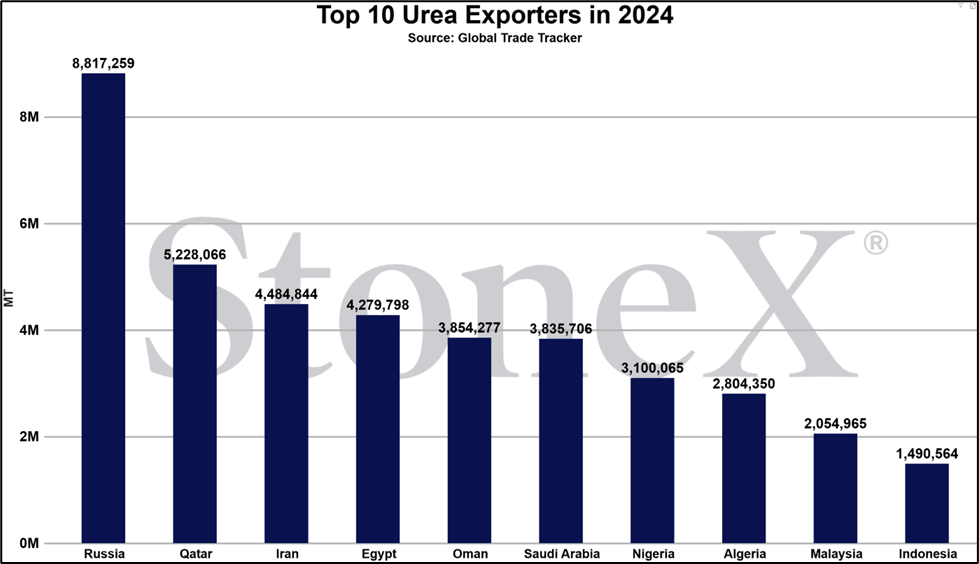
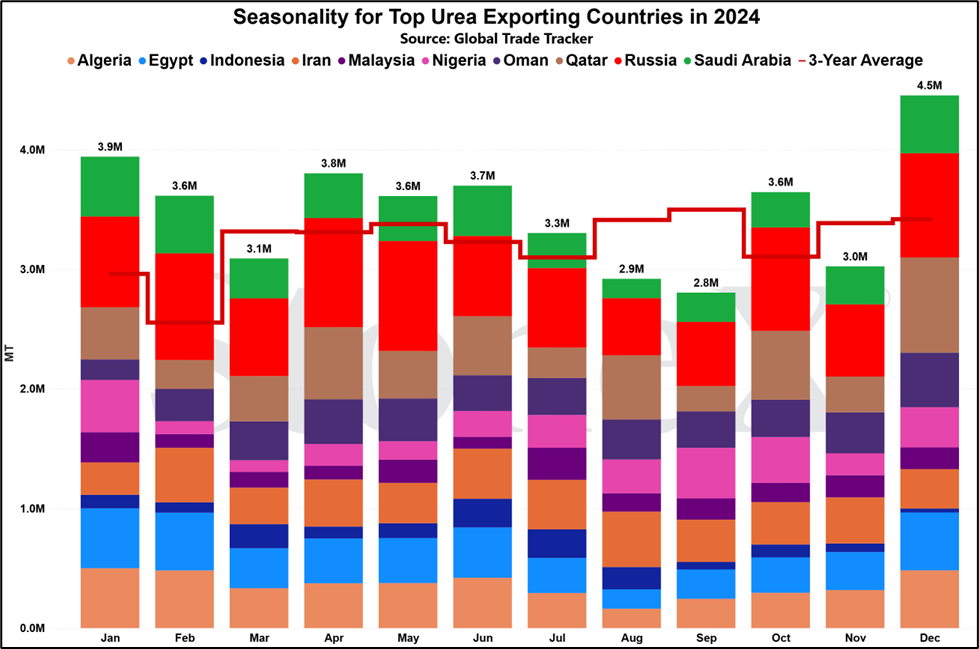
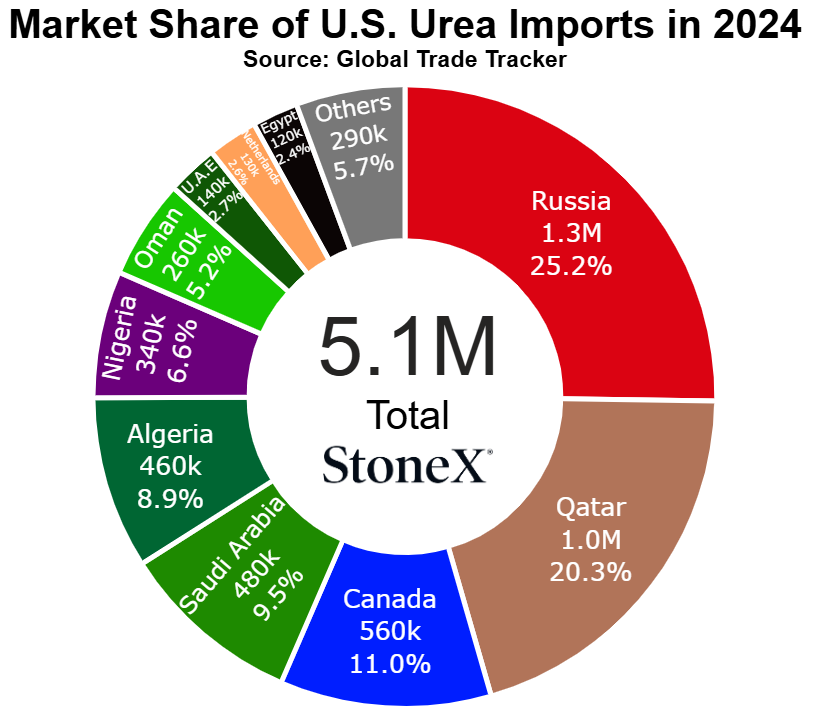
- Russia/Ukraine war continues and the U.S. takes action economically - this is what worries me. Trump has not only threatened Russia with massive economic action, he has gone as far as to say he will target other countries doing business with Russia. Now, that is easier said than done. Russia has allies around the world that will go around U.S. tariffs. However, let's say Trump was successful in this approach. The end result would be lower Russian exports of fertilizers. Go back to late 2021/early 2022, a big chunk of the outrageously high global urea values was the very real fear that Russian exports would fall and/or stop. If we suddenly enter a market where Russia is struggling and their urea export flows slow down, global prices are going to reflect that. Take a glance above at the top 10 urea exporters for 2024. Russia leads that list. Qatar is not a close 2nd. This would hurt.
I am not a brilliant global political person. I have absolutely no idea what is going to happen with Russia/Ukraine/the world. I can make guesses but so can everyone else. My goal on this piece is to try and show the different routes we have in front of us. Events halfway around the world absolutely matter to your operation. Does not matter how big or how small your operation is. It does not matter where you farm. These things matter so having an idea of what it means when we see things on the news is important so we can get ahead of market movements.
What does this mean for farmers?
For now, nothing. It merely means we all need to continue to watch the news for the next movement. Peace likely sets a bearish future in front of us. An escalation in the war could very well mean higher prices.
We do not know what is going to happen so for now do not know what it means for farmers. I guess the only thing it means is we need to be aware of the world.
India locks up 2M tons of urea, comes back immediately for another 2M tons
Since December 2024, India has announced 6 urea purchase tenders. The failed to meet their stated tonnage goal until this most recent one:
- December '24 - 1.5M ton goal / 187K tons secured
- January '25 - 1.5M ton goal / 559K tons secured
- March '25 - 1.5M ton goal / 885K tons secured
- May '25 - 1.5M ton goal - 228K tons secured
- June '25 - 2M ton goal - 1.46M tons secured
- July '25 - 2M tons goal - 2.1M tons secured!!
After months of trying, India finally got the tons that they were looking for!! Not only that, the conclusion of the purchase tender actually had the market feeling bearish for the first time in a while. In the lead up to the tender, some in the market were trying to undercut what would happen if they purchased 2M tons. "Even if they hit the 2M ton mark, it will wipe out all the excess supply out there. Supplies stay tight." Fortunately, that was not the case. There were approximately 2.6M to 2.7M tons that wanted to participate. India put the tonnage cutoff at 2M tons which meant that at least 600 - 700K tons were still out there looking for somewhere to go. That, on top of Chinese urea exports finally finding their way to the global market, had things looking soft. There was also an expectation that the world was about to get very quiet from a demand POV. Quiet times generally lead to softer price ideas.
That didn't last long.
Not much after the conclusion of their July tender, India stepped back in with yet another purchase tender announcement. This will be the August 15th tender and the details were:
- 2M ton purchase goal
- 1M tons for west coast
- 1M tons for east coast
- Offers due September 2nd
- Shipment period through October 31
This was a surprise. After getting 2M tons secured and the market suddenly looking bearish, many (myself very much included) thought that India would wait on their next announcement. The government has paid huge sums of money to pay the import subsidies. They have watched the global market effectively take advantage of them. This was finally their chance to make the world squirm.
However, they also have to think about their domestic farmers.
Even thought they locked up 2M tons last tender, we continued to believe that they needed to secure an additional 3M tons through January '26 to meet their local demand. They have also spent the last year or more struggling with supplies on urea and phosphate. Phosphate got bad enough that opposition politicians were using it again the party in power. Also, and this is the part that makes the most sense, there isn't a lot of global competition right now. Sure, if they drag their feet on the purchase announcement, nearby values will likely fall but when they return, the market is going to rally and they very likely will need to "fight" others in the world who will be stepping in for their own needs. Better to come out now when they get the full attention of the market.
Global values have been slipping as the offer due date nears. It knows a few things:
- There were hundreds of thousands of tons that wanted to sell last round that didn't and are still out there.
- Chinese exports are picking up as their July trade data showed (more on the next story) which means more competition that was not expected by some.
- The shipment window through October 31 is a long one. That is a lot of time for a lot of new product to be produced and available for sale.
We will make sure to get a report to the market once we have a better idea on offers, what is purchased, etc. For now, it is nice to see India being in a bit better of a position to make a purchase.
What does this mean for farmers?
If the India purchase tender causes offer prices to fall, that will lean on global price ideas. It might take time to flow everywhere but it would put a bearish slant on the world and that looks more possible today. The opposite is also true.
As always, India is a great storyteller of the spot global marketplace.
Chinese exports pick up in July...as expected
There is a big difference between China saying they are going to do something in fertilizer and China actually doing something in fertilizer.
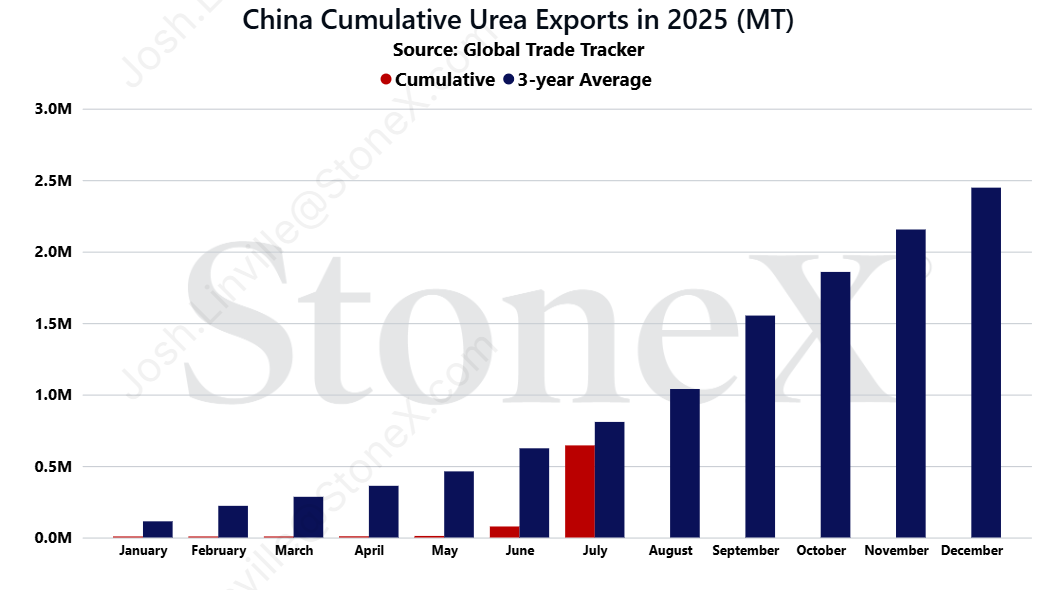
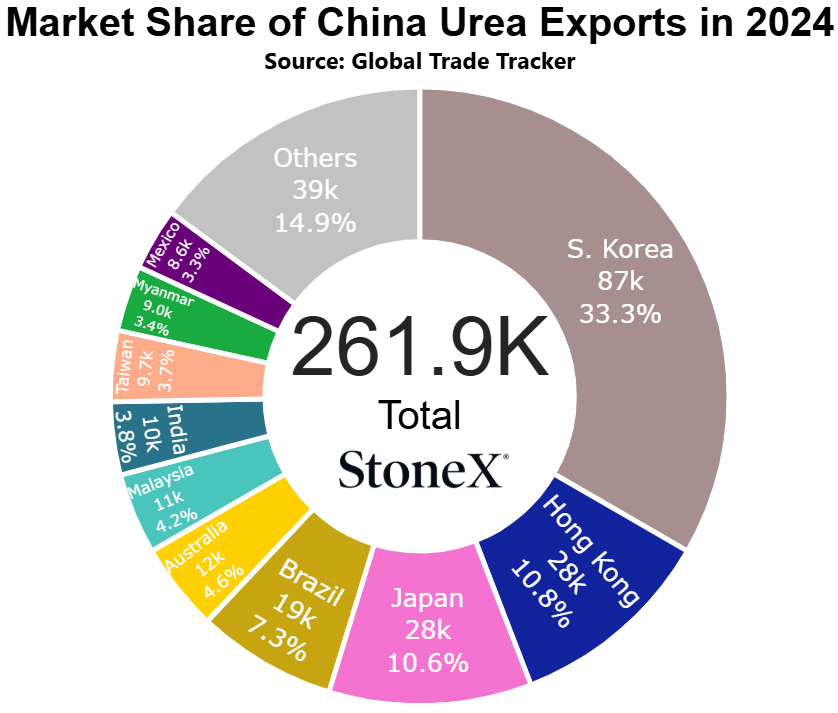
For much of 2025, we have expected China's urea exports to pick up when compared to 2024. Last year, they only exported 262K tons total. There wasn't much else to do but to go up!!! The early indications from China were that they would target approximately 2M tons to be exported. No surprise there. Domestic supplies had been heard very high and production levels continued at solid rates. Domestic demand could only digest so much and either exports were needed or production rates would have to slow.
Later in 2025, that export number rose from 2M tons to 3M tons. Great news for buyers!!! However, the question remained: where were they? Through June, China had only exported 77K tons. They were well under last years record low export pace and showing few signs of improving.
Then came the July trade data. 567K tons were reported to have been exported from China in July alone. Suddenly, the cumulative total chart (below) looked vastly improved!!!! We have to keep in mind that the 3-year average blue lines are skewed to 2.5M tons which is half of their normal 5 to 5.5M tons exported per year. Still, we take the wins we can get!!!
After that, even more rumors/reports started to be shared that China may not be done. Now, market expectations seem to be revolving around exports hitting 4.25M by the end of 2025. That would be much closer to normal for them and would blow the current 3-year average cumulative total out of the water!!!
This is where fertilizer markets get weird.
There is absolutely nothing that should have surprised the market when the July trade data was released. We have been discussing their increased export expectations for a while. It was baked into most POV's. However, seeing is believing. Over the years, global fertilizer markets have become distrustful of China's statements. They have take a China first approach which means that at any time, the government can slow/stop/change their export approach. Honestly, that still exists today. July was a big month but if the government changes its mind, we may not see another ton leave its shores. Still, finally seeing the tons show up for July was a major even for the global urea market.
Historically, China urea is a bit like the boogeyman of the global marketplace. When China is exporting heavily, the world knows it has a fight on its hands. Chinese exports are aggressive and are willing to fight to sell where they want to sell. When China is believed to be competing for business, other global price points seem to get more nervous and more aggressive with their pricing.
With that, we need to hope China continues to export. The more they export, the more aggressive sellers should be. The more they export, the better the global S&D. The more they export, the better the market is for buyers.
What does this mean for farmers?
Bigger Chinese exports = better global supplies = more aggressive global selling = hopefully lower global values.
Now, there is no guarantee in life except death and taxes. China can change in a moments notice and the world market can look vastly different just that quick.
Just nice to know that the market is finally handing the buyers a victory...for now.
North American nearby inventories extremely tight...but does anyone care?
This is a story that I'm not sure is going to matter. Nitrogen prices are extremely high. Farmers are struggling most everywhere. Buyers are hung up and not wanting to do anything.
As long as that remains the story, tight supplies do not matter because there is no demand to challenge it...but we need to cover this in case things change.
This last spring was a big one for North America. Huge crops meant huge nitrogen demand that effectively cleared out inventories across the region. The market moved into the summer months will little left in the system. Now, that is not that far from normal. Spring generally ends with lower inventories and that is fine. This year just feels a bit tighter.
The next layer to this is domestic production. Everyone is running as best they can and normally that is enough to meet coming demand without the need for bigger imports. Nearby production matches nearby demand. Unfortunately, there are several plants across North America that need to stop production for repairs this summer/fall. Nitrogen production is a high temperature / high pressure process. That means a lot of wear and tear on equipment. The crews that run these facilities do a fantastic job of maintaining everything but at certain points, the plants have to be shut down for big repairs. If not, the chances of the plant breaking go up significantly and that break can mean a much longer production downtime. Better to plan the repairs and shorten the production downtime.
Last there is demand uncertainty. Today, it seems no one wants to do anything. Rightfully so. Prices of urea are stupidly high vs historical levels/grain levels/etc. There is nothing to be excited about. That means retailers/distributors are being more cautious on their buying patterns. A lot of the market was around for 2008 and 2012. No one wants to repeat being on the wrong side of a high price.
However, what happens if demand suddenly picks up?
I'm not saying that will happen but we need to consider it. First is southern demand. Farmers in the south are suffering more than most others out there. The ground simply does not have the yield potential to justify big input prices. Cuts most likely will occur. More of a worry is preparations for the Upper Mississippi River closure in the winter. The Upper Miss goes down for winter which shuts down any/all barge flow. Barges flow is the most logistically cheap method of moving fertilizer north. If farmers/retailers are refusing to buy tons ahead of winter close, that will put a tremendous amount of pressure on rail/truck. Enough pressure that logistical costs could skyrocket and blow out the basis (raising inland values).
Because of that, we could see the north have a sudden change of mind. If that winter closure date nears and suddenly everyone decides to buy barges to get ahead of it which would meet low supply availability, we could easily see values jump. The size of demand would dictate the size of the price jump.
With all of this said, maybe nothing happens. The market has remained very quiet until now. That may continue to be the case but I want to make sure that we are at least considering what could happen.
What does this mean for farmers?
This is more of a Northern Plains/central and western Canada POV. Obviously if there is a run on buying before the river close, that will likely push prices up quickly for those tons. However, if that does not happen, rail is going to be pressured. There will be a lot more demand for rail tons from places that do not historically rely on rail. The market could realize the situation and start to move their logistical prices up to reflect.
In the end, high prices always seem to roll downhill...and at the bottom of each hill is the farmer.
Where are current values in relation to the past
NOLA/New Orleans, Louisiana
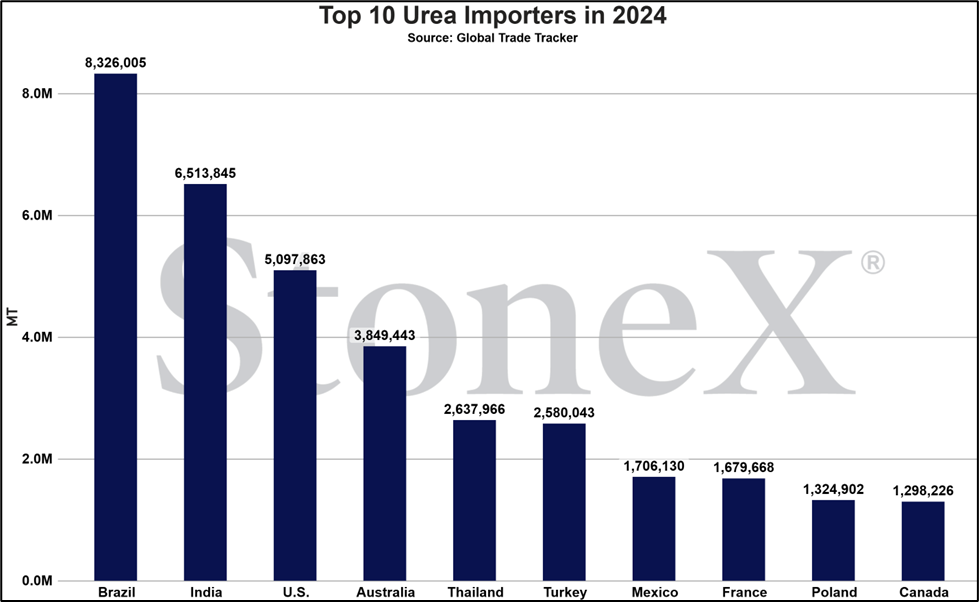
Number 3 global importer in 2024
Price comparisons
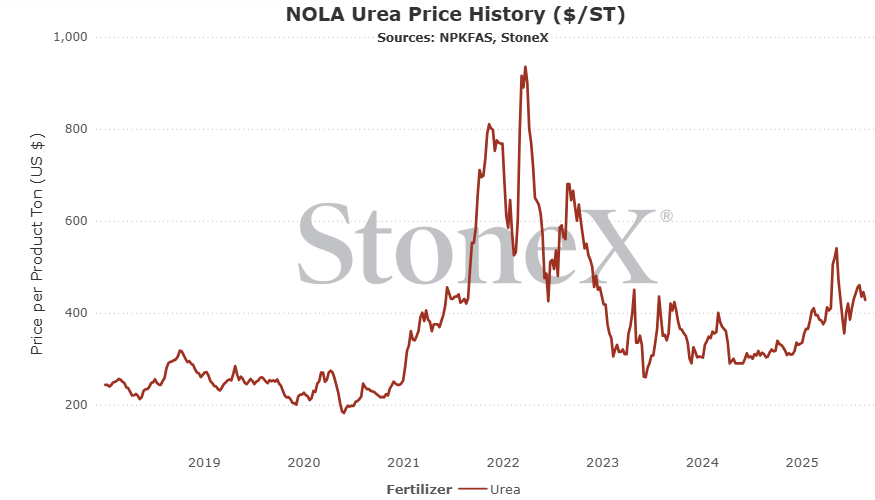
Vs 30 days ago - -6% or approximately $27 lower
Vs 90 days ago - 10% or approximately $38 higher
Vs 6 months ago - 8% or approximately $33 higher
Vs 1 year ago - 41% or approximately $125 higher
U.S. Midwest Average
Vs 30 days ago - 1% or approximately $6 higher
Vs 90 days ago - -11% or approximately $61 lower
Vs 6 months ago - 3% or approximately $16 lower
Vs 1 year ago - 39% or approximately $142 higher
U.S. Southern Plains Average
Vs 30 days ago - 6% or approximately $30 higher
Vs 90 days ago - -12% or approximately $73 lower
Vs 6 months ago - 11% or approximately $53 higher
Vs 1 year ago - 41% or approximately $150 higher
U.S. Northern Plains Average
Vs 30 days ago - -2% or approximately $9 lower
Vs 90 days ago - -16% or approximately $94 lower
Vs 6 months ago - 3% or approximately $14 higher
Vs 1 year ago - 37% or approximately $135 higher
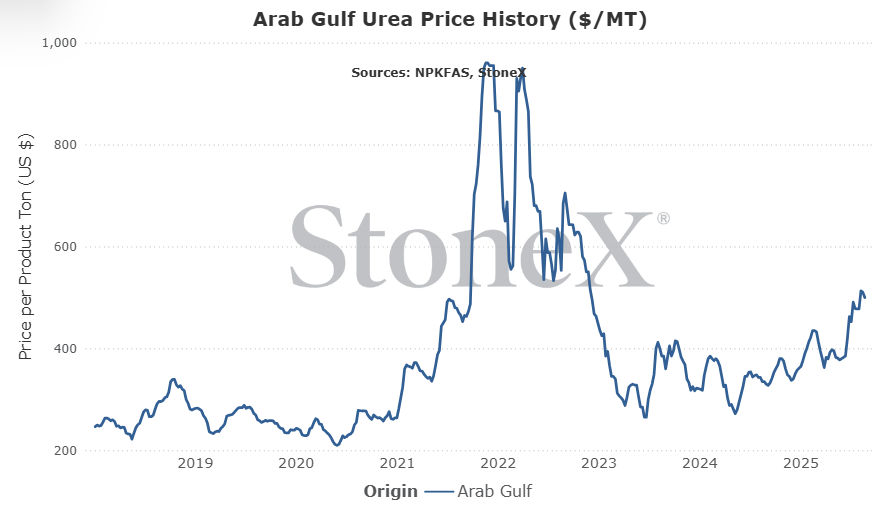
Middle East
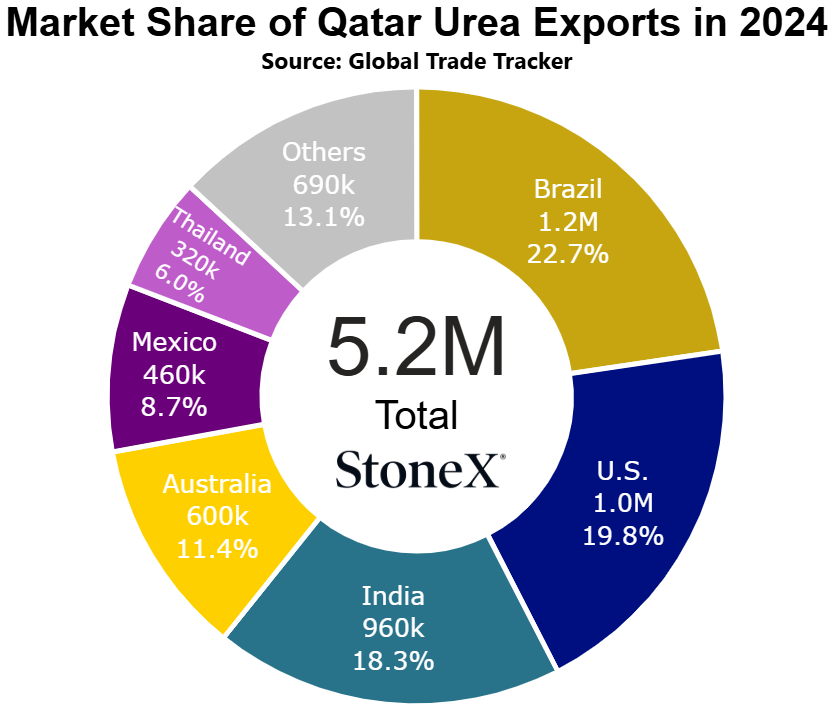
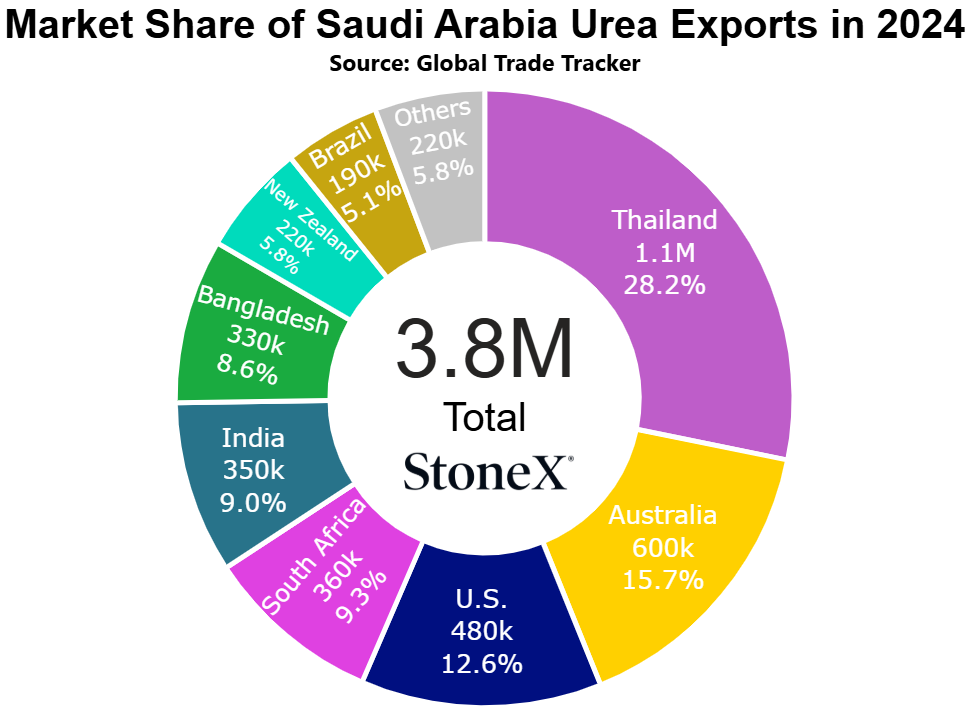
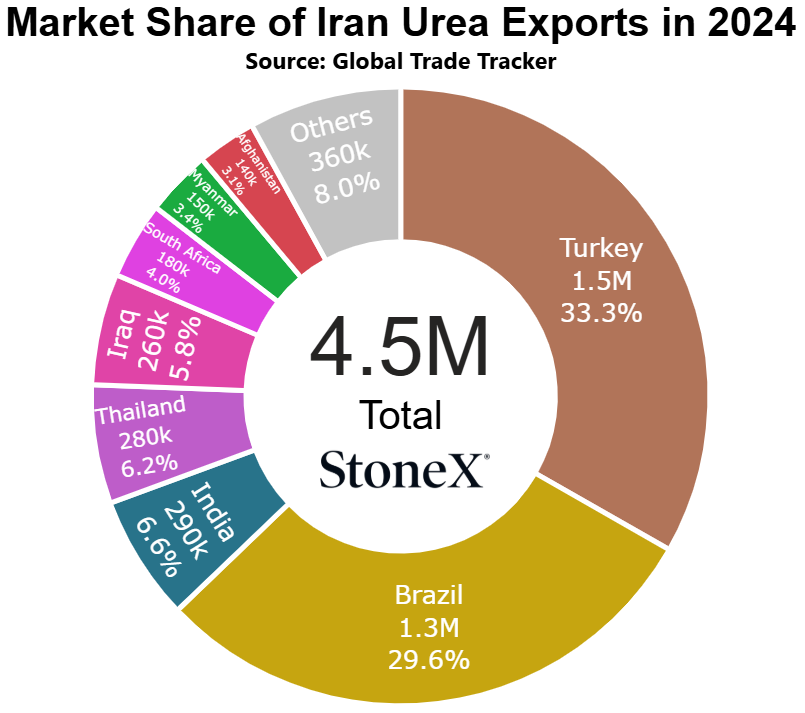
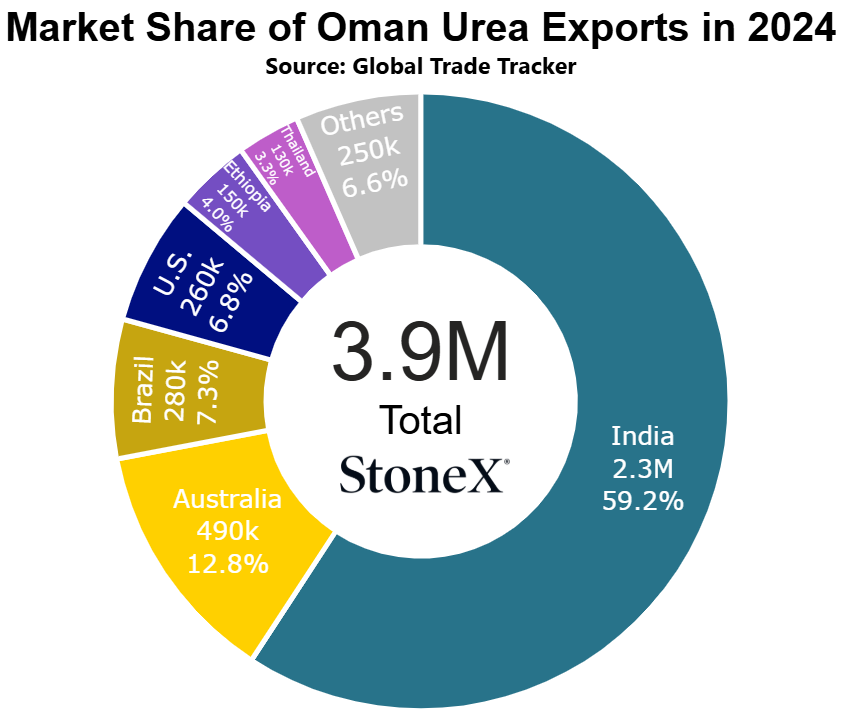
Number 1 exporter (as a region, not as individual nations)
Vs 30 days ago - 5% or approximately $23 higher
Vs 90 days ago - 32% or approximately $120 higher
Vs 6 months ago - 16% or approximately $68 higher
Vs 1 year ago - 49% or approximately $165 higher
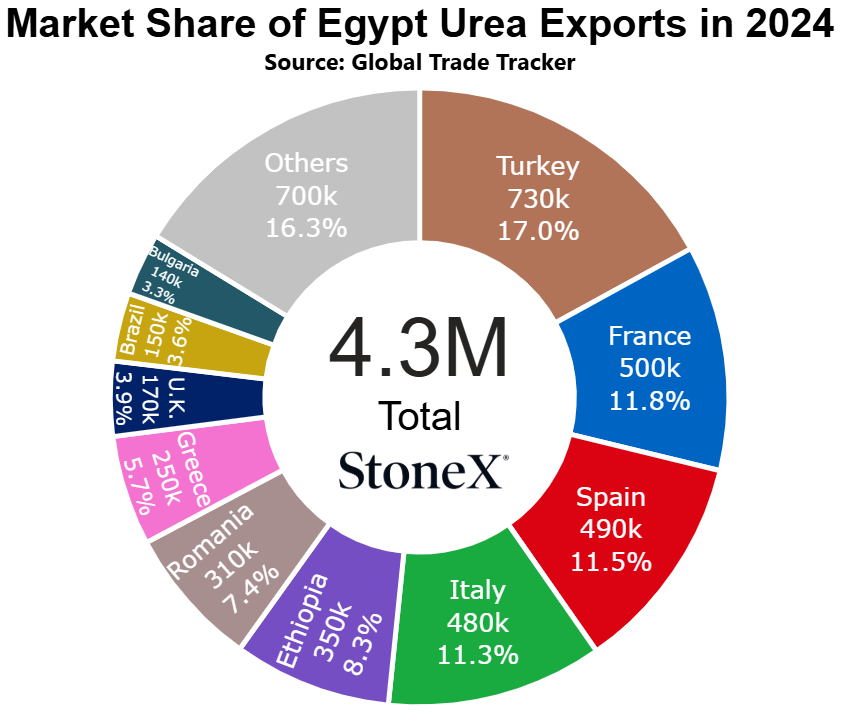
Egypt
Number 4 global exporter in 2024
Price comparisons
Vs 30 days ago - 1% or approximately $3 higher
Vs 90 days ago - 22% or approximately $90 higher
Vs 6 months ago - 8% or approximately $36 higher
Vs 1 year ago - 42% or approximately $145 higher
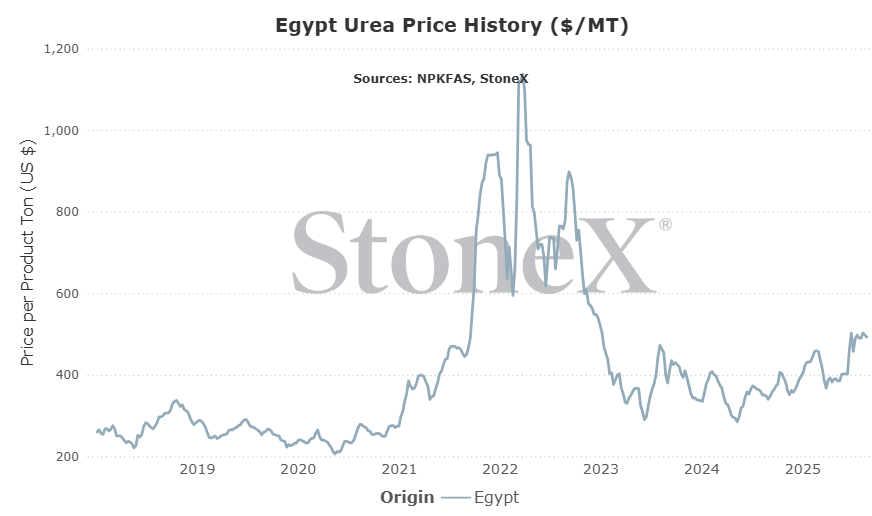
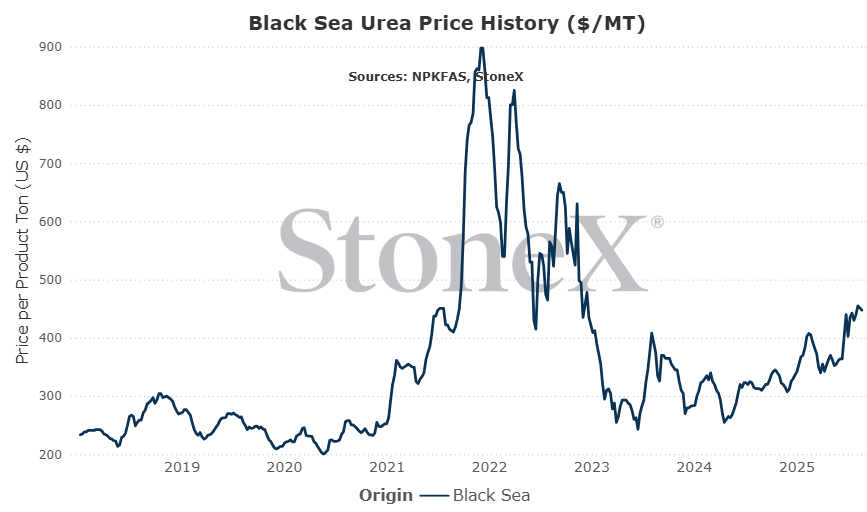
Black Sea
Number 1 global exporter in 2024
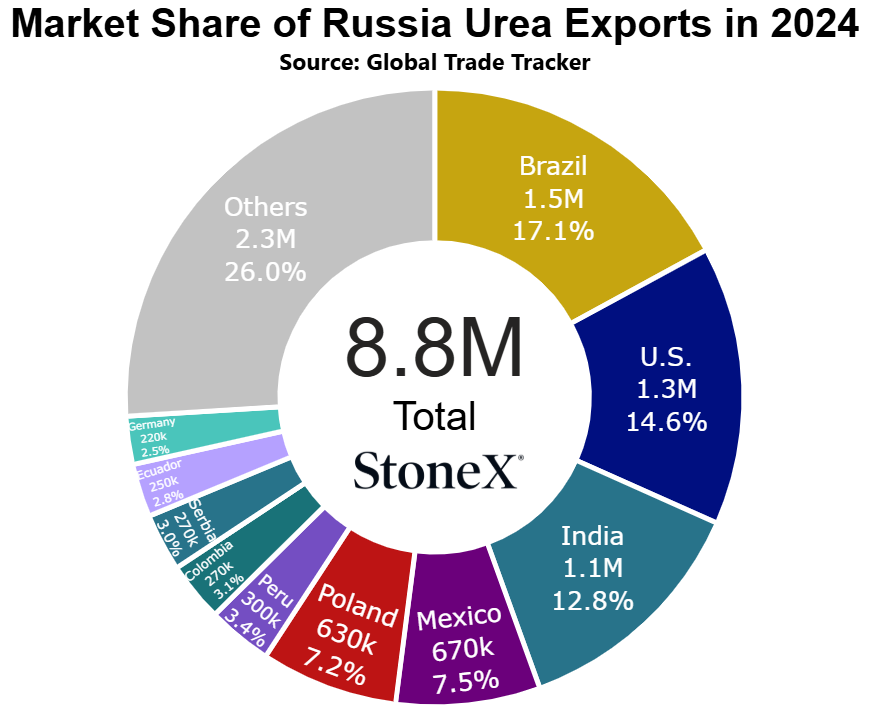
Price comparisons
Vs 30 days ago - 4% or approximately $18 higher
Vs 90 days ago - 24% or approximately $87 higher
Vs 6 months ago - 14% or approximately $55 higher
Vs 1 year ago - 43% or approximately $135 higher
China
Number 5 global exporter in 2023, did not make the top 10 in 2024
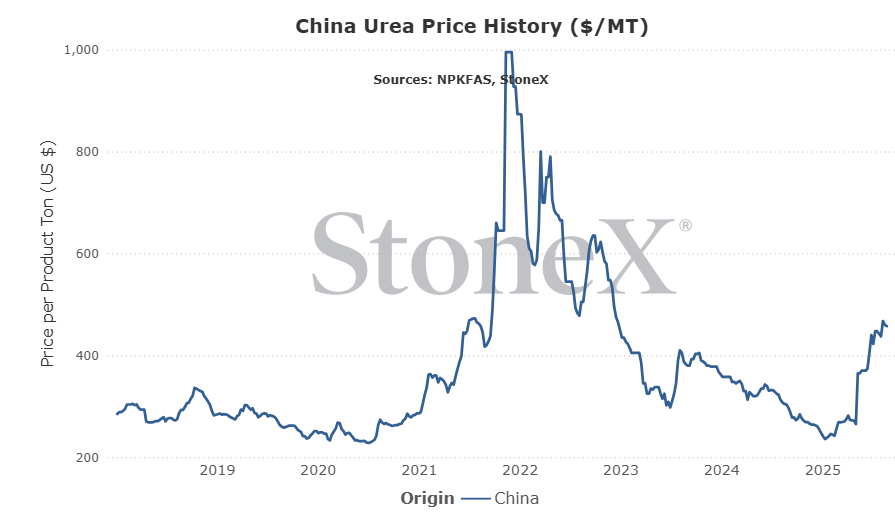
Price comparisons
Vs 30 days ago - 3% or approximately $15 higher
Vs 90 days ago - 24% or approximately $88 higher
Vs 6 months ago - 70% or approximately $189 higher
Vs 1 year ago - 50% or approximately $154 higher
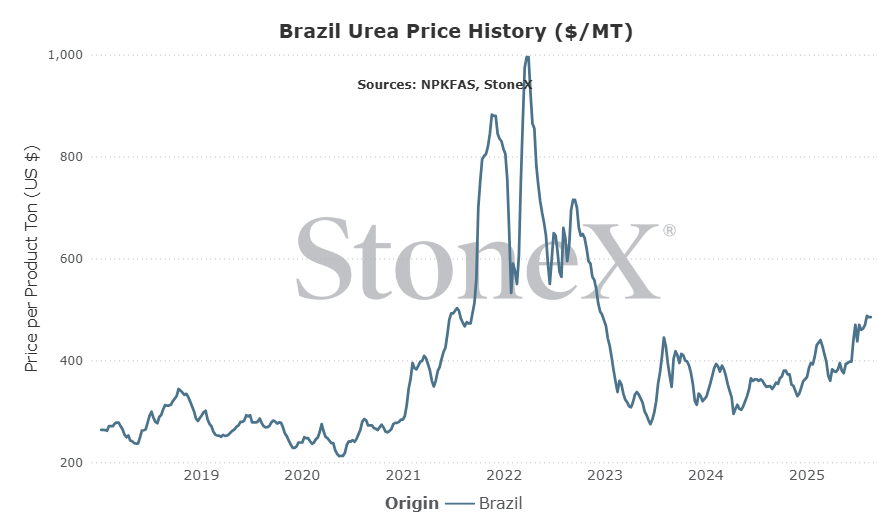
Brazil
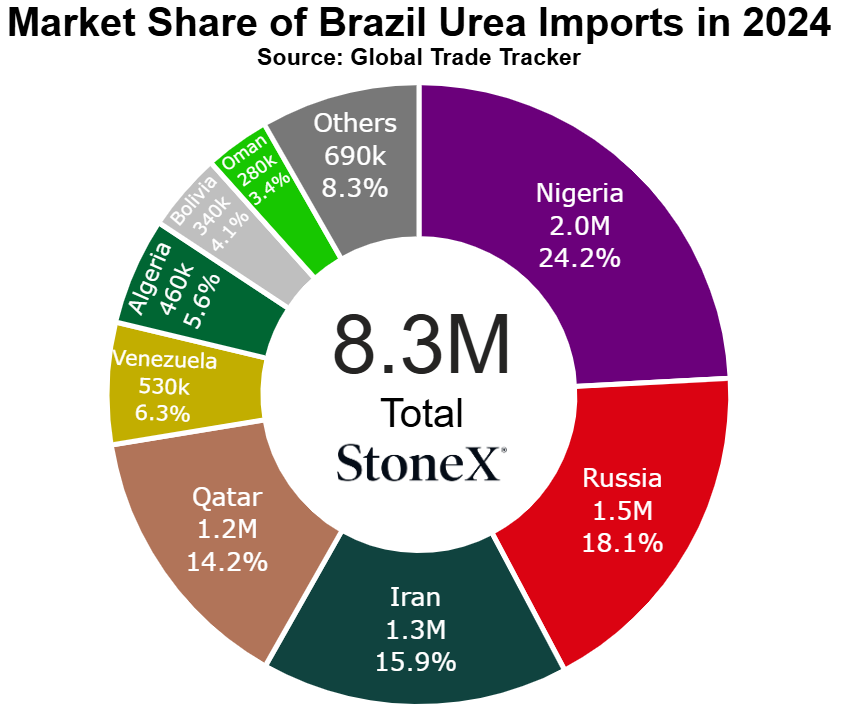
Number 1 global importer in 2024
Price comparisons
Vs 30 days ago - 5% or approximately $23 higher
Vs 90 days ago - 23% or approximately $90 higher
Vs 6 months ago - 13% or approximately $58 higher
Vs 1 year ago - 39% or approximately $136 higher
Bull/Bear Factors
Because no market is ever guaranteed to go higher/lower, we try to consider the factors that can sway values so that we are able to act when they occur rather than react.
- Bullish Factors
- Chinese exports get reduced due to higher domestic pricing - today, the market is celebrating the return of Chinese urea exports that were missing for the 1st half of the calendar year. However, them market would be wise to have a little caution. Remember, China originally restricted exports with two goals in mind: solid domestic supplies and lower domestic pricing. If you look at the price chart at the beginning of this newsletter, you might notice that Chinese values have jumped markedly in recent weeks/months. If the government notices this and decides that action needs to be taken, the world may lose expected supplies.
- No peace between Russia/Ukraine exacts heavy economic tolls - sure, there is a lot of hope that recent discussions between Russia/U.S./Ukraine may lead to peace, but that outcome is still a long ways off. If we see peace talks fall apart (Russia did just launch of a lot of attacks VERY near a NATO member border), President Trumps next steps may be tariffs. Not only tariffs directly on Russia but also against anyone doing business with Russia. If these tariffs did work, Russian urea exports could suffer which would chew into global supplies.
- India continues buying/building stockpiles - even when the world appears to be going quiet, India steps up to ruin that hope. After locking up 2M tons on their last tender, they came out nearly immediately with another 2M tons purchase tender. Let's say they lock up another 2M tons on this current tender, they still need another 1M ton through January. If they follow this tender completion with another announcement, it gives the market reason to keep prices high.
- Bearish Factors
- Chinese tons continue to be exporting, creating competition - the global urea market is a funny thing. Emotions can sometimes win out over fundamental stories. Chinese urea exports have been widely discussed and expected for a while now. The fact that exports finally started to show up in their July trade data should be absolutely no surprise...but that doesn't mean a reaction cannot happen. If the market, seeing these tons entering the global market, starts to react and get nervous, we could absolutely see values soften a bit.
- Peace between Russia/Ukraine causes normalized global relations/possible lower European natural gas values - there are a lot of dominos that would need to fall in order to get global urea values substantially lower, but Russia/Ukraine peace could be the first one. Russian relations with the world improve, improving their export efficiency. Russia could start flowing gas to Europe, restarting Europe's offline plants. China could see normalcy in the market and remove their export restrictions. Lot of dominos, but sometimes it only takes one to start the process.
- Financially strapped farmers move to less input cost intensive crops to save money - I have yet to talk to anyone farming that has said anything remotely close to "it isn't that bad". The feedback we hear is anywhere from "this really sucks" to feedback that isn't allowed to be written here. In these conditions, farmers may "want" to plant corn but the bank may have other ideas. If banks start dictating to farmers what they will/will not plant, there could be a shift to less intensive nitrogen crops which could plummet demand for urea.
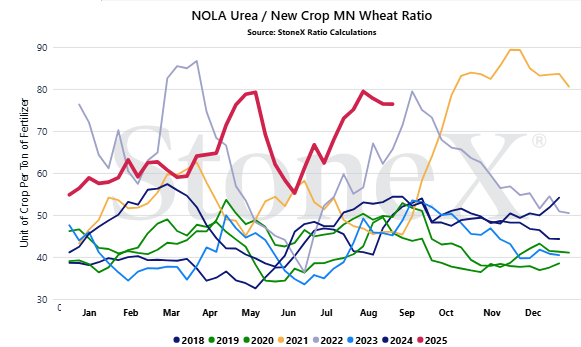
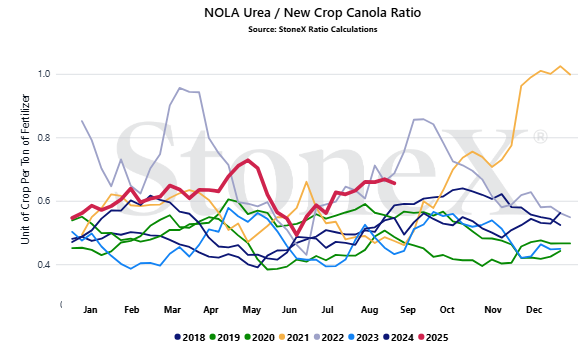
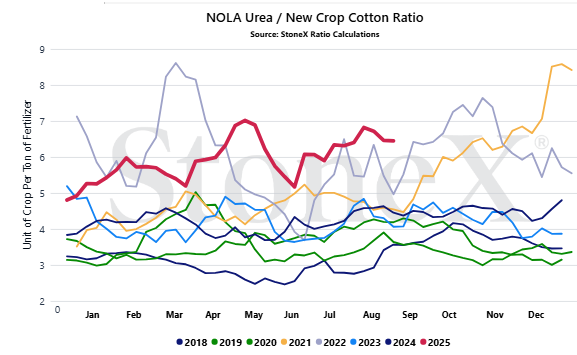
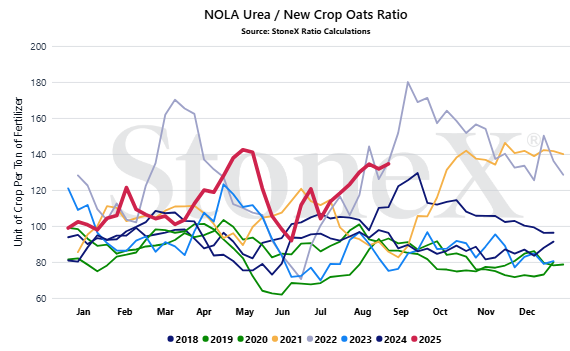
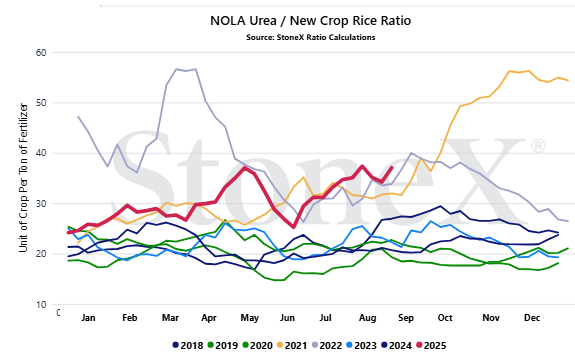
Where are the current urea/grain ratio values today
We believe that only looking at the flat price of either grains or fertilizer can be misleading:
- Only selling grain can hurt you if fertilizer prices rise substantially
- Only buying fertilizer can hurt you if grain prices fall
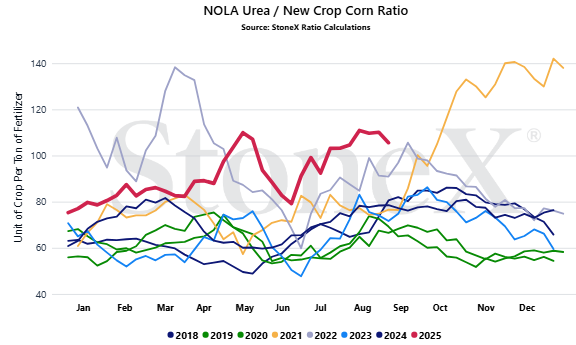
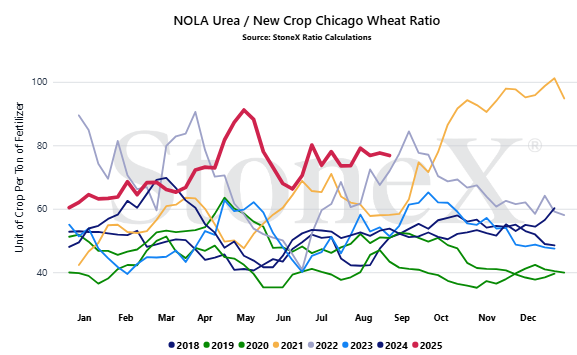
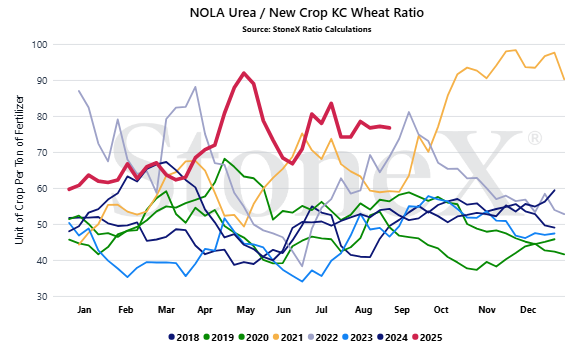
We look at the ratio "value" to get a better indication of where we are or how many bushels of X does it take to pay for 1 ton of fertilizer.
Would you rather:
- Spend 135 bushels to pay for 1 ton of urea
- Spend 55 bushels to pay for 1 ton of urea
When we compare the current ratio value against recent years, we start to see if we are high or low.
YOUR VALUES WILL LOOK DIFFERENT
This graph looks at the NOLA urea price vs the flat grain price. There are no logistics on either product. Your location will look different due to fertilizer logistical costs, grain basis, etc.
- Josh Linville’s Focal Points
- Russia/Ukraine peace talks - let me start this by saying that I am not confident that these talks will end in actual peace...but I'm hopeful. If they fail, global urea markets could be in a world of hurt as President Trump has not only threatened Russia with tariffs, he has threatened anyone that does business with tariffs. This could (not likely) impact Russia's export ability which could ultimately lower global supplies. On the other side, peace could start the domino's falling: return of normal Russian export destination flows (efficient trade patterns), return of Russian gas to Europe, return of European nitrogen production at 100%, eventual return of Chinese exports at normal levels, etc. To me, this is a much bigger deal than the current industry is giving credit to.
- Chinese export flows/destinations - there isn't much new in the way of Chinese urea exports. Expectations are still that they will export around 3M tons in 2025. We already knew that they exported very little January thru June, meaning the 2nd half of the calendar would have a lot dumped on it. It does sound like the Chinese government is loosening the destination restrictions which means it can hit major demand points like India. If so, that free's other tons that may have targeted India which now need to find other homes around the world. We have been saying that Chinese exports have the ability to soften price ideas. Right now, that is looking to be true at least in a small part...just wish there was more.
- Global demand timing - our current POV is still that global nitrogen demand will remain relatively unchanged vs last year which is big. However, that says nothing of the timing. With global farmers struggling financially, they may know they need to pull the trigger on nitrogen, but they are going to wait as long as humanly possible. Could that kind of delay cause nearby values to fall? Absolutely. However, that approach can cause much worse issues the closer to application seasons as the entirety of the markets approaches all at once. That becomes a sellers dream. Demand obviously matters. The timing of that demand can matter more.
- North American tight nearby supplies - N.A. inventories are tight today. The continent ended fertilizer year 2025 (last day was June 30) very low on inventories after a successful spring program. Imports for June (and likely July/August) are not going to be robust as it is typically a slow demand period and few want to take the price risk. To add to the mix, there are several nitrogen plants across the continent that are going down for needed repairs which will further limit supply availability. The biggest question here is if supplies are low enough to outpace demand delays/destruction.
StoneX Ratio Calculation
The ratio calculation is derived from Bloomberg historical grains values as well as fertilizer values from StoneX, NPKFAS, and Argus.
The calculation is simply dividing the fertilizer price by each grain price.
All data was sourced from StoneX unless otherwise noted.