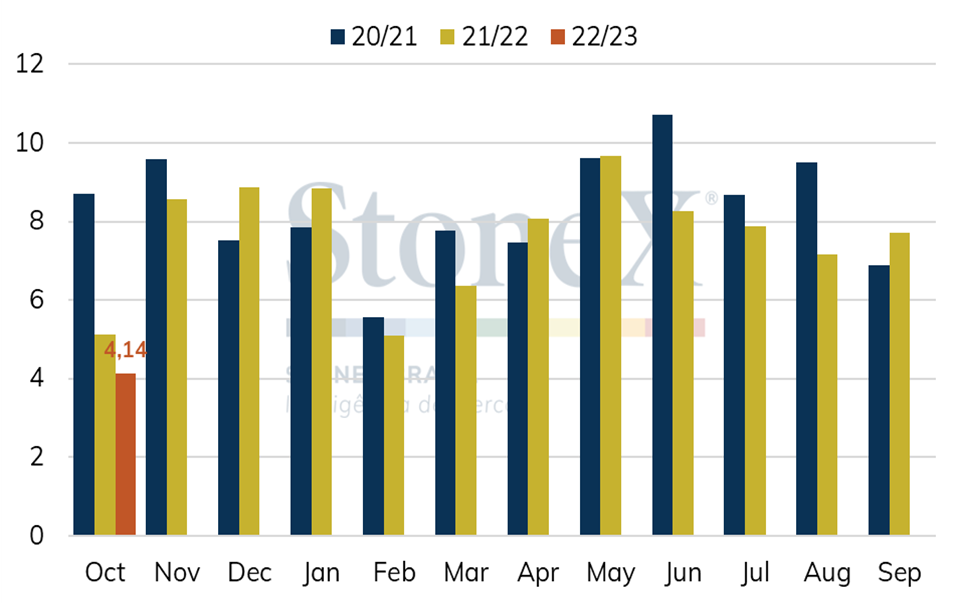
This weaker performance of Chinese imports results from weaker crush margins that have prevailed for much of this year and have limited the volumes imported for crushing. It is worth remembering that soybean prices hit 10-year highs last June on weather concerns in the northern hemisphere after harvest losses in Brazil earlier this year.
On the other hand, these weaker soybean imports have resulted in a decrease in soybean stocks in the country at a time when the pork industry margins are more positive, encouraging demand for meal - the main protein feed ingredient.
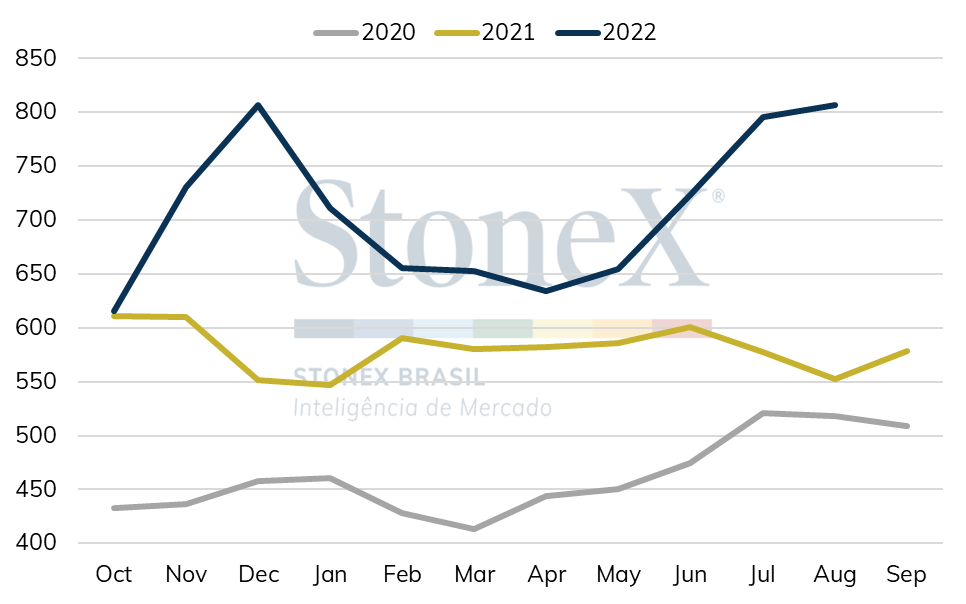
This tight soybean meal supply has pushed soybean meal prices to near-record levels in recent weeks in the country, with the partial November average exceeding $800 per ton in Sichuan province, which is one of the country's largest pork protein producers. In March this year, the average soybean meal price was above the $800 level.
Thus, the current scenario is positive for soybean imports by China in the coming months to meet this heated demand for meal and at a time when grain prices are no longer as high as in mid-2022. This scenario of lower prices is largely due to the prospects of record production in Brazil, which could exceed 150 million tonnes, which would tend to ease the global supply and demand balance.
Average monthly soybean meal price in Sichuan (USD/ton)
Source: JCI. Design: StoneX.
However, it is important to take into account the zero-tolerance policy against Covid-19 adopted by China, which has brought damage to the country's economy, with the potential also to affect the demand for soybeans, even though the commodity is food and has a greater resistance in times of economic downturn.
Recently, there were rumors that the country was considering relaxing measures to fight the coronavirus, which was a bullish factor for soybean prices. Still, the government denied these rumors, stating that the policy was maintained.
On Wednesday, November 9, China recorded the highest number of new cases of Covid-19 since the end of April, reaching 8,824. Guangdong province, a manufacturing hub located in the south of the country, has been recording more than 2,000 cases per day. In light of this, several factories are being closed, neighborhoods isolated, people quarantined, and mass testing. Importantly, people are becoming increasingly dissatisfied with the restrictive measures adopted, which have resulted in many complaints about the lack of food and even adequate medical care for the people in quarantine.