- Bearish factors
- World production in 24/25 widens the gap to consumption, according to the USDA.
- Improvement in productivity with the advancement of the harvest in Brazil;
- Pressured crushing margins in China;
- Concerns about the pace of global demand;
- Harvest completion in Argentina, strong crop;
- Favorable crop conditions in the USA
- Bullish factors
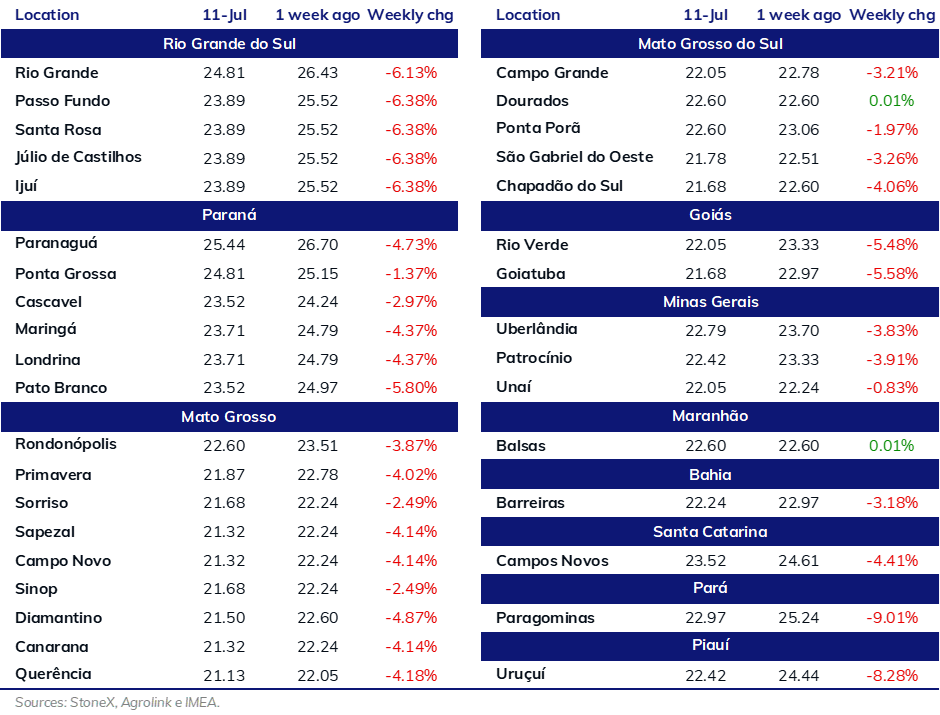
- Crop losses in Rio Grande do Sul due to floods;
- Investment funds with a high short position
- Heated crushing in the U.S.;
- Conversion of plants to renewable diesel in California;
- USDA increases Chinese imports again.
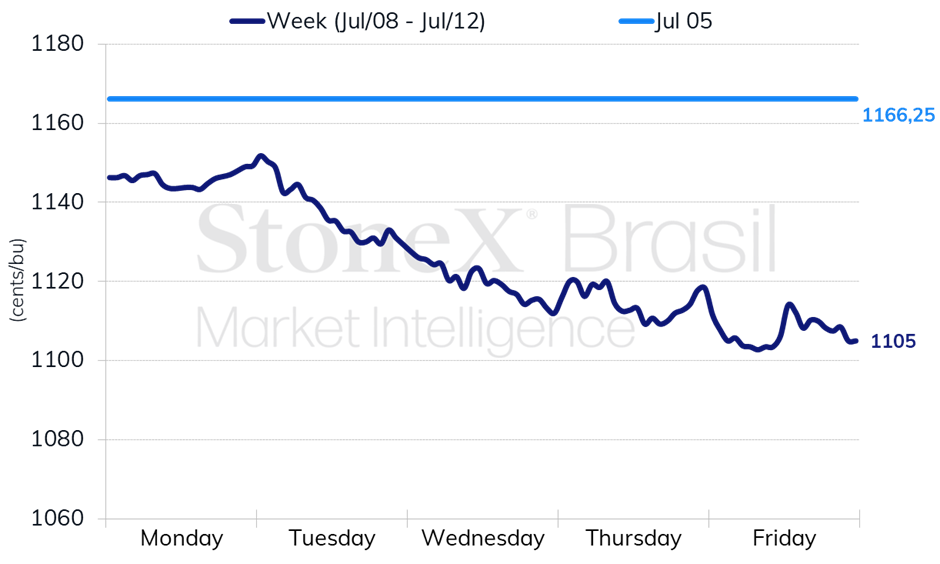
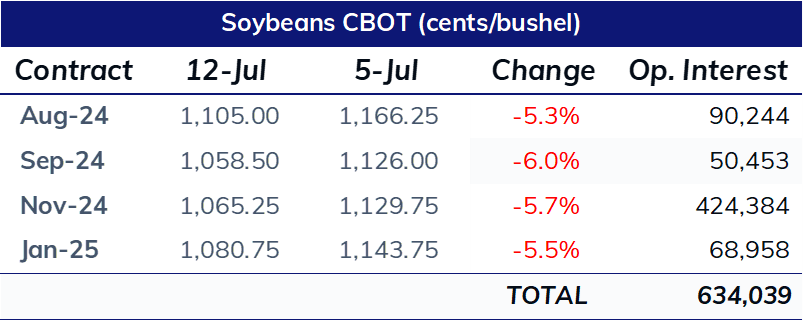
The soybean quotes posted a decrease in the previous week in Chicago. The August contract closed Friday's session (12) at 1105 cents per bushel, a decrease of 5.3% in the period.
The lack of threats on the supply side and surprises on the demand side continues to pressure the quotes of the oilseed, at a time when the US crop is in the spotlight. Not even the USDA report resulted in major price movements.
The weather in the USA is more favorable, with lower chances of drought occurrence, a positive situation for the development of crops. For soybean, August is the most important period for determining productivity, as it concentrates the grain-filling phase. In any case, a normal weather condition in the country reinforces the scenario of a more relaxed supply and demand balance, since the 24/25 crop in South America only begins to be planted in September.
In the coming days, forecasts indicate milder temperatures and rain in the eastern part of the American Midwest, which should foster the development of crops.
In the USDA's crop follow-up report for the week ending on July 7, 68% of the crops were in good/excellent condition a 1 p.p. increase from the previous release, in line with market expectations, remaining significantly above the five-year average for the period, at 59%.
Even amid the good prospects for the supply, the market monitors the behavior of products. The soybean meal has found support amidst concerns about the size of the crush in Argentina, following the recovery of the soybean crop, with a harvest of approximately 50 million tonnes in the 23/24 cycle. In addition, the more limited supply of the product in some locations in the US also influenced the movement of quotes.
In Brazil, 2.8 million tonnes of soybeans were shipped in the first week of July, with the total since the beginning of 2024 reaching 67 million tonnes, still at a very high level, but likely to forfeit strength in the coming months, as the surplus available for export this year is lower.
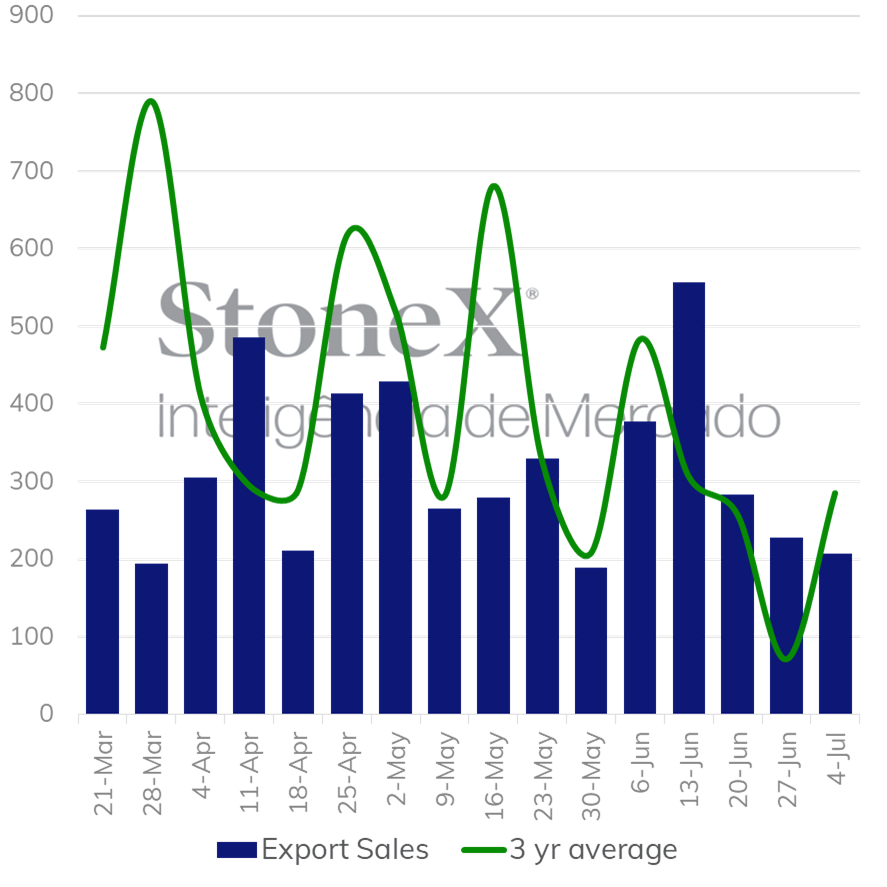
In the USA, export sales in the week ended on July 4 reached 207.4 thousand tonnes, at the lower end of market estimates, which ranged from 200 to 600 thousand tonnes, bringing the total to 45 million tonnes. Even so, the pace of negotiations is in line with what is necessary to achieve the estimate of 46.3 million tonnes for the 23/24 crop, by the end of August.
On Friday, the USDA released its monthly supply and demand report, but without major news, as expected. For the American 24/25 crop, the slightly smaller area disclosed on June 28 was incorporated. Anyway, as this area reduction was small, the expected decrease in production was also slight, with the estimate going from 121.1 to 120.7 million tonnes, a situation that would still keep the country's balance without major constraints, considering the productivity estimate of 3.5 tonnes per hectare and the demand volumes adopted by USDA currently.
The department did not bring changes in Brazil's production figures, while the Argentine 23/24 crop was cut from 50 to 49.5 million tonnes, a level below the current one brought by the Buenos Aires Exchange, at 50.5 million.
For China, it is noteworthy that USDA increased the estimated imports for the 23/24 cycle, from 105 to 108 million tonnes, but did not update the consumption, increasing stocks. Thus, there have been no changes in the country's demand outlook, which is always being monitored through grinding margins and the hog industry.
This week, the progress of the American crop should continue to be in the spotlight, with crop conditions and weather on the radar.