- Bearish factors
- World production in 25/26 still surpassing consumption, according to the USDA;
- Concerns about the pace of global demand;
- Estimate of record production for the Brazilian 24/25 crop;
- Argentina ends 24/25 crop above 50 mmt;
- Good crop conditions in the U.S ;
- Favorable weather in the USA.
- Bullish factors
- Decline in area in the 25/26 crop in the US;
- EPA announces an increase in the biodiesel and renewable diesel mandate in the US;
- Approval of the 45Z credit in the US, which should foster soybean oil;
- Progress in negotiations between China and the US;
- Increase of the biodiesel-diesel blend in Brazil.
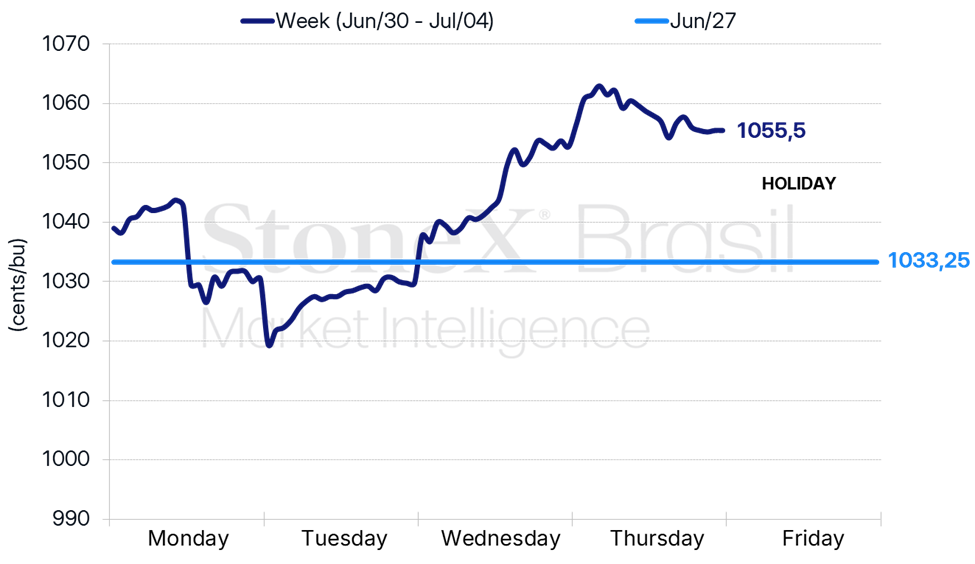
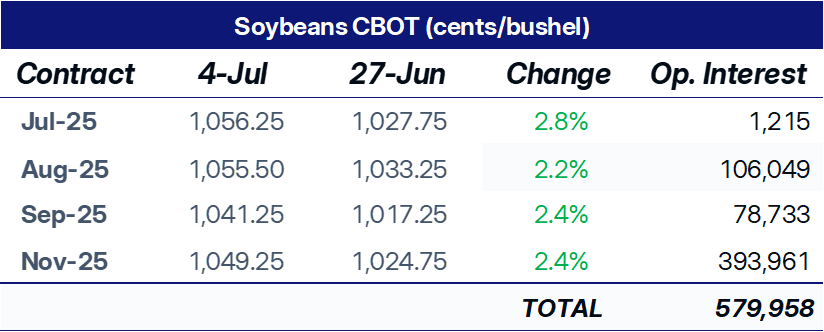
Soybean quotes in Chicago ended last week higher, before the Independence Day holiday in the US, on Friday (the 4th), in a position adjustment and a kind of preparation for the implementation of Trump’s tariff hike, which was postponed for three months. The August contract closed the period with gains of 2.2%, at 1055.5 cents per bushel.
However, at the moment, the US is seeking agreements with trading partners and it was announced that a general and broader tax has been postponed again to August 1, if the negotiations do not advance. It was announced that letters would be sent to countries notifying them that if they do not advance the agreements, the tariff level announced on April 2 will come into force at the beginning of next month.
Specifically regarding the fundamentals of the soybean market, the release of the US acreage and stocks reports was highly anticipated. The acreage of the 25/26 crop was 33.74 million hectares, a level very close to that reported in the sowing intentions in March, at 33.79 million, and slightly below the market expectations average, which were at 33.85 million hectares. It is highlighted that this result was the closest to the market average of estimates since 2018.
Meanwhile, the position of the crop 24/25 stocks on June 1 stood at 27.42 mmt, slightly above the market's average expectation, which was 26.67 mmt. This result indicates consumption slightly below what had been projected, but the impacts on prices ended up being limited, with the market following biofuel policies in the US.
The US Congress approved the length of the 45Z tax credit until the end of 2029, maintaining measures considered beneficial for soybean oil and, consequently, for the crushing of the country's grain. The penalties for indirect land use change (ILUC) have been eliminated, which allows soybean oil to receive credits similar to other feedstocks with lower carbon intensity. The credit for small producers was increased, in addition to the permission for the sale of tax credits to other companies in exchange for financial compensation. There was also a reduction in the maximum possible credit for Sustainable Aviation Fuel (SAF). These measures must come into force next year.
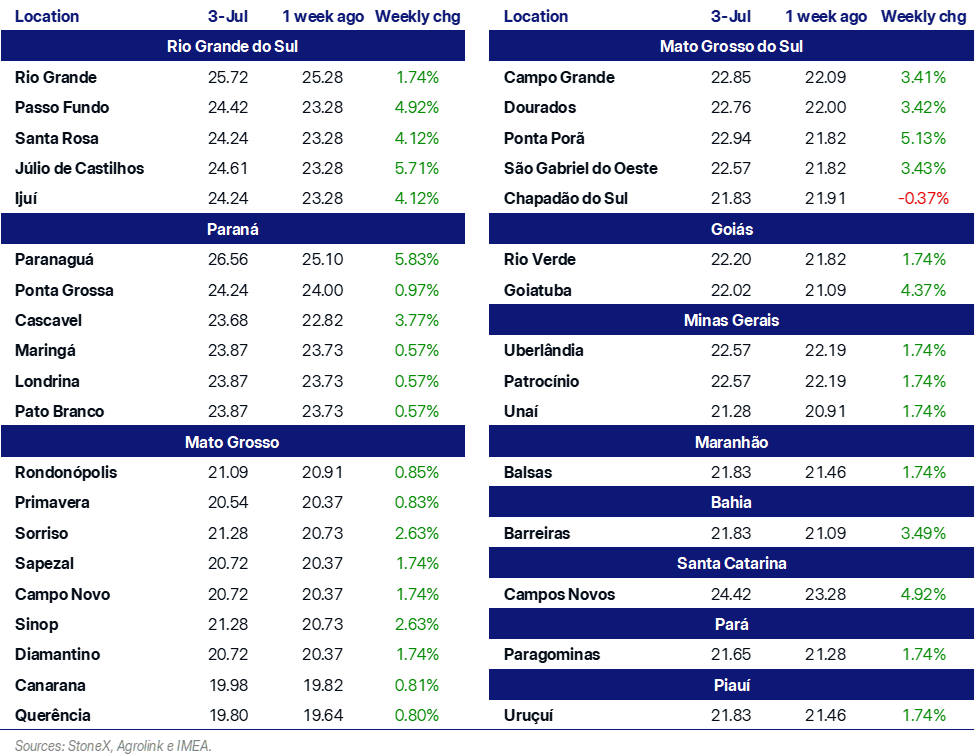
In Brazil, soybean exports reached 13.4 mmt in June, 500 thousand tonnes less than recorded in the same month last year. Since January, soybean shipments have reached almost 65 mmt. The basis at Brazilian ports remain strong even with the harvest of a record crop. StoneX raised Brazil's 24/25 soybean production to 168.75 mmt in its latest revision, an increase of 500 thousand tonnes due to a productivity adjustment in Bahia.
In Argentina, the soybean harvest is finished, with the Buenos Aires Exchange indicating a national average yield of 2.97 tonnes per hectare, confirming production of 50.3 mmt. On the demand side, even though the country crushes most of its soybean and focuses the exports on derivatives, meal and oil, the shipments of the grain were more active before the increase in retenciones on July 1st. The tax on soybean exports was raised from 26% to 33% at the beginning of this month. Moreover, the shipments of meal and oil were also reinforced, since the retenciones on these products increased from 24.5% to 31%. According to the Rosário Exchange, in June, Argentine exporters posted sales of 6.1 mmt of soybean and its derivatives, 22% above the five-year average.
This week, attention should turn to possible announcements of trade agreements by the US government, in addition to the release of the USDA monthly supply and demand report. The report of July incorporates the acreage of the USA released on June 30 and, usually, does not bring productivity adjustments, which start to occur from August.
Weather conditions in the US have been favorable for the development of the 25/26 crop, with the G/E percentage of the fields at 66% according to USDA figures on June 29. This past long weekend in the U.S., good rains were recorded in the Plains regions and the western Midwest, with emphasis on areas of Iowa, Minnesota, and Wisconsin. A drier condition still remains in parts of Illinois, Indiana, and Michigan. This week, the most significant rains should continue occurring in the northern plains, in the western Midwest, and in the Delta region.