- Bearish factors
- World production in 25/26 still exceeding consumption, according to the USDA;
- Concerns about the pace of global demand;
- StoneX estimates record production for the Brazilian crop 25/26;
- Argentina ends crop 24/25 above 50 mmt;
- Good crop conditions in the U.S;
- Tensions between the US and China;
- Favorable weather in the USA.
- Bullish factors
- Decrease in area in the US 25/26 crop;
- EPA announces increased mandate for biodiesel and renewable diesel in the US;
- Approval of the 45Z credit in the US, which should foster soybean oil;
- Possible extension of the truce between China and the US;
- Increase of the biodiesel-diesel blend in Brazil.
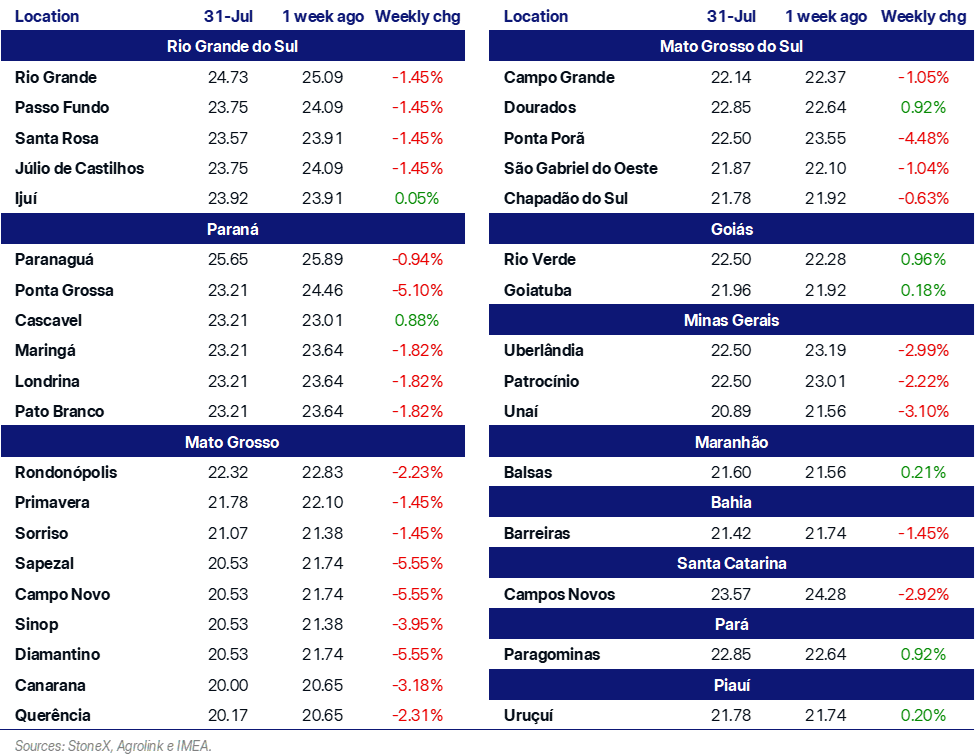
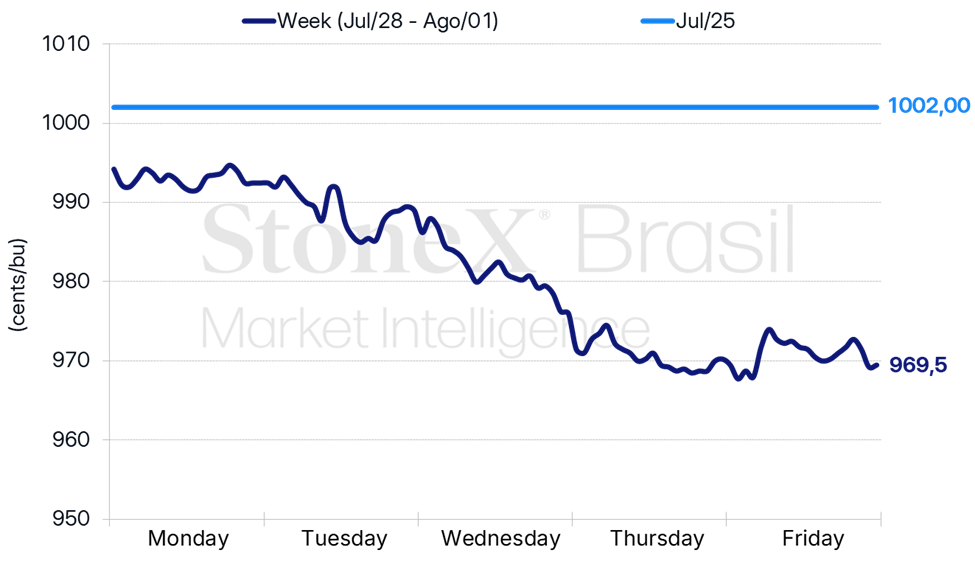
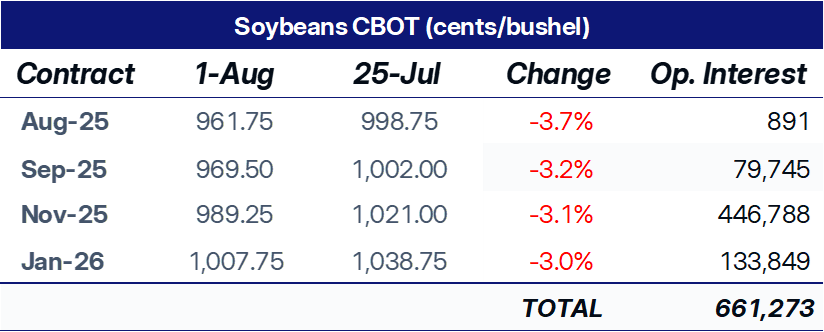
Soybean quotes in Chicago posted a drop last week, ending the period below USD 10.00 per bushel, due to the shortage of threats on the supply side and concerns over tensions between China and the US. The expiry for September ended on Friday (01) at 969.5 cents per bushel, a drop of 3.2% in the period.
The good progress of the US crop remains central to the fundamentals of the soybean market, with favorable weather conditions fueling expectations of a full crop in the country, ensuring a good supply, even with the drop in acreage versus last year. The G/E percentage of the country's 25/26 crop rose to 70%, an increase of 2 p.p., above last year, when it was at 67%, and above the five-year average, at 62%. The main factor for this increase was the improvement in conditions in Illinois, where the G/E percentage rose from 60% to 65%, noting that the state is one of the main soybean producers in the country, usually alternating in the first place with Iowa, where there was also an improvement in conditions.
With the U.S. soybean crop entering the grain filling stage in good condition, the chances of above-trend yields increase. The correlation between crop conditions and yields gains relevance from the beginning of August. Anyway, the weather continues to be monitored, with forecasts for this week indicating a drier pattern in the central and southern Midwest and in the Delta region. Starting from next weekend, a good part of the grain belt should receive good rains, while the plains area should remain with lower humidity.
In Brazil, the outlook for the 25/26 crop, which begins to be planted in September, is favorable, a situation that fuels the scenario of high supply. StoneX released its first estimate for the new soybean crop, bringing production to 178.2 mmt, a growth of 5.6% compared to the previous year.
This progress was driven both by an increase in acreage and by the national average productivity. In the case of the soybean area in Brazil, an annual positive variation of 2% is expected, while the increase in productivity is driven by the expectation of recovery of the crop in Rio Grande do Sul. On the other hand, other states are betting on a yield within the historical trend, but below that recorded in the 24/25 cycle, at least for now.
As Brazil has land available for agricultural expansion, soybean cultivation continues to advance year after year, without necessarily competing with other crops. The scenario of supply and demand and the prices impact the producer's decision and the increase in area, but the growth trend remains.
On the demand side, the market follows the imposition of tariffs by the US and the tensions with China. The two countries are in a period of truce, but a definitive agreement has not yet been reached and the tariffs may return starting August 12, despite the expectation of extending the truce for another 90 days.
This scenario always brings concern about the reduction of purchases of North American soybean by China, especially given the large Brazilian supply, which has the potential to keep increasing. Even though the flows of the oilseed tend to be redirected, if China buys even more soybean from Brazil, with other destinations starting to source from the US, given the relevance of the world's largest importer, there is always apprehension.
Another point that is on the radar is the biofuels policy in the US. Even with the increase in mandates next year and the possible penalization of imported raw materials, the growth in demand for soybean oil for the production of renewable diesel and biodiesel could lead to an increase in the need for imports of vegoils for food use.
In Brazil, soybean exports reached 10.4 mmt as of 07/25, with the year-to-date total at 75.4 mmt. The total numbers for the month of July will be released on Wednesday (06).
This week, the progress of the US crop should continue to be monitored, as well as the country's tariff issues with its trading partners.