Eigenlayer Tokenomics and Polygon's Aggregation Layer

Executive Summary
- Market trading color: Digital assets faced volatility with Bitcoin dropping 8%, driven by ETF outflows and FOMC influence
- Theme of the week – The backlash Eigenlayer faced and exploring Polygon’s aggregation layer
- Sector commentary: Bitcoin trends, DeFi innovations, AI-NFTs in focus, digital infrastructure evolving, regulatory shifts, key player updates
Market Trading Color (Nolan Aibel)
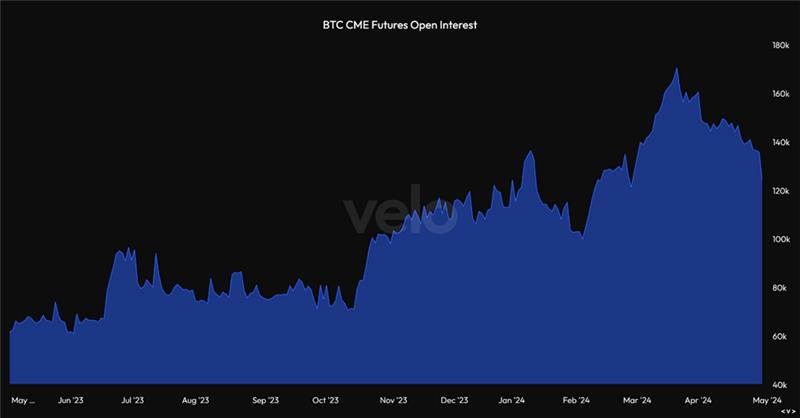
It has been a rocky week for digital assets as $BTC fell over 8%. A lot of the negative sentiment has come from the continued outflows from $BTC ETF products and the disappointment from initial Hong Kong ETF flows. After $563M in outflows yesterday, weekly outflows from the five trading days since last note have totaled over $1.07B. Much of the selling could be contributed to the de-risking nature ahead of yesterday’s FOMC. It could also be contributed to traditional players longing $BTC back in October, playing the ETF approval and $BTC halving. Now that the trade has played out, they have decided to unwind and take profit. This could be seen in the rapid decline of CME open interest below.
Source: Velo
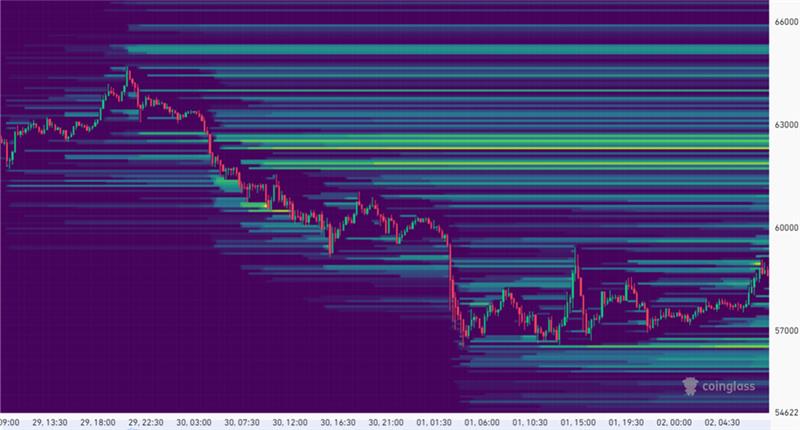
Yesterday’s FOMC brought us some surprise dovish sentiment from both the statement and Powell’s presser. Most notably, the Fed tapered its balance sheet runoff policy from $60B Treasurys per month to only $25B. Powell also downplayed the recent backup in reported inflation and the likelihood of further rate hikes. While there was not much liquidity building up below us over the course of the week, we could see support starting to build around $56,500. After attempting and failing once yesterday to reclaim the $60,000 level, it will be key to do so in the coming days or $BTC is at risk of falling through support and heading toward the $52,000 range.
Source: Coinglass
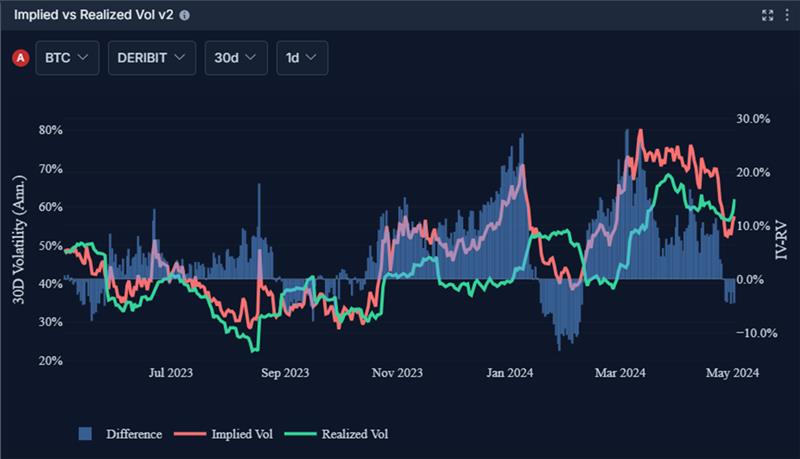
The overwhelming call selling over the past couple days has tanked $BTC implied vol which now screens 57. This is the lowest level since before March. Vol is cheap, this could be an attractive area to express directional bets.
Source: TheTie
Eigenlayer Airdrop
EigenLayer generated significant buzz within the cryptocurrency community by announcing its native token’s upcoming airdrop scheduled for May. Since its inception in June of the previous year, EigenLayer has facilitated Ethereum deposits and restaking from various liquid staking tokens, propelling it to become the second largest DeFi protocol with $14.84 billion in total value locked.
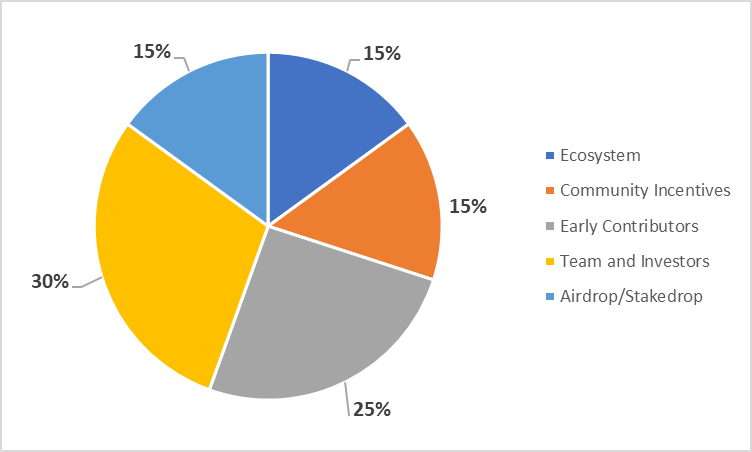
The introduction of the native token, totaling 1.67 billion, aimed to bolster the EigenLayer ecosystem. However, the independent non-profit Eigen Foundation allocated 45% of these tokens to community-related endeavors such as stakedrops, community initiatives, and ecosystem development.
Source: Eigenlayer
Despite this seemingly generous allocation, the community's initial excitement was tempered upon discovering that only 15% of the tokens would be distributed through EigenLayer's "stakedrop." Specifically, during the first distribution season, a mere 5% of the total token supply will be allocated to users based on a snapshot of their staking activities as of March 15, 2024.
Regarding investor token allocations, EigenLayer remained mum when queried about whether vesting would commence from the token’s inception or upon transferability of community tokens, as reported by TheBlock.
Criticisms and Impact
The revealed token allocation plan, with 90% of tokens locked until May 10 and non-transferable initially, compounded frustration among participants. In contrast, 55% of tokens were allocated to investors and early contributors, sparking vocal criticism within the crypto community regarding token distribution fairness.
The debate between linear and non-linear allocation methods alongside tiered pools, as seen in previous airdrops like Renzo, Tensor, and Etherfi, was hotly discussed on X. These airdrops typically employed linear allocation for top participants and tiered allocation for others based on their participation levels. This strategy aims to reward highly active users more substantially while still offering benefits to a wider range of participants. However, many of the small farmers feel cheated for having staked or been actively engaged for so long just to have a whale allocation take 89.9% of the points.
The community's dissatisfaction extended to the timing of the snapshot vote on March 15 to determine allocation addresses. Many community members expressed displeasure because they believed points earned after March 15 should have been included in the airdrop calculation for season 1, although these will be considered in subsequent seasons.
Following these developments, there was a notable surge in withdrawals from the platform over the last 24 hours. Data from Dune Analytics indicates that more than 7,000 withdrawals were initiated, resulting in approximately 150,000 ETH ($457 million) being withdrawn from the platform, as reported by DefiLlama.
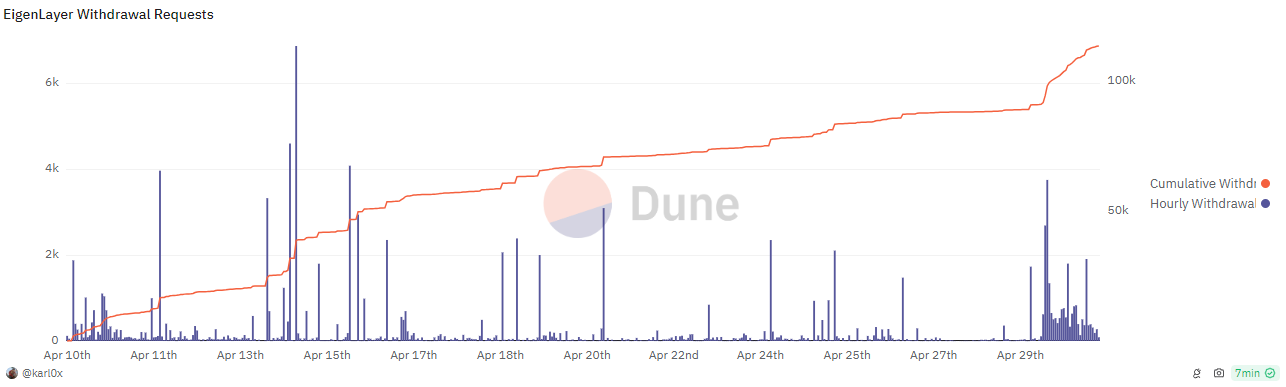
Source: Dune Analytics @karl0x
Polygon’s Aggregation Layer
As the cryptocurrency landscape evolves, scalability remains top of mind. Traditional approaches like bigger L1 chains, dominant L2 solutions, and the emerging concept of many rollups are all part of the discourse.
Polygon’s AG layer is being marketed as a neutral infrastructure that benefits everyone involved, including other chains looking to join. Migration involves moving L1 native assets to the shared Bridge for the AG layer. Polygon has developed tools like the type one prover, allowing existing EVM chains to transition seamlessly to ZK rollups. This migration pathway is straightforward and technically feasible.
Beyond technical considerations, the transition also involves narrative and strategic decisions. While some chains may have reservations about joining an established platform like Polygon, the AG layer is designed to be inclusive and collaborative. It offers a win-win situation where chains can access shared liquidity, users, and applications while contributing value to the overall ecosystem.
In terms of economics, the AG layer charges nominal fees for processing transactions, which benefit validators and the ecosystem. However, Polygon has reiterated that the focus is not on extracting value but on creating a thriving and interconnected crypto ecosystem. They talk about growing the pie and maximizing liquidity, apps, and users across crypto while allowing other protocols to build in partnership with them autonomously.
The narrative underscores the industry's shift towards ZK technology, the importance of security in layer-2 solutions, and the strategic considerations in token economics and ecosystem development. Specifically, as Polygon figures out their POL token.
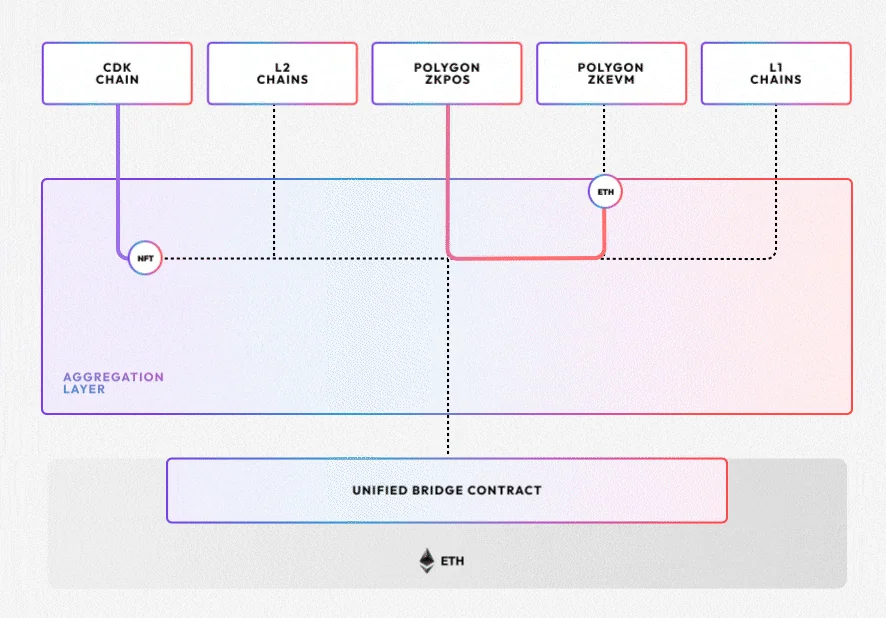
Source: Polygon Technology
Technical Points and Predictions Summarized
Technical Points:
- Transition from Proof of Stake to ZK Validium.
- Implementation of parallelization to improve transaction throughput.
- Introducing the Aggregator Layer (AG Layer) for data aggregation.
- Integration of different Virtual Machines (VMs) beyond Ethereum, such as Solana VM.
- Focus on enhancing user experience (UX) and reducing friction in asset bridging.
- Emphasis on cross-chain composability through ZK proofs.
- Community dynamics and internal alignment as key factors in technical development.
- Lessons learned from transitioning and optimizing technical infrastructure.
Predictions/Forecasts:
- Collaboration-driven ecosystems becoming more prevalent in the blockchain space.
- Potential for Polygon to expand partnerships with Layer 2 solutions like Arbitrum and Optimism.
- Integration of additional VMs and protocols into Polygon's ecosystem.
- Continued focus on improving user experience (UX) and driving mainstream adoption.
- Importance of objective analysis over speculative narratives in evaluating blockchain projects.
- Evolution of blockchain scalability, interoperability, and community dynamics in the industry.
Competitive Dynamics and Narrative Shifts
One of the key discussions revolves around the competitive yet collaborative dynamics within the crypto space. Larger rollups, such as Arbitrum and Optimism, may initially hesitate to join aggregation layers due to concerns about ceding control and potential narrative shifts. However, we highlight that such shifts may be mitigated by emphasizing the benefits of neutrality, shared security, and complementary functionalities.
There are powerful network effects implied by Polygon’s aggregation layer, such as more projects joining these layers, liquidity pools deepening, and creating a more compelling environment for developers and users. Examining various scaling paths, including larger L1s, dominant L2s, and many rollups, emphasizes the viability of a multi-rollup ecosystem. This approach allows for horizontal scalability, accommodates diverse application requirements, and fosters a specialized ecosystem where different chains cater to specific use cases.
While optimistic rollups offer advantages in terms of speed and market presence, recent conversations have been emphasizing the priority of security without compromising on user experience (UX) and developer experience (DevX). The industry's transition towards ZK-based solutions is seen as a pivotal step towards achieving a balance between speed, security, and decentralization.
Challenges
- Future Directions: The transition of Polygon PoS to ZK rollups, coupled with potential token rebranding and incentives, signals a strategic shift towards scalability and user incentives. The platform's efforts to improve transaction fees and enhance token utility are important but not yet fully drawn out.
- Branding Challenges: One of the significant criticisms Polygon faces is its branding strategy. While its marketing efforts are recognized as aggressive, there's a consensus that the platform lacks effective storytelling and branding. A clearer narrative about being an Ethereum-aligned side chain could enhance its positioning within the ecosystem.
- Narrative Complexity: Polygon has been accused of adopting too many narratives and jumping onto the latest trends. However, deeper analysis reveals that the platform's presence and impact across various sectors like DeFi, gaming, and NFTs are substantial and competitive.
Source: Eigenlayer Foundation, Polygon Foundation, Polygon, DeFiLlama
Sector Commentary
- Layer One / Altcoins
- Bitcoin ($BTC): Bitcoin Slips Under $62K as Hong Kong ETFs Disappoint (link)
- Bitcoin ($BTC): Bitcoin Set to Become More Dominant Even as BTC Stares at First Monthly Loss Since August (link)
- Bitcoin ($BTC): Bitcoin testnet griefing attack generates three years worth of blocks in one week, frustrating developers (link)
- Bitcoin ($BTC): Bitcoin top $70K or $210K? Analysts, price models clash over BTC cycle peak (link)
- Bitcoin ($BTC): 68% of Runes are in the red — Are they really an upgrade for Bitcoin? (link)
- Bitcoin ($BTC); Ethereum ($ETH): Ether and bitcoin derivatives traders are losing confidence in the potential for higher prices, analyst says (link)
- Ethereum ($ETH): Consensys vs. SEC litigation over whether ether is a security 'will take years': TD Cowen (link)
- Ethereum ($ETH): Ether posts weekly gain against bitcoin amid drop in BTC market dominance (link)
- Solana ($SOL): FTX estate wraps up second tranche of locked Solana sales with bids around $100 (link)
- Altcoins: Ether Holds Up Despite Correction in CoinDesk 20: CoinDesk Indices Market Update (link)
- DeFi
- Decentral Park Research: Sanctum: The Most Exciting Solana Protocol We’ve Seen This Cycle (link)
- Bitcoin DeFi ecosystem thrives despite market correction (link)
- Liquid Restaking Protocol Renzo Airdrops REZ Token, Debuts at $289M Market Cap (link)
- EigenLayer, After Touching Off Restaking Frenzy, Plans Own EIGEN token (link)
- Op-Ed: The Changing Face of Risk in DeFi (link)
- AI / NFTs / Web3
- RWA / Tokenization / Metaverse / Gaming
- BlackRock's BUIDL Becomes Largest Tokenized Treasury Fund Hitting $375M, Toppling Franklin Templeton's (link)
- Tokenized Asset Issuer Backed Raises $9.5M as Crypto's RWA Race Heats Up (link)
- Pantera Capital solely funds $8 million Series A for web3 gaming firm InfiniGods (link)
- ‘It's Modding, But on Steroids’: Mark Long on the Future of Web3 Gaming (link)
- Digital Infrastructure: Capital Markets / Exchanges / DAOs / Mining
- Stablecoin legislation could prove bigger than US spot bitcoin ETFs, Bitwise CIO says (link)
- Stripe will support Avalanche's efforts to add funds and users to ecosystem (link)
- MicroStrategy Now Holds $13.6B Worth of Bitcoin, 1% of Total Circulating Supply: Canaccord (link)
- Coal Miner Alliance Resource Dabbles In Crypto Mining, Mines 425 BTC (link)
- Solo Bitcoin Miner Hits the Jackpot with $218,000 Block Reward (link)
- Crypto stock selloff: MicroStrategy shares plunge 17% as Coinbase, Marathon and Riot also fall (link)
- Hong Kong Bitcoin and Ether ETFs Have Soft Debut (link)
- A closer look at the tough month for spot bitcoin ETFs (link)
- Australia’s top exchange may approve spot Bitcoin ETFs this year: Report (link)
- Sens. Warren and Marshall pose questions to Biden officials about the use of crypto to evade sanctions (link)
- Op-Ed by EY’s Paul Brody: Crypto’s Transition: Bringing Capital Onshore (link)
- Binance Founder CZ Gets 4 Months in Prison (link)
- Ex-Revolut exec raises $6.5 million for hybrid crypto exchange X10 (link)
- Early bitcoin investor Roger Ver arrested, charged with alleged tax fraud (link)
- Paradigm Special Counsel Has Left the Crypto-Focused VC Firm (link)
- Ahead of EU Elections, Crypto Industry Pushes Blockchain Merits as Policy Focus Shifts to AI (link)
- Crypto wallets exit US amid regulatory pressure (link)