Libragate: Meme Coin Mania, Political Fallout, and the $100M Dilemma

Executive Summary
- Market trading color: Solana’s scandal tanked SOL 25%, ETH regains focus, Hyperliquid gains traction, Bitcoin lacks direction
-
Theme of the week – The LIBRA token’s collapse sparked legal and political turmoil, exposing insider trading and market manipulation risks
- Links of the week: Bitcoin breakout, Ether ETF inflows, Solana’s LIBRA scandal, XRP-SEC drama, and FTX payouts
Market Trading Color
This past week may have felt like years for many in the crypto space. It all started this past Friday when the President of Argentina decided to endorse a token backed by US Venture fund Kelsier Ventures. To make a long story short, fund insiders owned a large majority of the supply and extracted hundreds of millions of dollars from those who fell on the knife and bought the token. Mass hysteria was caused as details of the scam unraveled, potentially implicating members from both Meteora and Jupiter, popular Solana DEXs. This sent Solana down over 25% toward a local low of $160. The same Solana that was trading just under $300 after the launch of Trump’s memecoin. Solana has been a gem this cycle, becoming the go to blockchain for many emerging DePin projects, AI projects, and general trade execution. Solana had overtaken ETH in a few key metrics, mainly 24 hour DEX volume. The SOLETH ratio climbed as high as 0.079 in January. It’s now down to 0.063. That’s more so attributed to SOL’s weakness rather than ETH’s strength. However, aside from the numerous rug pulls that have taken place on Solana of late, large unlocks stemming from the FTX estate hang overhead. 12M SOL that was purchased at steep discounts is set to be unlocked over the next two months. While this seems like a lot and has spoken many on X, this only accounts for 2% of total MC and we believe the larger holders of these tokens (Galaxy, Pantera, Figure) are all well hedged and will release these lightly into the market if they or their OTC counterparts do even choose to sell.
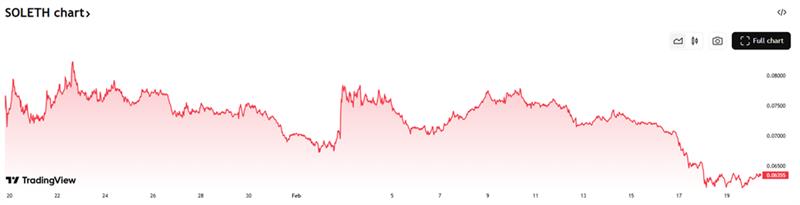
Source: TradingView
While ETH has yet to truly break out, attention has certainly turned back to the chain with this latest Solana fiasco. A lot of conversations we’ve been having lately are centered around getting back to the basics with revenue generating and RWA protocols. Many of those exist within the Ethereum ecosystem including Circle, Lido, Uniswap, and Maker. Another protocol on the rise that has been entrenched in conversations of late that fits the bill of revenue generating is Hyperliquid (revenue chart below). Hyperliquid is a DEX built on its own L1 that thrives on low fees, speed and a user friendly interface. The token gained popularity as there was no VC backing, strictly an airdrop to the first users of the platform. 75% of HYPE tokens are slated to be distributed to current and future users. The 20% dedicated to the core contributors do not vest until 2027-2028. The role out this week of HyperEVM, making Hyperliquid compatible with existing Ethereum infrastructures, will be key for increase user adoption and dapp development.
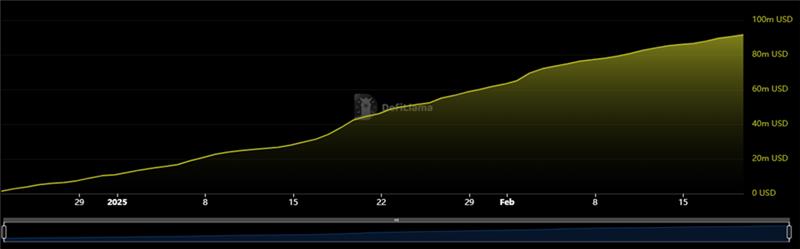
Source: DeFiLlama
There’s a mix of opinion in terms of where the market goes from here. Many claim there needs to be a larger flush down to the $85,000 range before we see a new all time high. Others point to the positive catalysts continuing to be rolled out by the new administration that it would be enough to take us higher here. Volumes across exchanges have been on a steady decline over the course of the month as participants digest the choppiness and lack a sense of direction. The market has missed Saylor’s buying pressure of late. Tuesday, he announced a new private offering for $2B of new converts, that was well received. Open interest on BTC futures contracts has fell below $60B, down from highs above $70B last month. Despite, headlines of sovereign wealth funds and corporate treasuries buying Bitcoin in size continue to roll in.
1. The LIBRA Token Collapse and Political Repercussions
Overview
The Solana-based LIBRA meme coin experienced a meteoric rise followed by a swift collapse, sparking legal, political, and regulatory scrutiny. Argentine President Javier Milei, who briefly promoted the token on social media, now faces fraud lawsuits and calls for impeachment for his alleged role in what critics are calling “Libragate.”
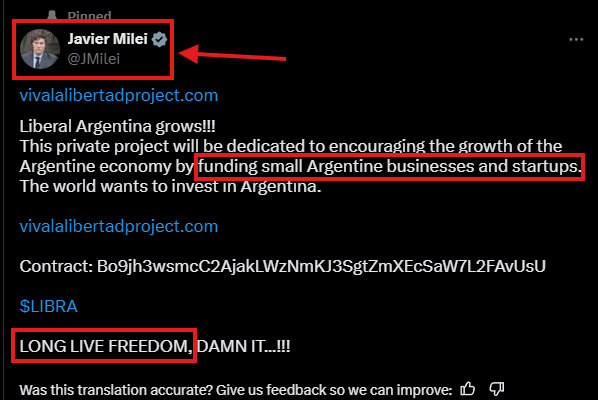
Source: X @KobeissiLetter
The aftermath highlights concern about insider trading, market manipulation, and the broader risks of meme coin speculation.
Key Developments
- Milei’s Denial of Responsibility
- In a February 17 interview with Todo Noticias, Milei denied promoting the LIBRA token, claiming he merely “spread the word.”
- He stated he had no financial ties to its launch, emphasizing he acted in “good faith.”
- Milei argued that “the state plays no role here,” viewing the collapse as an issue between private actors and investors.
- He downplayed the number of victims, dismissing most of the 44,000 affected investors as “bots.”
- The Collapse: Timeline of Events
- On February 14, LIBRA surged to a market cap of $4.56 billion shortly after Milei’s post on X (formerly Twitter).
- Milei then deleted his post, triggering a 94% crash that wiped out more than $4.4 billion in market value.
- Allegations of a pump-and-dump scheme followed, leading to widespread fraud accusations.
- Insider Trading Allegations
- Blockchain analysts traced wallets involved in LIBRA’s launch to ones that had “sniped” the MELANIA meme coin linked to U.S. First Lady Melania Trump.
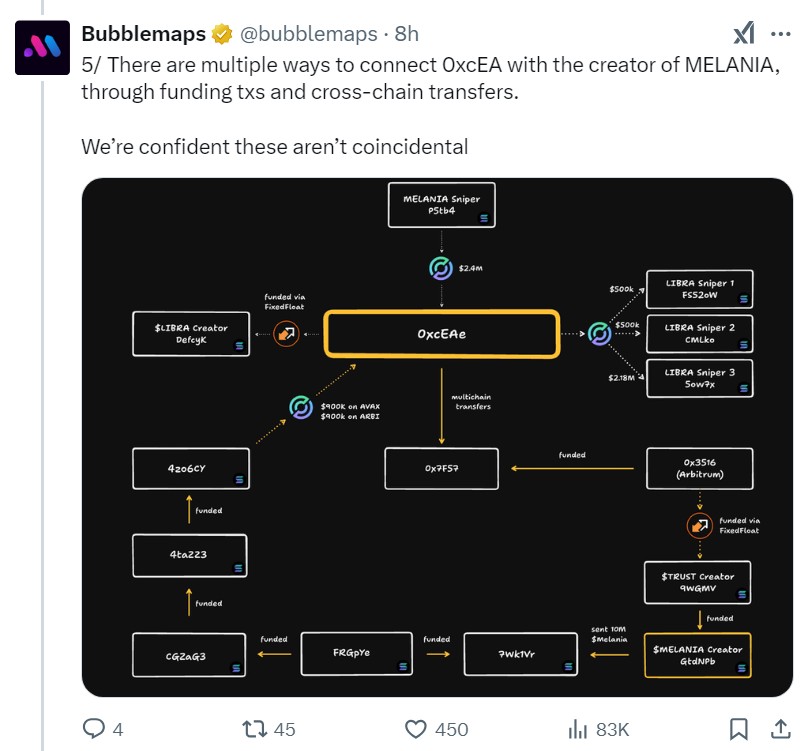
Source: X @ bubblemaps
-
- Bubblemaps analytics identified a wallet that sniped LIBRA, netting $6 million in profit.
- Jupiter Exchange confirmed some individuals knew about LIBRA’s launch weeks in advance but denied that its official team participated in insider trading.
- Market Implications & Upcoming SOL Unlock
- The LIBRA fiasco underscores the high-risk environment of meme coin launches, where insiders often profit at the expense of retail traders.
- An additional market concern is the FTX SOL Unlocking Event on March 1, when 11.2 million SOL tokens (over $2 billion) will be unlocked, potentially increasing sell pressure on Solana-related projects.
Regulatory and Legal Fallout
- Multiple fraud lawsuits have been filed against Milei, accusing him of crypto-related misconduct.
- Political opponents are calling for impeachment, citing Milei’s involvement in the LIBRA scandal.
- LIBRA’s issuers remain under investigation for possible market manipulation and insider trading violations.
Conclusion and Takeaways
- LIBRA’s rise and crash highlight the extreme volatility of meme coins and the potential for manipulation.
- Milei’s distancing from the project raises questions about political risk and accountability in crypto endorsements.
- The upcoming SOL unlocking event could introduce fresh volatility, heightening the importance of risk management.
- Regulators may leverage this incident to push for stronger oversight of crypto markets and influencer-backed token launches.
2. Coffeezilla’s Interview with Hayden Davis
Investigative journalist Coffeezilla interviewed Hayden Davis, a central figure in the LIBRA project’s launch, to dissect the events leading up to the token’s collapse, insider trading accusations, and the fate of the $100 million still under Davis’s control.
Key Findings
- Ethical Dilemmas & Insider Trading in Meme Coins
- Davis likened meme coin markets to “casinos,” where insiders often hold a substantial advantage.
- While acknowledging that the setup favors insiders, Davis argued that such behavior is “inherent to the space.”
- Coffeezilla countered that greater transparency and regulation, akin to capital markets, is necessary to protect retail investors.
- Price Manipulation & Sniping
- Davis admitted to using sniper wallets for early token purchases, claiming it was to “protect” the project from external snipers who might drain liquidity.
- Preferential Treatment & Refunds
- Davis refunded $5 million to Dave Portnoy after he lost money on LIBRA—a gesture not extended to ordinary investors.
- This drew significant backlash, prompting Davis to admit it was a public relations mistake.
- Melania Token Connection
- Davis confirmed involvement in the Melania Trump meme coin launch, contradicting earlier denials of insider activity.
- He maintains he did not “extract liquidity” but used sniping to ward off other large traders.
The $100 Million Dilemma
Davis currently controls about $100 million in project liquidity. He outlined four possible actions:
- No Refunds – Donate to Nonprofit
- Davis believes donating the funds to an Argentine nonprofit is a poor choice, as it sidesteps compensating investors.
- Refund Investors
- A structured plan to proportionally distribute refunds to those who lost money, prioritizing smaller retail investors.
- Davis fears the complexity of verifying losses and the personal risk it entails.
- Reinject Money into LIBRA
- Davis’s “cleanest exit,” which would restore liquidity and boost LIBRA’s market cap back to roughly $3 billion.
- Coffeezilla warns this could trigger another wave of insider trading and market manipulation.
- Delay Decision
- Wait for guidance from the Argentine government, which has so far remained silent on next steps according to him.
Davis claims he initially had Milei’s support but now finds Milei publicly distancing himself. He also reported receiving threats and views the $100 million as leverage to negotiate clarity from regulators and politicians.
Market Implications: The Reality of Meme Coins
- Davis revealed that large investors received discounted early access during the Trump meme coin launch.
- He describes meme coins as “unregulated casinos,” emphasizing that retail participants rarely come out ahead.
3. What Snipers Are in Crypto Markets
When discussing Libra, pump.fun, and other launches, we often get asked what is sniping? In cryptocurrency and in DeFi contexts, snipers are highly specialized traders or automated bots that exploit high-speed transactions and privileged on-chain insights. Their goal is to buy and sell tokens before ordinary traders can react, profiting from short-term price imbalances.
How Sniping Works
- Contract Detection
- Sniper bots monitor mempools and blockchain explorers for new token launches or liquidity additions.
- Front-Running the Market
- By submitting high-priority transactions with maximum gas fees, snipers ensure their buys or sells happen first.
- Some use private RPC endpoints to hide their transactions from competitors.
- Transaction Optimization
- Tools like Flashbots help execute transactions privately, avoiding public mempool monitoring.
- Techniques like sandwich attacks (a form of MEV exploitation) further disadvantage retail traders.
- Dumping the Position
- Once the price rises, snipers exit quickly, often spreading sells across multiple wallets to evade detection.
Types of Snipers
- Launch Snipers: Target brand-new tokens upon liquidity addition.
- Arbitrage Snipers: Exploit price discrepancies across different trading venues.
- MEV (Miner Extractable Value) Bots: Front-run or sandwich trades in blocks they help to validate.
- Liquidity Snipers: Move rapidly when liquidity pools expand or contract.
Countermeasures
DeFi projects increasingly employ anti-sniping tactics:
- Trading Cooldowns: Forcing delays between buys and sells.
- Whitelist & Pre-Sale Mechanisms: Allowing only vetted addresses to trade early.
- Transaction Limits & Bot Protection: Restricting large buy/sell orders.
- Flashbots & Hidden Mempool: Private transaction relays to prevent front-running.
Market Implications
- Extreme Volatility: Sniper activity can cause rapid price spikes and crashes.
- Retail Disadvantage: Ordinary traders often face high slippage and late entry points.
- Manipulated Price Discovery: Insiders and bots effectively set initial market prices.
Links of the Week
- StoneX Digital Top 10 Links of the Week
- Bitcoin ($BTC): Bitcoin Is Coiled Like a Spring, a Breakout of This Range Is Coming: Van Straten (link)
- Ethereum ($ETH): Ether ETFs Register $393M in Inflows This Month as Crypto Investors Turn Their Back on Bitcoin (link)
- Solana ($SOL): LIBRA Apparent Rug Pull Is Latest 'Sordid Episode' Emerging From Solana's Memecoin Complex: Galaxy (link)
- XRP in Focus as Elon Musk’s DOGE Sets Eyes on SEC (link)
- Standard Chartered sees more sovereign wealth funds buying bitcoin (link)
- Crypto fundamentals are back (link)
- U.S.-Listed Bitcoin Miners Accounted for 29% of Global Hashrate in February: JPMorgan (link)
- Strategy flags profitability risk amid bitcoin volatility, may be exposed to greater tax liabilities than anticipated (link)
- FTX’s Initial $1.2B Payout Process to Creditors Is Underway (link)
- Tether Made 'Unsolicited' Bid for Majority Stake in $1B LatAm Agribusiness Adecoagro (link)