According to the India Meteorological Department's (IMD) weather monitoring, the monsoon rains until June 10 were about 3% above normal. However, all this excess is concentrated in the Southern region of India, while the Northern states, on the other hand, are facing a significant drought in the first half of 2024.
In Karnataka (KA), between June 1 and 12, rainfall was 66% above normal and in Maharashtra (MH) it was 41% higher. Another important sugarcane-growing state, Tamil Nadu, (almost 5% of the country's total area) recorded more than double the historical average this month. In Karnataka's three main cane-growing districts (Belgaum, Bagalkot and Bijapur, where 71% of the state's area is located), rainfall is significantly above normal, with volumes more than double in some areas. In the five districts with the largest sugarcane areas in MH (Solapur, Kolhapur, Ahmednagar, Pune and Sangli, 58% of the state's area), excessive rainfall has also been occurring, with the exception of Kolhapur (the second largest producer in the state), where rainfall is within the average range.
In Uttar Pradesh, which has over 2 million hectares of sugarcane in India (the largest area in the country), the rainfall in June so far has been minimal, with a 78% deviation from normal in April and May which, despite being seasonally less rainy months, had almost 10 mm of rainfall, 82% below average. Another North Indian state, Bihar, has also had little rainfall, as has Gujarat to the West. Together, these three states account for more than half of India's sugarcane area.
Rainfall between May 31 and June 5 in India - deviation from normal (mm)
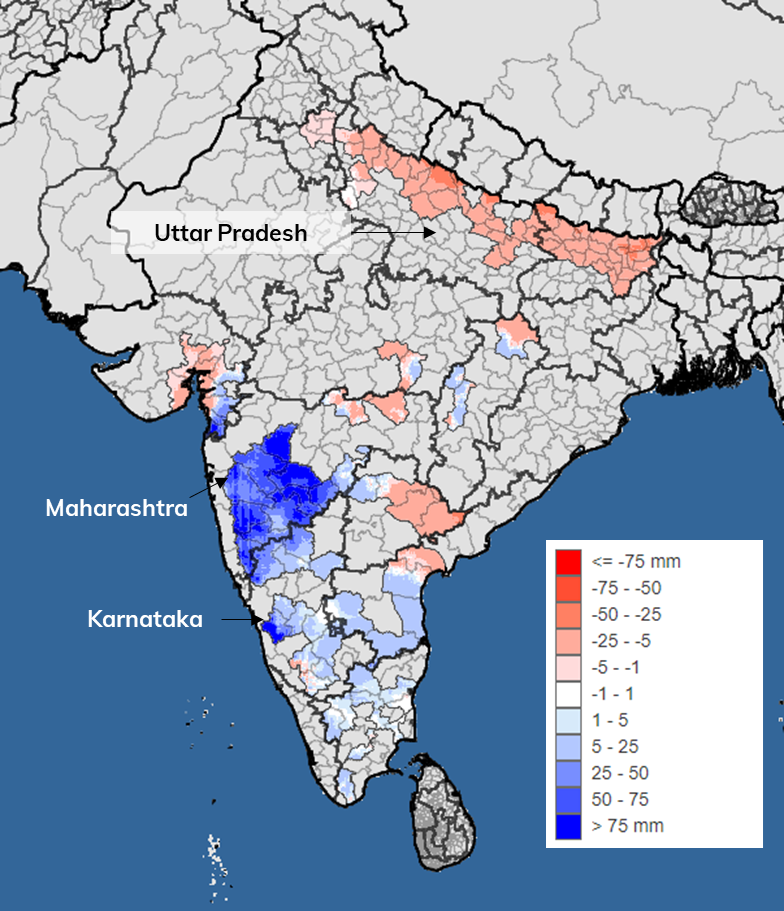
Sources: CHIRPS, USDA, Global Agricultural & Disaster Assessment System (GADAS). Design: StoneX.
In the first five days of June, when the rains advanced especially in Karnataka and Maharashtra, volumes were already well above average in Maharashtra and Karnataka, unlike Uttar Pradesh. This week, up until Tuesday (11), the rainfall in the two states has almost exceeded the 10-year average, with four days to go.
Forecasts for the next seven days in the main districts in MH and KA indicate rainfall between 25-50 mm above normal, with some areas in KA likely to get up to 100 mm above average. However, for UP, the monsoon has not yet reached high volumes, and may remain at up to 50 mm below normal next week.
Rainfall forecast for the next seven days in India - deviation from normal (mm)
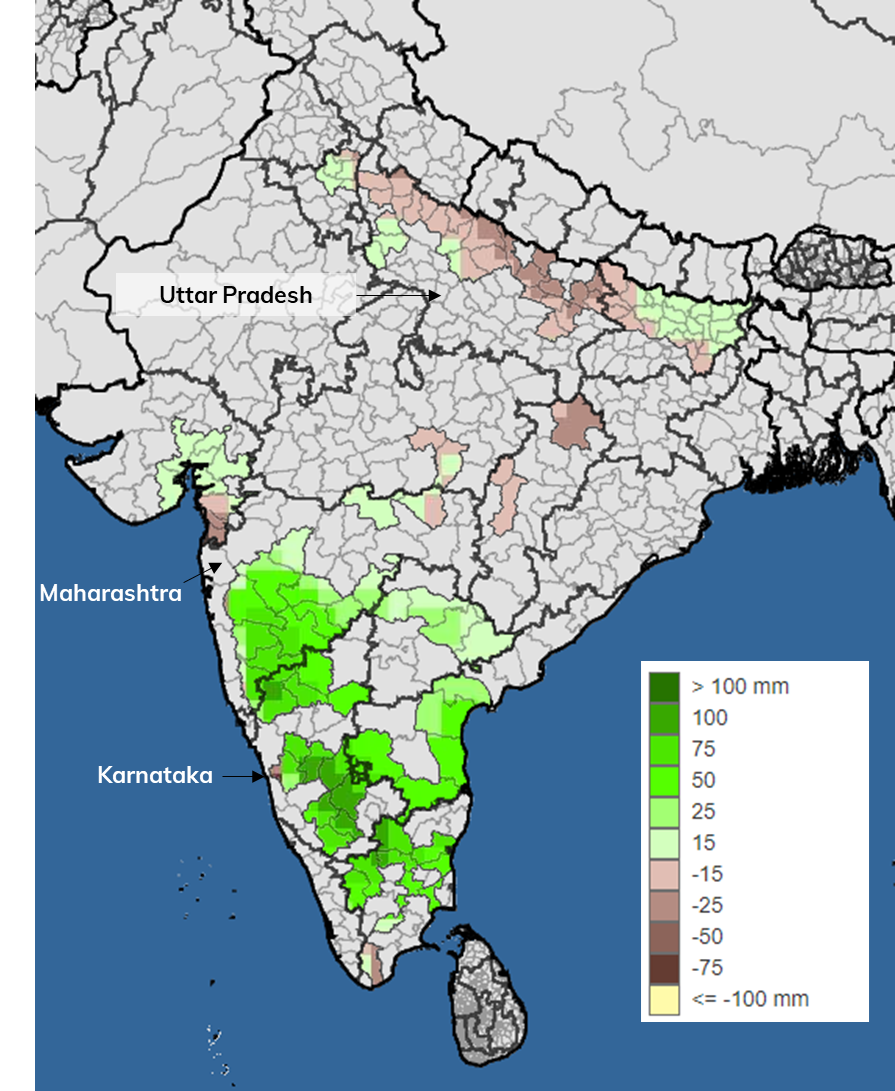
 Sources: Global Forecast System (GFS), USDA, Global Agricultural & Disaster Assessment System (GADAS). Design: StoneX.
According to data from the Global Forecast System (GFS), the rainfall in Maharashtra will become less heavy over the next five days and will return in intensity from the middle of next week, with the next 15 days of accumulated rainfall expected to be within the average. For Karnataka, rainfall is expected to be 34% above average for the period, as is Bihar (+46%), which should finally have less dry days.
In Uttar Pradesh, the rains are expected to arrive in the middle of next week, with significant volumes expected mainly in the last week of June, which brings a forecast of 30% above-average rainfall in UP over the next 15 days.
15-day rainfall forecast in India (mm)
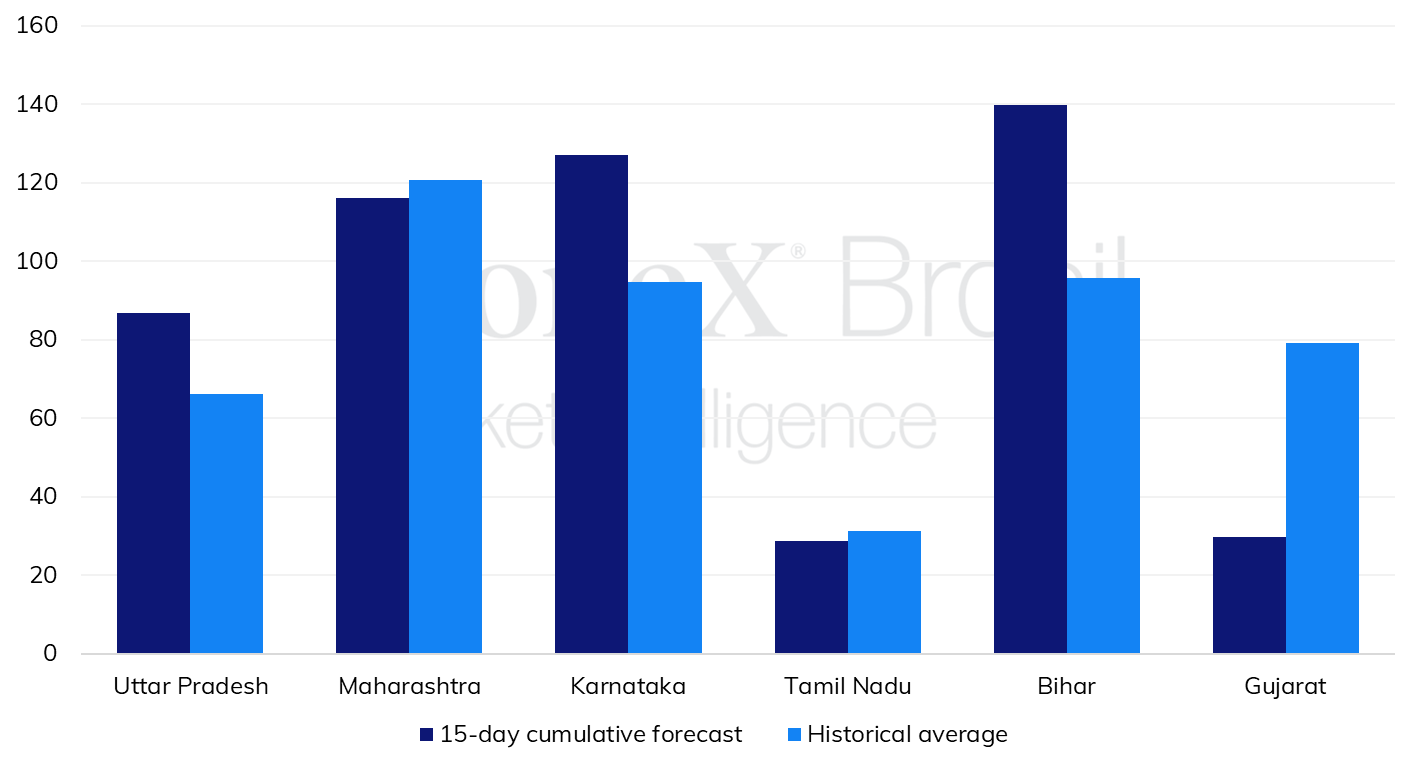 Sources: Refinitiv, GFS. Design: StoneX.
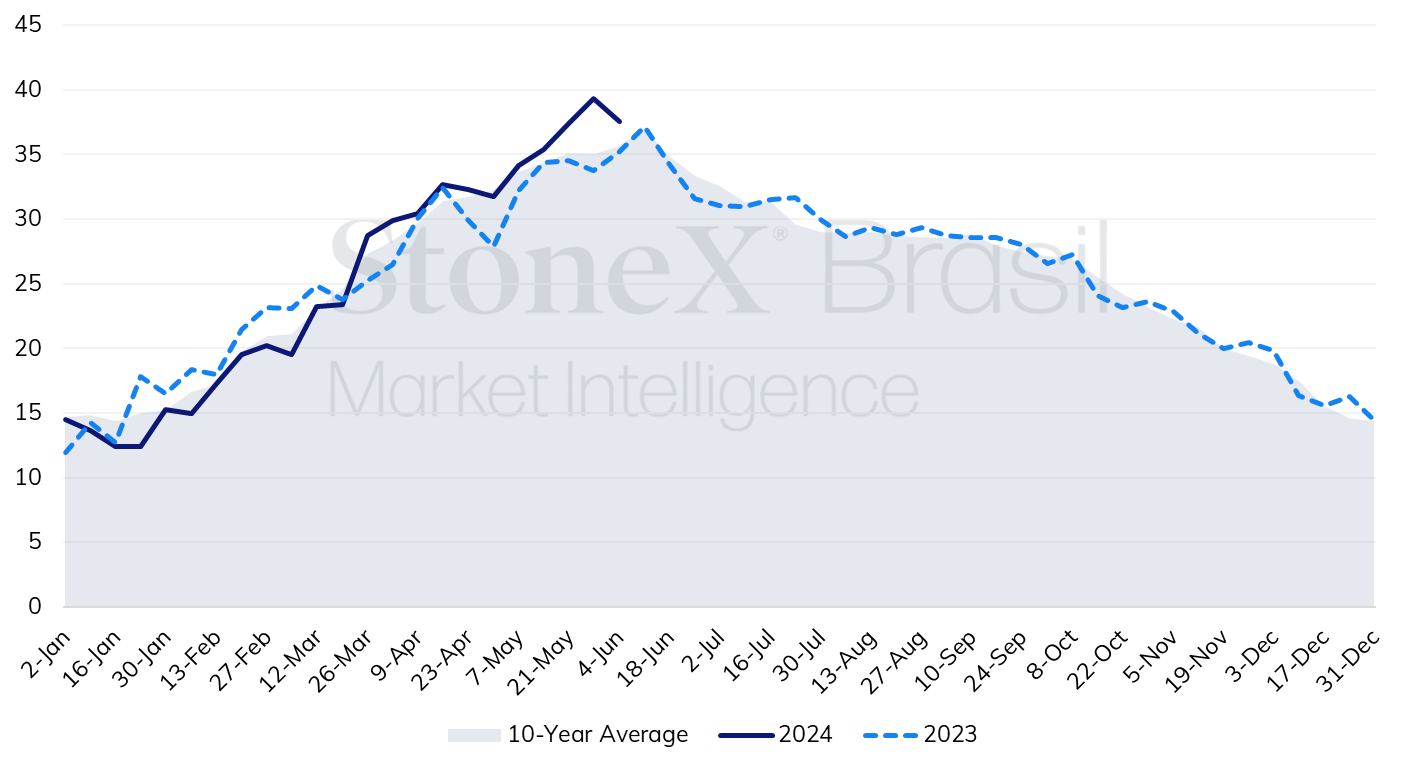
Another point of attention for Uttar Pradesh is the average temperature in recent weeks, which approached 40ºC at the end of May, up to 4ºC above normal. What is being reported is the Indian market's concern about very high temperatures in UP in conjunction with well below normal rainfall, which could be detrimental to the state's cane.
Average temperatures in Uttar Pradesh (ºC)

 Fonte: Refinitiv. Elaboração: StoneX.
On the other hand, the good performance in MH and KA is welcome, although the planting period and much of the development of the cane that will begin to be harvested in October has already been drier than normal.
Daily recap
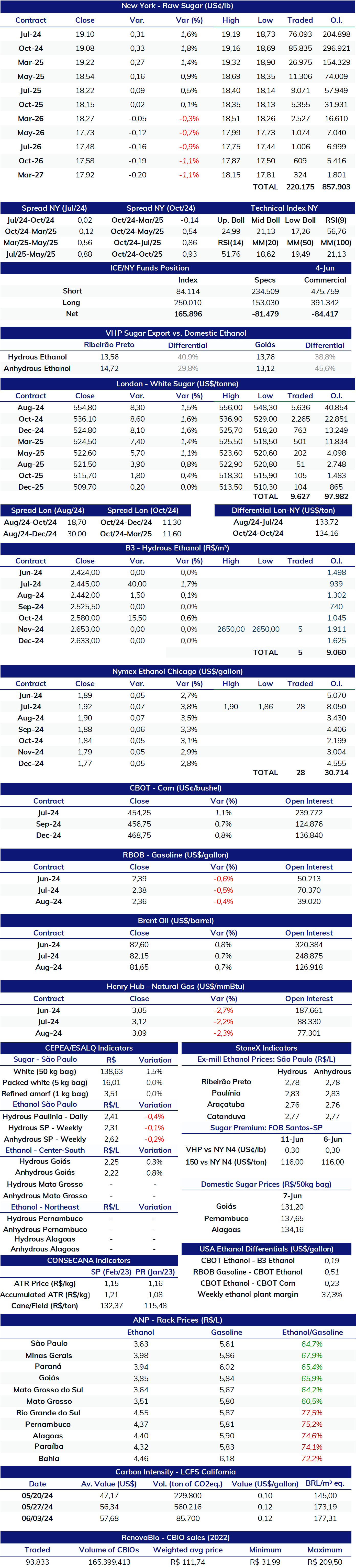
On Wednesday (12), the Oct/24 raw sugar contract rose 33 points, closing the trading session at US¢ 19.08/lb, and again trading above US¢ 19.00/lb. On the day, the macro side was highlighted in Brazil, and the spot dollar closed at around BRL 5.40. In other words, as mentioned in the prvius day's report, prices in Brazilian Reais have been recovering.
To the detriment of an increase in the price of the dollar, which could be bearish for sugar since it makes prices more expensive for exporters, NY#11 follows the recent rises, which primarily reacted to a lower than expected sugar-directed mix in the Center-South of Brazil.
Two pieces of news also boosted the movement on the day. As discussed in this report, a slowdown in the rains in Maharashtra and an ongoing drought in the Northern states of India are short-term concerns, despite excessive volumes in Karnataka. Secondly, Australia's main sugar producer has paused operations (two days after starting this year's harvest) due to strikes at its mills, which also increases the risks in the sugar market.