According to UNICA data, domestic sales of hydrous ethanol by Center-South plants totaled 16.3 million m³ in 2021 up to the first half of December, an annual decline of 11.1%. On the other hand, sales of anhydrous reached 9.6 million m³ (+14.4%). Lower demand for ethanol fuel was the result of a firm crop failure in 2021/22 (Apr-Mar), as well as conjunction between high dollar and crude oil quotes on the international market.
Given the weather adversities faced in the sugarcane belt, our expectation is that the current crop will close with hydrous production at 16.9 million m³ (-18.8% YoY), while anhydrous production is projected at 11.0 million m³ (+13.3%), volumes that already consider production of 3.5 million m³ of corn ethanol in the Center-South.
In the case of biodiesel, the revision of blending standards has also received attention. Last month, the Brazilian government decided to keep at 10% the volume of the biofuel that is blended in diesel throughout 2022. Previously, the proposal was to reach a 14% blend rate from March next year.
Despite greater demand for gasoline at Brazilian stations and barriers in the biodiesel market, 2021 was marked by a fresh surplus of decarbonization credits under the RenovaBio program. From the beginning of the year until last Tuesday (28), about 31.1 million Credits had been put into circulation, representing 123.4% of the target of 25.22 million CBIOs set for distributors by the ANP.
Considering the surplus of 2020, close to 4.0 million CBIOs, the volume available on the market already exceeds 35.1 million. Given wide supply, the number of retired Credits or in the hands of distributors already exceeds the target set for the current year by 4.5 million Credits, showing that these companies should not find difficulties in meeting their annual objectives for 2021.
In fact, by last Tuesday, about 24.1 million CBIOs had already been retired, that is, 95.8% of the 2021 target. The B3 exchange, however, does not differentiate which proportion of this volume corresponds to the abatement of the program’s unobligated parties, a calculation that will be made next year, and that will be discounted from distributors’ obligations for 2022, which for now is 35.98 million CBIOs.
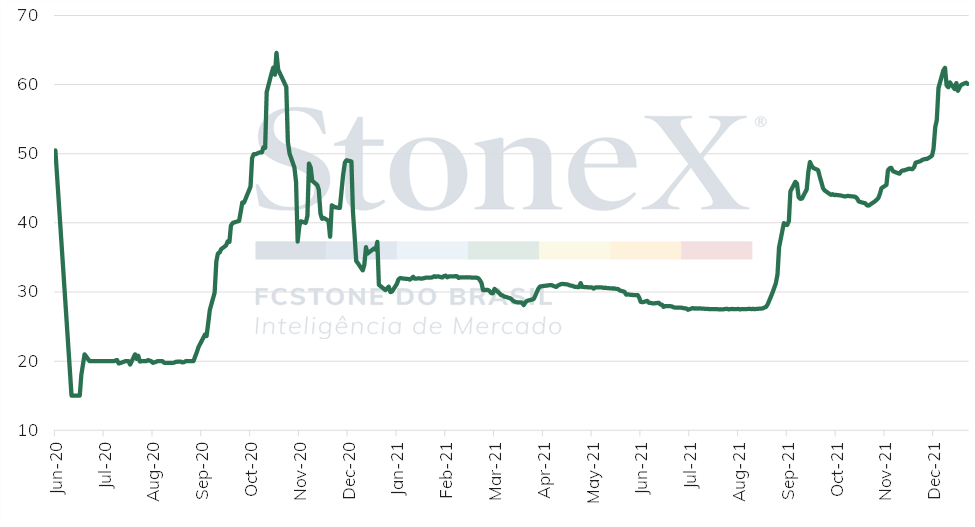
Following the more comfortable balance of Credits, CBIO rates operated at lower levels during 2021, with the weighted average of the current year being BRL 35.63/CBIO. In recent weeks, however, prices have appreciated, since some distributors have taken advantage of attractive quotes to move up their purchase of Credits to be retired in 2022.
Weighted average price of CBIOs (BRL/CBIO)
Source: B3. Design: StoneX.
Based on these points, it is clear that 2022 will start with a surplus of CBIOs in the market, which should help achieve the proposed target for the following year. In a long-term horizon, however, the targets should be aggressive when we analyze the trends for biofuel production capacity in the Brazilian market (complete analysis here).
This situation highlights the need for investments in the sector, as well as for certification of production units in the coming years, also from other products, with emphasis on biomethane.
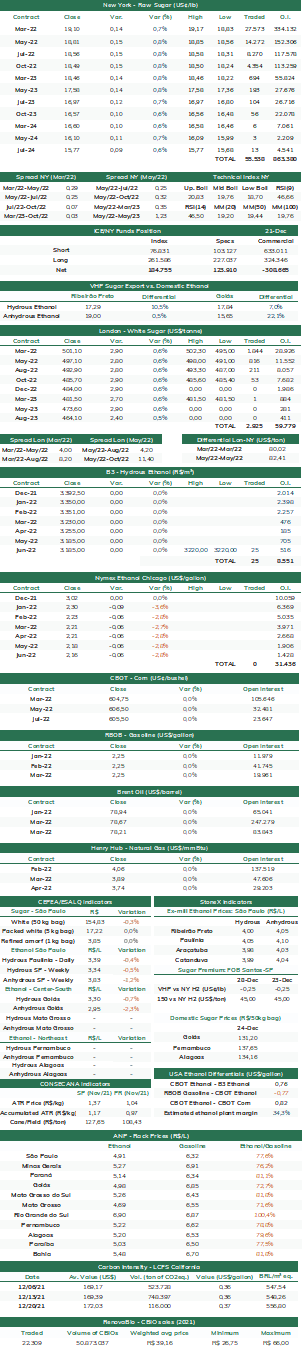
Regarding the sugar market, the sugar #11 contract closed the session on ICE/NY quoted at 19.10 c/lb on Friday (29), posting a daily appreciation of 0.7%.