

FX Weekly Overview (Brazil Issue)
Dollar to reflect Brazilian electoral scenario, Copom minutes, RPM, IPCA-15, and expectations of higher interest rates in the US

Leonel Mattos
- Currencies
By: Matt Weller, Head of Market Research
Talking Points:
To sign up for the Trading Global Macro podcast, find it on your preferred podcast platform: Apple Podcasts, Spotify, or YouTube.
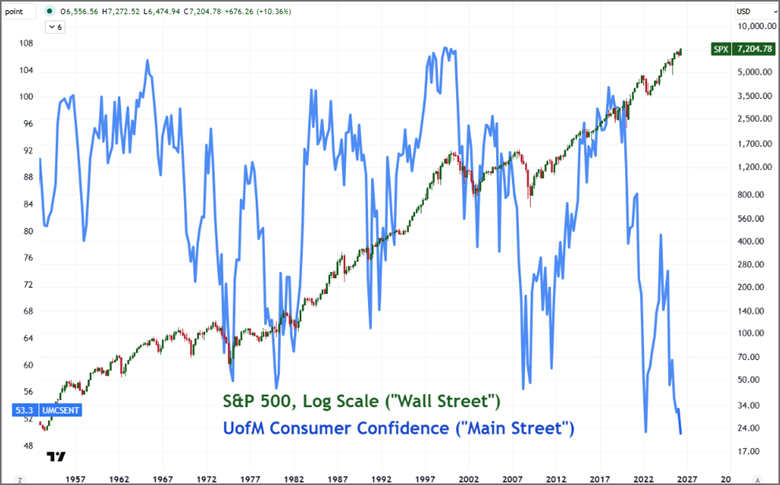
One of the most striking macroeconomic contrasts today is the growing divide between Wall Street and Main Street.
On one hand, major equity indices such as the S&P 500 have continued to push toward record highs. On the other, consumer sentiment measures, particularly the University of Michigan survey, reflect record pessimism among households.
Source: StoneX, TradingView
That divergence raises an important question: how can financial markets remain resilient when many consumers feel increasingly strained?
A Stark Sentiment Gap
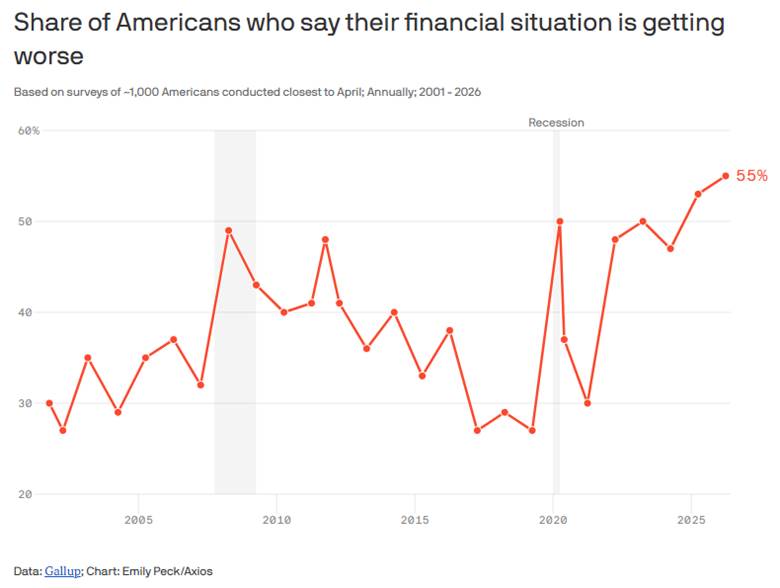
On a surface level, the Wall Street vs. Main Street contrast is difficult to reconcile: A rising stock market is often associated with economic strength, expanding corporate earnings, and improving confidence. Despite that signal, many households continue to feel pressure from accumulated inflation, higher everyday costs, and uncertainty around the labor market.
For consumers, the experience of inflation is not limited to the latest monthly reading but rather the accumulation of higher prices against a backdrop of slow (or no) real wage growth. Grocery bills, gasoline prices, insurance costs, and other recurring expenses leave a lasting impression. Even if the rate of inflation moderates, households may remain anchored to the lower prices they remember from several years ago.
Source: Gallup
Why Wall Street Has Stayed Resilient
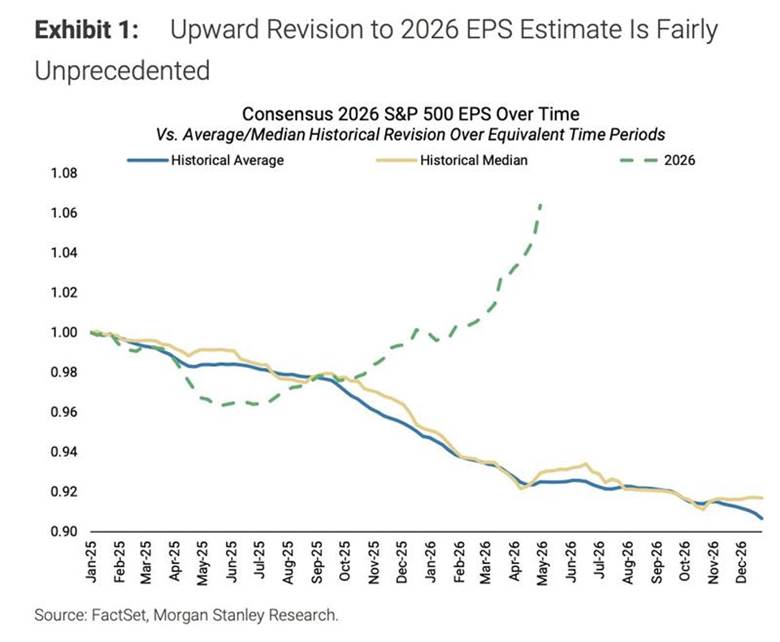
The corporate side of the economy tells a different story. Large publicly traded companies have often found ways to adapt to and capitalize on economic shifts. Tariffs, higher input costs, oil price volatility, and even technological disruption create challenges for consumers, but companies have been able to pass costs through, protect margins, or find efficiencies.
Artificial intelligence is one of the clearest examples. For many workers, AI represents uncertainty about the future of white-collar employment. For companies, however, it may represent productivity gains and lower operating costs. That difference in perspective helps explain why the same macro trend can weigh on Main Street sentiment while supporting Wall Street expectations, explaining part of the divergence.
At the end of the day, corporate earnings remain central to market performance. As long as investors believe earnings can hold up, equity markets may continue to look through weak household sentiment, as we’ve seen in recent years.
Source: Factset, Morgan Stanley Research
The Limits of Consumer Surveys
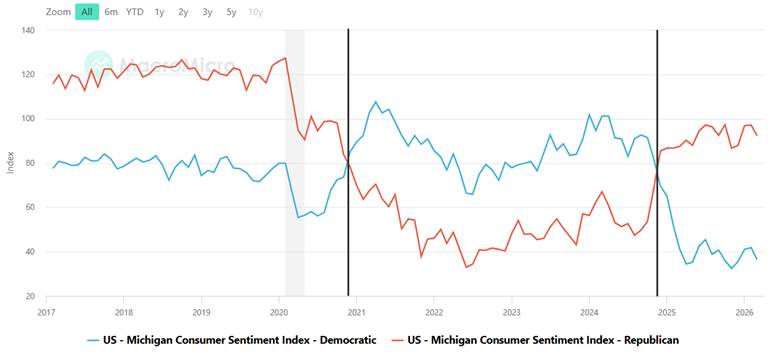
Another key point is that not all sentiment indicators tell the same story. While the University of Michigan survey has shown extremely weak readings, other measures such as the Conference Board’s consumer confidence index have been less dire.
Ultimately all of these measures of consumer sentiment are derived from surveys, and survey quality has deteriorated in recent years through declining response rates and heightened political polarization. Consumers’ views of the economy can shift sharply depending on election outcomes and political affiliation, making it harder to interpret survey data as a clean measure of actual spending behavior.
Source: MacroMicro, StoneX
Still, dismissing consumer pessimism entirely would be a mistake.
Why the Wall Street vs. Main Street Divide Matters
Despite technological advances, the US consumer accounts for more than two-thirds of economic activity, making household spending essential to long-term growth. If consumers feel persistently squeezed, that will eventually affect corporate revenues, political outcomes, and policy choices.
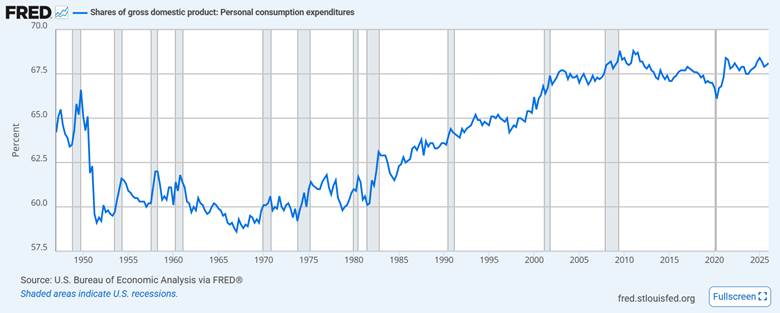
Source: FRED
This is where the idea of a K-shaped economy becomes especially relevant. Higher-income consumers and asset owners may benefit from rising markets, while lower- and middle-income households may feel left behind. That imbalance can persist for a time, but extreme divergences between market performance and household confidence cannot remain isolated forever. If politicians ignore everyday consumers for too long, ultimately they’ll be voted out, whereas corporations can face boycotts or increased regulation if the scale tips too far to one side.
The key takeaway is not that one side of the debate is “right” and the other is “wrong.” Rather, investors, analysts, and policymakers should look beyond eye-catching headline charts to contextualize seemingly incongruous conclusions. Especially in the current macroeconomic environment, understanding why Wall Street and Main Street are sending different signals is essential to interpreting the broader macro landscape.
Access More Global Macro Insights, Forecasts and Tools
Stay connected to timely global macro analysis designed to help market participants navigate shifting economic conditions and evolving risk. Gain access to regular market commentary, updated quarterly forecasts, a comprehensive two-week forward economic event calendar, and specialized tools built to support informed trading and risk management decisions.
-- Experts: Matt Weller, Global Head of Market Research; John Kicklighter, Global Head of Content
StoneX TV content is created, produced, and distributed solely by StoneX Media Ltd (“StoneX TV”) and is provided for informational and educational purposes only. StoneX TV does not provide investment, financial, legal, or tax advice and does not make any recommendation or endorsement of any investment strategy, transaction, or financial instrument. Nothing in this content constitutes, or should be construed as, investment advice or a recommendation to buy, sell, or hold any financial instrument, including securities, futures, derivatives, digital assets, foreign exchange products, or CFDs. This content does not constitute an offer, invitation, or solicitation to engage in any investment activity. The information presented is general in nature and is not tailored to the financial situation, investment objectives, or risk tolerance of any specific person. You should not rely on this content as a substitute for independent professional advice. Investing and trading in financial instruments involves significant risk of loss and is not suitable for all investors. Past performance is not indicative of future results. Any views or opinions expressed are those of the presenter at the time of publication and are subject to change without notice. Such views may not necessarily reflect those of StoneX Media Ltd or its affiliates. StoneX Media Ltd and its affiliates, including StoneX Group Inc., may from time to time have positions in, or engage in transactions involving, the financial instruments referenced. This content may include general market commentary and opinion. It does not constitute independent investment research and has not been prepared in accordance with legal requirements designed to promote the independence of investment research. StoneX Media Ltd is not authorised or regulated to provide investment services and does not act in a fiduciary capacity. StoneX Media Ltd is incorporated in Ireland and operates in accordance with applicable Irish law. It is a wholly owned subsidiary of StoneX Group Inc. and is a separate legal entity from other subsidiaries within the StoneX Group, which may be regulated in various jurisdictions. StoneX Media Ltd does not act on behalf of, or provide services for, any regulated affiliate. This content is not directed at, and may not be distributed to, any person in any jurisdiction where such distribution would be contrary to local laws or regulations. Supporting documentation for any claims, comparisons, statistics, or technical data may be made available upon reasonable request, where applicable.
Our subscribers have access to comprehensive market analysis from StoneX spanning commodities, equities, currencies and more.
Dollar to reflect Brazilian electoral scenario, Copom minutes, RPM, IPCA-15, and expectations of higher interest rates in the US

A currency can clear a major level and still fail, which is why momentum confirmation decides whether an advance holds. Michael Boutros works through what separated the current Dollar Swiss move from two earlier rallies that stalled within days.


Dollar seasonality since the year 2000 gives the U.S. dollar only a narrow September edge before turning sharply against it in December. That seasonal weak spot lands in the same stretch of the calendar as two more Federal Reserve meetings and a fresh set of forecasts.

Our market expertise, advanced platforms, global reach, culture of full transparency and commitment to our clients’ success all set us apart in the financial marketplace.
Reach
With access to 40+ derivatives exchanges, 180+ foreign exchange markets, nearly every global securities marketplace and numerous bilateral liquidity venues, StoneX’s digital network and deep relationships can take clients anywhere they want to go.
Transparency
As a publicly traded company meeting the highest standards of regulatory compliance in the markets we serve, our financials and track record are matters of public record. StoneX’s commitment to “doing the right thing over the easy thing” sets us apart in the industry and helps us build respect, client trust and new partnerships.
Expertise
From our proprietary Market Intelligence platform to “boots-on-the-ground” expertise from award-winning traders and professionals, we connect our clients directly to actionable insights they can use to make more informed decisions and achieve their goals in the global markets.