Systemic Risks Ahead: China Two Sessions Closing, US CPI and US Debt Ceiling Deadline
Talking Points:
- Risk trends suffered a serious shudder this past week with the benchmark S&P 500 registering its biggest drop in 6 months and the VIX climbing
- While there is key event risk on tap this week, themes are likely to be front-of-mind with China’s Two Sessions closing and the US heading into another debt deadline
- US inflation (CPI) will be a key economic release, adding to the debate of FOMC policy moving forward stirred after last week’s employment data
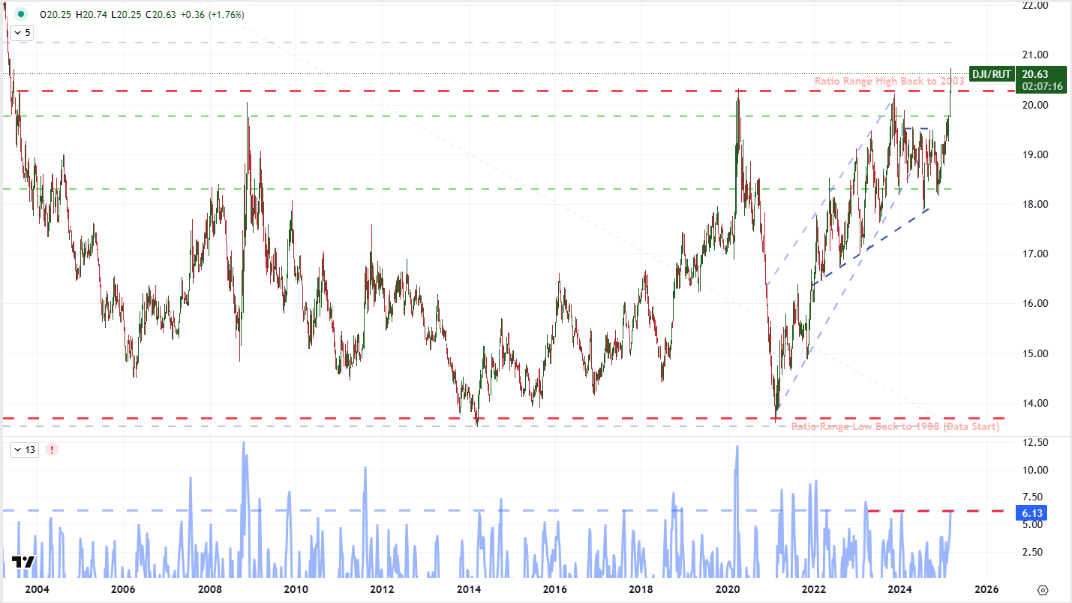
Risk aversion is starting to garner serious traction in both baseline and outlier measures of sentiment. While we have technical readings like the S&P 500 registering its worst week’s retreat since September, it is the steadfast climb in the VIX volatility index and rotation out of small cap and into large cap US stocks that is starting to raise serious flags. Then again, where there is rising instability surrounding the market’s previously-established benchmarks of sentiment – from Nvidia is a tech benchmark, the mega cap Dow relative to the Russell 2000 small cap index for concentrated risk return or US equities contrasting rest of world – it can be argued that the cascade has yet to spread across the financial system.
Chart of Dow to Russell 2000 Ratio with 4-Week Rate of Change (Weekly)
Source: John Kicklighter, TradingView
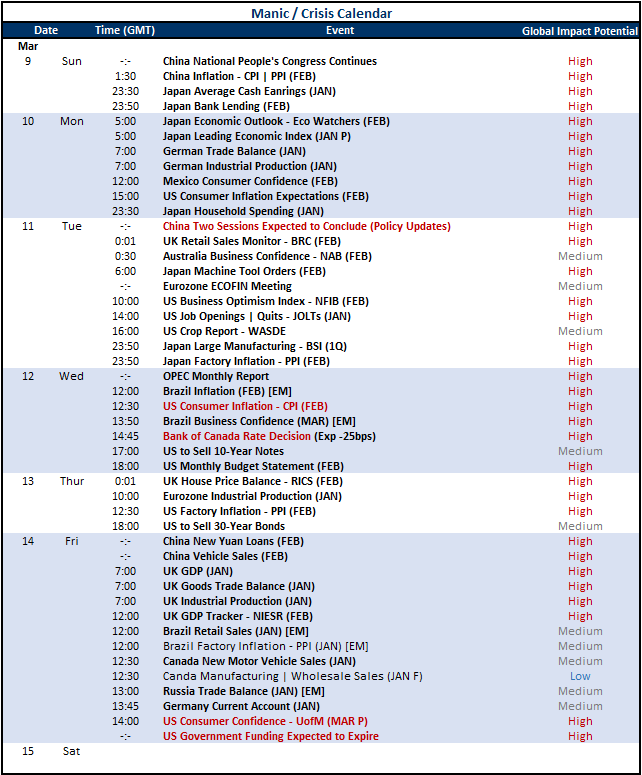
To distinguish full speculative deleveraging from mere rotation, we would do well to monitor the health of macro themes. As it happens, we are looking at updates on just such systemic matters while discrete scheduled event risk prods confidence over the coming week.
Calendar of Top Global Macro Event Risk
Source: John Kicklighter
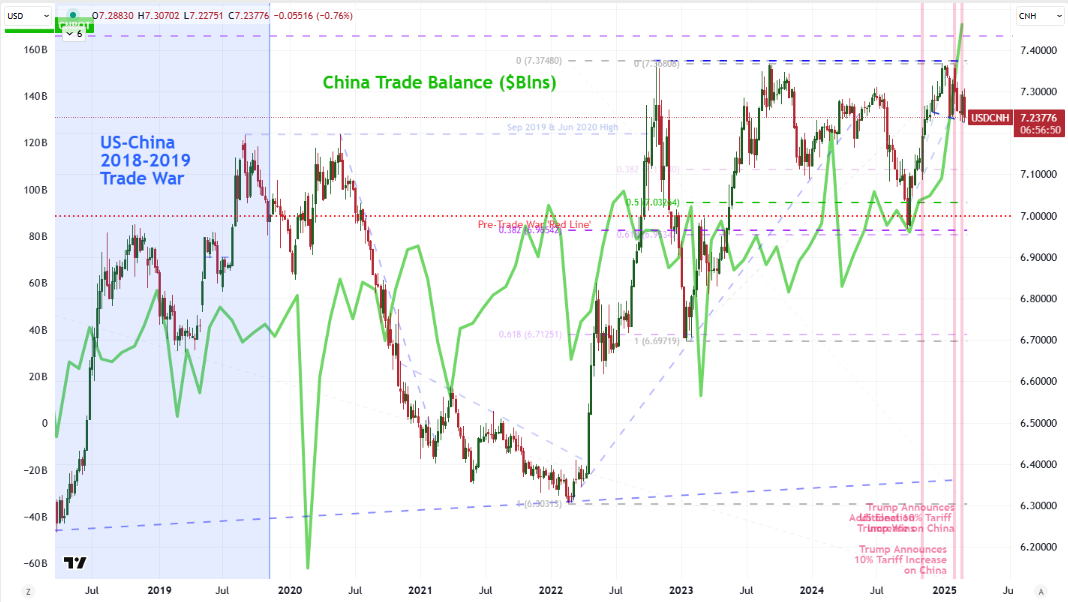
Over the past week, the US Dollar may stake the claim for the most provocative, systemic move. While the S&P 500 reported the biggest weekly lose since September and is looking ahead to its biggest week for activity (volume) of the calendar year, the DXY Dollar reported its worst week in nearly two-and-a-half years and third largest tumble in 15 years. There is seemingly something amiss in the world’s largest economy and thereby the most heavily used currency. There are multiple themes posing risk at the moment, but trade wars seem to be the most pressing. The back and forth on tariffs by President Trump is registering a shorter and less intense half-life for target benchmarks – like USDCAD – but there are areas where the pressure continues to mount, as with China.
While Trump has walked back or modified his tariffs on Western powers (Canada, Mexico, autos, etc), he has held to escalations against China. Vows of retaliation and willingness to engage in an active trade war were issued by China, but nothing of substance has been implemented yet. Perhaps they are simply waiting for the end of the Two Sessions. Typically, the close of the National People’s Congress brings updates on growth forecasts and news of any relevant policy shifts. Now is the time to expect such adjustments.
Chart of USDCNH (Daily)
Source: John Kicklighter, TradingView
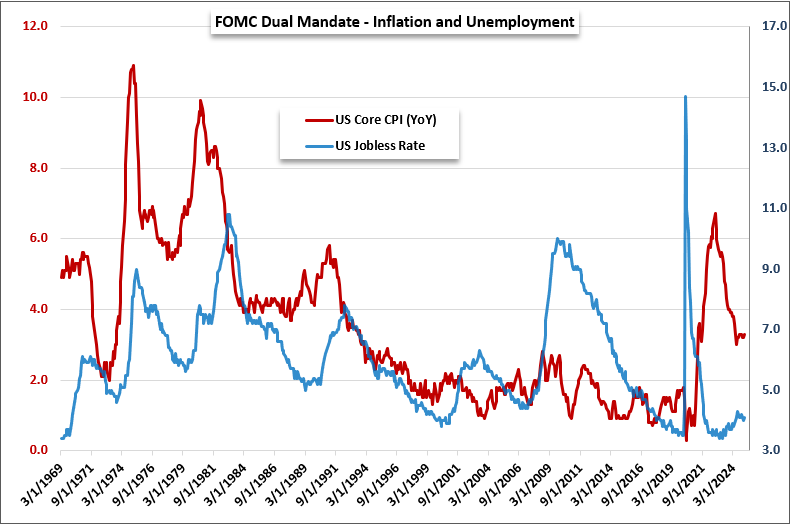
At mid-week, the US docket will come more distinctly in focus with the release of the US consumer inflation (CPI) update for the month of February. This past week, we registered a seemingly benign headline employment figure with nonfarm payrolls coming generally in line with expectations and the jobless rate only tepidly ticking higher. Then again, job cuts and underemployment have swelled particularly under the shadow of the government spending crackdown. This is one side of the Fed’s so-called ‘dual mandate’ in dictating monetary policy. Alone, there is considerable ambiguity between holding steady or cutting rates.
To make a more rounded decision, the objective of maintaining steady inflation around 2 percent comes into play. Price pressures leveled out well above objective and the Fed Chairman Powell warned this past week that they are not in a rush to further adjust benchmark settings – in defiance of Trump’s previous calls to lower rates to zero. If price pressures fade, it would allow a more straightforward policy to focus on externally-driven issues, but the risk of tariff-fanned inflation could raise very serious complications.
Chart of US Core CPI and US Unemployment Rate (Daily)
Source: John Kicklighter, Federal Reserve Economic Database
Finally, towards the end of the week, there could be further complications to take in around the world’s largest economy and financial system. The health of the US consumer via the University of Michigan confidence survey is certainly an important measure with insight into multiple facets of concern like political concern or inflation forecasts. That said, I believe there is another event which could prove more destabilizing given the difficulty in discounting the outcome – and in reality the reticence to price any real pain –relating to genuine US government instability. There are certainly lots of headlines about the changes around initiatives like DOGE, but the rubber meets the road when it comes to possibly sharp declines in government job numbers.
The situation may be even more unsettling from the perspective of another US government shutdown actually crossing the threshold into extraordinary closers of segments of the apparatus. Democrats have had little recourse to stop the GOP-led upheaval, but cutting off funding may be an area where they could mount an effective stance. And given government jobs is already a preferred Democrat bastion already under pressure, there is less compunction to only hold to theatrics. That said, I very much doubt the market has priced in a serious escalation of risk on this front.
Chart of US Credit Risk / Dollar Loss (Daily)
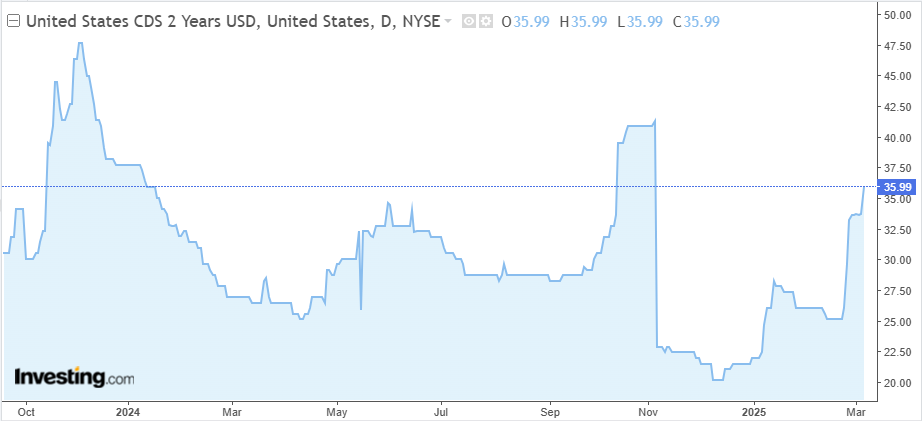
Source: John Kicklighter, Investing.com
-- Written by John Kicklighter, Global Head of Content