Will the Markets be as Volatile as Headlines: Manufacturing, ECB and NFPs
Seasonality forces will be kicking in hard going forward. Challenges posed to US President Donald Trump's aggressive trade policy approach will further throttle the market's reactionary tendencies.
Talking Points:
Trade war threats are rapidly losing their potency as US courts further throttle the Trump administration’s frequent reversals
Manufacturing activity may still have absorbed the negative influences of trade upheaval and data this week will indicate by how much
Monetary policy is back on the radar with the ECB and BOC rate decisions this week and US NFPs more pointed after a multi-year low PCE deflator
Seasonality forces will be kicking in hard going forward. In the best of times, the presumed norms of a market as the year progresses carries a certain amount of skepticism; but the drift towards fulfilment doesn’t often require full conviction on statistical averages. Expectations of alignment to the gentle slide of the ‘summer doldrums’ will feature prominently over the coming week. That said, the challenges posed to US President Donald Trump in his aggressive trade policy approach will throttle a certain degree of volatility founded on uncertainty as the threat of another trade war acted as a top-level driver of the markets until lately. With any new tariff raised expected to be deliberated by federal courts, anticipation of a new pressure points being applied to the market will remain notably under-analyzed. That, in turn, makes relative market performance even more interesting.
Table of Relative Market Trends and Volatility
Source: John Kicklighter
Over the past week and month, many benchmarks for risk are at the low end of their previous period’s evaluation. For those that assume that thinned threat assessment for the calendar will lead to inaction in a favorite ‘buy and hold’ market, a lack of traction in the omission of bad news will not bode well for a market that is increasingly wary of the backdrop trade winds. Thematically, there isn’t a clear fundamental refrain to carry the market to a definitive objective. There is debate over what consideration is more important for investors in the list of themes at present, but a well-placed economic event could rouse interest to life.
Even if Trade Wars Fade, What Manufacturing Impact Did the Volatility Wrought?
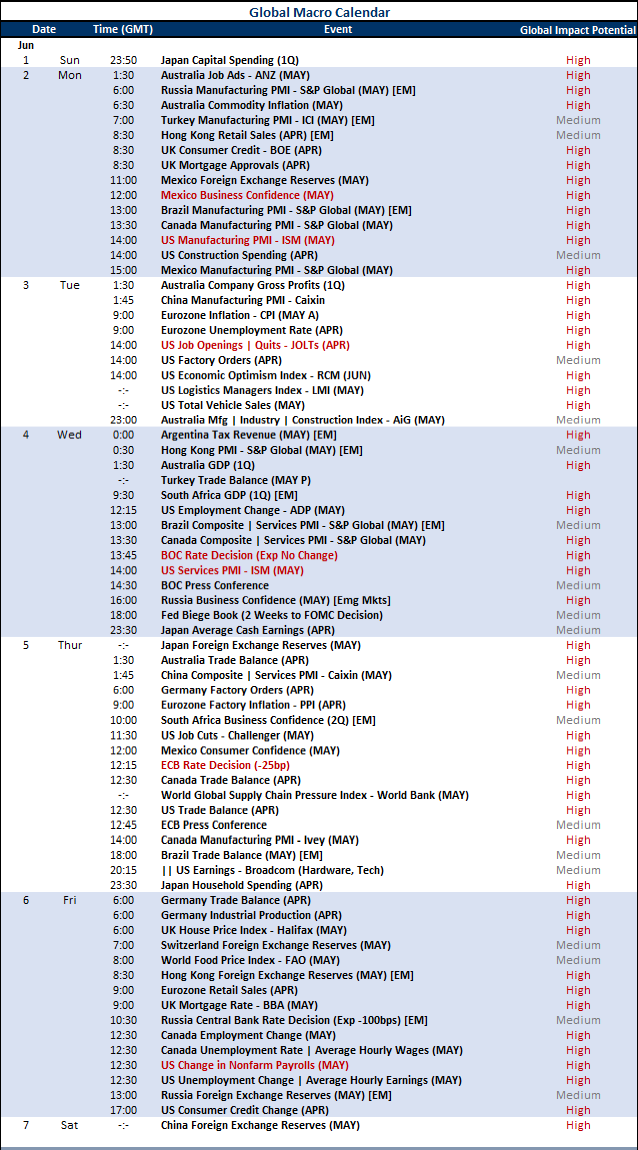
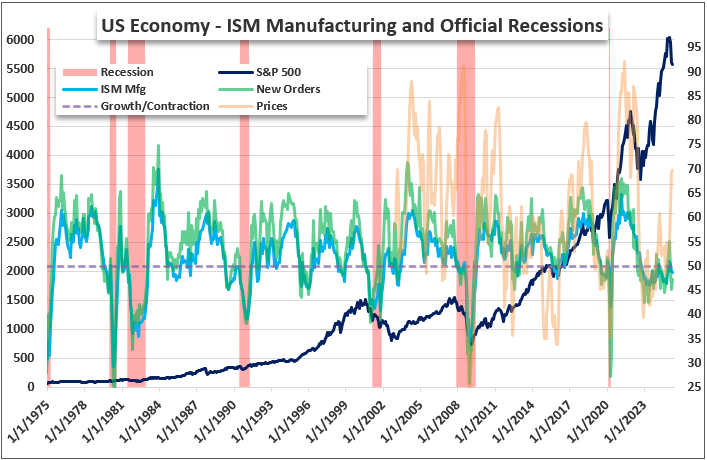
In terms of the top scheduled event through the coming week, the run of manufacturing activity over the open of the week will be a particularly important gauge of trade, growth and inflation pressures. The US ISM manufacturing survey results for May will be release Monday, 14:00 GMT. Theoretically this is a lagging indicator relative to the S&P Global update we had not too long ago; but comparison to the factory activity health of key trade partners will be an important side consideration. In addition to the US factory update, there is a scheduled release of manufacturing PMIs for Mexico, Brazil, Canada and Brazil ( as well as China’s Caixin update) on Monday. These are all key Americas trade partners for the US. This data may offer some more tangible insight into what the negative consequences are should the government continue to cater to uncertainty. It will also offer some measure of what carry over the uncertainty of the past three months holds.
Chart of US ISM Manufacturing, New Orders and Prices Overlaid with S&P 500 (Daily)
Source: S&P, ISM Manufacturing
The ECB is Expected to Cut and BOC to Hold
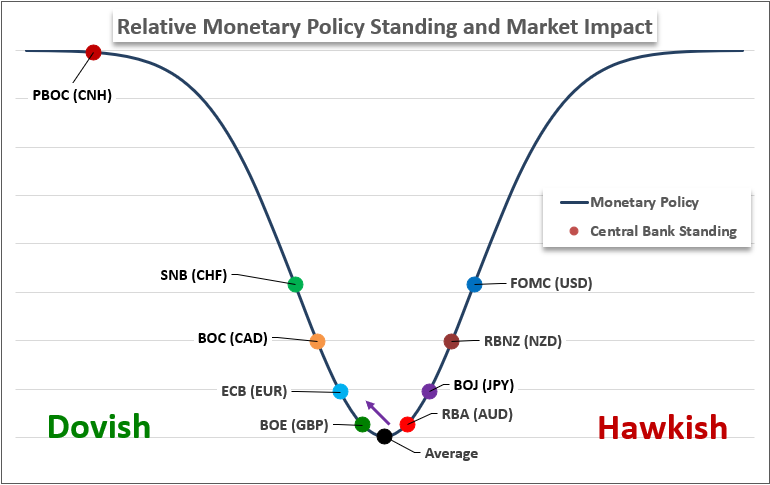
Another theme worthy of a macro trader’s attention over the coming week is the state of monetary policy. This can be shaped by key event risk (like the US labor report) or it can be updated outright in the case of the Bank of Canada (BOC) and European Central Bank (ECB) rate decisions. With the Federal Reserve’s own policy update and subsequent forecasts due a few weeks down the line, these two FOMC peers will provide some contrast to US policy, but it will also carry meaningful weight in setting expectations for what the US authority may due later in June. Looking to economist expectations, the BOC is expected to hold its benchmark lending rate on Wednesday at 13:45 GMT six separate rate cuts over the past year amounting to 225 basis points (bp) of easing.
That positions the Canadian group in a meaningful dovish policy setting. As for the ECB, President Lagarde and team are actually expected to announce another 25 bp easing at the Thursday 12:15 GMT announcement. That would be the eighth rate cut from the group in this policy era, which could add enough pressure to offset competing fundamental considerations like safe havens and seeking alternative to the Greenback.
Chart of Relative Monetary Policy Standings of Major Central Banks
Source: John Kicklighter
Nonfarm Payrolls Will Pull Focus Forward
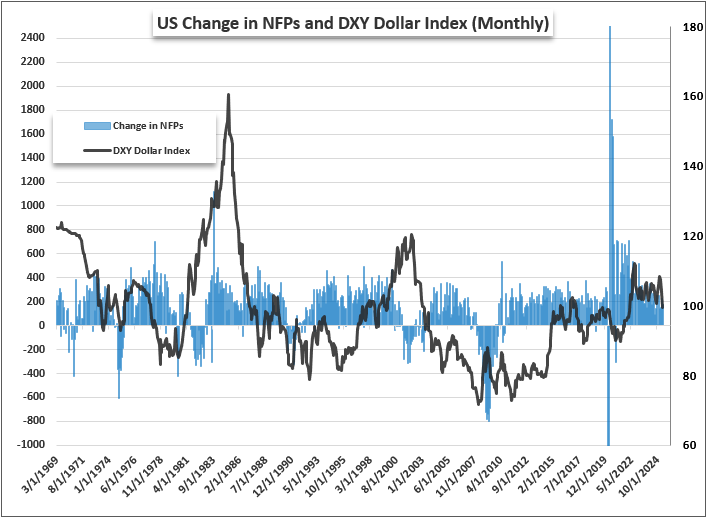
Arguably, the most fundamentally loaded event on the economic docket through the coming week will be Friday’s May change in nonfarm payrolls (NFPs.). Given the Fed’s favorite inflation indicator – the PCE deflator – saw its headline and core annual readings drop to their lowest levels in five years, there is a distinct possibility that the US central banks could soften its concern around lurking prices pressures via trade ware fallout (especially as the courts challenge the President). The Fed has a dual mandate between maximum natural unemployment and a contained level of inflation (frequently considered a 2 percent target).
Between the economic health implications and the possibility of feeding monetary policy shifts, the Friday jobs report indeed carries a lot of intention. The real question is how much impact it could have on markets. Fed implied interest rates have ticked lower recently on the PCE update, but there is still considerable premium for the Greenback to sacrifice. No doubt, the payrolls report will represent an important update on the US economy and monetary policy. Yet, there is a question about the surprise quotient of the data as well as the practical delimiter that is the Friday release of the data. This report has more potential to throttle markets in advance of its release than it may have to spur reaction in the aftermath of the update.
Chart of DXY Dollar Index and Change in NFPs (Monthly)
Source: US Bureau of Labor, ICE
Follow the Global Macro Calendar
What are the major events and indicators on tap for the global economy that could charge volatility in markets and reshape deeper fundamental themes? Sign up for the updated Global Macro Calendar updated each week with a two week look ahead of the top events!
The subsidiaries of StoneX Group Inc. provide financial products and services, including, but not limited to, physical commodities, securities, clearing, global payments, risk management, asset management, foreign exchange, and exchange-traded and over-the-counter derivatives. These financial products and services are offered in accordance with the applicable laws in the jurisdictions in which they are provided and are subject to specific terms, conditions, and restrictions contained in the terms of business applicable to each such offering. Not all products and services are available in all countries. The products and services offered by the StoneX Group of companies involve risk of loss and may not be suitable for all investors. Full Disclaimer. This content is not intended for residents of any particular country, and the information herein is not advice nor a recommendation to trade nor does it constitute an offer or solicitation to buy or sell any financial product or service, by any person or entity in any jurisdiction or country where such distribution or use would be contrary to local law or regulation. Please refer to the Regulatory Disclosure section for entity-specific disclosures. No part of this material may be copied, photocopied or duplicated in any form by any means or redistributed without the prior written consent of StoneX Group Inc. The information herein is provided for informational purposes only. This information is provided on an ‘as-is’ basis and may contain statements and opinions of the StoneX Group of companies as well as excerpts and/or information from public sources and third parties and no warranty, whether express or implied, is given as to its completeness or accuracy. Each company within the StoneX Group of companies (on its own behalf and on behalf of its directors, employees and agents) disclaims any and all liability as well as any third-party claim that may arise from the accuracy and/or completeness of the information detailed herein, as well as the use of or reliance on this information by the recipient, any member of its group or any third party.
Our market expertise, advanced platforms, global reach, culture of full transparency and commitment to our clients’ success all set us apart in the financial marketplace.
Reach
With access to 40+ derivatives exchanges, 180+ foreign exchange markets, nearly every global securities marketplace and numerous bi-lateral liquidity venues, StoneX’s digital network and deep relationships can take clients anywhere they want to go.
Transparency
As a publicly traded company meeting the highest standards of regulatory compliance in the markets we serve, our financials and record of accomplishment are matters of public record. StoneX’s commitment to “doing the right thing over the easy thing” sets us apart in the industry and helps us build respect, client trust and new partnerships.
Expertise
From our proprietary Market Intelligence platform, to “boots on the ground” expertise from award-winning traders and professionals, we connect our clients directly to actionable insights they can use to make more informed decisions and achieve their goals in the global markets.