A Trump Victory - What Implications for the Base Metal Market?
Donald Trump’s victory in the US election was confirmed just after 10:30am GMT, with 277 electoral colleges votes (and 271 required to win). At the time of writing, the Financial Times has reported 54 out of the 56 races called, with Harris holding 226 votes versus Trump at 295. With a four-year Trump term ahead for the market, this article does a quick take at what this means for base metals?
At the time of writing, Trump holds control of the presidency, the Senate and potentially the House (with 397 districts of 435 counted, with Trump holding 206 votes over 191 for Harris).
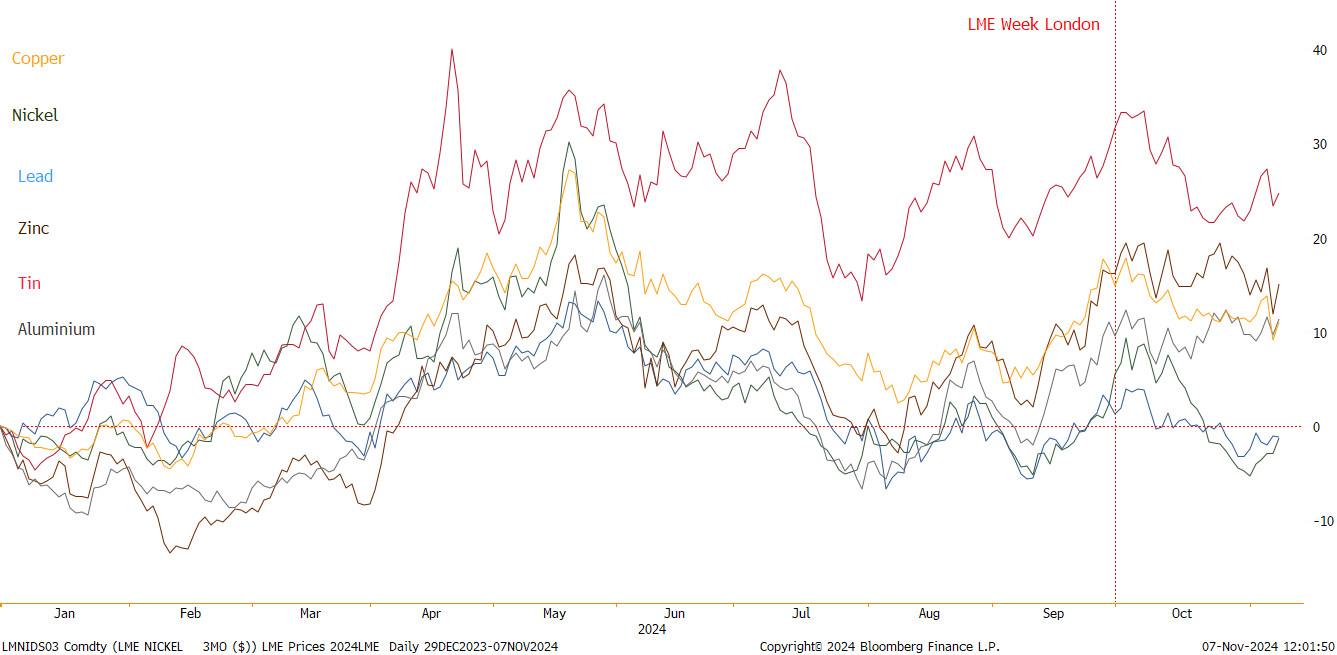
LME 3M Base Metal Price Performance
Source: Bloomberg, StoneX
What Could a Second Trump Term Look Like?
“Investors shouldn't assume that Trump's second term will look just like his first, a point that could come to the forefront after immediate post-election market action plays out. Trump’s first term was heavy on tax cuts and light on tariffs; his second term could be a mirror image — a different policy mix with unique market implications” – StoneX Strategy Team
Lighter Tax Cuts?
- Trump has proposed smaller cuts than in his first-term, including tax-free treatment for tip income and overtime pay; modest, targeted reductions of the corporate rate; and — most important to him — extension of 2025-expiring individual income tax cuts. That isn't the same "big bang" as happened in 2017.
- In addition to resistance from Democrats, the federal budget deficit, now near $2 trillion (6% of GDP), may restrain Trump's desire to cut taxes much further.
Heavier Tariffs?
- Trump’s tariff proposals are more aggressive than they were during his first term, with stated plans for a 10% across-the-board tariff and a special 60% tariff on Chinese imports. Unlike tax policies, tariffs do not require Congressional approval, offering him greater flexibility to pursue these measures. Trump has argued they're a better way to generate government revenue. During his first term, average U.S. tariffs rose only modestly, from 2% to 3%; his new proposals would bring tariffs to heights unseen since the 1930s.
Trump tariffs - What Implications for the Base Metal Market?
Trump has previously mentioned he would:
- Implement 10-20% tariffs across the board on all imports into the U
- Implement a 60% tariff on Chinese goods imports
- Under the scenario that China invades Taiwan, Trump stated in a WSJ interview
“I would say: if you go into Taiwan, I’m sorry to do this, I’m going to tax you at 150% to 200%”.
Stronger USD & Potential Slowing Global Growth = Net Negative for Base Metals
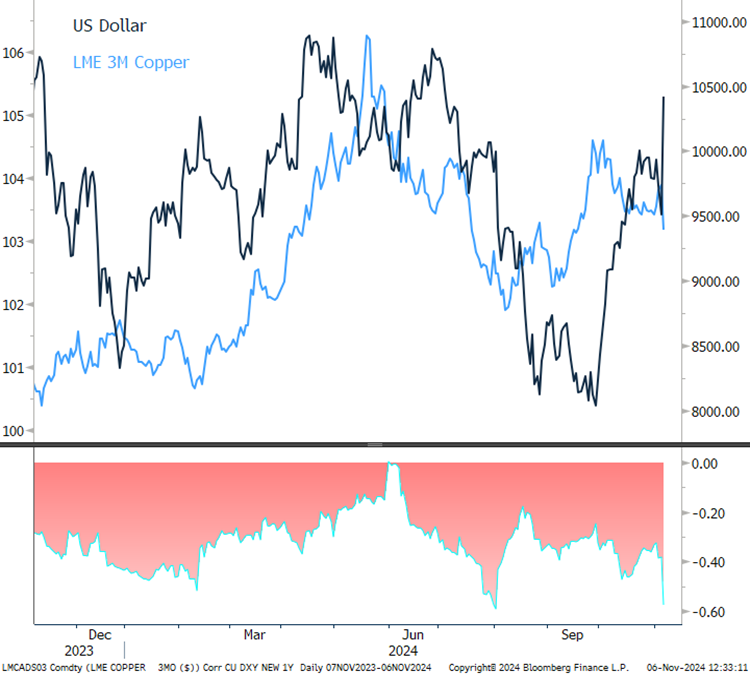
A follow through of these tariffs (which do not require approval by Congress), would be a shock to the market, resulting in (based on economic theory from 2018 tariff increases), a stronger US dollar, slowing growth and labour productivity. Furthermore, in the scenario of retaliation by US trade partners, the outlook may become more unfavourable for industrial metals.
Correlation of US Dollar and LME 3M Copper
Source: Bloomberg, StoneX
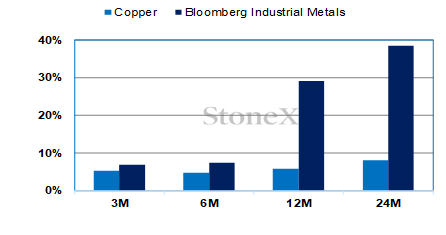
Base Metal Index & Copper Prices Post 100bps Decline in US 2Y Yields
Source: Bloomberg, StoneX
An Escalation in Geopolitical Tensions = Net Negative for Base Metals
Geopolitical tensions can impact a commodity market in two ways:
- A risk channel: Financial markets overestimate the impact on supply resulting in higher prices
- An economic activity channel: Shocks to economic growth, creating uncertainty in investment and demand, leading to lower prices.
We forecast (on average) the economic activity channel as having a longer lasting impact on base metals.
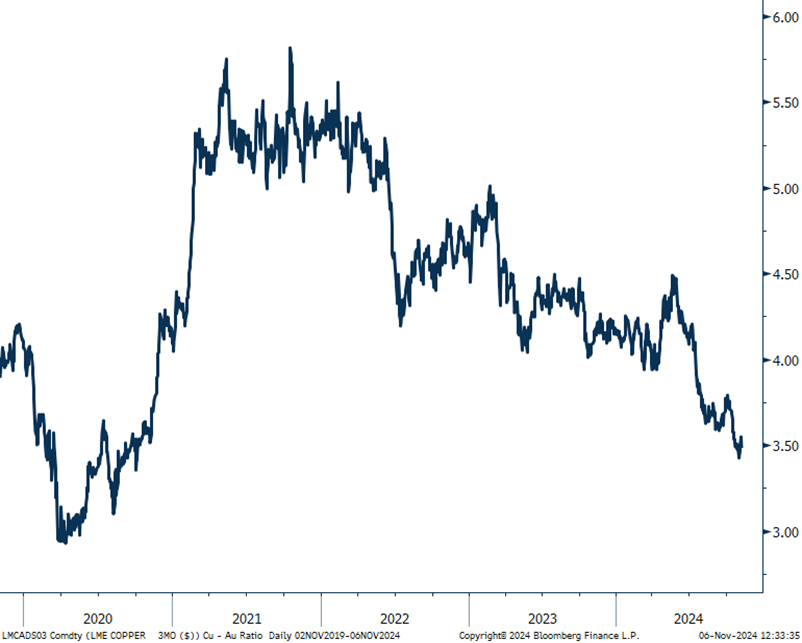
Copper : Gold Ratio
Source: Bloomberg, StoneX
Chinese Reliance on Exports for Domestic Growth to Reduce = Net Negative for Base Metals
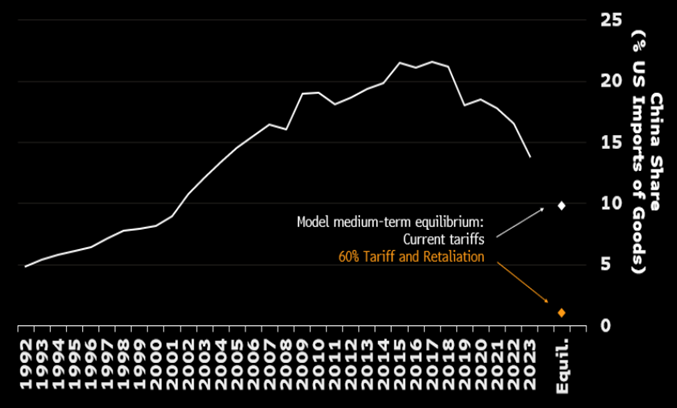
StoneX Ivy Li reports: “an additional 30-60% tariffs on Chinese exports goods to the US could slash China’s foreign trade growth ratio by 4-8%”. The US share of China’s foreign trade could fall to close to zero (it currently stands at 15%, down from 20% pre-2019 trade war). However, it is likely in this scenario China would move to increase business with the global south and emerging markets, in part offsetting the negative impact.
BBG Impact on Chinese Exports On 60% Tariff Increase
Source: Bloomberg, StoneX
China May Have to Lean on Fiscal Stimulus Harder = A Double-Edged Sword
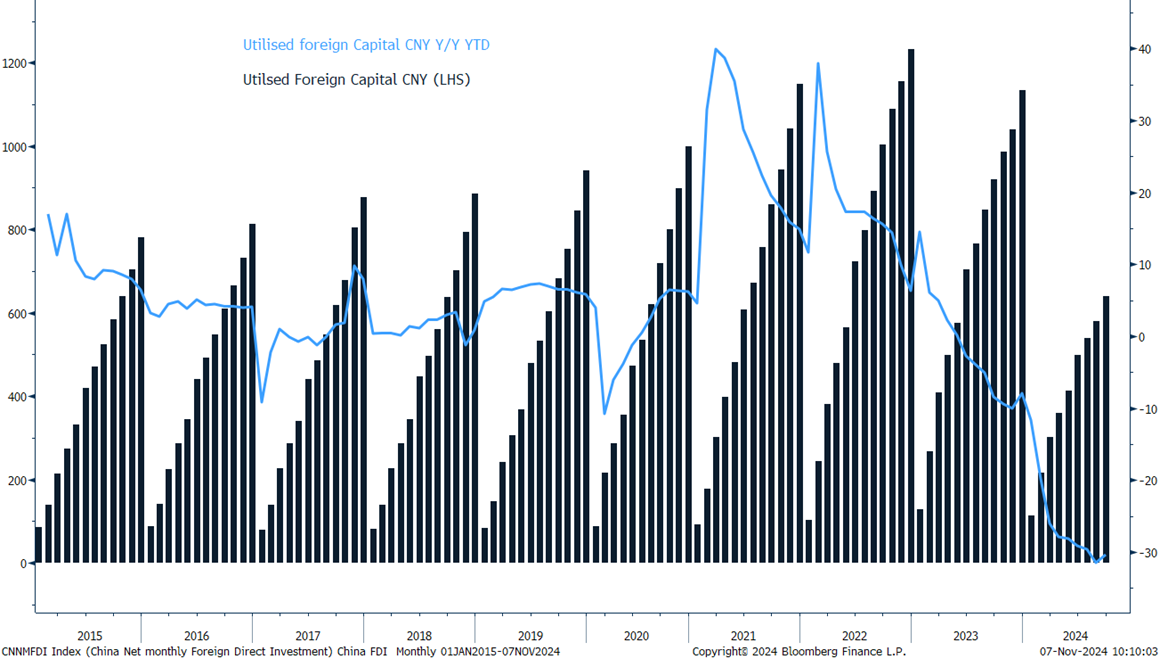
While the Chinese Government has previously alluded to the fact that they may need to increase the overall level of fiscal stimulus in the country on a Trump victory in the US elections (with the NPCSC meeting usually being moved to an odd numbered month, post the election). Higher stimulus in China is not an outright bullish parameter, given that this move will be taken in light of the negative impact from tariffs and the PBoC’s limited freedom to lower interest rates (given a potential increase in central bank policy divergence). Furthermore, with Foreign Direct Investment (FDI) in China having already fallen to historically low levels in 2024 (down 30.4%Q1-Q3), the outlook for higher tariffs will likely result in an acceleration of foreign investment away from China.
Foreign Direct Investment into China
Source: Bloomberg, StoneX
Our View
Overall, we foresee a second Trump term with an economic policy lever heavy on tariffs and lighter on tax cuts, creating upward pressure on short- and long-term interest rates. Base metals to move lower in the medium-term due to potential inflationary policies (corporation tax cuts, tariffs), heightened geopolitical tensions and building concerns over China recovery.