The biggest test of the global urea marketplace is happening right now in the form of the India urea purchase tender. We have already seen values sliding in anticipation of lower offers being submitted...but is that where it ends? From my POV, it is going to be tough to paint a bullish picture moving ahead as we are quickly moving into the dead demand period for the world.
Our POV is that following India, barring any surprise demand popping up, prices should stay under pressure. China's anticipated May return only pushes that POV further.
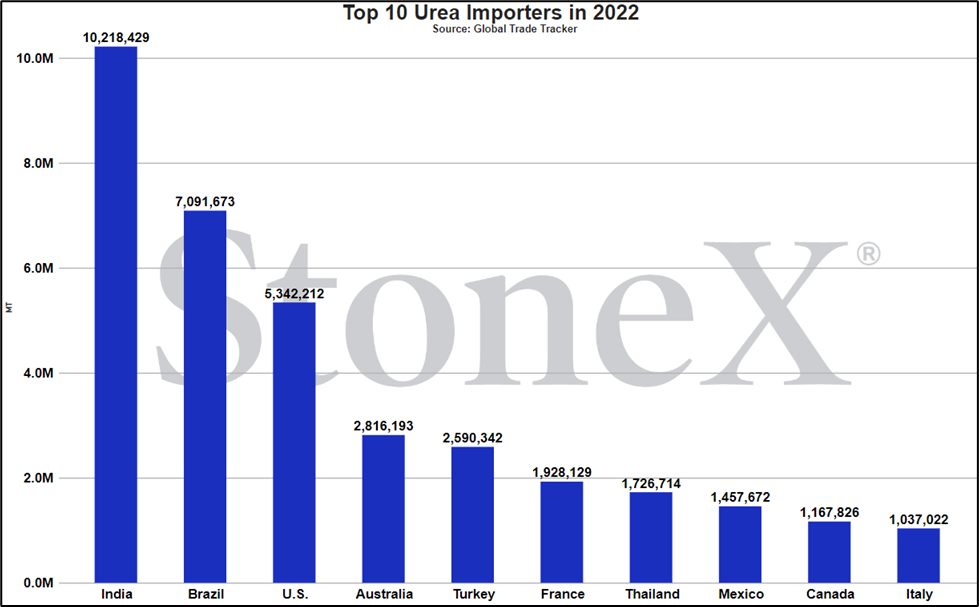
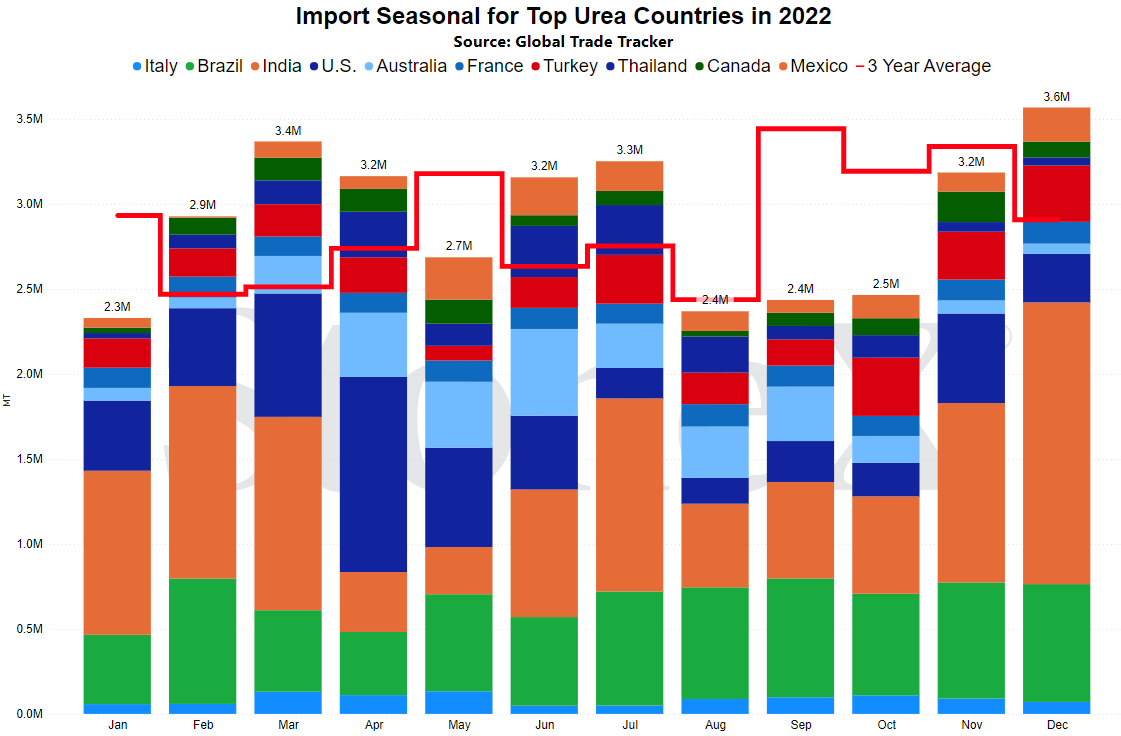
India tender finally gets announced
The announcement the urea world was agonizing over was finally announced. India stepped forward and put the world on notice. The biggest thing that stood out to me was the shipment date. They announced that this tender would receive shipments all the way until May 20th. This did multiple things to set a bearish tone:
It stressed that they were not desperate for product nearby
It gives plenty of time for producers to make product to ship
It extends beyond the period when Chinese producers are expected to return to the export marketplace
It extends long enough to force offers to consider the ramifications of missing (i.e. carrying product into the summer demand lull season)
As such, we have seen global prices declining as a result and offers have reflected the same. The lowest price for the west coast is $339 and east coast is $347.70. More important is how tight the offer range is. There are over 1M tons offered within $10 of the lowest west and east coast price which should indicate that offers will be willing to drop their price to participate.
As any tender, we have to wait for the final details but for those that have been hoping for softer pricing, this has been exactly what was wanted.
What does this mean for Aussie farmers?
The India tender put decent negative price pressure on the global urea marketplace. Eventually, assuming it holds, those values should eventually make their way to farmers in Australia.
Brazilian producer announces stoppage due to high input costs
In an announcement that took us by surprise, Brazilian based nitrogen producer Unigel announced that they were ceasing production at their locations in Camacari and Laranjeiras which combine to product approximately 1.1MMT of urea annually. The reason for the stoppage was due to high cost natural gas making them unable to profitably sustain production.
Now, on the global scale, 1.1MMT per year is not much...but for that local market, this is a big change that will see local buyers being forced to find new supplies to meet their demand.
What does this mean for Aussie farmers?
It creates new competition in the world. Brazil was used to sourcing this 1MMT from domestic producers. Now, they must source those tons from somewhere else around the world. While it may not be a direct conflict, the dominos do shift trade flows around the world. While it is far from a world changing event, it does lend price support.
Chinese exports continues to be expected to return
This isn't exactly a new story this month but is important enough that it needs attention.
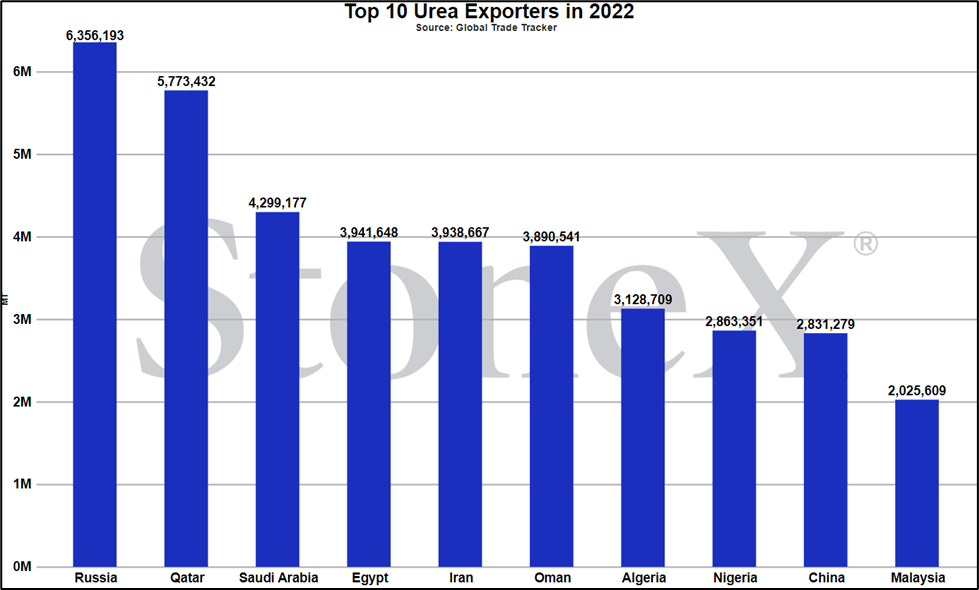
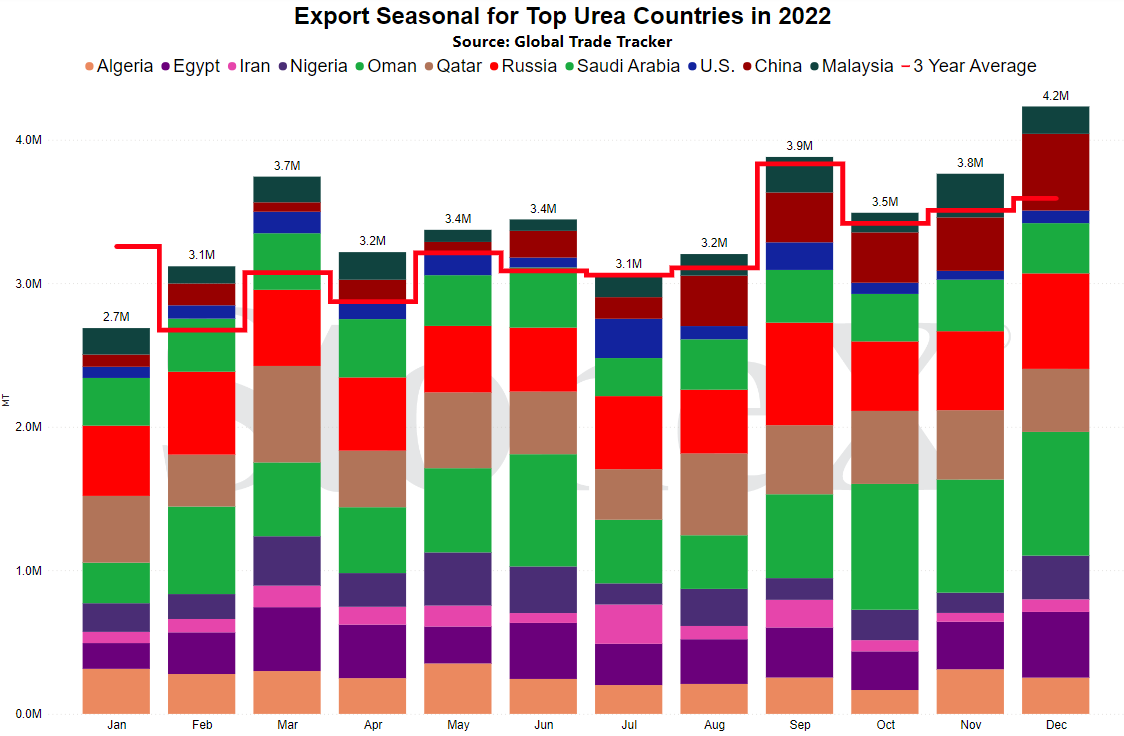
In recent months, it has been heard that the Chinese government was loosening its export restrictions on urea. This would/will be a huge event for the urea world. Typically, China accounts for over 5MMT of exports per year, or approximately 10% of the global export volume. Unfortunately for world buyers, the Chinese government stepped in during the worst of the last few years and restricted exports with the idea of keeping more tons home to maintain adequate supplies and lower prices for Chinese farmers. Now that the world has "normalized", it seems these restrictions are being loosened.
Assuming nothing changes, and we always have to watch for changes, we should see them return on a wider scale early May. They will be returning during the period when global demand slows to its lowest level which combines for a rather bearish scenario.
Again, we have to watch because as with everything with China, there is no telling exactly what will be done. We could see these returns get squashed and restrictions put back into place. Let's just hope that doesn't happen...
What does this mean for Aussie farmers?
This is big. China "typically" accounts for around 10% of the global urea export market. Not only that, but their location in the world in proximity to Australia makes them a more "near" partner/supplier. Even if product is not sourced directly from China to Australia, it adds a lot of supply/competition to the world that has been lacking it. More supply/competition typically equates to lower pricing.
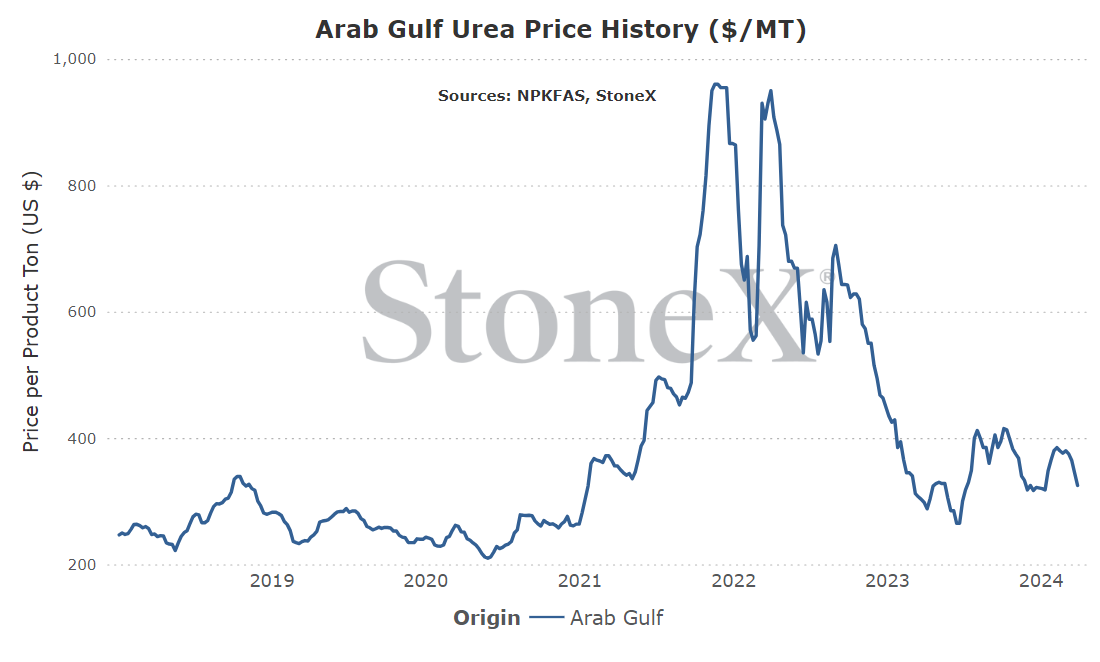
Number 1 exporter (as a region, not as individual nations)
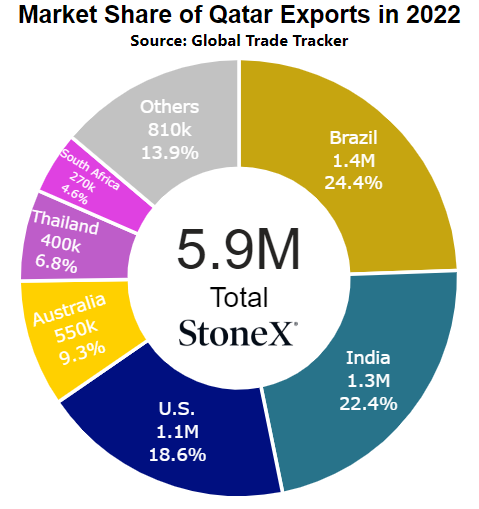
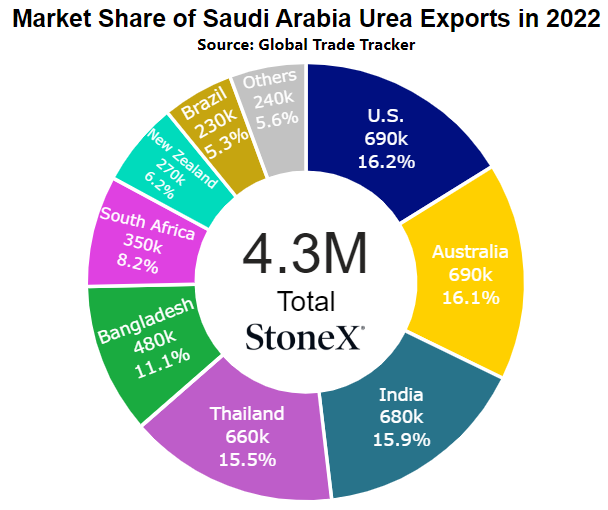
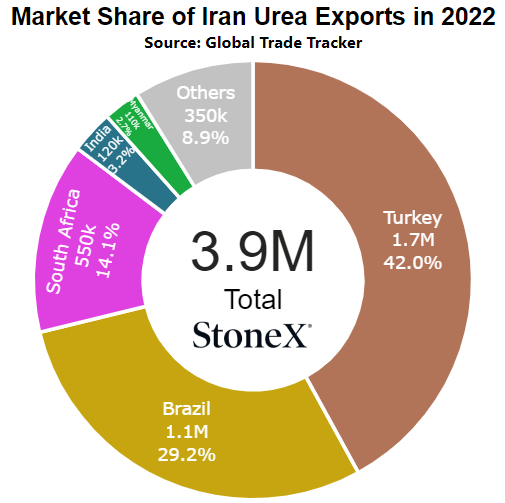
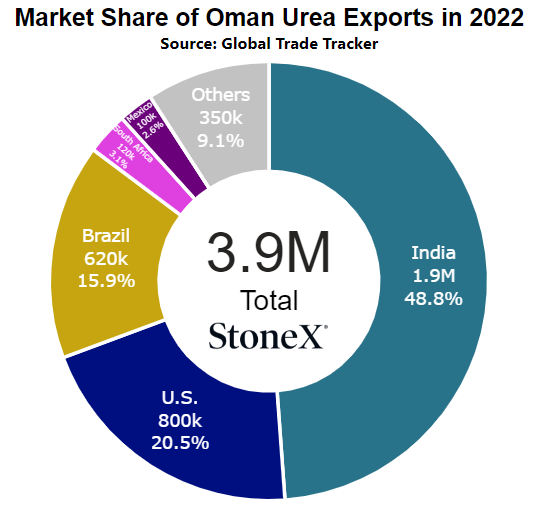
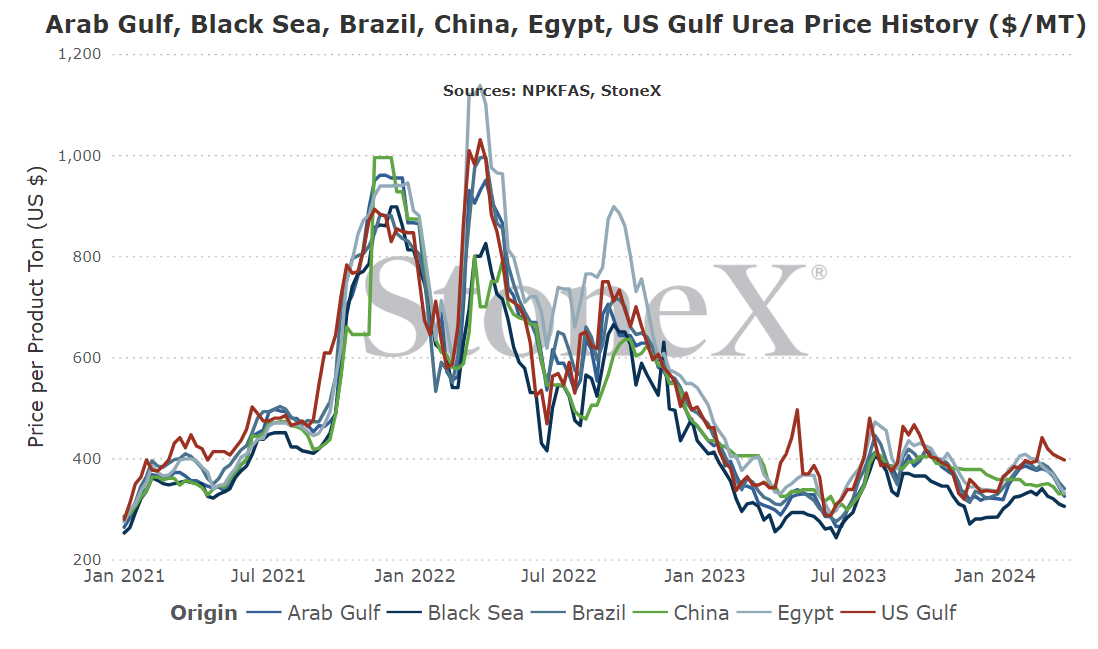
Vs 30 days ago - -14% or approximately $55 lower
Vs 90 days ago - +1% or approximately $3 higher
Vs 6 months ago - -16% or approximately $60 lower
Vs 1 year ago - +9% or approximately $28 higher
Egypt
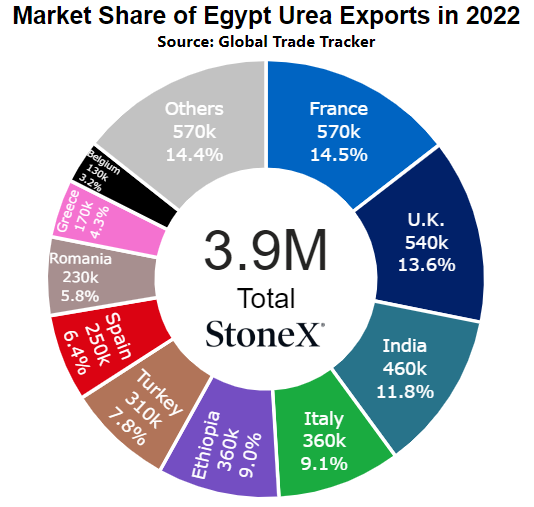
Number 4 global exporter in 2022
Price comparisons
Vs 30 days ago - -14% or approximately $54 lower
Vs 90 days ago - -2% or approximately $7 lower
Vs 6 months ago - -22% or approximately $94 lower
Vs 1 year ago - -1% or approximately $2 lower
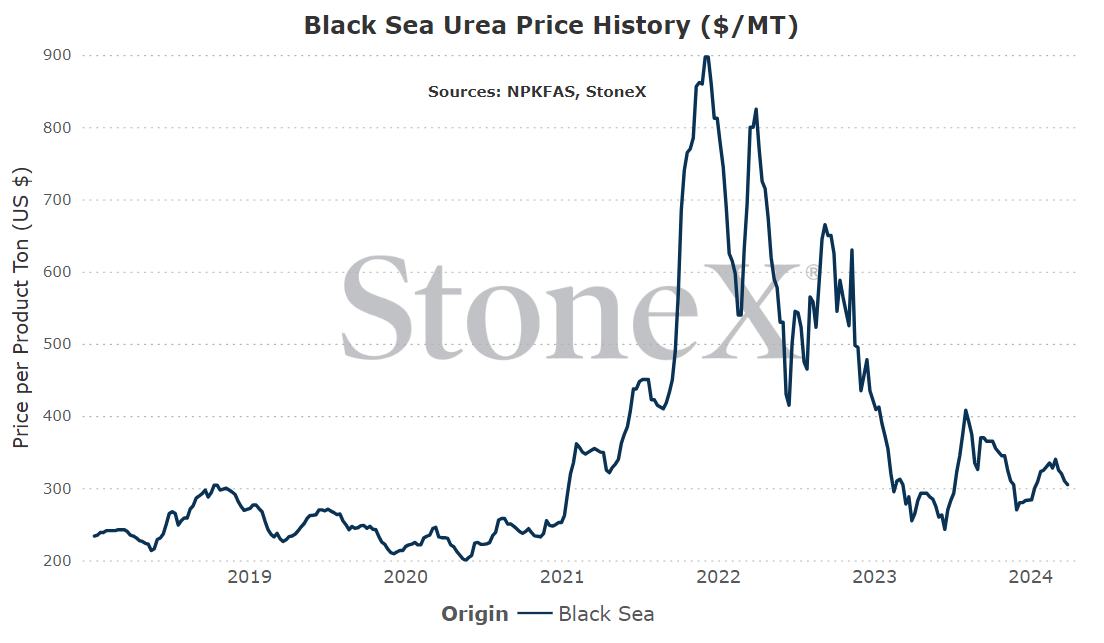
Black Sea
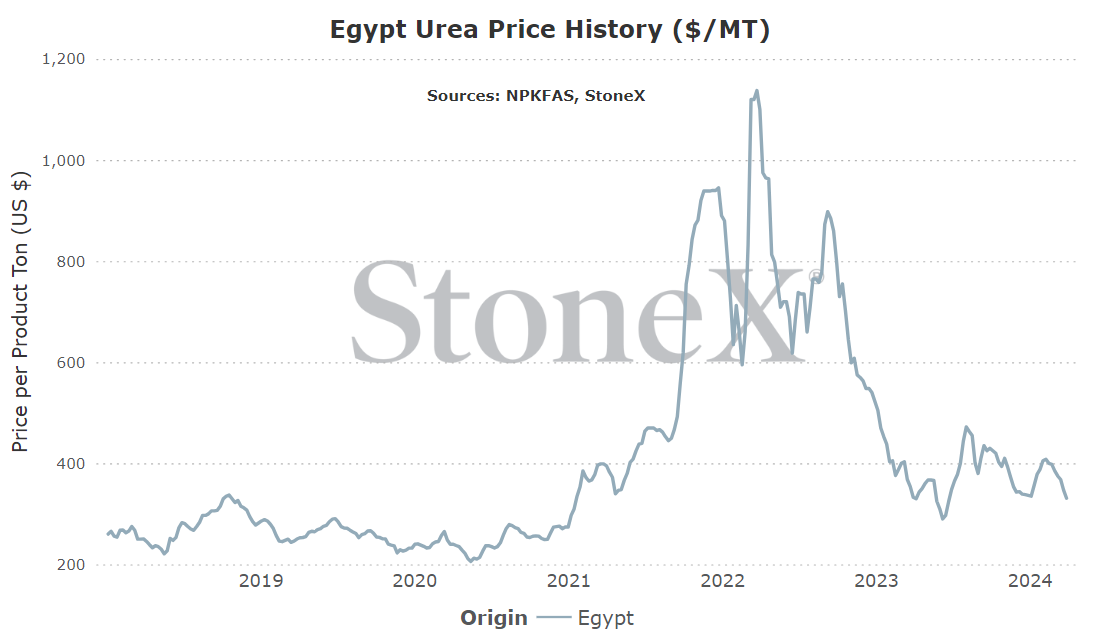
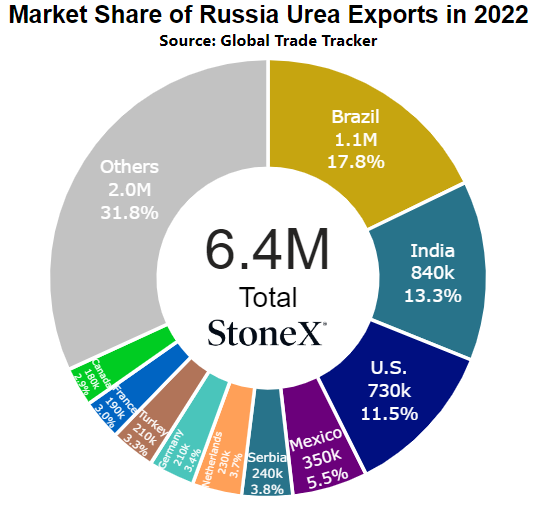
Number 1 global exporter in 2022
Price comparisons
Vs 30 days ago - -10% or approximately $35 lower
Vs 90 days ago - +8% or approximately $23 higher
Vs 6 months ago - -16% or approximately $60 lower
Vs 1 year ago - +20% or approximately $50 higher
China
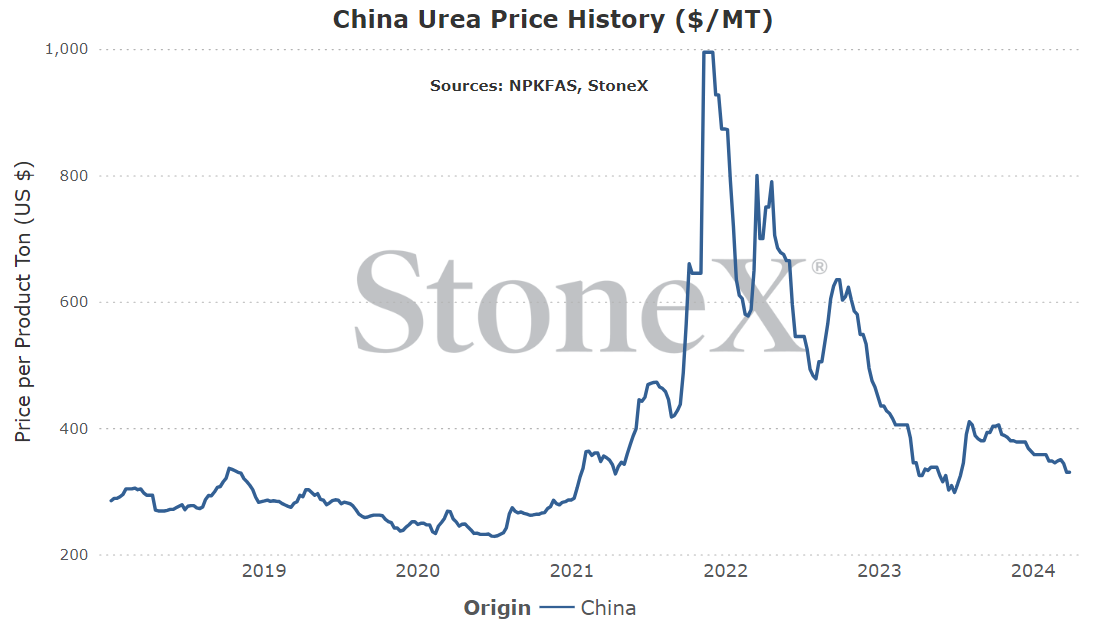
Number 9 global exporter in 2022
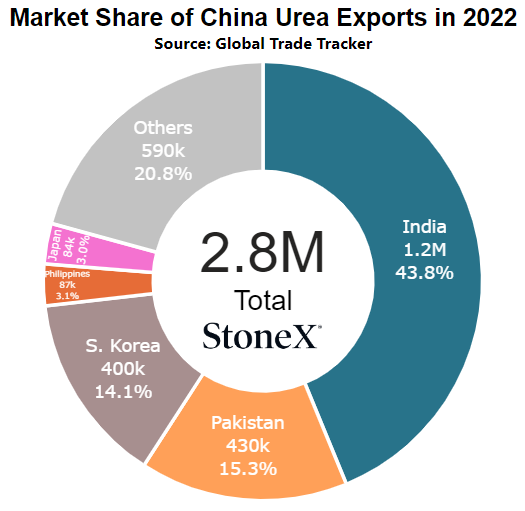
Price comparisons
Vs 30 days ago - -5% or approximately $18 lower
Vs 90 days ago - -10% or approximately $38 lower
Vs 6 months ago - -16% or approximately $63 lower
Vs 1 year ago - -4% or approximately $15 lower
- China could 180 their export return - you never know when it comes to China. We have a month before they are supposed to return to exporting. That is 30-days for them to change their minds. If they do decide to stop exports again, this would help reduce expected supplies and add a bit of support.
- India offers may balk at lowest values, force retender - I'm going to start by saying I do not expect this...but it needs to be watched. Most of the offers were relatively close to the lowest values which means they "should" drop price to participate. However, if offers bull up and push against the values, it could force India to retender and give position holders a bit more backbone for round two.
- Last minute spring demand could surge - there is still a decent chunk of spring/Q2 demand floating out there and if it gets backed into a corner (waited too long), you could see offers take advantage with higher prices. There are some areas that are still tight inventories and just in time logistics are not cheap.
- Looks more and more likely that China is returning - is there a chance that China reverses course again? Yes, but it doesn't look likely. If/when China returns to exporting, it will be the return of the global urea boogeyman that keeps everyone awake at night. When they are out there lurking, offers seem to go a little lower than they would have.
- Global urea market is looking pretty light on demand - we could certainly see a quick pop of demand, but it is looking less likely by the day. In fact, once India wraps up their purchase, destination options start to fall off. That means for those areas still buying product, they have a lot of opportunities.
- Major N demand region, N.A., just cut their corn estimates which lowers nitrogen demand - The U.S. USDA report from last week surprised the marketplace by dropping expected corn acres to 90M. The StoneX estimate had sat at 92.1M for a long time with an industry average of 91.5M. With an average application rate of 155 pounds of actual N per acre, this is a sizeable cut to demand that could have some suppliers scrambling for new destinations.
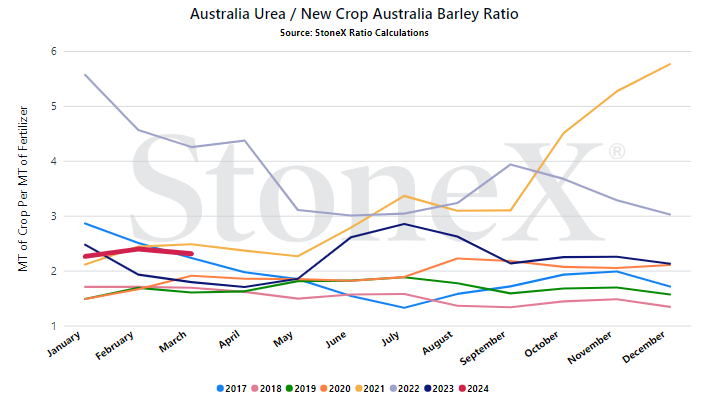
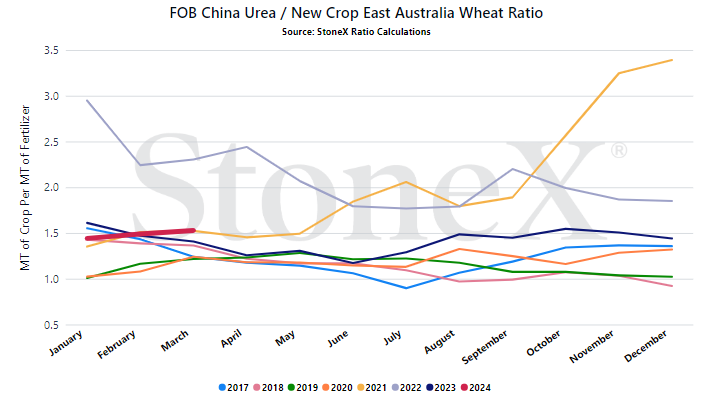
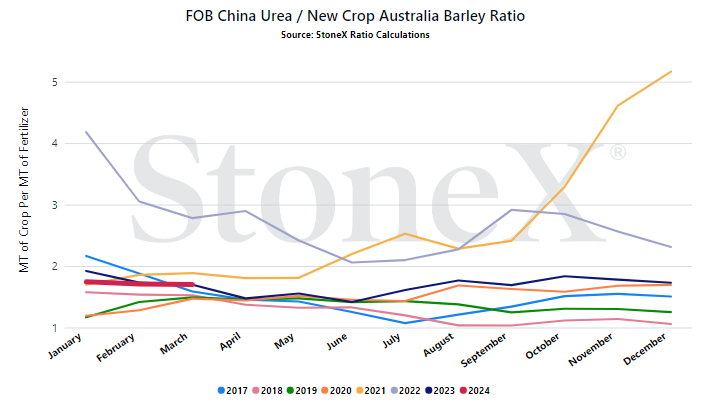
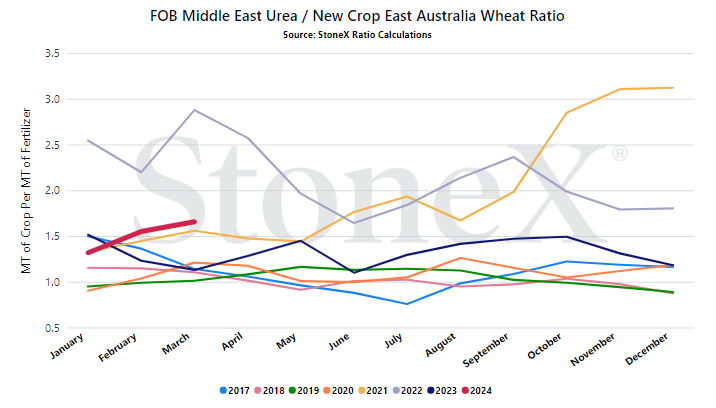
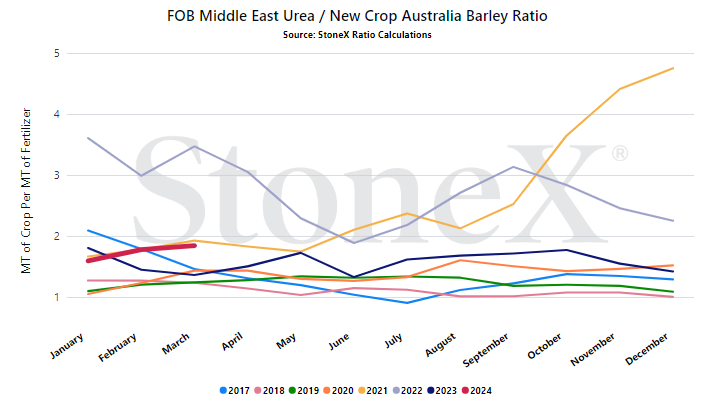
We believe that only looking at the flat price of either grains or fertilizer can be misleading:
-
Only selling grain can hurt you if fertilizer prices rise substantially
-
Only buying fertilizer can hurt you if grain prices fall
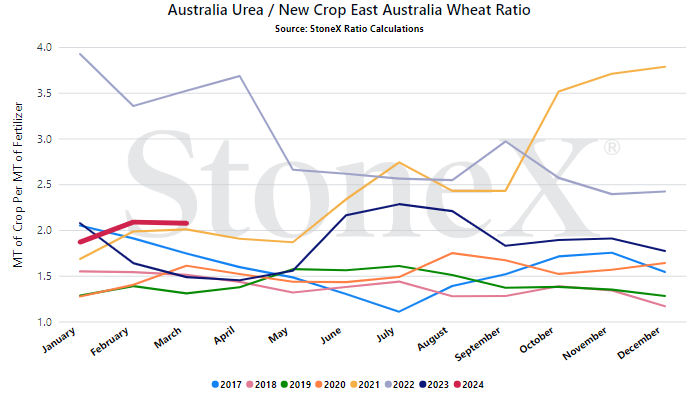
We look at the ratio "value" to get a better indication of where we are or how many bushels of X does it take to pay for 1 ton of fertilizer.
Would you rather:
-
Spend 135 bushels to pay for 1 ton of urea
-
Spend 55 bushels to pay for 1 ton of urea
When we compare the current ratio value against recent years, we start to see if we are high or low.
YOUR VALUES MAY LOOK DIFFERENT
This is a work in progress section! We plan on looking at the relationship between Aussie grains and global price points (and hopefully Aussie specific locations, though that data is hard to secure, very protected). Big reason why we are still in the "trial" stage of this newsletter!!!!
- Chinese export programs - will they or won't they? Right now, it looks like they are coming back which will add much needed supplies to the marketplace. However, if they change their minds, it will likely have global ramifications. Isn't urea fun...
- Remaining world demand before quiet Q3 demand period - will we see a surge of last minute demand as nations try to secure final needs for application in the spring? Will demand remain low as nations have already brought in needs which would force manufacturers/suppliers to scramble and find any homes possible. Either route can shift price ideas.
- How India urea purchase tender ends - so far, most of the points from India are bearish as has been seen in global values since the announcement. However, we have seen/said that before and been surprised by the end results. I feel that the results and direction of the market coming out of this tender will go a long way in setting the tone for the near future.
StoneX Ratio Calculation
The ratio calculation is derived from Bloomberg historical grains values as well as fertilizer values from StoneX, NPKFAS, and Argus.
The calculation is simply dividing the fertilizer price by each grain price.
All data was sourced from StoneX unless otherwise noted.