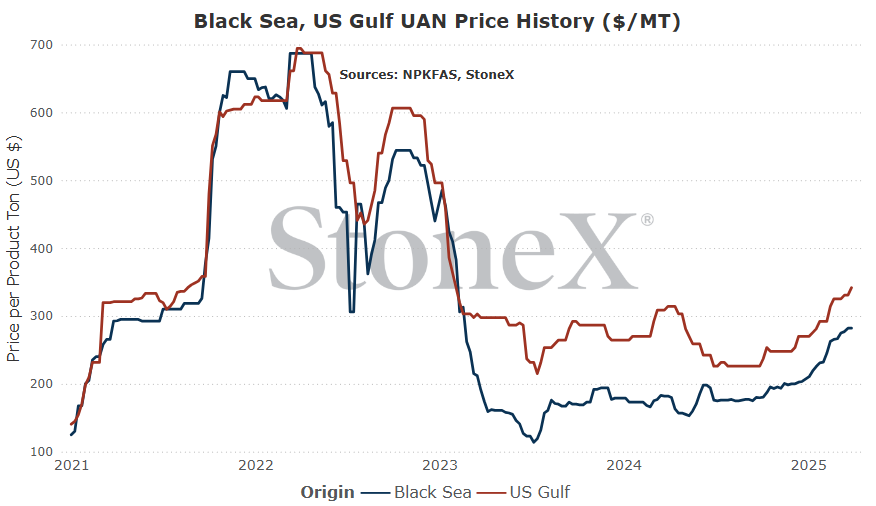
The intention of the below graphs are not to use to say "my price should be X based on this graph". These prices are derived from an FOB price point average. The intent is to show major global price movement trends. Your values will likely have significant basis difference (similar to your local grain price being different than the traded market price).
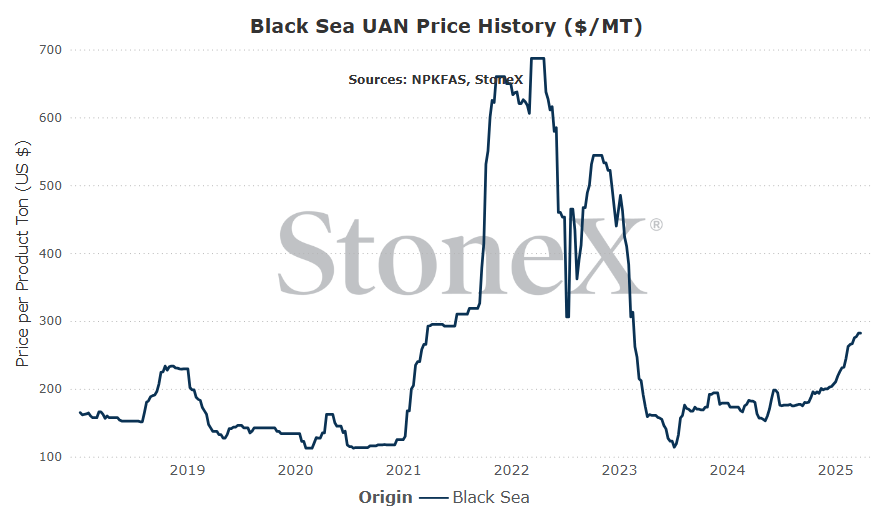
This graph is labeled as MT in USD currency.
Europe taking further steps to block Russian UAN flows
If the U.S. Trump administration has been pushing hard for peace between Russia/Ukraine and Russia and the rest of the world, no one has discussed that with European nations. There have been several powers that have talking about increasing penalties on Russian produced fertilizers.
I could go into a massive story discussing all the different countries as well as the EU approaches to Russian fertilizer flows. Most of you are in the heat of spring season and do not have the time for that!!!
Basically, European countries are taking steps further into tariff's against Russia. They see Russian fertilizer exports as a source of income for a Russian government desperate for cash to pay for its Ukrainian invasion. They want no part in supporting that structure and so continue to put forward ideas that can disconnect that sourcing.
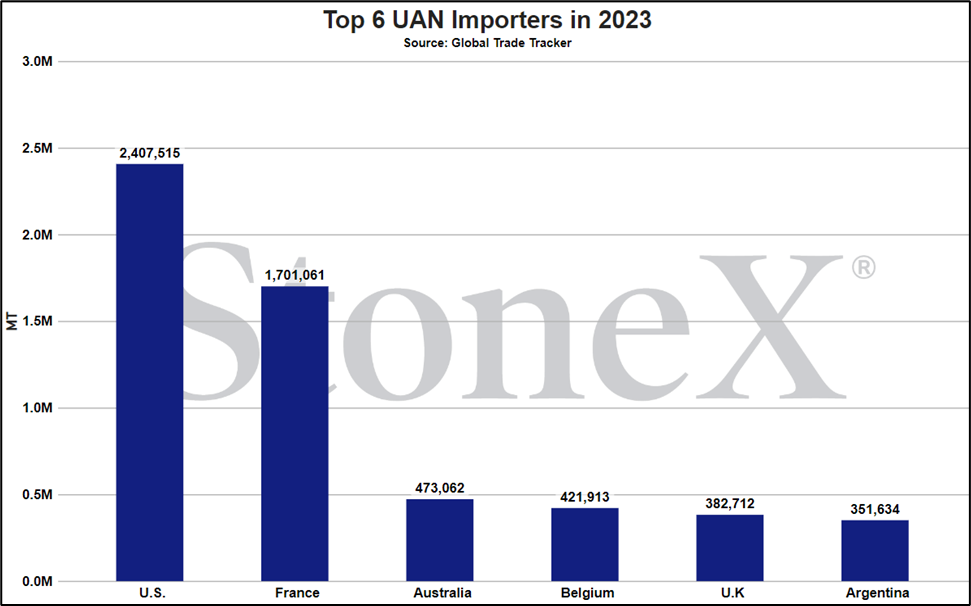
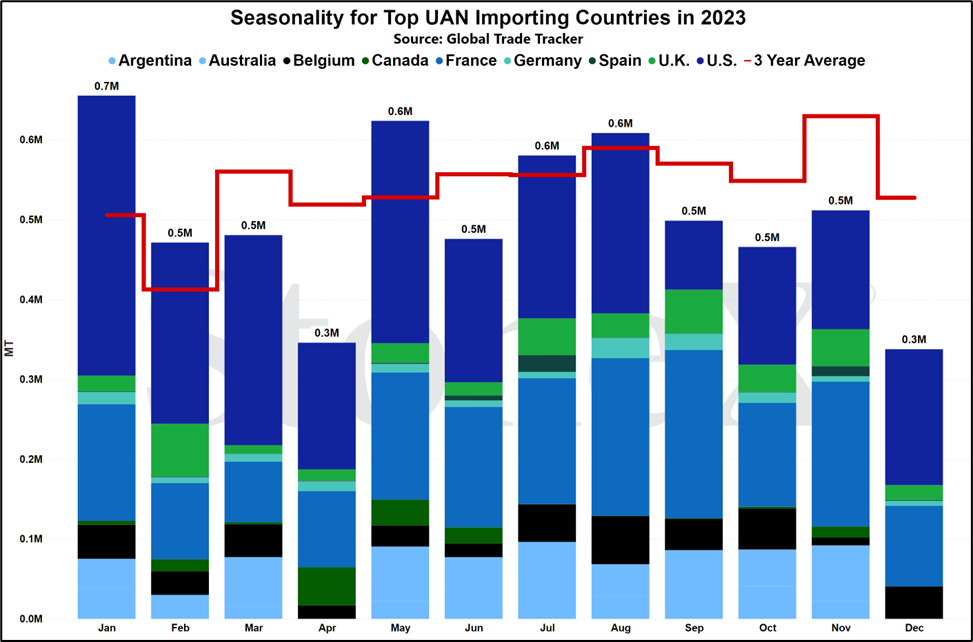
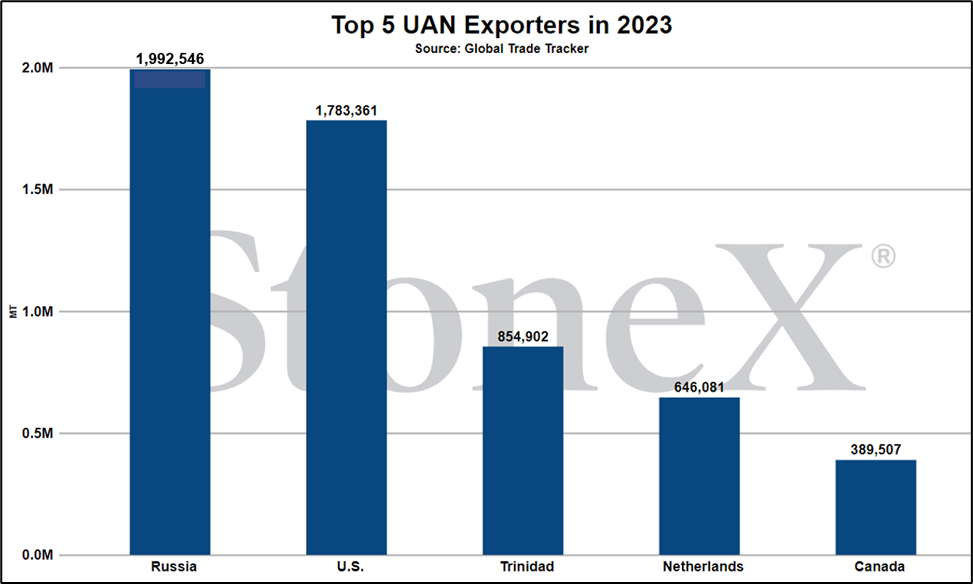
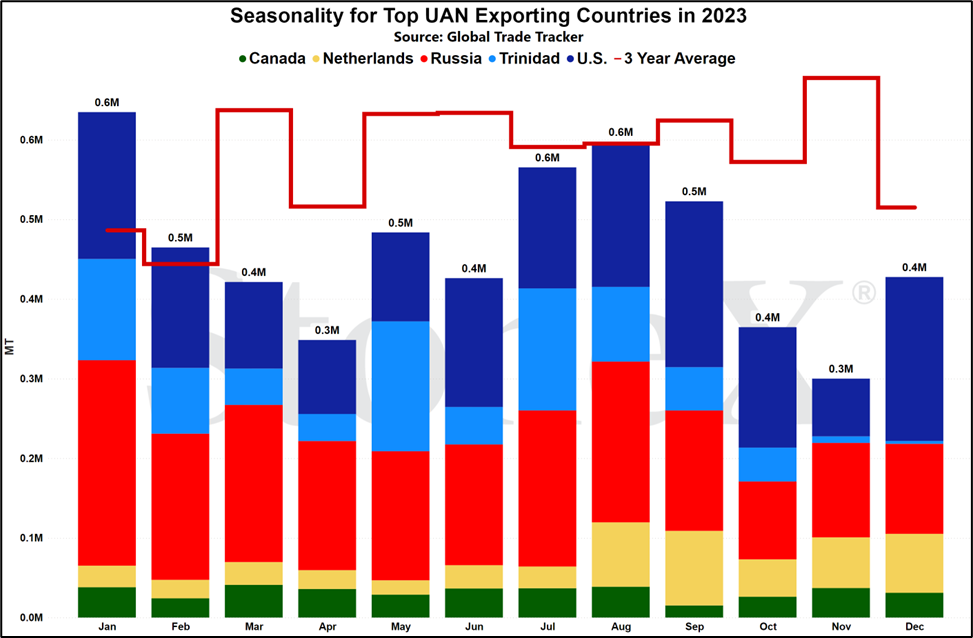
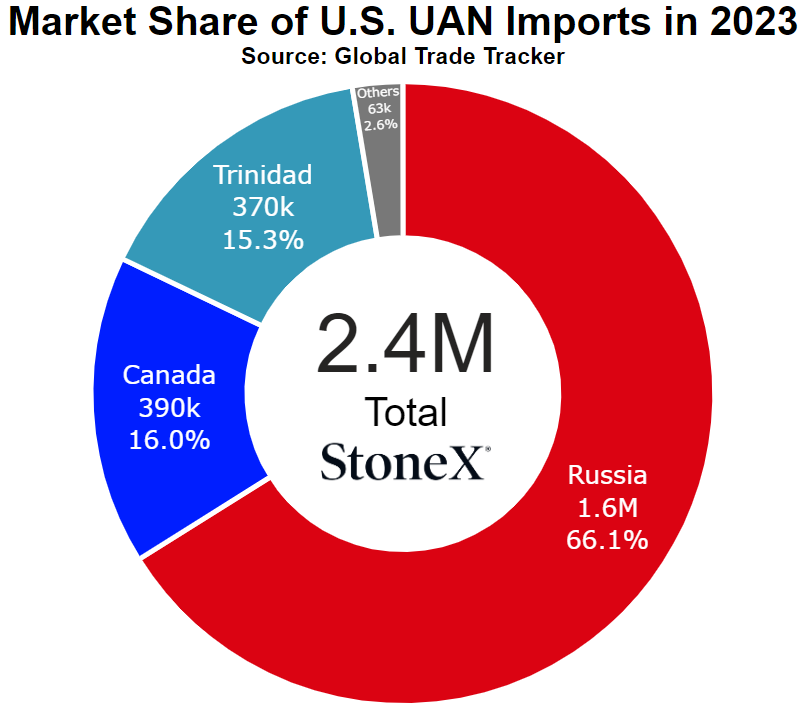
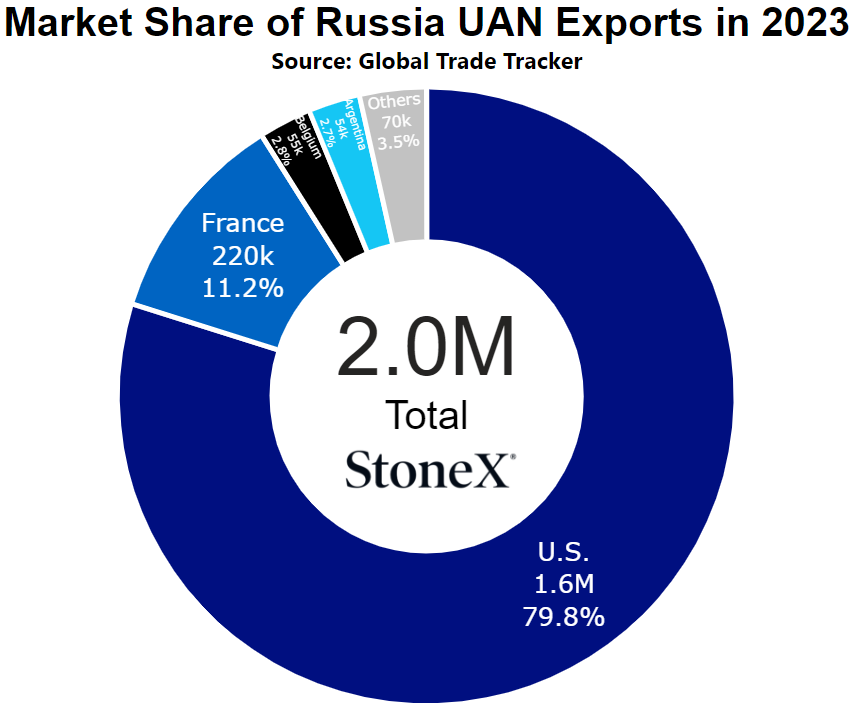
So how would that play out? From a UAN perspective, it makes things...interesting. Russia will lose access to even more destinations and it is already struggling there. Australia and Canada have both basically blocked Russian fertilizer. If Europe proceeds, the only sizeable destination in the UAN world is the U.S. and it feels like that is maxed out. If Russia loses Europe, it is likely we will see more Russian UAN production switched to urea...which will further tighten the global S&D.
Then the question becomes where Europe gets its UAN from. Guess what North American farmers, you would not have MORE competition for N.A. produced tons. If N.A. (more specifically U.S.) manufacturers have more global demand, that is more export possibility. The more that gets exported, the tighter the N.A. S&D and as such, the higher the price.
So far, we have not seen anything legal/definitive happen in Europe but they have been willing to back up their talk. If this situation plays out as they have discussed, global UAN is going to be impacted.
What does this mean for farmers?
Long story short: if Europe blocks Russian UAN, not only will it raise prices for European based farmers (it will), but it will also raise global values as Russia converts more UAN production to urea.
Russia already struggles with destinations. Losing anything Europe based will make that worse and likely cause them to produce less UAN.
If Europe loses access to Russian UAN, it isn't as though that demand disappears. They will still need the tons. No doubt they will lean even more heavily on the U.A./N.A. region which will help boost those price ideas.
All in all, higher price floors.
N.A. UAN values remain firm on tight inventories
Most of the time, UAN values will follow urea higher and lower.
Most of the time is not all the time.
The last month has seen urea and UAN break apart in terms of pricing. While NOLA urea has fallen a little over $10/ton, NOLA UAN has actually increased in price by around $15/ton.
Why the sudden disconnect?
It comes down to UAN supplies being extremely tight heading into spring '25. That is why I sent the mid-month e-mail regarding it.
- Starting inventories for fertilizer year 2025 were snug after a solid spring '24.
- Multiple small production hiccups turned into a loss of a couple hundred thousand tons.
- Imports to the U.S./N.A. markets have been relatively low vs normal/forecast.
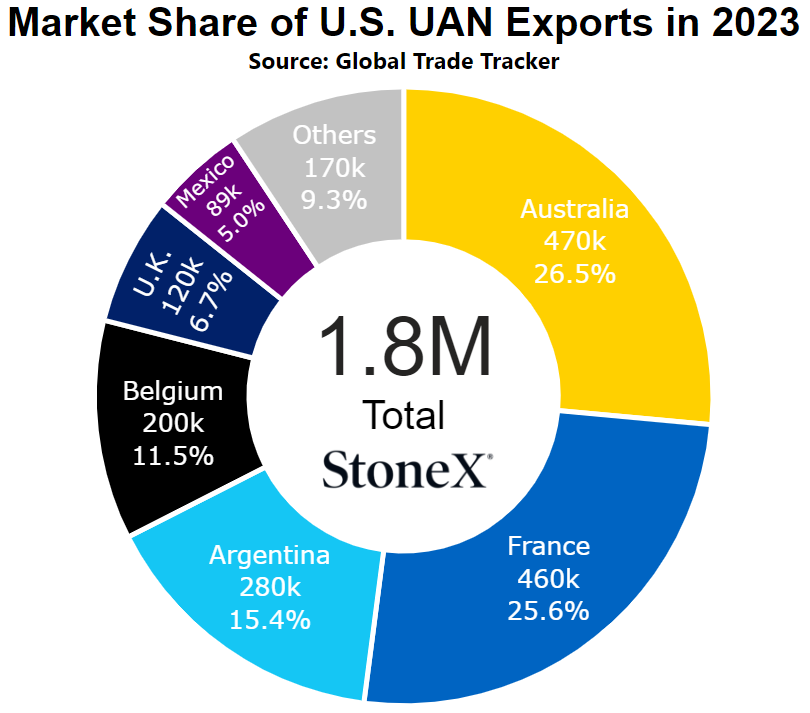
- Exports from the U.S. to the world have been higher than normal/forecast.
- Demand continues to go higher with increasing corn acres (USDA now 95M +)
- Late winter artic blasts caused further production hiccups
- Spring production has been suffering at a couple key plants in Iowa and Oklahoma, removing even more supply from the market
The net result is much tighter supplies on increasing demand. A free market recipe for higher pricing.
Unfortunately, it doesn't appear that it will be getting better short term. In fact, we are wondering how long UAN values will hold. Typically, later in the spring cycle starts to see prices fall. This is especially true in the later sidedress period. However, that assumes that there is product available. One of the most worrisome pieces of feedback that we continue to get is the struggle to find product. Most have been reporting for weeks that nothing can ship until April. More are sharing that May is getting harder to find. There are one or two facilities that is telling customers that they are sold into June.
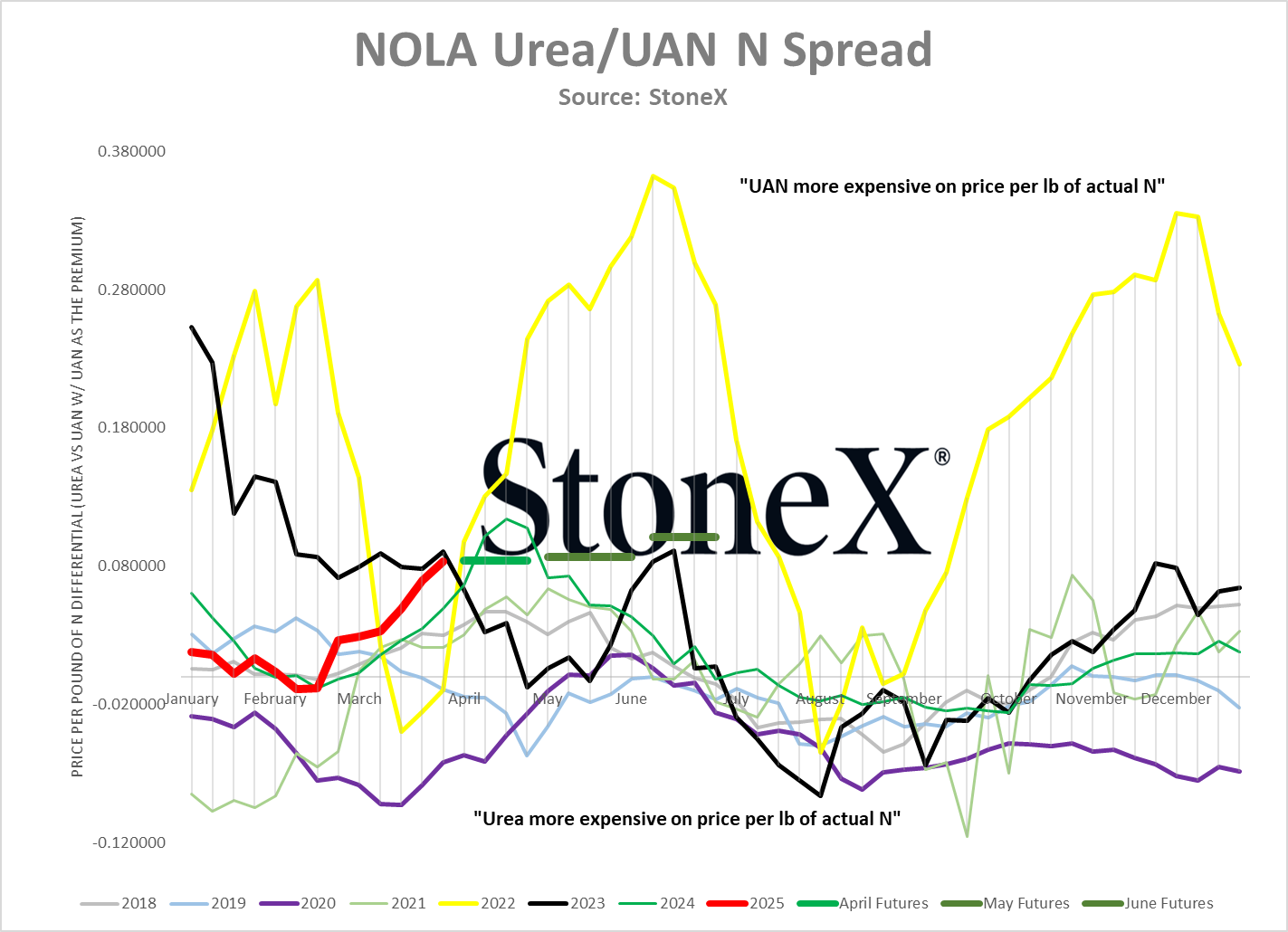
This has created a possible opportunity for those that can switch freely between urea and UAN. The graph below shows the price differential between NOLA urea and UAN on a price per pound of actual N (the number you really care about). Last weeks average values show UAN at a near 8-cent premium to urea. These values will vary based on where you farm, but I'm guessing most will see UAN as expensive vs urea. For those that can switch back and forth, urea appears to be very well priced...for now.
The unfortunate truth of N.A. UAN is that manufacturers/suppliers are in control of price negotiations as we head into spring. When supplies are as tight as they currently are, they have little reason to drop price ideas.
It doesn't mean bearishness cannot happen. Just makes it very hard.
What does this mean for farmers?
Long story short: higher UAN prices with less chance of prices slipping into sidedress season.
Eventually, the market will shift from focusing on the current tight inventory situation and more on summer price reset fears. However, with current urea values shooting higher and the UAN S&D as tight as it is, that may take a while. There are just very few reasons for UAN prices to fall near term.
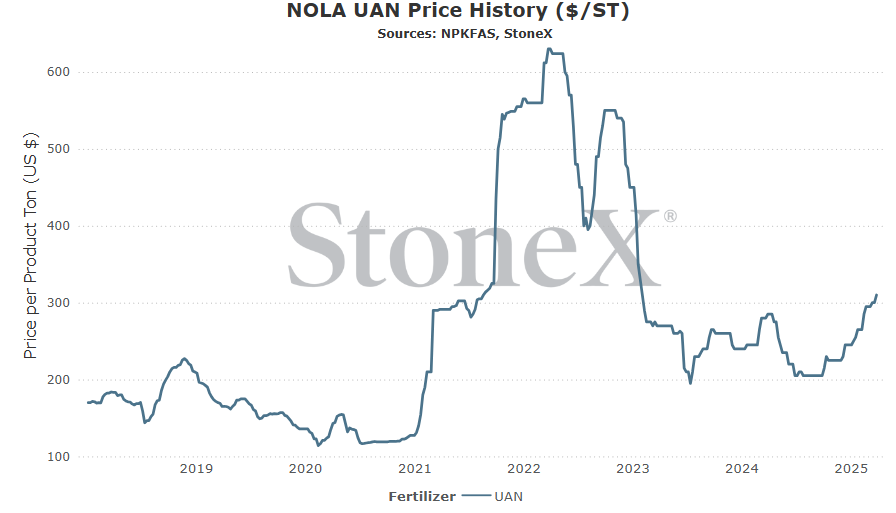
NOLA/New Orleans, Louisiana
Number 2 global importer in 2022
Number 1 global exporter in 2022
Price Comparisons
Vs 30 days ago - 5% or approximately $15 higher
Vs 90 days ago - 27% or approximately $65 higher
Vs 6 months ago - 51% or approximately $105 higher
Vs 1 year ago - 9% or approximately $25 higher
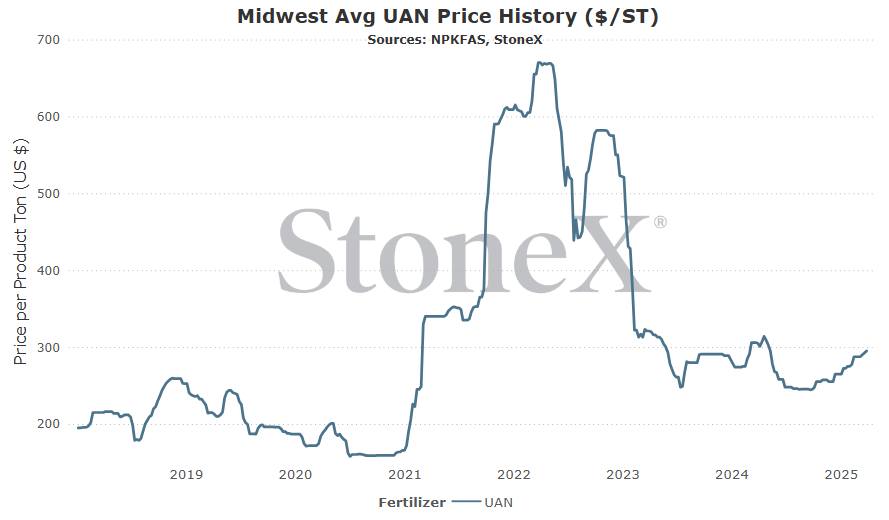
U.S. Midwest Average
Vs 30 days ago - 3% or approximately $8 higher
Vs 90 days ago - 11% or approximately $30 higher
Vs 6 months ago - 20% or approximately $50 higher
Vs 1 year ago - -3% or approximately $10 lower
Black Sea (Russia)
Number 2 global exporter in 2022
Price comparisons
Vs 30 days ago - 6% or approximately $16 higher
Vs 90 days ago - 34% or approximately $72 higher
Vs 6 months ago - 57% or approximately $103 higher
Vs 1 year ago - 55% or approximately $100 higher
- N.A. UAN supply situation comes to a head with buyers – this is a story that we have been watching for a while but it appears to be getting worse before demand has stepped up in a big way. Fert year inventories were lower to start. Imports have been low. Exports have been high. Demand is solid. N.A. production has suffered. UAN prices have been going higher...but have we seen the worst? Buyers are dragging their feet and praying for a better opportunity. That cannot last forever. If the demand wave finally hits, we will not be surprised to see values up again.
- Russia continues to produce more urea at the expense of UAN – from Russia's perspective, their UAN sales alternatives are very few with many large buyers blocking their flows. Invade a country that did nothing to you and those are some of the consequences. With so few destinations available, it makes sense to switch to something like urea where you have PLENTY of sales destinations. The issue for UAN is that if/as this switching happens, it reduces global supplies...and demand hasn't changed.
- Europe takes further steps to block any remaining Russian flows – if there was any hope that Russia could find new or bump up flows to European destinations, those hopes are getting slim. There continue to be more calls for European countries to further tariff Russia across the board of products. While the governments will see this as a "win" against Russia, it is their European farmers that will pay the price.
- Urea starts stealing UAN demand due to "low" pricing – now, not every N.A. farmer can switch easily between urea and UAN. For many, they are locked in on one product or the other. But that isn't all farmers. There are places more adapted to switching to the cheaper alternative...and urea is absolutely the cheaper alternative today. UAN continues to rally its price in an attempt to shove demand to something else with its ongoing supply issues. Eventually, the price gap can lead to too much demand switching and that action can start to bring UAN lower.
- Any remaining long positions start to get nervous about carrying into summer – with as tight as the N.A. market is today, this doesn't look likely. In fact, if I were holding a decently large position of physical UAN, I would probably hold onto it while expecting even higher prices. At some point, those positions will want to cash out. Better to take your profits than it is to wait too long and possibly carry those tons to summer resets. When the first one breaks, it doesn't typically take long for others to follow. That can create a wave that pushes prices down.
- Large shock of much lower corn acres for N.A. – just because almost every forecast out there is calling for massive corn acres (which means massive UAN demand) doesn't mean they are right. Farmers make that call. Mother nature makes that call. Not some suits sitting in an office. If we suddenly see corn acres fall off, that will mean an unexpected drop in nitrogen demand that can crater UAN price ideas. For reference, I'm still in the 94'ish million acre range but again, I sit in an office more than in the field so it is just a guess.
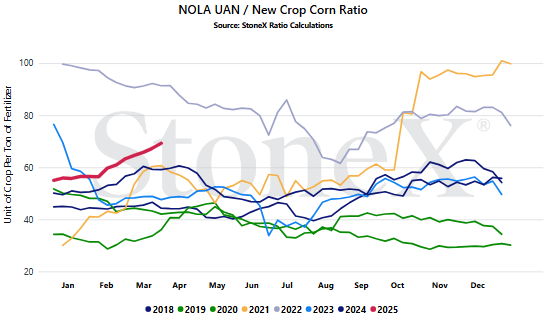
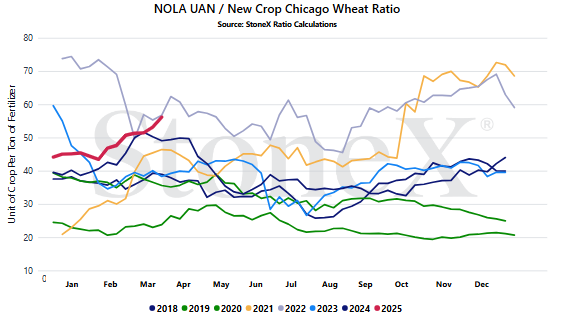
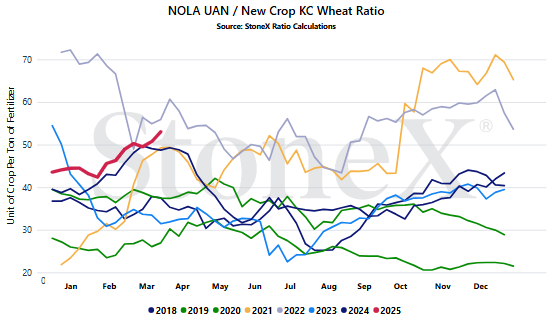
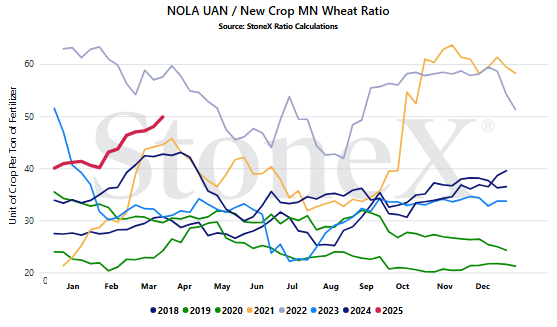
We believe that only looking at the flat price of either grains or fertilizer can be misleading:
-
Only selling grain can hurt you if fertilizer prices rise substantially
-
Only buying fertilizer can hurt you if grain prices fall
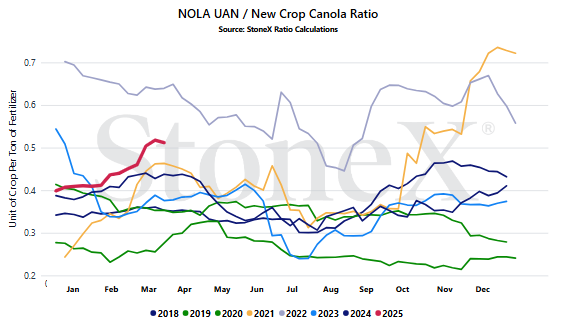
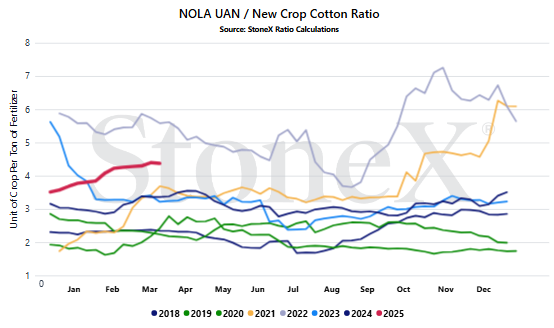
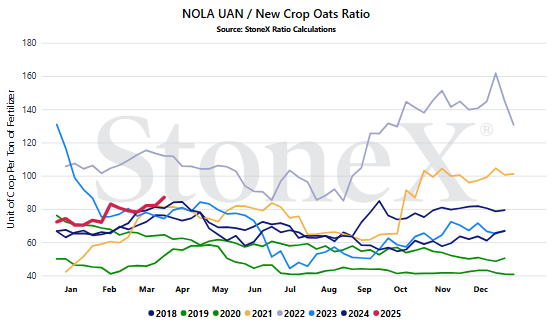
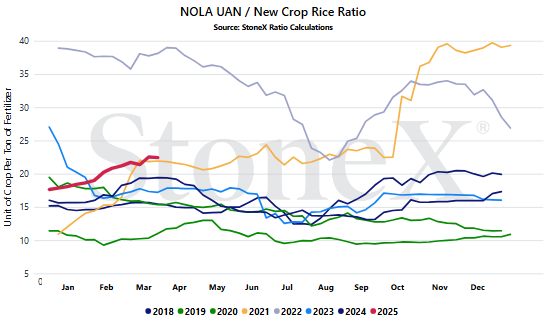
We look at the ratio "value" to get a better indication of where we are or how many bushels of X does it take to pay for 1 ton of fertilizer.
Would you rather:
-
Spend 100 bushels to pay for 1 ton of UAN
-
Spend 60 bushels to pay for 1 ton of UAN
When we compare the current ratio value against recent years, we start to see if we are high or low.
YOUR VALUES MAY LOOK DIFFERENT
This graph looks at the NOLA UAN price vs the flat grain price. There are no logistics on either product. Your location will look different due to fertilizer logistical costs, grain basis, etc.
- How much production Russia can convert from UAN to urea - I'm afraid I do not have a firm answer here, but it is very important. Russia has struggled with UAN destinations. Many European countries have taken further steps to block Russian fertilizers. Australia and Canada have not moved an inch to change their economic blockades. For major destinations, that really only leaves the U.S. and it seems like that avenue is tapped out. So if you do not have destinations for UAN but you have plenty for urea, why not switch...if you can. Therein lies the issue. This is likely happening but we do not know at what rate and for how long. The more they switch, the better it is for urea supplies and prices...but the worse it is for global UAN.
- Trinidad production flows - fortunately, Trinidad has taken steps in recent years to open untapped waters for new gas exploration and development. Eventually, nitrogen production in Trinidad should have sufficient supplies...but that is not today and will take time. Until that day comes, Trinidad will likely continue to be a somewhat unreliable supplier. Not because of any plants doing. Merely because of those gas issues. This hurts nitrogen markets but really targets UAN, especially N.A. buyers because if Trinidad does not have the supplies to send to Europe, N.A. tons come in to fill the gap leaving our markets shorter.
- Just how tight N.A. inventories are vs demand - this has been a quickly growing concern of mine. There is part of me that is nervous that we are overstating it and inventories will be fine...but I do not think so. We know there have been several production hiccups. We know we started the fertilizer year low on inventories. We know imports have been low/exports high. We also know that demand continues to rise with higher corn acres. Now, we hear all over how hard it is to find physical product. I'm not going to cry "shortages", but this feels much closer than normal...
StoneX Ratio Calculation
The ratio calculation is derived from Bloomberg historical grains values as well as fertilizer values from StoneX, NPKFAS, and Argus.
The calculation is simply dividing the fertilizer price by each grain price.
All data was sourced from StoneX unless otherwise noted.