Major global phosphate export location price graphs
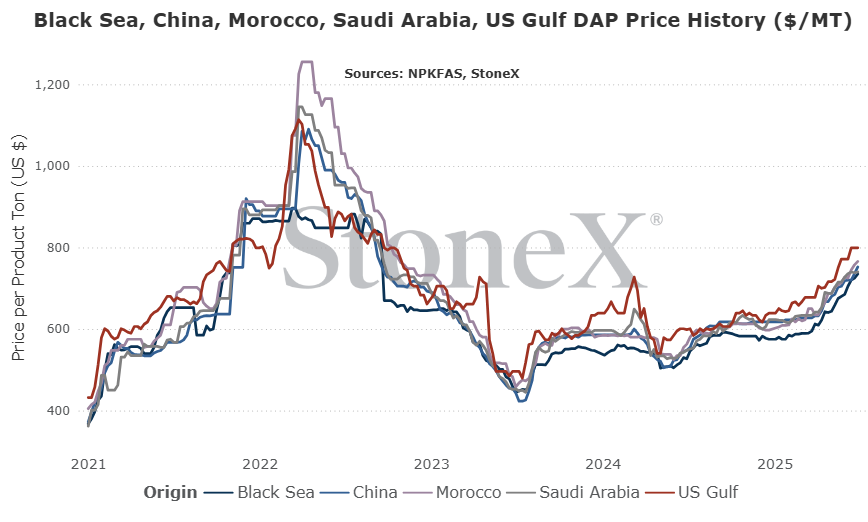
I will say this now and will say it going forward to eternity: these are the flat price graphs for each individual location. Your price where you are is going to be different. There are logistics. There is the cost of storage/interest/insurance/etc. These graphs should not be taken as "it shows the price at $700, why isn't my price $700". These graphs should be used to give an appreciation for price movements.
This graph is labeled as MT in USD currency.
What everyone wants to know first, what do we think will happen going forward
Global
At some point, prices have to stop going higher...right?
Sure doesn't seem to be the case.
Unfortunately, the global phopshate story is the same boring story it has been all year. Chinese exports continue to be excessively low vs their normal rates. That creates a massive hole in global supplies. On the other end, India cannot get out of their own way. Stockpiles continue to be low vs normal and the entire phosphate world knows it. Not only do they know it, but they know demand will not be impacted because Indian farmers do not see price fluctuations. That has given manufacturers/suppliers almost complete control in negotiations...and they have.
Global supplies are tight and there isn't anything for "excess or new" production to step up at a price level to provide a ceiling. There is a lot of new production coming, but it is measured in years not months.
Demand stories continue to be dominated by India who has little choice. Either pay up for most anything offered, or run the risk of opposition party politician and/or farmer protests.
Prices cannot go up forever, but it is REALLY hard to see why they would fall near term.
AUSTRALIA
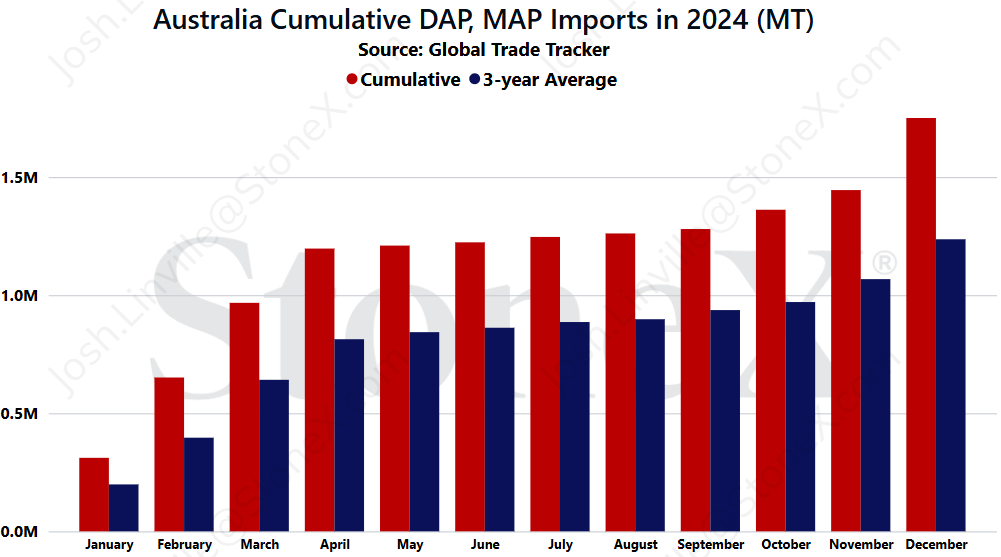
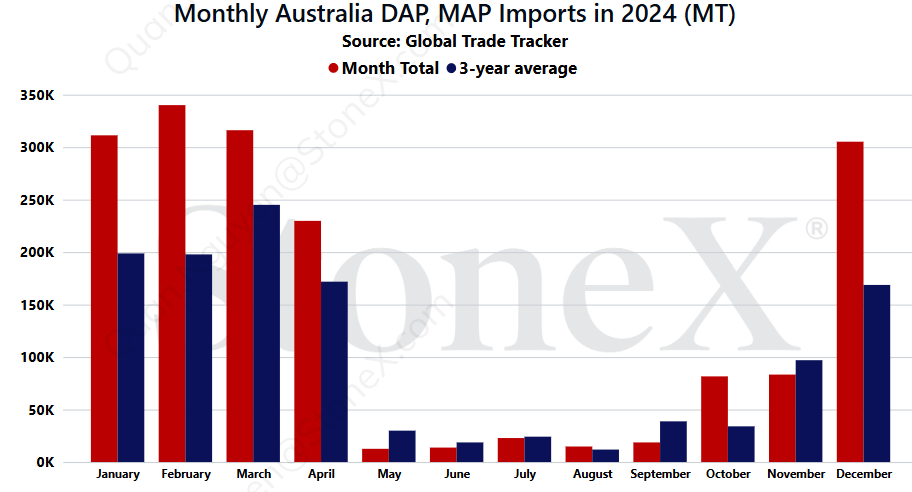
"Australia isn't going to use big amounts of phosphate until a few months into 2026. There is absolutely no reason to worry about phosphate today."
If that is the thought in your head, you are right...to an extent. The next major application season is still a little ways down the road. However, that road isn't nearly as long as we might think.
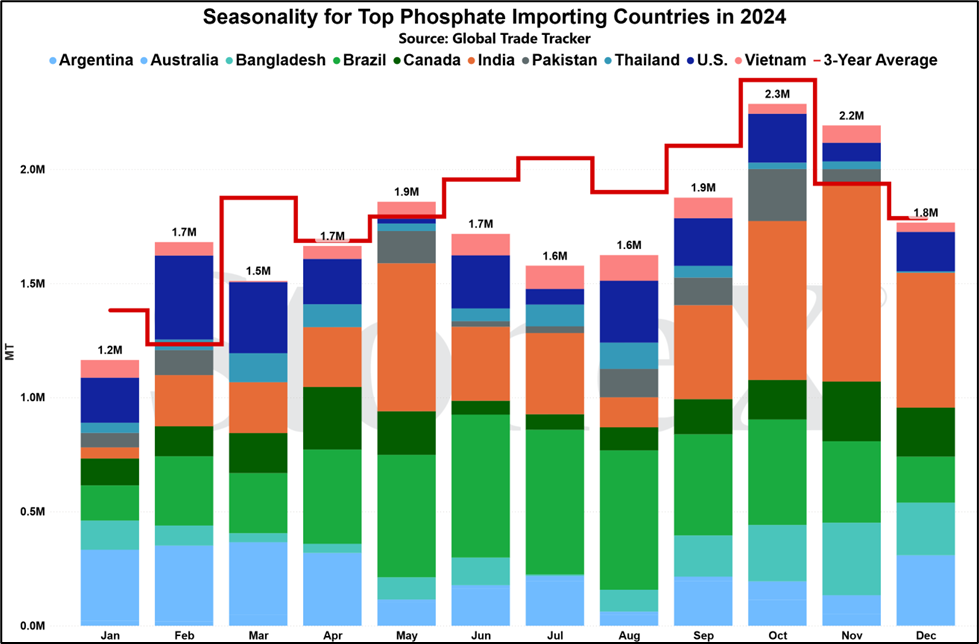
Number one, a lot of these global phosphate issues are not short-term. They look like they are going to last for a while. There is little indicating that China improves their export flows. India is still in stockpile catch up mode. The U.S. is about to start entering the purchase fray to prepare for their next application season which largely revolves around November and December.
Number two, importers have to make preparation months in advance. Contracts need to be signed to guarantee product availability. Vessels need to be secured and planned for. A lot of this will start happening in Q4.
Number three, everyone in the Australian supply chain from the importer to the farmer will need to be watching for opportunities. Global values are extremely high with threats of moving higher. If, and it is a big if, there is a sizeable dip in values in the next few months, it might be the best chance and could see much earlier purchases.
Today, not likely to see values do much domestically as demand is largely done except for small pockets. However, if prices continue higher around the world, eventually domestic values will follow.
Just because Australia is in a quiet demand period does not mean the markets shut down. We need to continue to watch because there could be some offseason opportunities that can be missed if we stop watching.
General Global DAP/MAP Information
General Australian Phosphate Information
What has happened in the last 30 days?
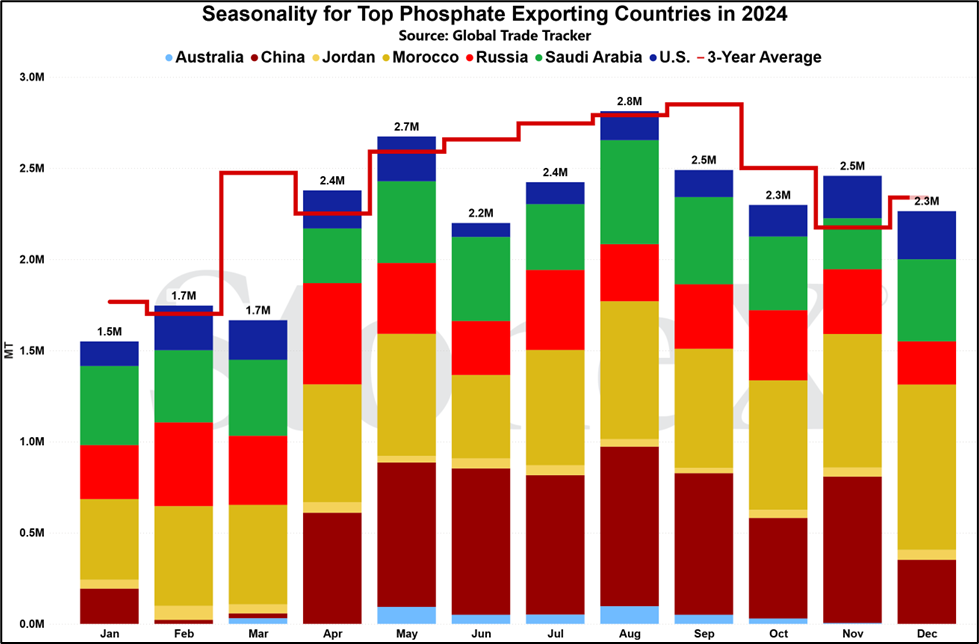
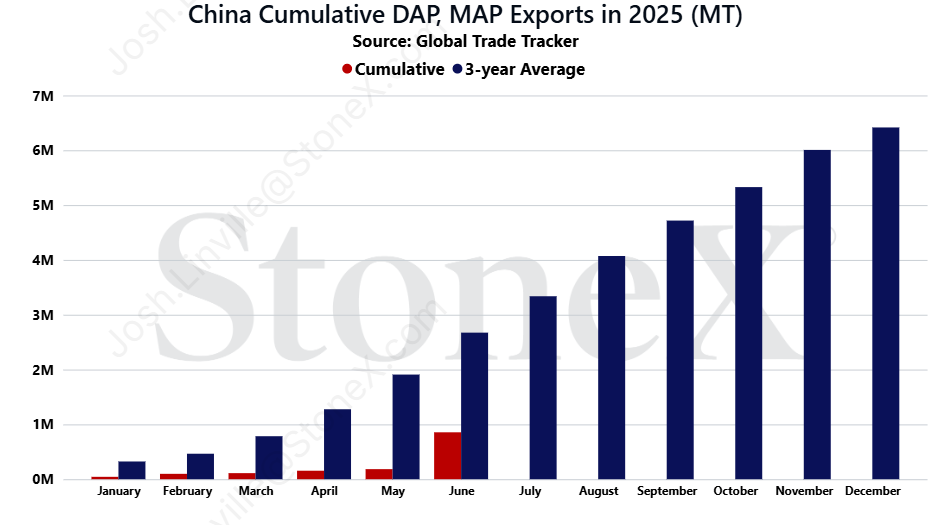
Chinese phosphate exports remain well behind, expected to continue
I realize this is a largely regurgitated story that I've hammered on for month's now. Unfortunately, it remains the leading phosphate story for the world and those new to the newsletter need to be brought up to speed.
For those of you that have been here a while, China's export approach is same old, same old. Excessively low vs normal rates.
For those that are new, welcome!
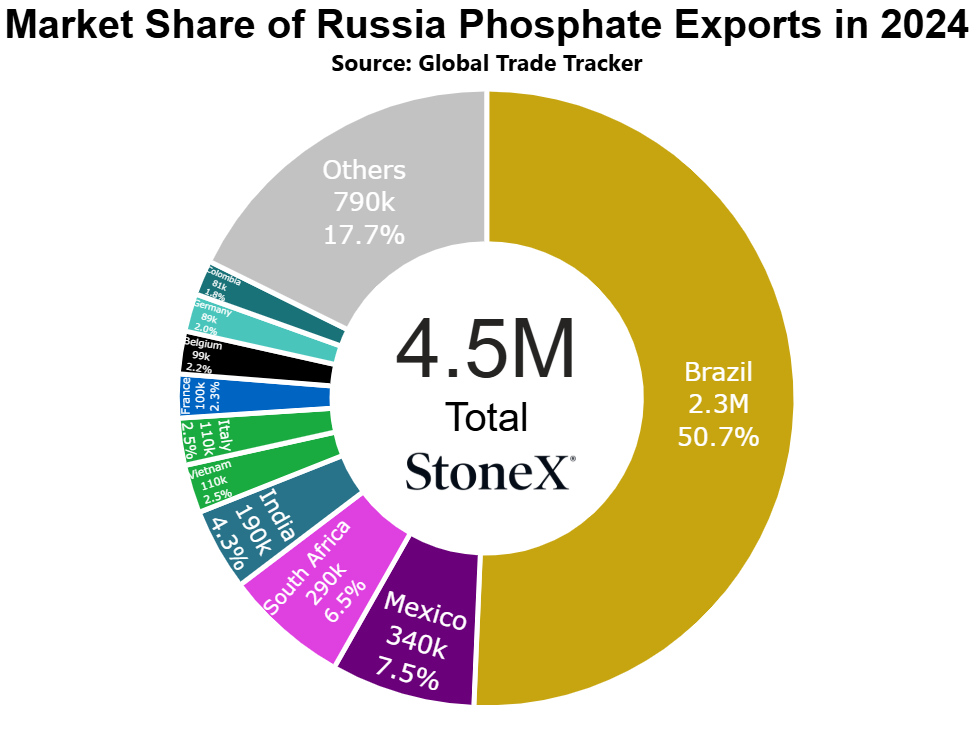
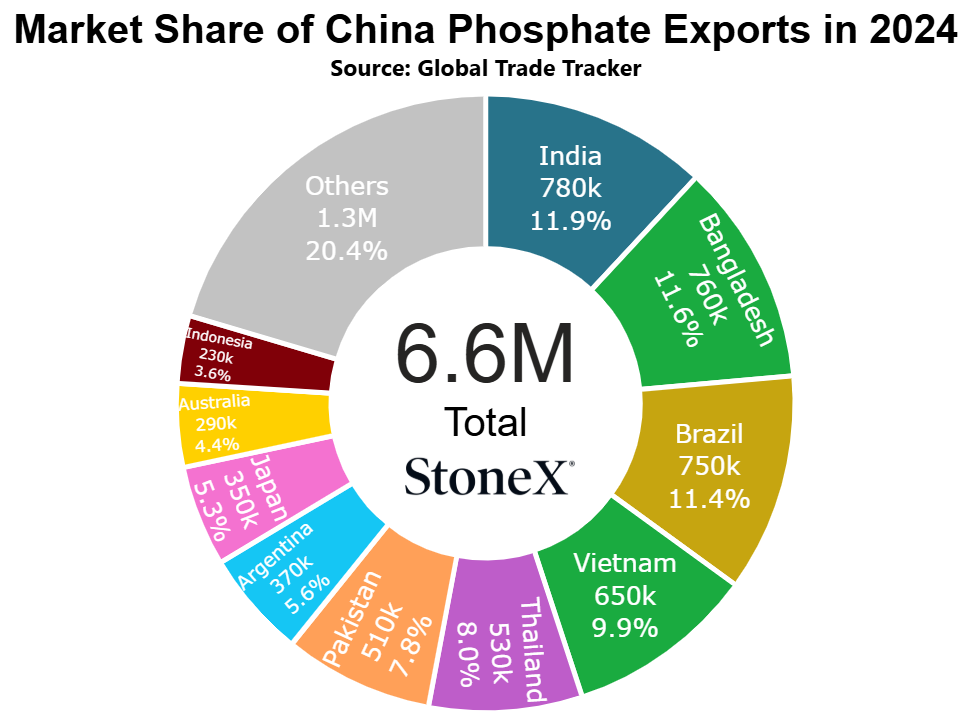
Historically speaking, China is the world's largest exporter of phosphate. Before recent years, it was considered normal for 8 to 10M tons of phosphate to depart their shores for international destinations.
Unfortunately, a combination of the global 2022 fertilizer supercycle uncertainty, increased need for domestic China grain production, and the advent of battery technology changing to use phosphate as its base have all contribued to the current situation where it appears that the world will be lucky if they export 4.5M tons (their last stated export quota).
2022 was an unusual situation that largely got started with Russia suddenly and shockingly invading Ukraine. Suddenly, companies started pulling out of Russia at record pace. Russia became so "toxic" that it appeared that the world would largely shun even their fertilizer exports. Some nations, like Australia and Canada, actually moved forward and enacted penalties on Russian goods that stopped the flow. European countries have take similar steps of late. However, after a cooling period, we soon found out that Russian exports were continuing to flow as global buyers flocked to "cheap" tons. From China's perspective, the damage was already done. Rather than allow free flowing exports which could result in a lack of supplies for Chinese farmers, the government started to intervene. Export restrictions were put into place to accomplish 2 goals: ensure adequate domestic supplies and lower domestic values. They were successful on both accounts and continue the practice to today.
Recent years has also seen China take a little more isolated approach to the world. There are plenty of theories as to why but the end story is largely the same. China no longer wants to be dependent on the rest of the world for its foods. To reduce that dependence, farmers have been tasked with growing more. How do you increase yields? Put on more fertilizer. From this standpoint, even a small percentage increase can result in a massively larger demand number.
Then there is the new battery technology. The current best tech approach is using phosphate as the battery base. Who is one of the largest battery manufacturers in the world? You guessed it, China. So not only has agricultural demand risen, but so to has industrial demand.
That brings us to modern day. 2025 marks a new expected low for phosphate exports from China. The government has announced a 4.5M ton export quota. Now, like with all things, this number can change. It just doesn't seem likely. Exports for 2025 have yet to reach the 1M ton barrier through June. To say that they cannot export another 3.5M tons July through December would not be wise. That is well within their capacity and is a situation that will be watched closely but given their approach so far, it is hard to see them changing to increase the number.
For now, the world's phosphate market remains extremely high priced and at the center of the story is China.
What does this mean for farmers?
For me, this is the core of the problem of the current phosphate market.
Global phosphate is already a relatively "small" market with 5 countries controlling nearly 90% of global production. When the leader of that group cuts their export flows by half or more, everyone around the world feels the impact.
This has the capacity to continue for a while...long enough to impact the start of the 2026 Aussie application cycle.
India stockpiles remain low despite purchases. Government protests begin.
While the government of India has been attempting to maintain that domestic phosphate stockpiles are at good levels, it appears that story/wall is starting to crumble.
For those unaware of how India operates, it is different in the way that farmers there do not see global price volatility like so much of the world does. The government sets a low and steady price for the fertilizers. Now, these values are much below global replacement. To make sure that imports continue to flow, the government approves subsidy programs to make up the difference so that importers can do their jobs.
Unfortunately, the government has been struggling to keep up with global phosphate for a little over a year now and it has resulted in low domestic stockpiles.
Last summer, phosphate prices were falling. Chinese exports had been seen improving and there was global hope that the trend would continue. Honestly, I thought the same. It seems like phosphate still had price downside. The Indian government, who had spent a lot of money since 2022 on subsidy programs, looked to try and save some cash and influence global values lower. They dropped the subsidy rate for importers which made it impossible to purchase anything until global prices fell. They believed by stopping their own demand, it would force prices lower.
It might have...if not for China pulling back the reigns on exports.
That was the shock. Suddenly, Chinese exports were no longer guaranteed and global supplies got tight almost overnight. Prices around the world started to climb and India was slow to respond. Each time they took a step to right size themselves with the market, the market moved higher. This cat and mouse game has been playing out ever since. Stockpiles have suffered and this has been an issue in the country. With the government controlling farmer pricing and the subsidy programs that allow/disallow imports, if inventories get too small, the government is blamed.
This situation has recently come to a head. While it has been a major talking point around the world, the government opposition party finally had enough and protested on their floor to bring light to the low inventory situation. The following link does a very good job of describing the situation.
https://timesofindia.indiatimes.com/city/raipur/fertilizer-crisis-hits-…
"So why don't they just buy a bunch and get caught up?"
This has been another issue. With Chinese exports so low, global supplies are very low. It has not been as simple as "just buy the tons". The tons are far and few between. To make it worse for India, the world's position holders/manufacturers are very well aware of India's issues which makes it much easier to push price ideas higher with each sale.
Today, stockpiles have improved somewhat on large quantity contracts and spot purchases being made. However, current levels are still low vs normal and with their monsoon season looking very good, demand should also be very good. Our hope for Indian farmers is that stockpiles get rebuilt in time for their season. Time is running out.
What does this mean for farmers?
If China is the core issue, India is the core result.
India continues to desperately buy tons to rebuild stockpiles. They effectively are competing with themselves and driving their own prices higher.
There is still a lot of rebuilding to do and other global buyers cannot wait forever.
Where are current values in relation to the past
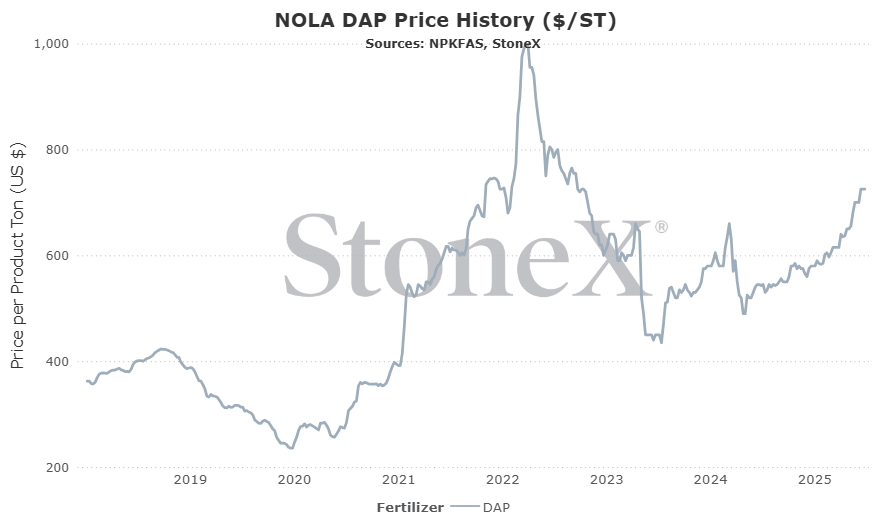
NOLA/New Orleans, Louisiana DAP price comparison
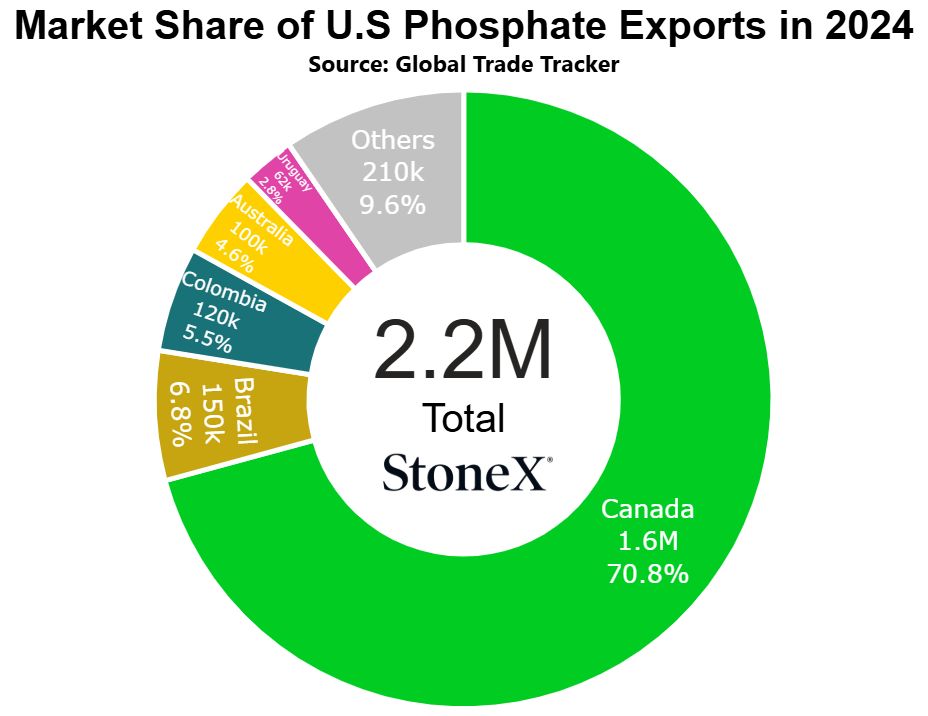
Number 5 global exporter in 2022
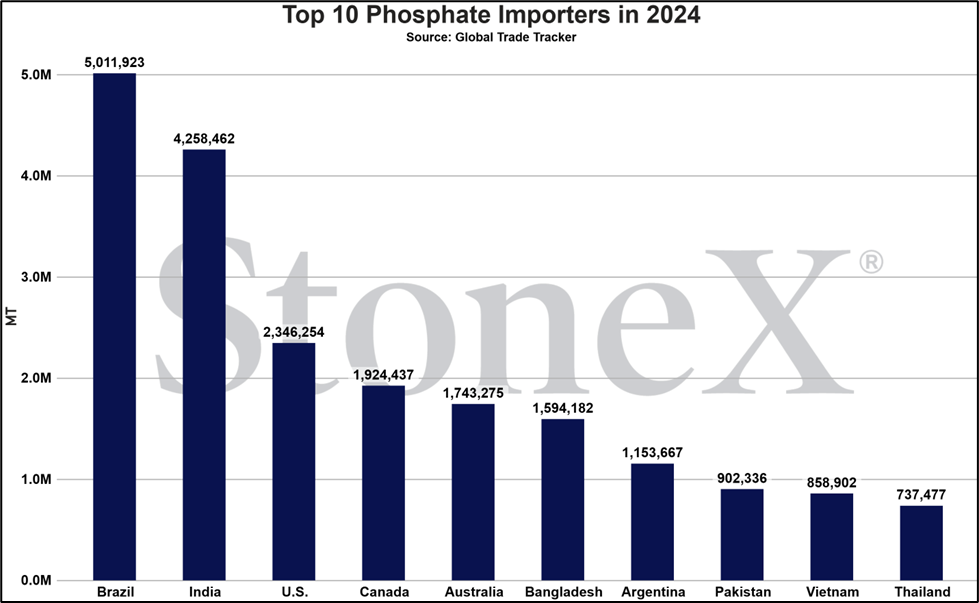
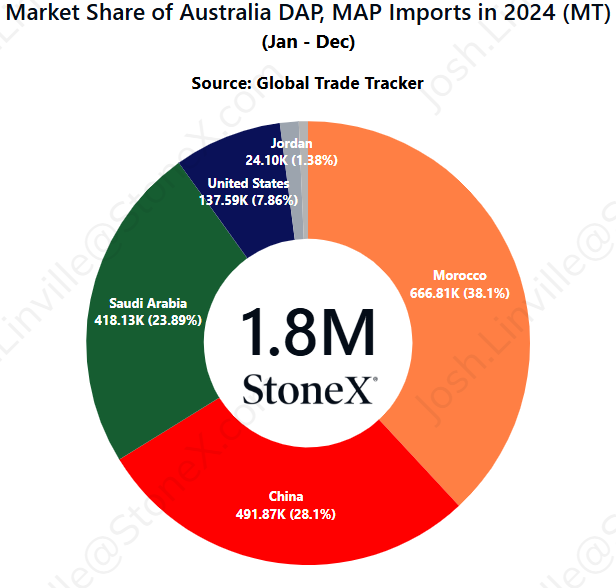
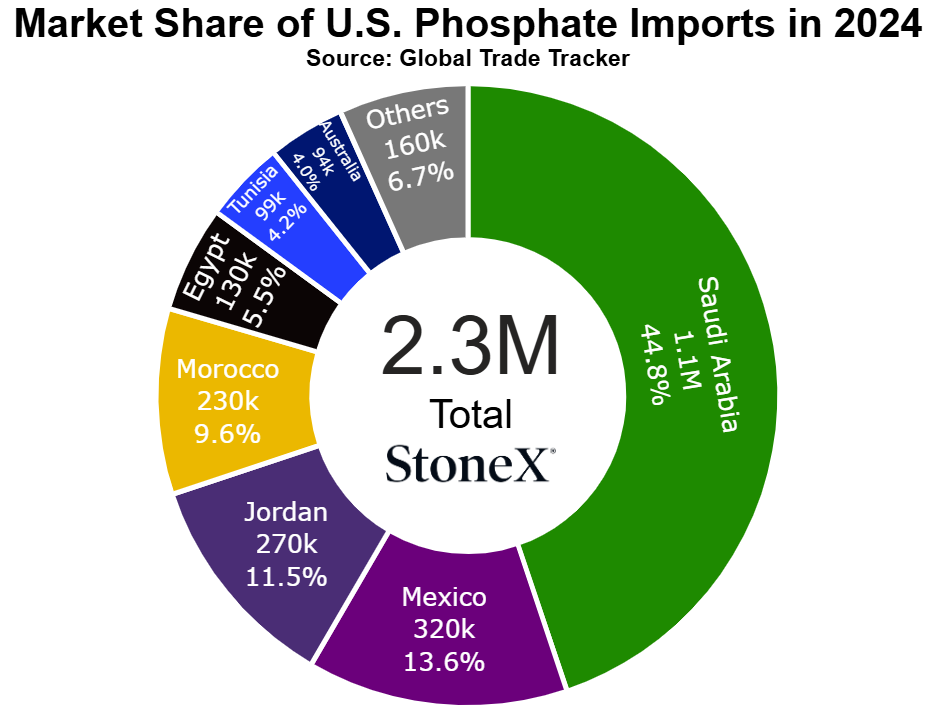
Number 3 global importer in 2024
Price comparisons
Vs 30 days ago - 4% or approximately $30 higher
Vs 90 days ago - 16% or approximately $105 higher
Vs 6 months ago - 29% or approximately $170 higher
Vs 1 year ago - 39% or approximately $210 higher
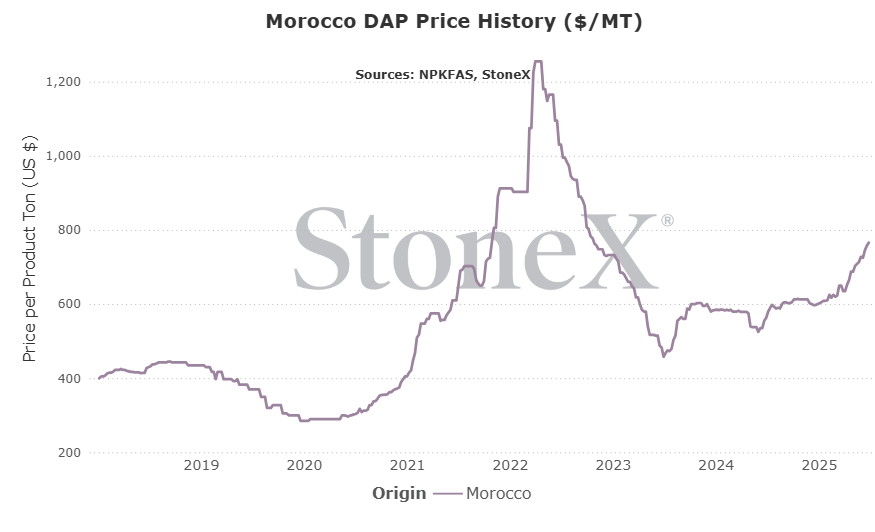
Morocco DAP price comparison
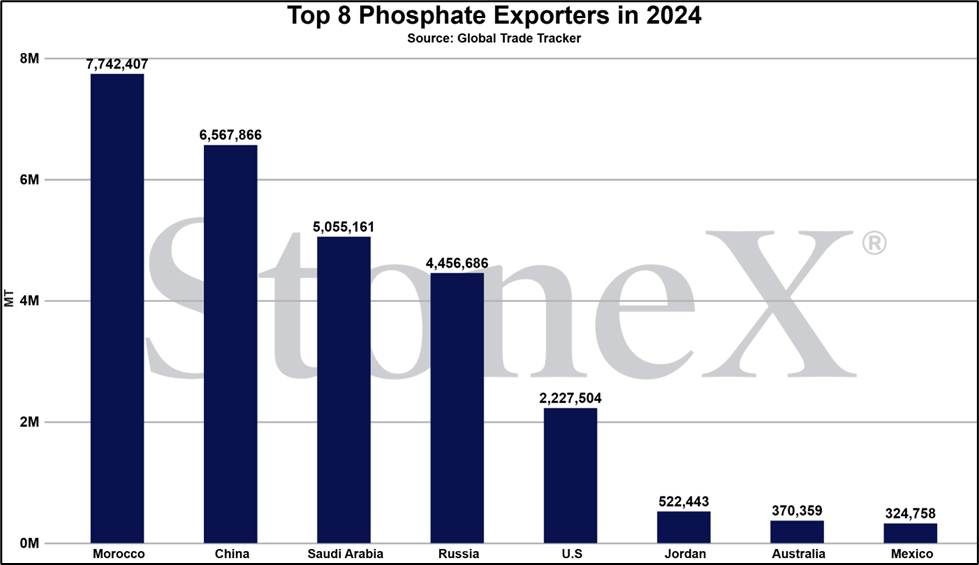
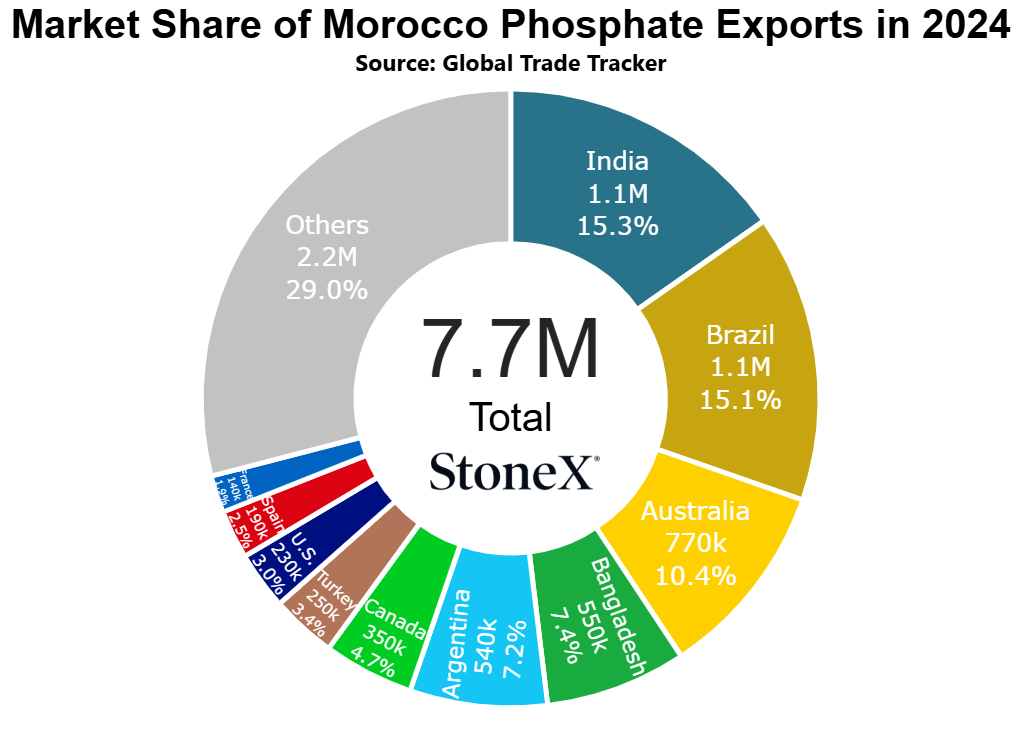
Number 5 global exporter in 2024
Price comparisons:
Vs 30 days ago - 3% or approximately $22 higher
Vs 90 days ago - 15% or approximately $100 higher
Vs 6 months ago - 29% or approximately $178 higher
Vs 1 year ago - 33% or approximately $195 higher
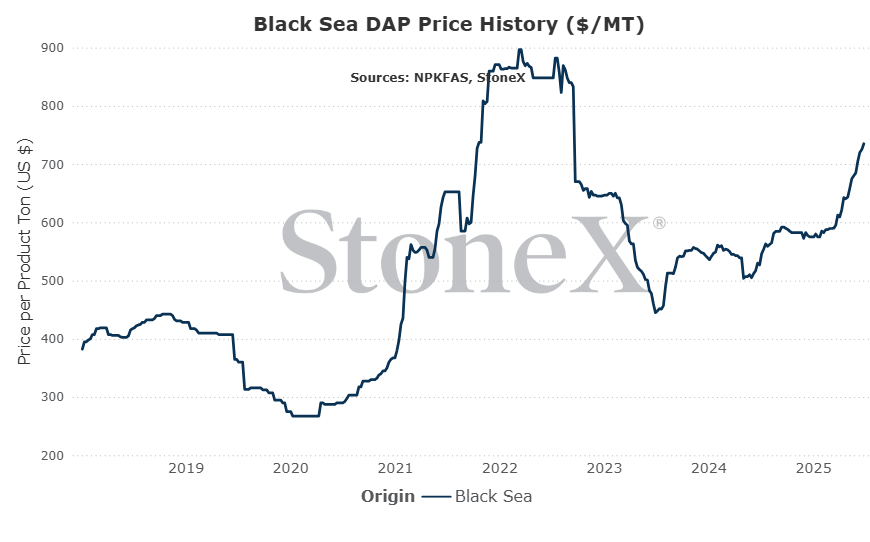
Black Sea DAP price comparison
Number 4 exporter of DAP/MAP in 2024
Price comparisons
Vs 30 days ago - 3% or approximately $25 higher
Vs 90 days ago - 18% or approximately $117 higher
Vs 6 months ago - 30% or approximately $175 higher
Vs 1 year ago - 36% or approximately $201 higher
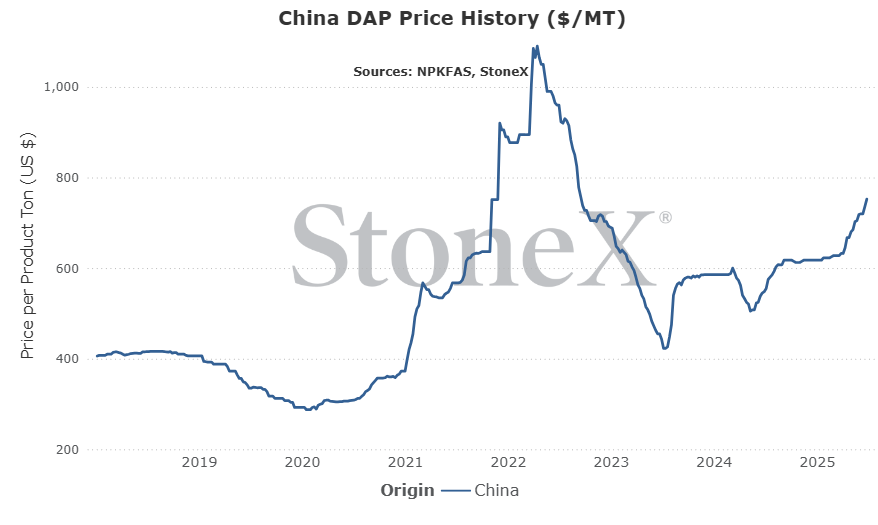
China DAP price comparison
Number 2 global exporter in 2024
Price comparisons
Vs 30 days ago - 2% or approximately $18 higher
Vs 90 days ago - 13% or approximately $90 higher
Vs 6 months ago - 24% or approximately $148 higher
Vs 1 year ago - 32% or approximately $185 highe
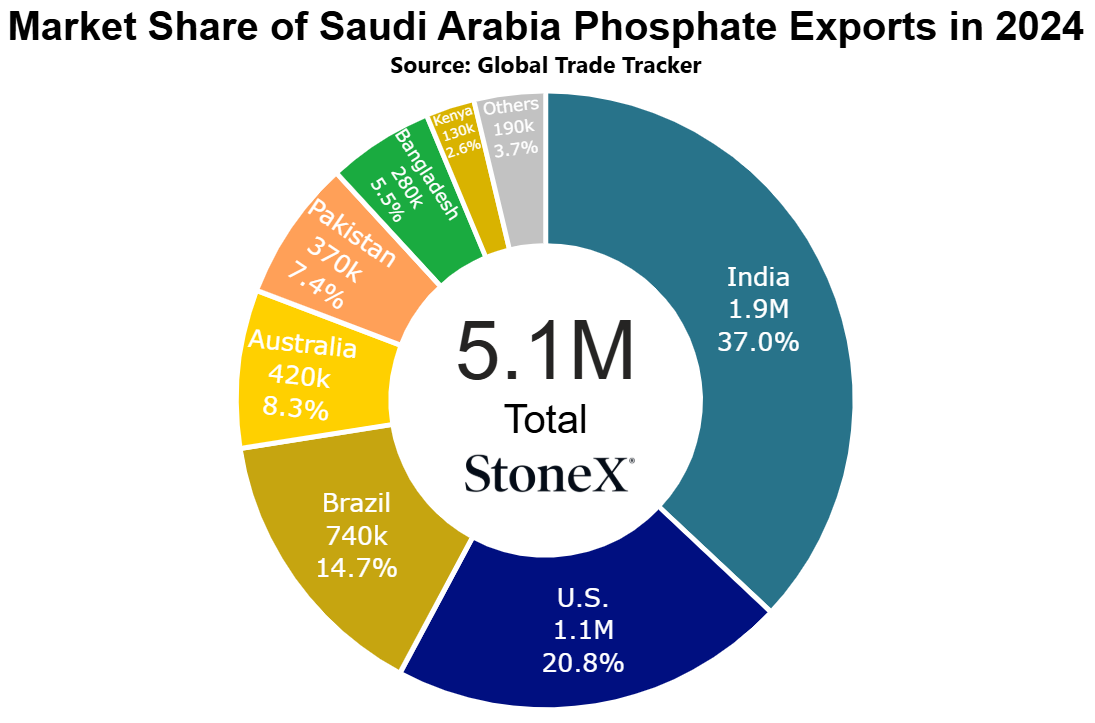
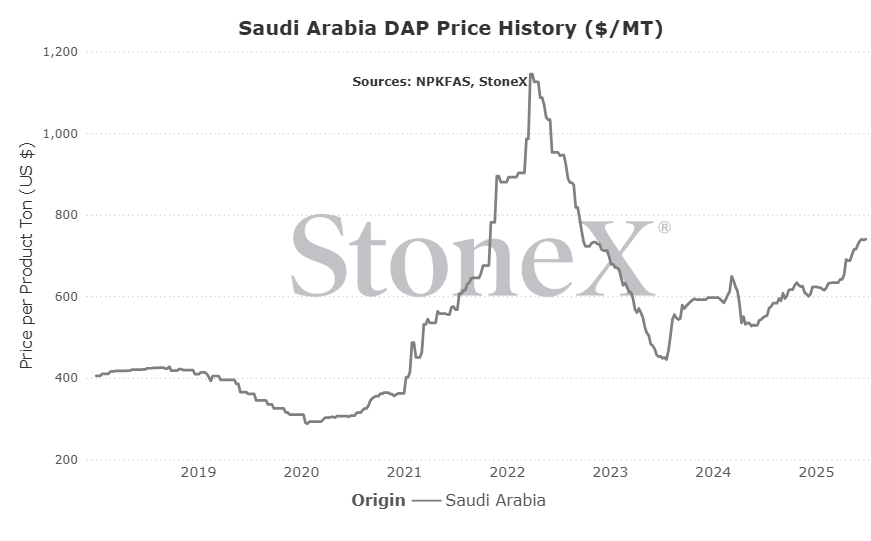
Saudi Arabia DAP price comparison
Number 3 global exporter in 2024
Price comparisons
Vs 30 days ago - 7% or approximately $49 higher
Vs 90 days ago - 15% or approximately $101 higher
Vs 6 months ago - 28% or approximately $174 higher
Vs 1 year ago - 37% or approximately $214 higher
Bull/Bear Factors
Because no market is ever guaranteed to go higher/lower, we try to consider the factors that can sway values so that we are able to act when they occur rather than react.
Bullish Factors
- Chinese export quotas get cut further from 4.5M – Chinese exports of phosphate jumped big in June, indicating their export program was finally starting to take hold. Our expectation is that July will be similar. However, what if it is too much too soon? We know the Chinese government is watching closely. If they see something they do not like, they hold the kill switch and could shut down exports. Image that world...
- India remains a "desperate" buyer – fortunately for India, it sounds like stockpiles have improved from their worst level. Unfortunately, current stockpiles are still low vs normal. More unfortunately, their monsoon season has been very good which indicates coming phosphate demand will be very good. The world still knows how bad of shape India is in and seem to have little issue with taking advantage of it.
- Low Aussie stockpiles means the market reacts quicker to global price movements – at this point in the calendar, most Australian storage locations should be anywhere from low to empty on phosphate. Better to be mostly empty and prepared for the next fill opportunity. However, that also means that if global values move higher, so too will the next round of Aussie phosphate.
Bearish Factors
- Higher than expected demand destruction – right now, the phosphate market is expecting some demand destruction. You would be hard pressed to find something that doesn't think there will be at least some degree of demand pull-back. However, farmers are near a breaking point...if not already there. At some point, enough is enough. If enough people say no to purchases, it can shift the market...at least for a time.
- India rebuilds stockpiles and stops buying – this seems fairly low probability, but still possible. India has been buying a lot and getting big volume contracts signed. Once they get comfortably supplied, their buying patters will slow and they have been the biggest driver of higher prices. If they disappear, maybe prices start to fall?
- China surprises the world and increases their export quota similar to what they did for urea – yeah, I'm stretching here. China's reduction on exports is a big reason why global prices are so high. However, they surprised everyone for urea by increasing their exports from 2 to 3M tons for 2025. It isn't impossible to think they could boost phosphate as well under the correct conditions. If that happens, phosphate could suddenly look different.
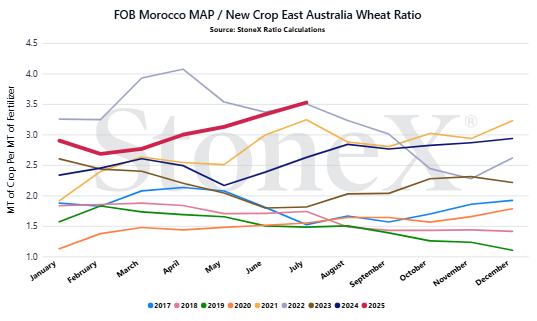
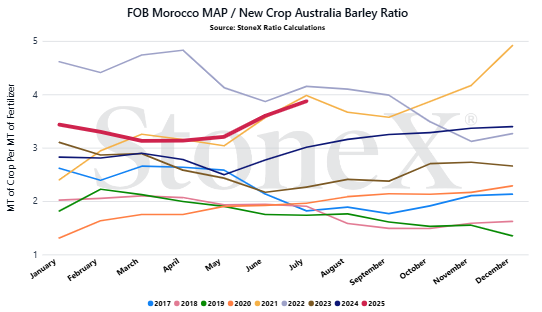
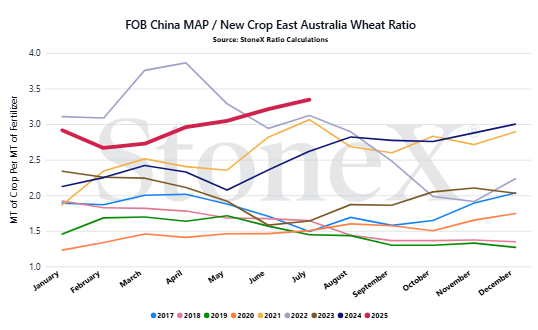
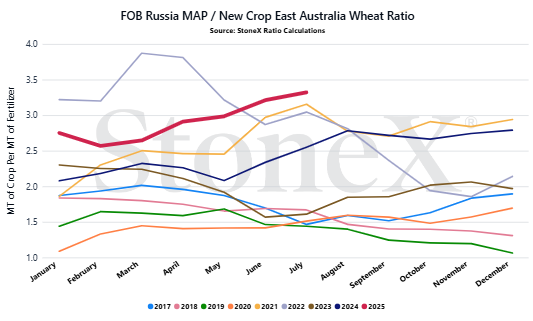
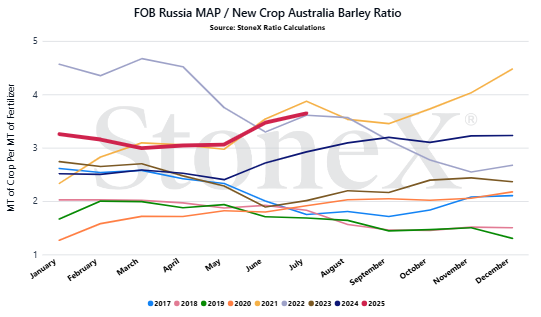
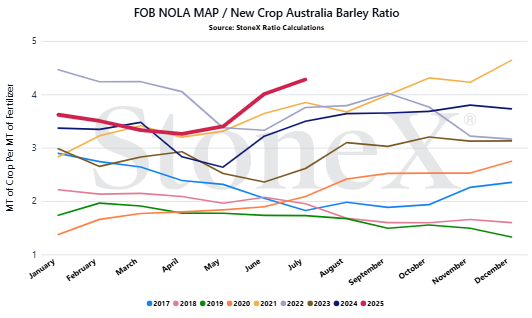
Where are the current phosphate/grain ratio values today?
We believe that only looking at the flat price of either grains or fertilizer can be misleading:
We look at the ratio "value" to get a better indication of where we are or how many bushels of X does it take to pay for 1 ton of fertilizer.
Would you rather:
When we compare the current ratio value against recent years, we start to see if we are high or low.
YOUR VALUES MAY LOOK DIFFERENT
Josh Linville’s Focal Points
- Chinese exports - if there is a single thing we can point to in order to lay blame for the current phosphate situation, it is China. China is normally the world's largest exporter with 8 to 10M tons per year being allowed to leave their shores. The 2025 government export quota is only 4.5M. Could that number increase? Maybe. Cannot say absolutely not but it doesn't look likely. Could that number fall? That is a bigger chance today. Unfortunately, China is controlling the world today.
- India stockpile levels/monsoon season/looming demand - if China is the biggest cause of the global situation, India is the biggest effect. For over a year now, India has struggled to maintain their domestic stockpiles. Too many times the government has looked to try and influence global values down to save money, only to be burned with even higher prices. This reached a breaking point with Indian opposition government members protesting on the floor for low stockpile levels. The world saw that manufacturers/supplies knew that mean they were even more desperate. A desperate buyer pays more for product. Especially a buyer that is using government subsidies to make the purchase. It sounds like their stockpiles have improved but with a solid monsoon season, it may not be enough for looming demand.
- Looming global demand with such high prices - the age old question: how will farmers react? Most I have spoken with are indicating that they intend to cut their fall application rate or simply wait until spring in hopes of lower values. This has been said before but it is really hard to do on the heels of a big yield which removes big nutrients. Therein lies the issue. The phosphate market WANTS demand to be cut, but it doesn't feel enough has been...yet. If demand falls off, that will signal the top of the market but today does not feel we have gotten there.
- Timeline of new global production - there is hope at the end of this nasty tunnel. There is a growing laundry list of new and expanded production of phosphate around the globe. However, a better supplied outlook does not help today. When those tons come online will make a big difference. If they remain online and we start seeing those tons in 2026, for example, that can help sooner than later. If they start getting delayed which is a very normal occurance, the current market gets even more bold...
-
StoneX Ratio Calculation
The ratio calculation is derived from Bloomberg historical grains values as well as fertilizer values from StoneX, NPKFAS, and Argus.
The calculation is simply dividing the fertilizer price by each grain price.
All data was sourced from StoneX unless otherwise noted.