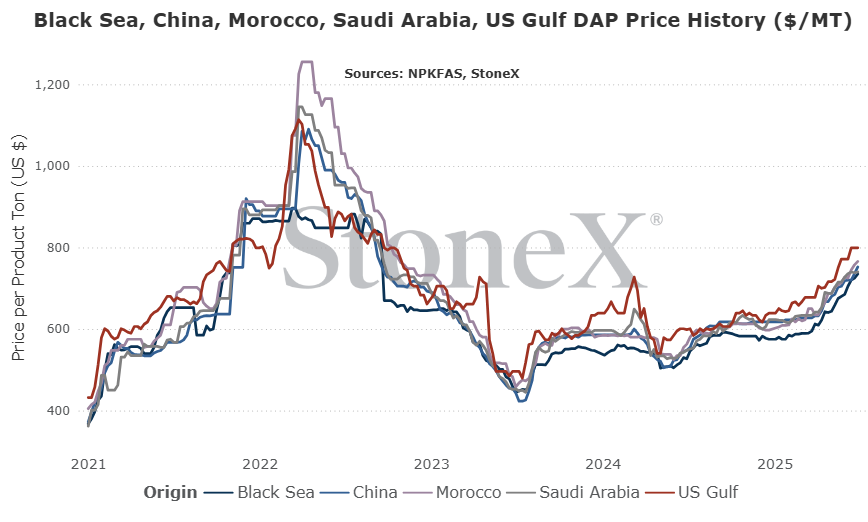
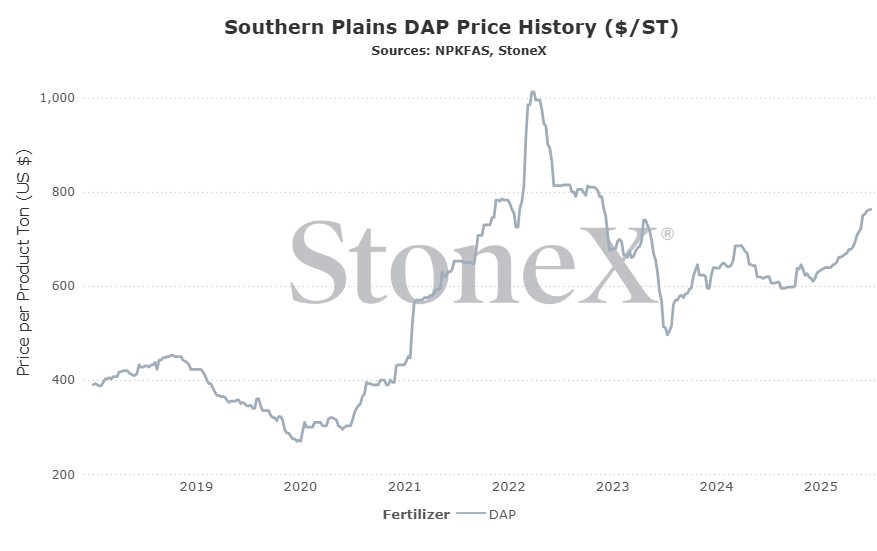
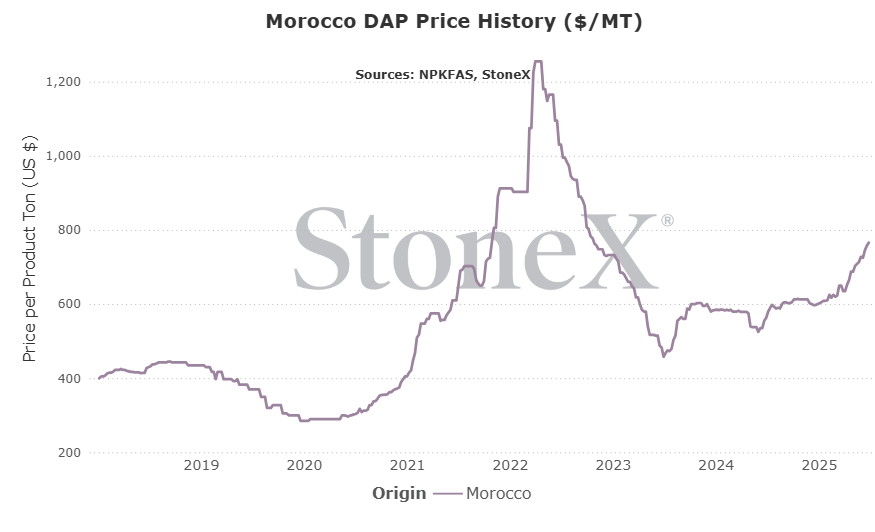
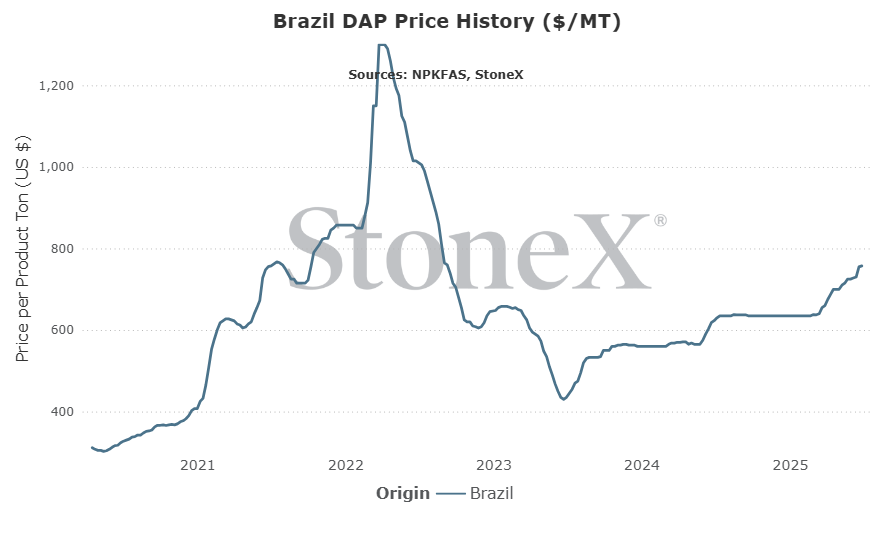
I will say this now and will say it going forward to eternity: these are the flat price graphs for each individual location. Your price where you are is going to be different. There are logistics. There is the cost of storage/interest/insurance/etc. These graphs should not be taken as "it shows the price at $700, why isn't my price $700". These graphs should be used to give an appreciation for price movements.
All values are in metric tons and USD currency.
Global
At some point, prices have to stop going higher...right?
Sure doesn't seem to be the case.
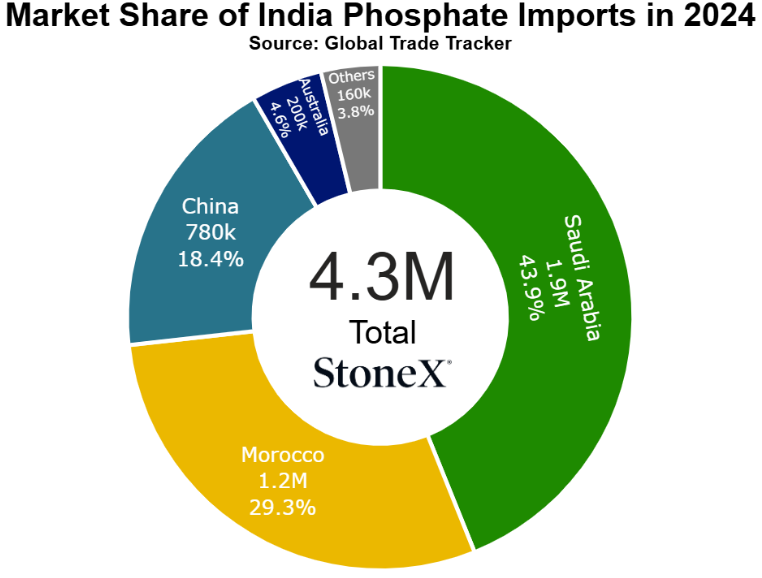
Unfortunately, the global phopshate story is the same boring story it has been all year. Chinese exports continue to be excessively low vs their normal rates. That creates a massive hole in global supplies. On the other end, India cannot get out of their own way. Stockpiles continue to be low vs normal and the entire phosphate world knows it. Not only do they know it, but they know demand will not be impacted because Indian farmers do not see price fluctuations. That has given manufacturers/suppliers almost complete control in negotiations...and they have.
Global supplies are tight and there isn't anything for "excess or new" production to step up at a price level to provide a ceiling. There is a lot of new production coming, but it is measured in years not months.
Demand stories continue to be dominated by India who has little choice. Either pay up for most anything offered, or run the risk of opposition party politician and/or farmer protests.
Prices cannot go up forever, but it is REALLY hard to see why they would fall near term.
North America
North American phosphate demand is going to take a hit this fall.
Let me repeat that.
North American phosphate demand is going to take a hit this fall.
You are going to struggle to find ANYONE to disagree with that statement. The argument is in just how much demand destruction there will be.
Supplies are still a struggle. N.A. operating rates have been struggling at a new low percentage Q4 and Q1, and it appears that Q2 may come very close to matching those periods. There also isn't much hope for imports as the U.S. has tariffed/duties/both the 4 other largest phosphate producing countries in the world.
I'm sorry to say that these values are horribly high...and there is a better chance that they go higher before they go lower. NOLA DAP prices have largely been in line with other major buyers like India and Brazil. I feel like we need imports and with the current duty/tariff situation, we are not getting imports until our price is at least the cost of the duty/tariff. The best bet is Saudi Arabian product as they "only" have a 10% duty rate.
The last regional sale was not long ago in the low $800's/MT. Let's just call the 10% tariff an $80mt cost. $80mt equates to roughly $73st. That means for heavier imports to start arriving, NOLA needs to be around $75 higher than the competition (India). We are nowhere near that today...
For what it is worth, while I will not tell anyone how much or how little to apply, I have told friends and family that if they are set on fall application, makes sense to lock it up...and then I apologize because they will not like the number.
General Global DAP/MAP Information
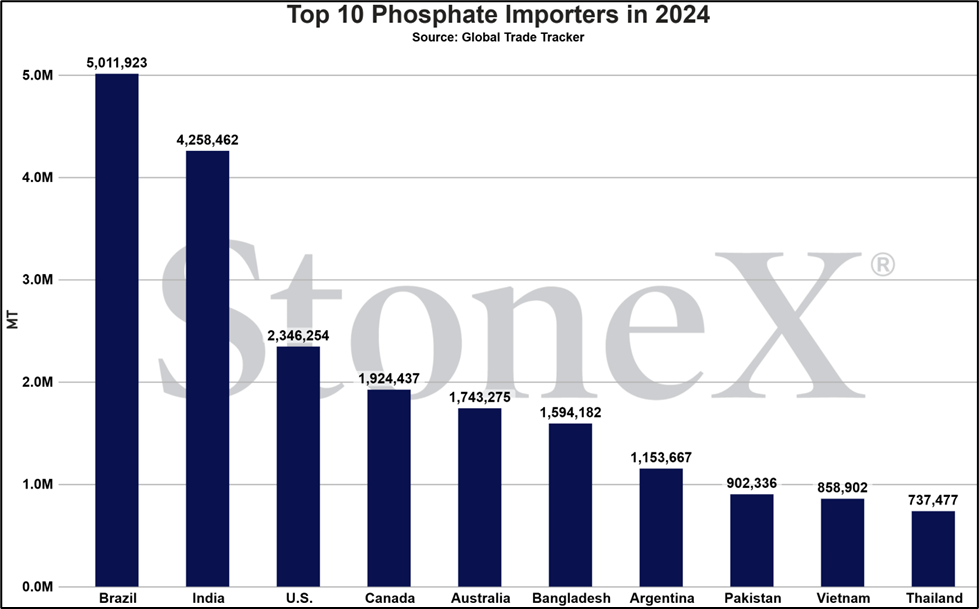
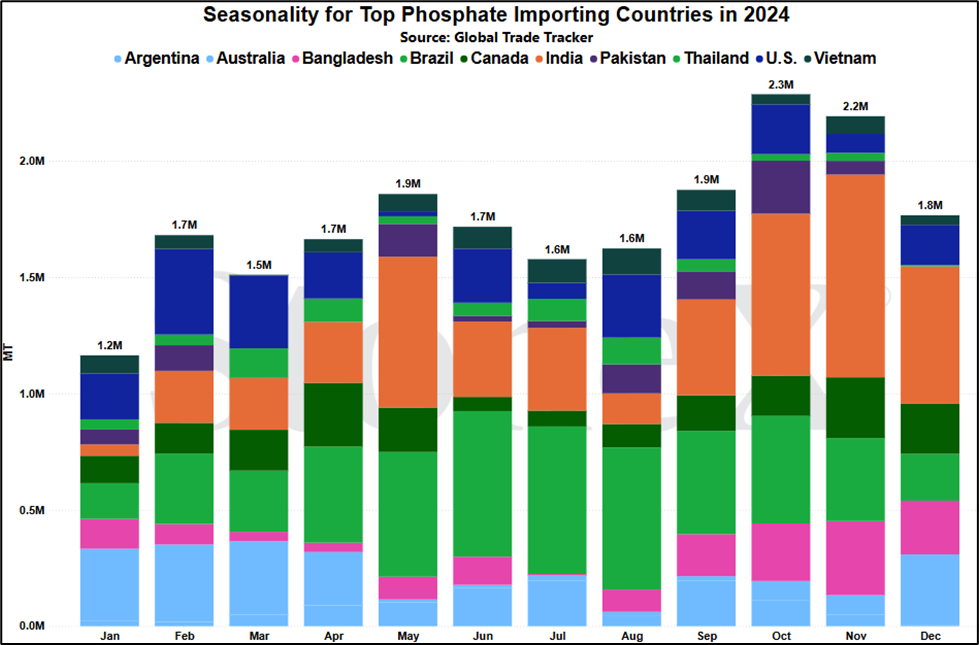
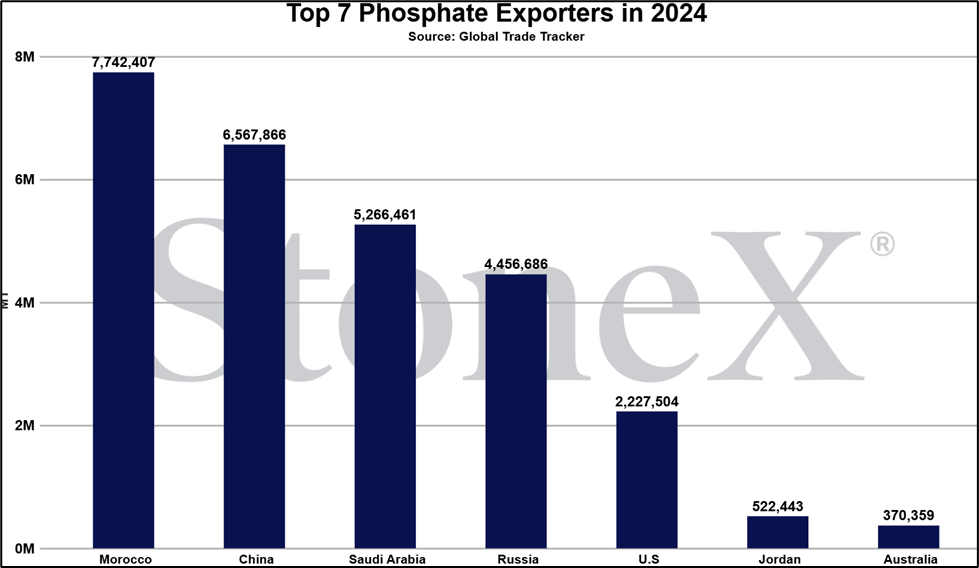
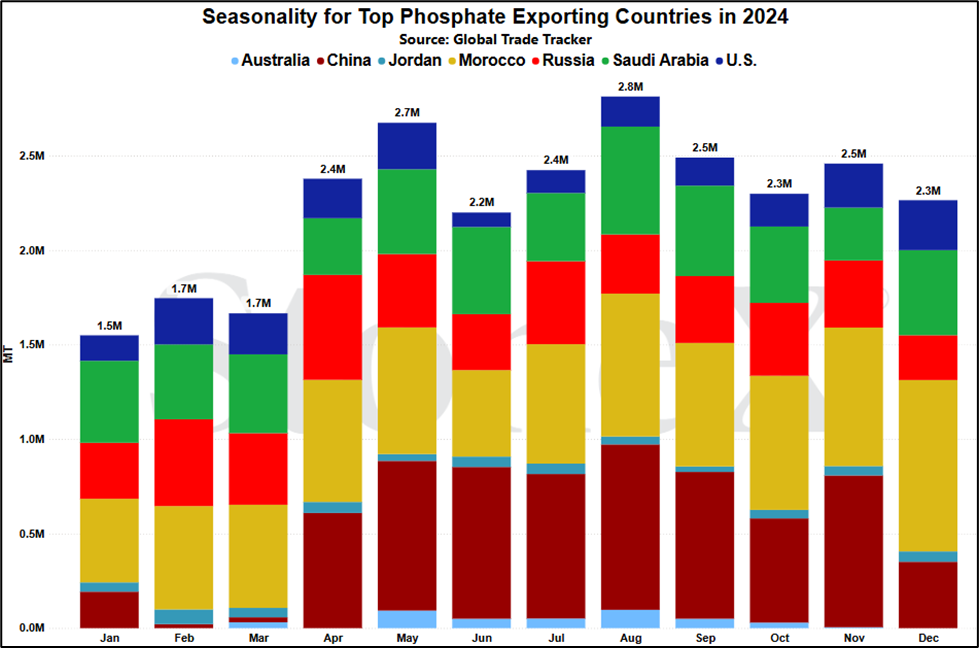
Chinese phosphate exports remain well behind, expected to continue
I realize this is a largely regurgitated story that I've hammered on for month's now. Unfortunately, it remains the leading phosphate story for the world and those new to the newsletter need to be brought up to speed.
For those of you that have been here a while, China's export approach is same old, same old. Excessively low vs normal rates.
For those that are new, welcome!
Historically speaking, China is the world's largest exporter of phosphate. Before recent years, it was considered normal for 8 to 10M tons of phosphate to depart their shores for international destinations.
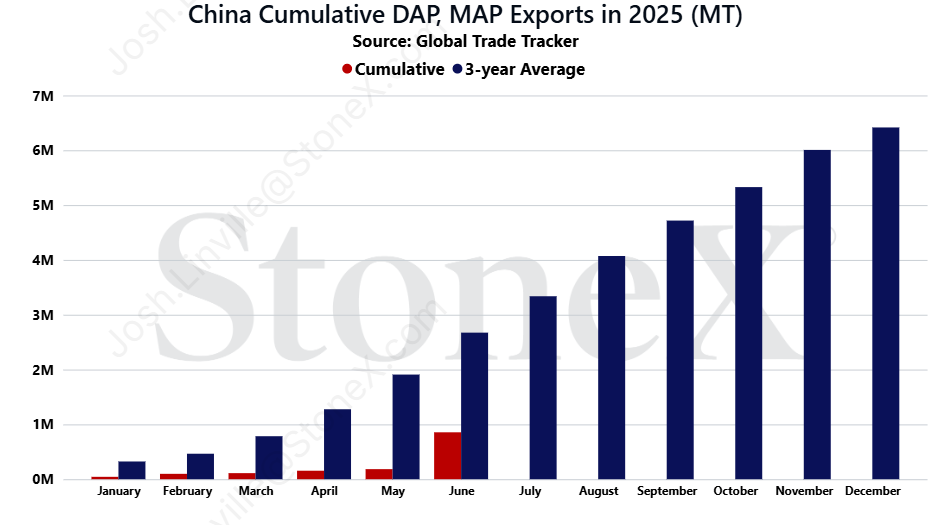
Unfortunately, a combination of the global 2022 fertilizer supercycle uncertainty, increased need for domestic China grain production, and the advent of battery technology changing to use phosphate as its base have all contribued to the current situation where it appears that the world will be lucky if they export 4.5M tons (their last stated export quota).
2022 was an unusual situation that largely got started with Russia suddenly and shockingly invading Ukraine. Suddenly, companies started pulling out of Russia at record pace. Russia became so "toxic" that it appeared that the world would largely shun even their fertilizer exports. Some nations, like Australia and Canada, actually moved forward and enacted penalties on Russian goods that stopped the flow. European countries have take similar steps of late. However, after a cooling period, we soon found out that Russian exports were continuing to flow as global buyers flocked to "cheap" tons. From China's perspective, the damage was already done. Rather than allow free flowing exports which could result in a lack of supplies for Chinese farmers, the government started to intervene. Export restrictions were put into place to accomplish 2 goals: ensure adequate domestic supplies and lower domestic values. They were successful on both accounts and continue the practice to today.
Recent years has also seen China take a little more isolated approach to the world. There are plenty of theories as to why but the end story is largely the same. China no longer wants to be dependent on the rest of the world for its foods. To reduce that dependence, farmers have been tasked with growing more. How do you increase yields? Put on more fertilizer. From this standpoint, even a small percentage increase can result in a massively larger demand number.
Then there is the new battery technology. The current best tech approach is using phosphate as the battery base. Who is one of the largest battery manufacturers in the world? You guessed it, China. So not only has agricultural demand risen, but so to has industrial demand.
That brings us to modern day. 2025 marks a new expected low for phosphate exports from China. The government has announced a 4.5M ton export quota. Now, like with all things, this number can change. It just doesn't seem likely. Exports for 2025 have yet to reach the 1M ton barrier through June. To say that they cannot export another 3.5M tons July through December would not be wise. That is well within their capacity and is a situation that will be watched closely but given their approach so far, it is hard to see them changing to increase the number.
For now, the world's phosphate market remains extremely high priced and at the center of the story is China.
What does this mean for farmers?
Higher prices...everywhere.
I do not care where you are reading this from. If you are subject to price volatility, then your prices are being affected by this. If you farm in India where the farmer price remains constant, this still affects you from the standpoint that stockpiles are low because global supplies are tight without Chinese exports.
This is a global driver event.
India stockpiles remain low despite purchases. Government protests begin.
While the government of India has been attempting to maintain that domestic phosphate stockpiles are at good levels, it appears that story/wall is starting to crumble.
For those unaware of how India operates, it is different in the way that farmers there do not see global price volatility like so much of the world does. The government sets a low and steady price for the fertilizers. Now, these values are much below global replacement. To make sure that imports continue to flow, the government approves subsidy programs to make up the difference so that importers can do their jobs.
Unfortunately, the government has been struggling to keep up with global phosphate for a little over a year now and it has resulted in low domestic stockpiles.
Last summer, phosphate prices were falling. Chinese exports had been seen improving and there was global hope that the trend would continue. Honestly, I thought the same. It seems like phosphate still had price downside. The Indian government, who had spent a lot of money since 2022 on subsidy programs, looked to try and save some cash and influence global values lower. They dropped the subsidy rate for importers which made it impossible to purchase anything until global prices fell. They believed by stopping their own demand, it would force prices lower.
It might have...if not for China pulling back the reigns on exports.
That was the shock. Suddenly, Chinese exports were no longer guaranteed and global supplies got tight almost overnight. Prices around the world started to climb and India was slow to respond. Each time they took a step to right size themselves with the market, the market moved higher. This cat and mouse game has been playing out ever since. Stockpiles have suffered and this has been an issue in the country. With the government controlling farmer pricing and the subsidy programs that allow/disallow imports, if inventories get too small, the government is blamed.
This situation has recently come to a head. While it has been a major talking point around the world, the government opposition party finally had enough and protested on their floor to bring light to the low inventory situation. The following link does a very good job of describing the situation.
https://timesofindia.indiatimes.com/city/raipur/fertilizer-crisis-hits-…
"So why don't they just buy a bunch and get caught up?"
This has been another issue. With Chinese exports so low, global supplies are very low. It has not been as simple as "just buy the tons". The tons are far and few between. To make it worse for India, the world's position holders/manufacturers are very well aware of India's issues which makes it much easier to push price ideas higher with each sale.
Today, stockpiles have improved somewhat on large quantity contracts and spot purchases being made. However, current levels are still low vs normal and with their monsoon season looking very good, demand should also be very good. Our hope for Indian farmers is that stockpiles get rebuilt in time for their season. Time is running out.
What does this mean for farmers?
If China is the cause of global supply tightness, India is the effect with higher prices being demanded for each sale.
This is another global reaching story. As long as the cat and mouse game between China and India plays out, everyone suffers. With every higher priced sale, every ton in the world will point to it and ask why the next sale anywhere around the world cannot be that high or higher.
High prices cannot last forever, but this India situation is sure making it feel like it can...
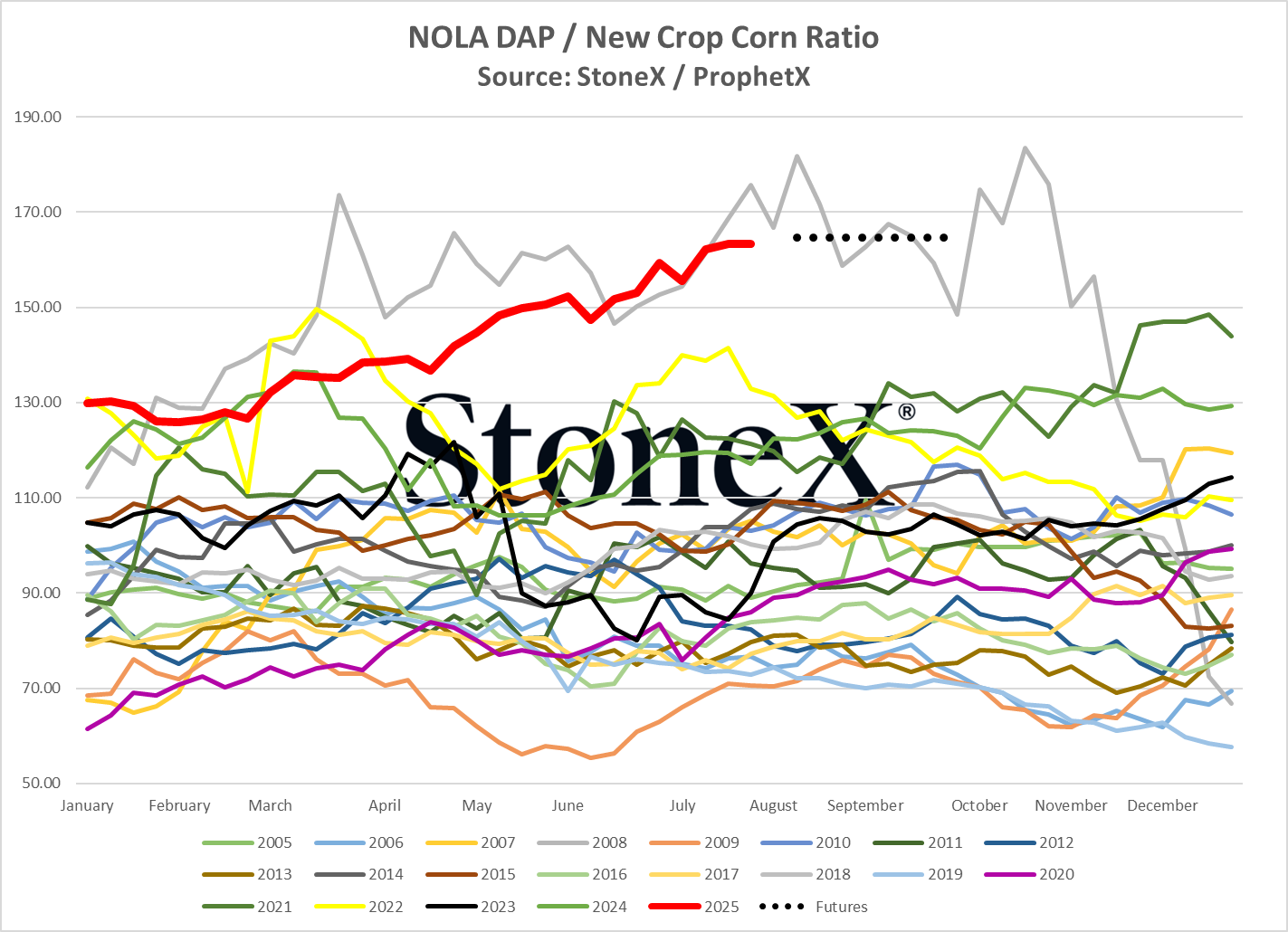
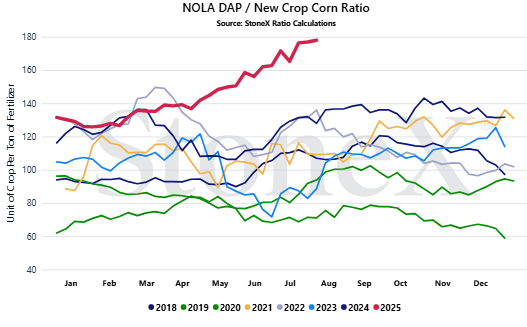
NOLA DAP/Corn ratio less than a bushel from breaking all-time high
As I write this, we are on the razor's edge of matching/breaking the all-time high ratio between DAP and corn.
In late 2008, the weekly average ratio hit a high of 183.43 bushels of corn to pay for 1-ton of NOLA DAP. Now, there very likely could have been something higher that traded that week, but we do not have that information so we are using that 183 number as our record setter.
Today, we are very close:
- A prompt NOLA DAP barge traded yesterday at $820
- December 2026 corn currently trading at $4.48
- Creates a ratio of 183
If the corn price falls a couple pennies or DAP rallies another $5, we will set a brand new high.
...and that is nothing to celebrate.
What that will mean is that phosphate is currently the least affordable for farmers in history. Farmers will have never paid as many of their hard earned bushels to pay for that phosphate input.
The expectation is that demand will change. No doubt there will be application rate cuts. No doubt we will see some fall applicators wait until winter/spring. Anything to reduce the burden.
Unfortunately, a lot of this continues to be driven by global phosphate market events (China and India) as well as U.S. tariffs (making it more costly to bring product from Saudi Arabia).
Again, this is nothing to celebrate and the current situation is drastically worse than 2008. In 2008, corn prices were significantly higher which helped to offset high input costs. The relationship between DAP/corn was bad, but higher overall income helped. Today, corn prices are terrible and are refusing to move higher. Making for a very poor farmer income situation.
Remember, there is hope on the horizon with a lot of new production being planned. Just wish they would come online in the coming months rather than the coming years...
North American fall demand destruction expected. Will it be enough?
One of the most common responses to the current high phosphate situation is that demand will be destroyed as farmers reduce application rates, wait until spring, and/or skip application completely.
If you are in these camps, I am going to say something and I do not want people upset about it.
Before making an application rate change, MAKE SURE the savings is worth the possible cost.
What I mean by that is do not make an angry decision that ends up costing more in the long run. Yes, reducing application rates in some instances makes perfect sense. If you have built up your soil levels and can mine the ground for a season without a yield fall off, that is great! If soil levels are good and you only need to apply to get back to maintenance levels without a yield fall off, fantastic!! However, if an application is reduced and/or skipped completely and the result is a massive pull back on yield potential next year, you may lose more than you save.
Then there is the waiting until spring. This may end up being the best strategy as it gives farmers their most valuable asset today: time. Time to watch the markets for an opportunity. Time for phosphate values to correct. Time for hope. However, before diving into this pool headfirst, talk to you supplier/retailer/etc. If one or two take that approach, it likely will not be a big deal. If every farmer does it, there is going to be a very bad situation in the spring where retailers struggle to get everything done.
OK, enough of that. Back to the story.
So many folks are talking demand destruction as a response to high prices. That is exactly what I expect to see happen. The issue is the market not only expects it, it needs it.
At a recent conference, a story was going around where a manufacturer was pressed on demand destruction. No doubt the hope was that the shock of the story would cause them to rethink high prices. The response was that they anticipated heavy demand pull back and even if demand dropped 1M tons across N.A. this fall, it wouldn't be enough to rebalance the S&D.
Everyone, think about that. They ALREADY anticipate demand getting pummelled and the response is that it may not be enough. To me, that is not a story told to maintain high prices. With the world S&D in such bad shape, they do not need that. That response was a truthful statement that points to how bad of shape phospahte is in.
Do not get me wrong. I am not saying that I expect wide ranging outages of supply this fall. The market almost always finds a way (except for UAN this spring). It just might be difficult, higher cost, and slower to arrive.
The best advice I can give is to have that conversation with your retailer/supplier. I did not say you have to buy it. Just have the conversation. Discuss things like supply options, timeframe to get product in place, their preparations, etc.
Everyone, I want nothing more than for everyone to hold out and for prices to drop hundreds of dollars. I would love nothing more than for everyone to tell me I was wrong in a few months.
However, with the market set up like it is, I'm comfortable with this stance...for now.
What does this mean for farmers?
Largely, it means scare tactics of the past are not going to work as well.
In the past, threats of lowered demand could force prices lower. With sufficient supplies, the market could ill-advise losing demand and so might respond by dropping values to something that worked. Today, the market actually NEEDS demand to be lower. The current S&D is out of whack. It has to find balance. For the most part, very little can be done about supply so the attention focuses on demand. How do you lower demand? Make it so expensive that people walk away.
That is where we are now.
North America supply outlook remains ugly. Will higher prices help fix it?
North America is in a bad place in terms of phosphate supplies. Why?
- China - tariffs enacted during Trumps 1st term continue to keep imports away
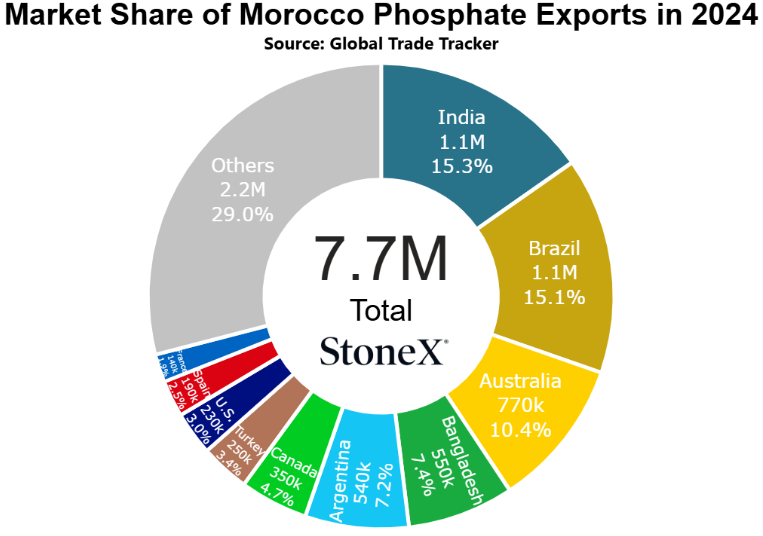
- Morocco - tariffs and duties on their phosphates
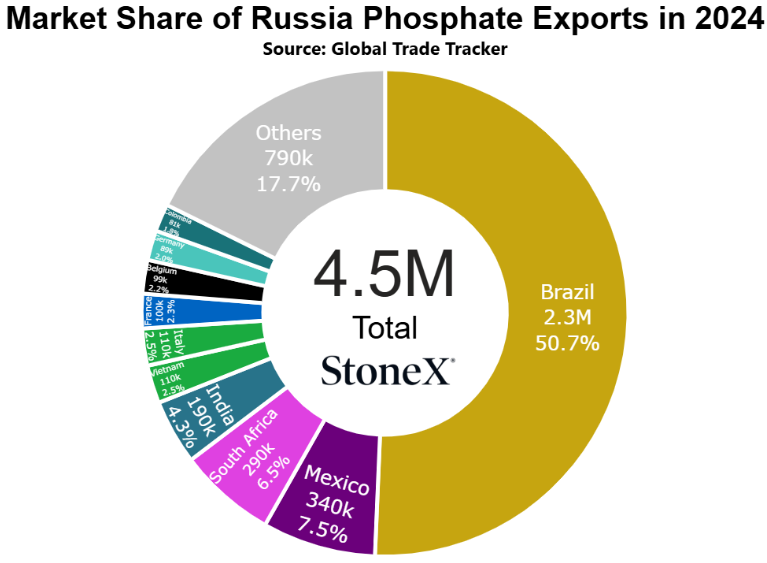
- Russia - duties on their phosphates and possible heavy handed tariffs on their way
- Saudi Arabia - tariffs currently on the country
That list represents the 4 largest manufacturing and exporting countries in the world. The 5th largest country is actually the U.S....but there are problems here at home. Operating rates in Q4 '24 and Q1 '25 set the all-time low that we have seen. Q2 '25 is not expected to improve and with production plant downtime for repairs scheduled for some locations, Q3 '25 could also be tough.
That top 5 list represents 85 - 90% of global production and exports. For N.A. buyers, that is a tough situation that continues to lead to a very tightly supplied market.
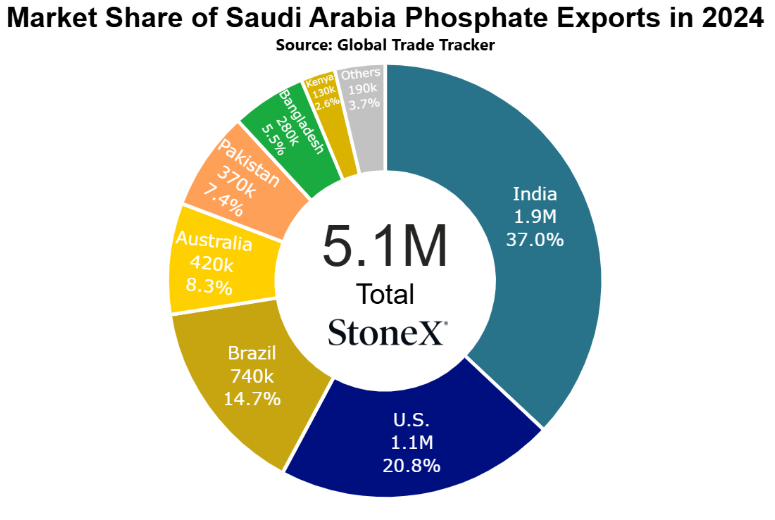
This has been a big reason for why NOLA DAP values have skyrocketed in recent weeks/months. The market appears to understand that it needs imports to meet demand, even with demand expected lower. Saudi Arabia remained the most likely supplier from that list, but 10% tariffs meant nothing was coming to the U.S. until its price "paid" the tariff. When a market is as tightly supplied as phosphate, tariffs do not work like politicians think. Producers like S.A. can pick and choose where to send their product. If the U.S. and India are the same price but the U.S. has a 10% tariff/penalty, then the tons flow to India. Only after the U.S. moves its price high enough to pay the flat price and the 10% tariff will tons start to flow.
Now, that has finally happened with NOLA DAP reaching parity with major buyer India. That "should" open the door to imports starting to arrive. "Should".
Still, the U.S. phosphate situation remains in a tough spot. Prices are extremely high. Retailers and farmers are going to be very reluctant and slow buyers. That could make it hard to get product in place in time...for whatever demand will be there.
What does this mean for farmers?
Unfortunately, as has been the common theme this month for phosphate, higher prices.
Eventually, the world will calm down and normalize. Phosphate cannot stay this high forever. It is unsustainable.
For now, it sure seems to have lasting power.
NOLA/New Orleans, Louisiana DAP price comparison
Number 5 global exporter in 2022
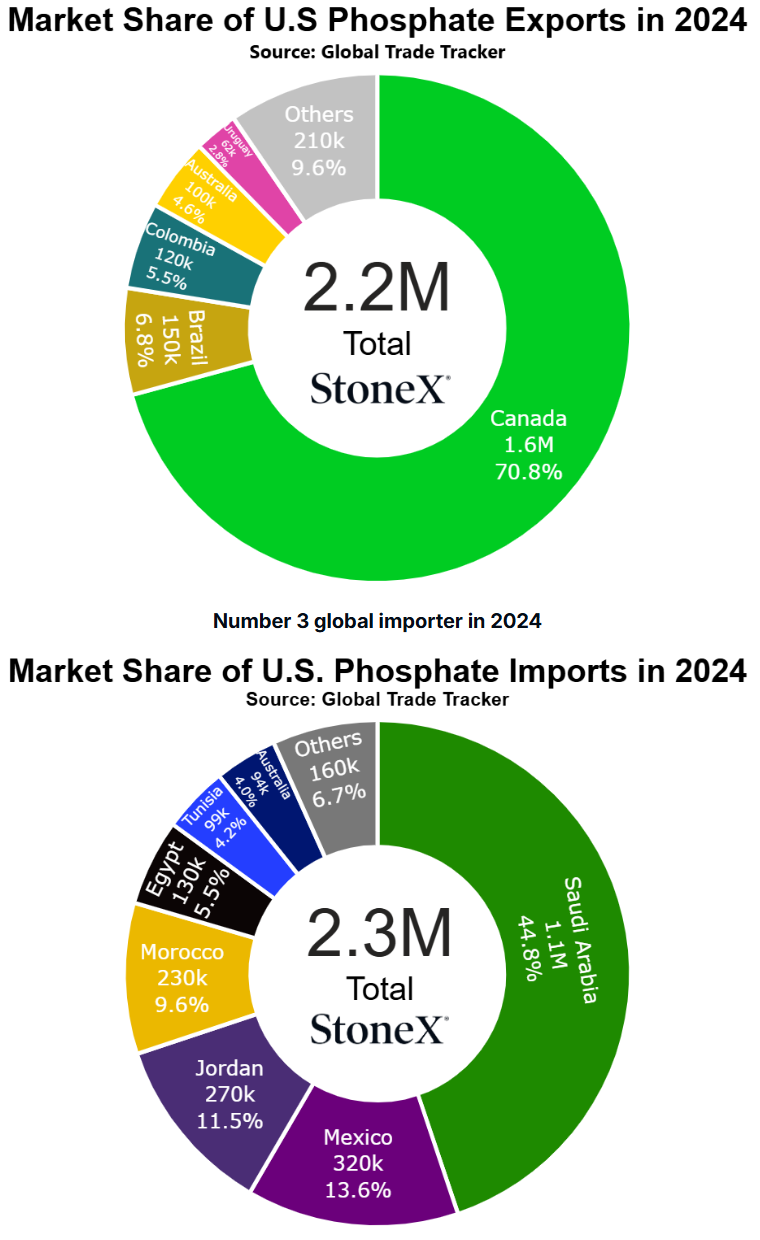
Price comparisons
Vs 30 days ago - 4% or approximately $30 higher
Vs 90 days ago - 16% or approximately $105 higher
Vs 6 months ago - 29% or approximately $170 higher
Vs 1 year ago - 39% or approximately $210 higher
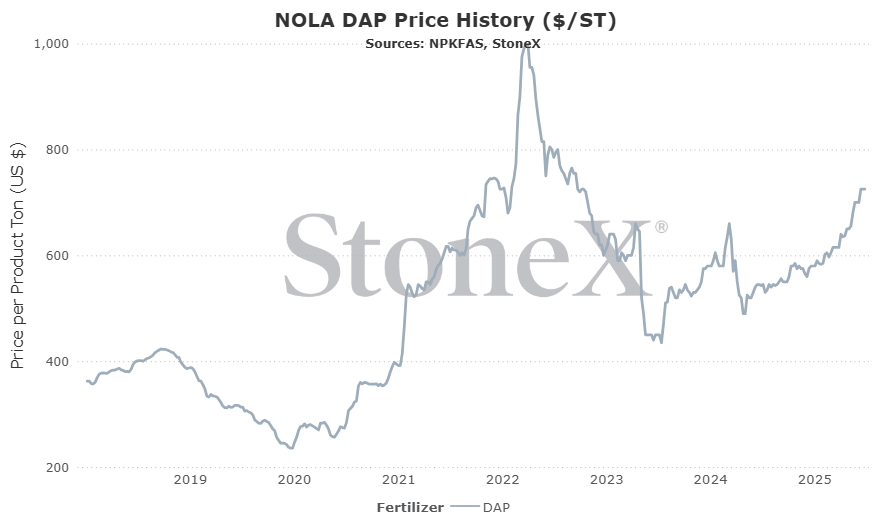
U.S. Midwest Average (using multiple points across Midwest) price comparison
Vs 30 days ago - 3% or approximately $25 higher
Vs 90 days ago - 14% or approximately $92 higher
Vs 6 months ago - 25% or approximately $155 higher
Vs 1 year ago - 24% or approximately $149 higher
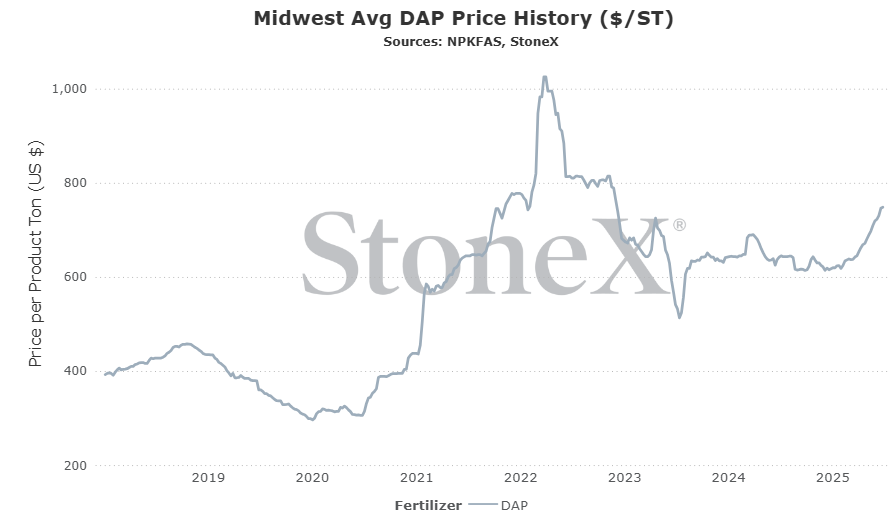
U.S. Northern Plains Average price comparison
Vs 30 days ago - 1% or approximately $6 higher
Vs 90 days ago - 14% or approximately $99 higher
Vs 6 months ago - 24% or approximately $155 higher
Vs 1 year ago - 33% or approximately $196 higher
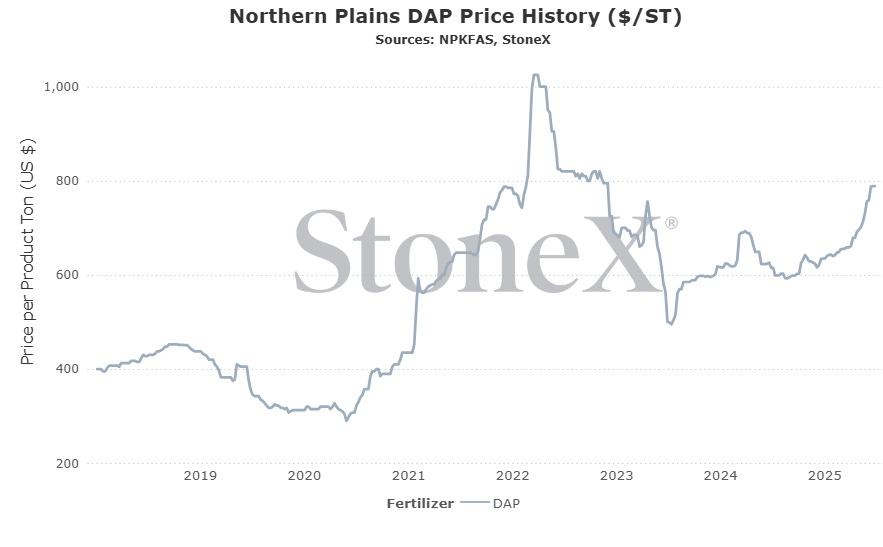
U.S. Southern Plains Average price comparison
Vs 30 days ago - 4% or approximately $30 higher
Vs 90 days ago - 14% or approximately $100 higher
Vs 6 months ago - 24% or approximately $154 higher
Vs 1 year ago - 31% or approximately $186 higher
Morocco DAP price comparison
Number 1 global exporter in 2022
Price comparisons:
Vs 30 days ago - 3% or approximately $22 higher
Vs 90 days ago - 15% or approximately $100 higher
Vs 6 months ago - 29% or approximately $178 higher
Vs 1 year ago - 33% or approximately $195 higher
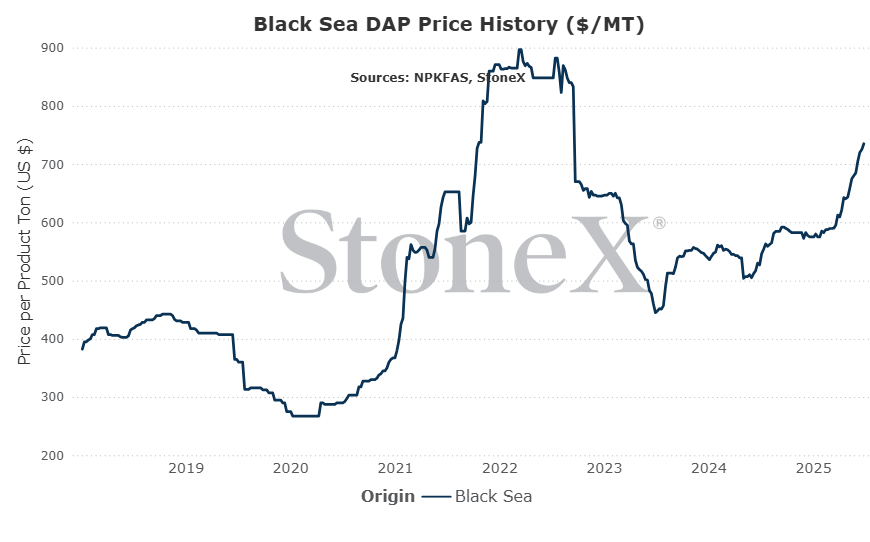
Black Sea DAP price comparison
Number 3 exporter of DAP/MAP in 2022
Price comparisons:
Vs 30 days ago - 3% or approximately $25 higher
Vs 90 days ago - 18% or approximately $117 higher
Vs 6 months ago - 30% or approximately $175 higher
Vs 1 year ago - 36% or approximately $201 higher
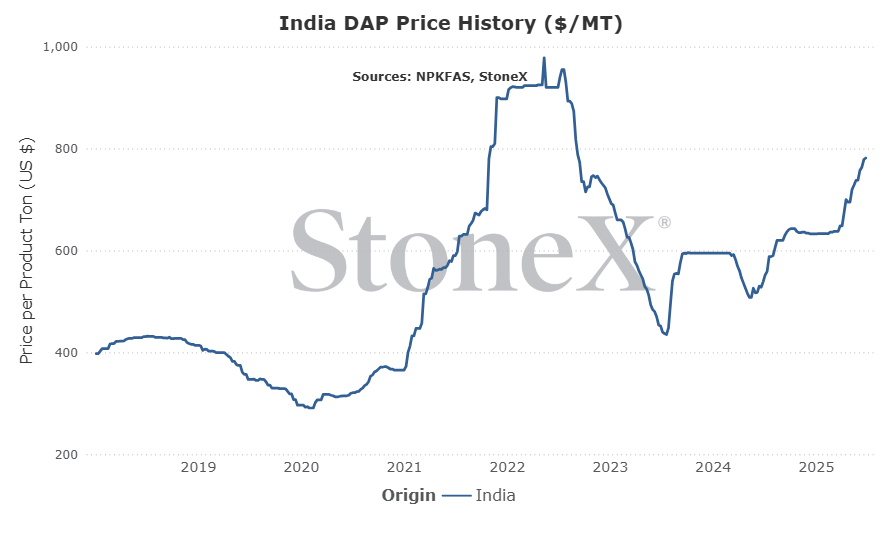
India DAP price comparison
Number 1 global importer in 2022
Price comparisons:
Vs 30 days ago - 4% or approximately $29 higher
Vs 90 days ago - 17% or approximately $115 higher
Vs 6 months ago - 28% or approximately $177 higher
Vs 1 year ago - 38% or approximately $223 higher
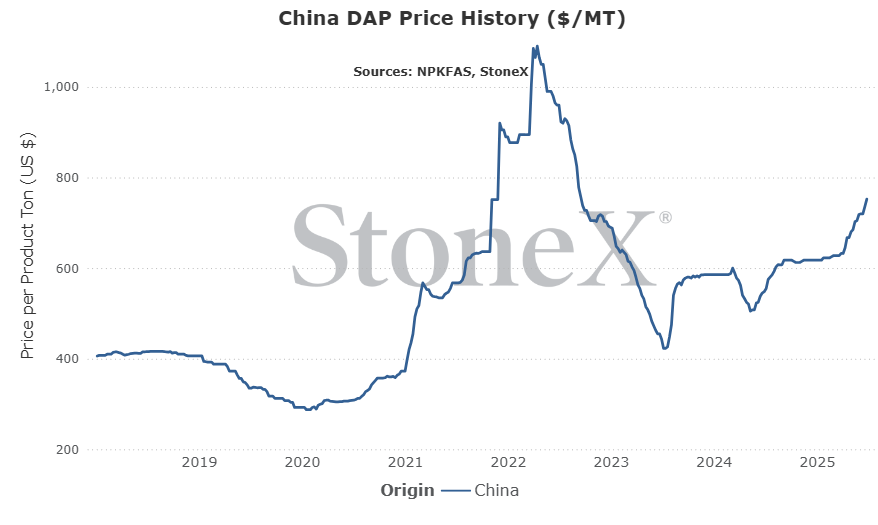
China DAP price comparison
Number 2 global exporter in 2022
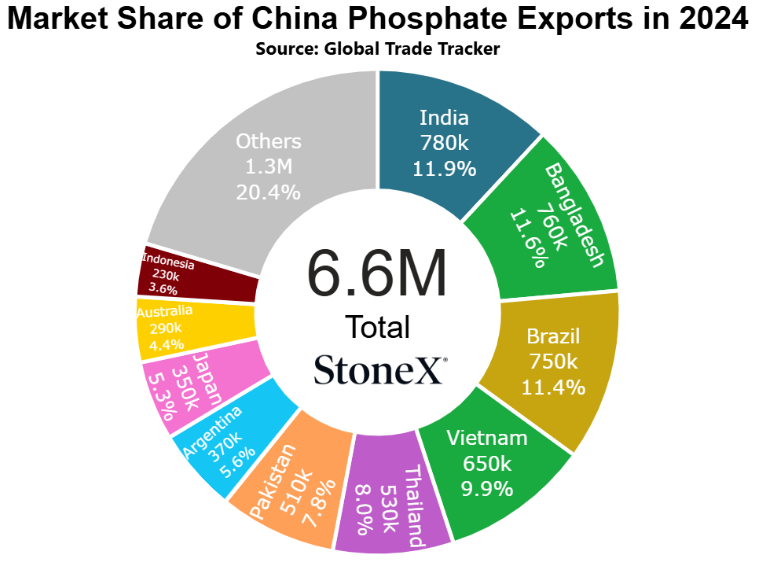
Price comparisons:
Vs 30 days ago - 2% or approximately $18 higher
Vs 90 days ago - 13% or approximately $90 higher
Vs 6 months ago - 24% or approximately $148 higher
Vs 1 year ago - 32% or approximately $185 higher
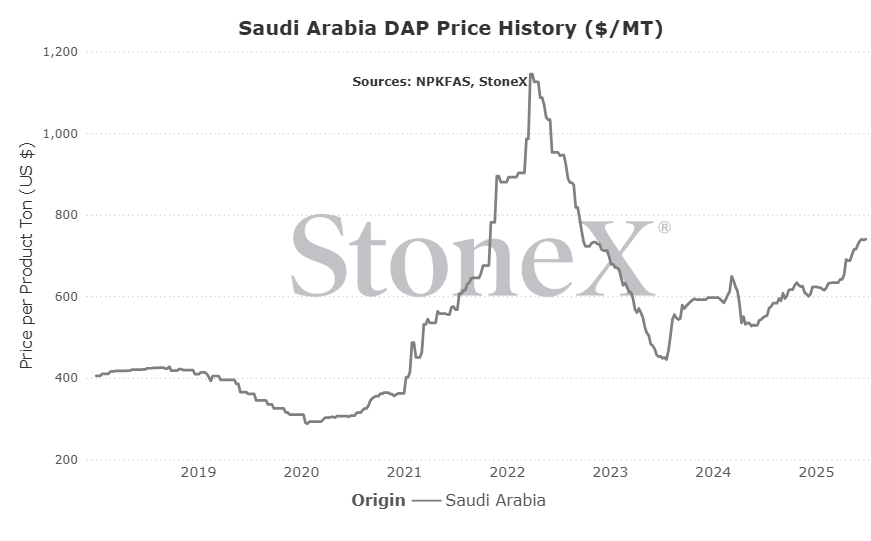
Saudi Arabia DAP price comparison
Number 4 global exporter in 2022
Price comparisons:
Vs 30 days ago - 7% or approximately $49 higher
Vs 90 days ago - 15% or approximately $101 higher
Vs 6 months ago - 28% or approximately $174 higher
Vs 1 year ago - 37% or approximately $214 higher
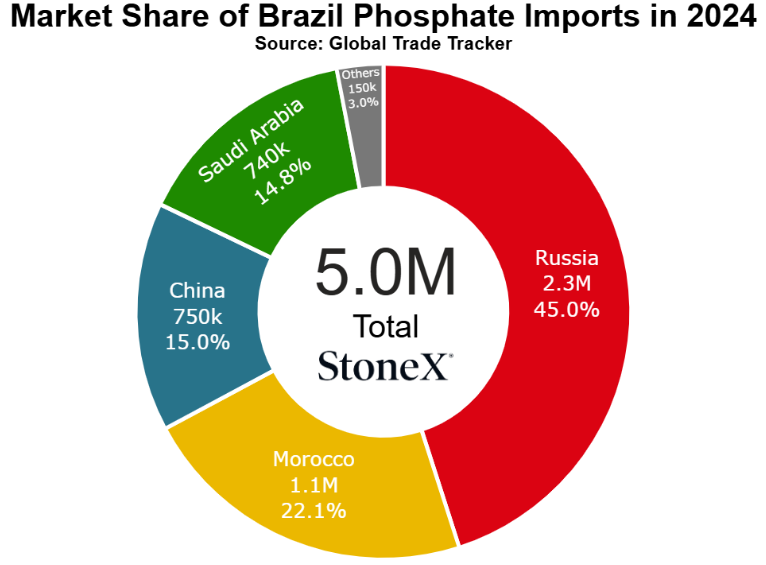
Brazil DAP price comparison
Number 2 global importer in 2022
Price comparisons
Vs 30 days ago - 0% or approximately $3 higher
Vs 90 days ago - 9% or approximately $60 higher
Vs 6 months ago - 20% or approximately $125 higher
Vs 1 year ago - 20% or approximately $125 higher
- Chinese export quotas get cut further from 4.5M – Chinese exports of phosphate jumped big in June, indicating their export program was finally starting to take hold. Our expectation is that July will be similar. However, what if it is too much too soon? We know the Chinese government is watching closely. If they see something they do not like, they hold the kill switch and could shut down exports. Image that world...
- India remains a "desperate" buyer – fortunately for India, it sounds like stockpiles have improved from their worst level. Unfortunately, current stockpiles are still low vs normal. More unfortunately, their monsoon season has been very good which indicates coming phosphate demand will be very good. The world still knows how bad of shape India is in and seem to have little issue with taking advantage of it.
- N.A. continues to impede imports – the U.S. has blocked most of the world's phosphate supplies. Morocco/Russia/China/Saudi Arabia all have tariffs/duties/both. After them, there simply is not a lot of other places to find product. The reason I list this as bullish is that right now, NOLA values are in line with other major buyers like India. My fear is that the closer to fall we get, the bigger a premium we become to the world...and the world doesn't look soft today.
- Higher than expected demand destruction – right now, the phosphate market is expecting some demand destruction. You would be hard pressed to find something that doesn't think there will be at least some degree of demand pull-back. However, farmers are near a breaking point...if not already there. At some point, enough is enough. If enough people say no to purchases, it can shift the market...at least for a time.
- North American operating rates improve markedly – another situation that doesn't look likely but something we need to watch. U.S. phosphate operating rates were record lows for Q4 and Q1. I have not seen Q2 data yet, but a lot of indications point to it being low as well. That has played a part in current high prices. However, production could surprise us and make a return to normal for Q3 and Q4. That and demand destruction could weaken price ideas. It doesn't seem likely, but it is worth watching for.
- China surprises the world and increases their export quota similar to what they did for urea – yeah, I'm stretching here. China's reduction on exports is a big reason why global prices are so high. However, they surprised everyone for urea by increasing their exports from 2 to 3M tons for 2025. It isn't impossible to think they could boost phosphate as well under the correct conditions. If that happens, phosphate could suddenly look different.
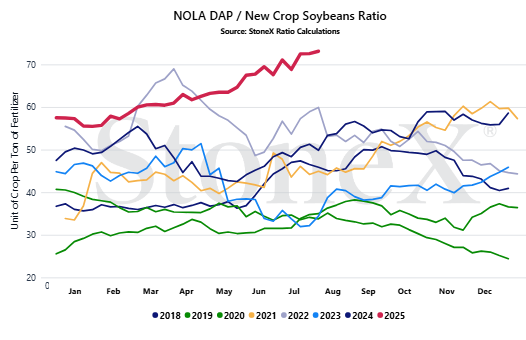
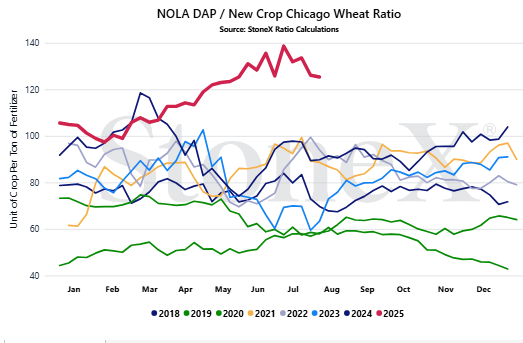
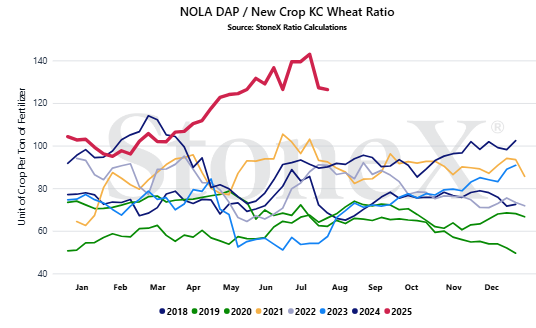
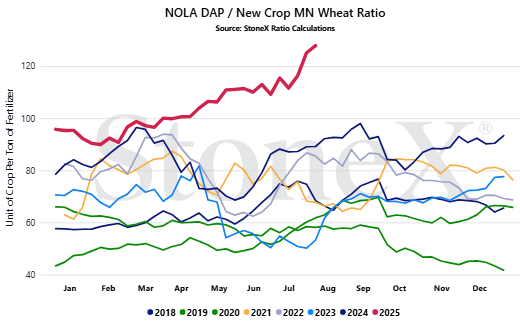
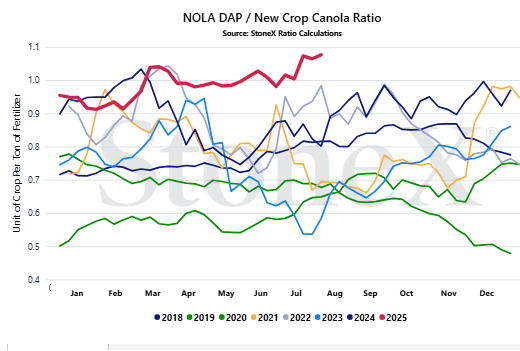
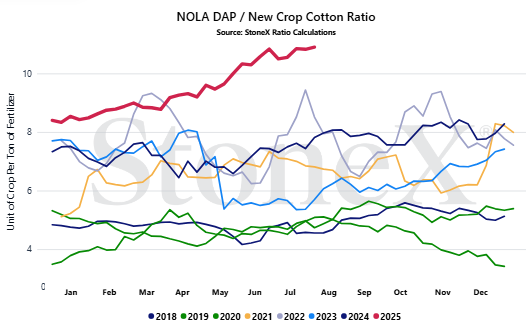
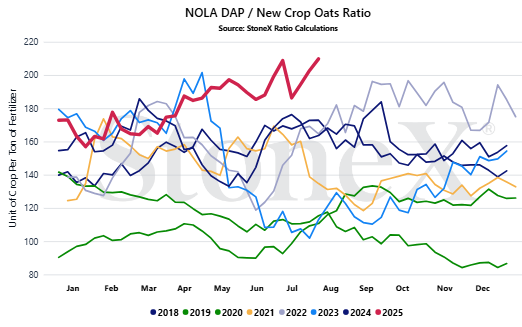
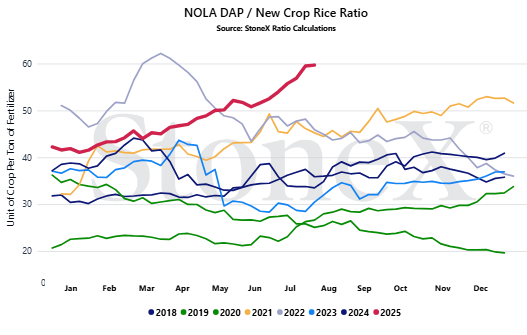
We believe that only looking at the flat price of either grains or fertilizer can be misleading:
-
Only selling grain can hurt you if fertilizer prices rise substantially
-
Only buying fertilizer can hurt you if grain prices fall
We look at the ratio "value" to get a better indication of where we are or how many bushels of X does it take to pay for 1 ton of fertilizer.
Would you rather:
-
Spend 150 bushels to pay for 1 ton of DAP
-
Spend 80 bushels to pay for 1 ton of DAP
When we compare the current ratio value against recent years, we start to see if we are high or low.
YOUR VALUES MAY LOOK DIFFERENT
This graph looks at the NOLA DAP price vs the flat grain price. There are no logistics on either product. Your location will look different due to fertilizer logistical costs, grain basis, etc.
- Chinese exports - if there is a single thing we can point to in order to lay blame for the current phosphate situation, it is China. China is normally the world's largest exporter with 8 to 10M tons per year being allowed to leave their shores. The 2025 government export quota is only 4.5M. Could that number increase? Maybe. Cannot say absolutely not but it doesn't look likely. Could that number fall? That is a bigger chance today. Unfortunately, China is controlling the world today.
- India stockpile levels/monsoon season/looming demand - if China is the biggest cause of the global situation, India is the biggest effect. For over a year now, India has struggled to maintain their domestic stockpiles. Too many times the government has looked to try and influence global values down to save money, only to be burned with even higher prices. This reached a breaking point with Indian opposition government members protesting on the floor for low stockpile levels. The world saw that manufacturers/supplies knew that mean they were even more desperate. A desperate buyer pays more for product. Especially a buyer that is using government subsidies to make the purchase. It sounds like their stockpiles have improved but with a solid monsoon season, it may not be enough for looming demand.
- N.A. values/hurdles vs the world - too many people across North America see their phosphate price and immediately blame the tariff's/duties. There is reason to be upset by those, but they are not causing it. Yes, we are making it very difficult for the 4 largest exporting countries from sending product here, but NOLA DAP values are in line with other major buyers like India. As we near the fall application season, my fear is we move to a major premium which effectively has us paying the tariff to bring product in. Right now, we are not doing that and so not seeing many tons flow here.
- Looming global demand with such high prices - the age old question: how will farmers react? Most I have spoken with are indicating that they intend to cut their fall application rate or simply wait until spring in hopes of lower values. This has been said before but it is really hard to do on the heels of a big yield which removes big nutrients. Therein lies the issue. The phosphate market WANTS demand to be cut, but it doesn't feel enough has been...yet. If demand falls off, that will signal the top of the market but today does not feel we have gotten there.
- Timeline of new global production - there is hope at the end of this nasty tunnel. There is a growing laundry list of new and expanded production of phosphate around the globe. However, a better supplied outlook does not help today. When those tons come online will make a big difference. If they remain online and we start seeing those tons in 2026, for example, that can help sooner than later. If they start getting delayed which is a very normal occurance, the current market gets even more bold...
- Will we set an all-time high DAP/corn ratio value? - this is not something I want to see happen, but it almost feels inevitable. Phosphate values continue to rise. Corn prices remain very low. We are not very far off from setting the all-time high which was set in late October 2008.
StoneX Ratio Calculation
The ratio calculation is derived from Bloomberg historical grains values as well as fertilizer values from StoneX, NPKFAS, and Argus.
The calculation is simply dividing the fertilizer price by each grain price.
All data was sourced from StoneX unless otherwise noted.