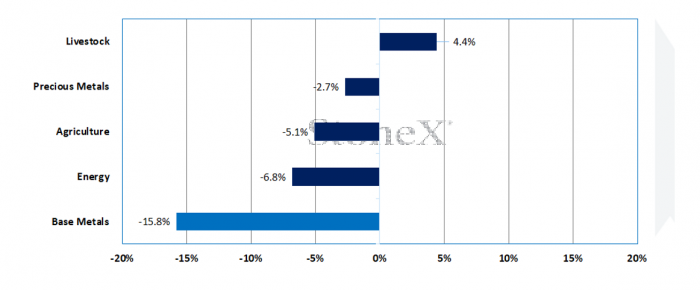
The base metals are on track to be the worst performing commodity sector in 2023, which if it occurs, would mark a second consecutive year that the suite holds this position. Given that prices over the last 18-month have largely been dominated by macro forces (something we forecast to remain in place in the near-term), understanding global macro drivers will be central in forecasting future price performance. To gain more insight on this, please register for our next webinar “LME Week: What Did We Learn” on Thursday 2nd November at 15:00 London Time.
This morning (31st October), China released its PMI readings, which came in below market expectations, adding to bearish sentiment towards the suite in the near-term. PMI readings in China usually act as a barometer of what we can expect from other key economic readings over the previous month.
The Details:
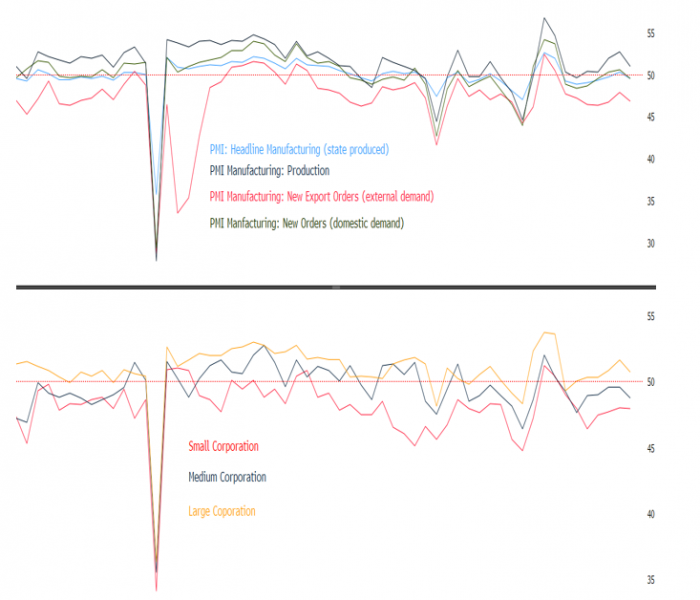
• Headline manufacturing fell into contractionary territory (49.5) in October, having only briefly posted above the all-important 50 level in September. Prior to this, manufacturing in China has been unable to enter expansionary since March 2023.
• Production in October fell from its highest level in six months to 50.9, although managed to remain in expansionary territory for a fifth month.
• Meanwhile, new orders (a proxy for domestic demand) slipped into contractionary territory in October at 49.5, while new export orders also declined, falling to 46.8 (near its lowest level this year).
• In addition to this, readings across the board for small, medium and large sized firms weakened, with both small and medium sized companies holding below 50 for seven consecutive months.
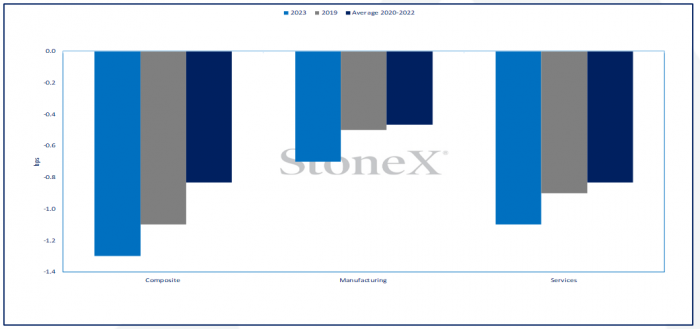
Even though we were forecasting a modest weakening M/M within the PMI readings (given that October seasonally records a downturn, due to less spending compared to the summer months), the pace of declines has surprised the market to the downside. Indeed, the October versus September pull back for all three headline PMI readings has outpaced that of declines seen over 2020-2022 period and of pre-COVID, highlighting the gravity of issues China is facing in its recovery from declining exports, struggling property market and record low confidence.
Service Readings Similarly Slip Across the Board, Although Construction is Underpinned by Fiscal Stimulus with Infrastructure Offsetting Property Weakness
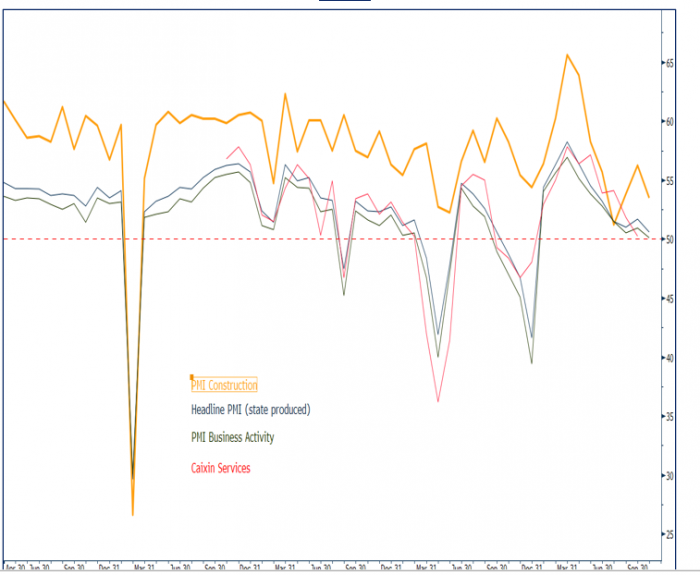
Non-manufacturing figures also declined in October, with the headline reading falling to 50.6 from 51.7 in September, below expectations of 52.0. Here, we believe that ongoing declines within the property market are capping activity, although the surprise move by the Government to increase the fiscal budget this year should help offset losses, boosting infrastructure activity (with the construction PMI remaining robust over much of this year).
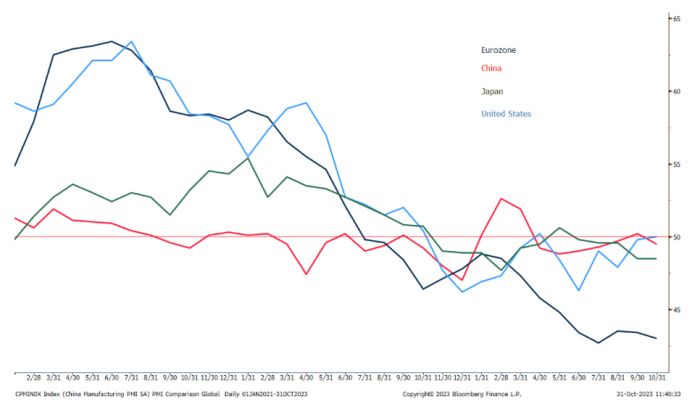
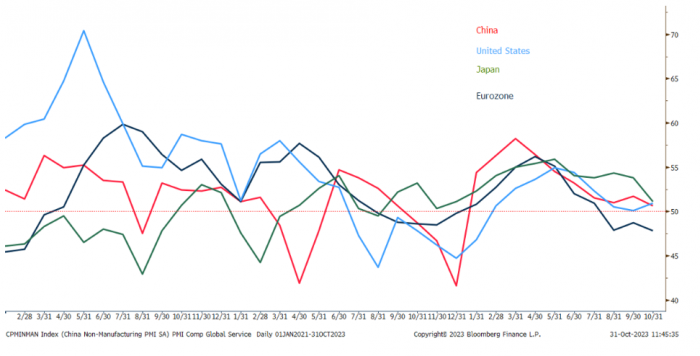
Based on seasonality patterns alone, we expect PMI readings to recover over the final two months of the year however, given the weaker than expected outcome of the October numbers, the outlook has dampened somewhat. Here, leading headwinds from the property sector and reality of depressed demand ex-China (due to a tighter credit environment) is likely to continue to weigh on recovery, although the most recent move to increase the fiscal budget should help offset some of the weakness.
On 25th September, China’s Ministry of Finance and National Development and Reform Commission pulled the trigger to increase the annual fiscal budget to 3.8% of GDP (or $4.88T yuan, $667Bn) from 3.0% set previously in the Two Sessions meeting in March. Please note, the last time a budget was changed mid-year was in 2008. As it stands, upon the issuance of 1Tr yuan in sovereign bonds, local Governments will be aided to fund construction and infrastructure projects.