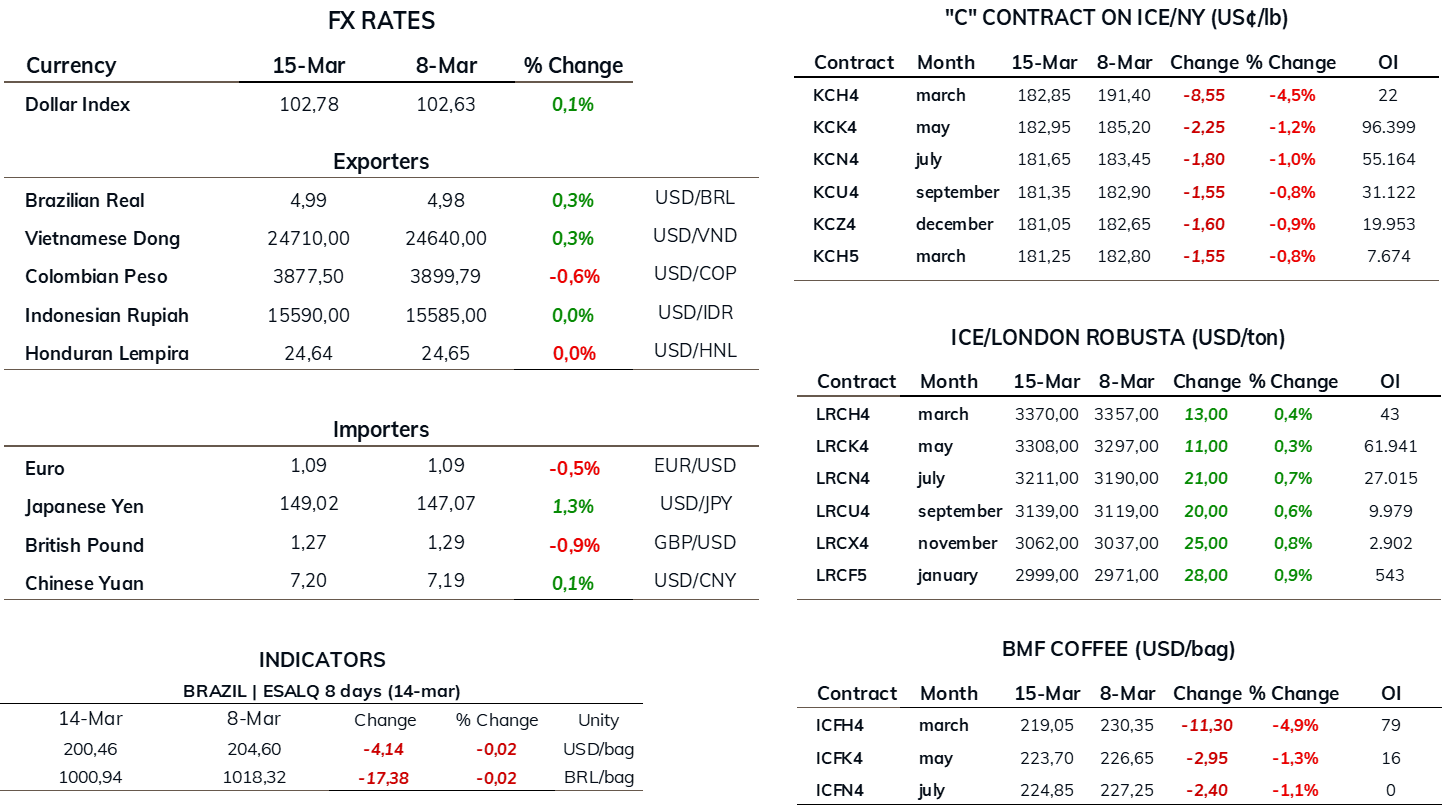
• Arabica coffee fell 1.2% on the week in New York, closing at US₵ 182.95/lb
• On the London exchange, Robusta coffee rose 0.3% to USD 3,308/t
• Cepea indicator for Arabica coffee down 1.2%
• Cepea indicator for Robusta coffee up 1.1% to BRL 888.20/bag
• Dollar Index up 0.1% to 102.78 points and USDBRL up 0.5% to 4.99
• Harvest progress in Brazil could put pressure on prices
• Vietnam has faced dry weather in the middle of the flowering period
• Market to keep an eye on winter in Brazil and the possibility of La Niña returning
In New York, coffee futures ended the week down due to speculative agents liquidating their positions amid a weakened technical scenario and no change in fundamentals. The release of Brazilian export data by Cecafé, which showed a 57.5% increase in Brazilian raw coffee exports in February, also weighed on prices. In addition, the dollar's rise during the week contributed to putting pressure on prices. On the other hand, Robusta coffee futures ended the week practically unchanged, with a small rise of just 0.3% for the May contract.
In New York, the most active contract, maturing in May, ended the week with losses of 225 points (-1.2%), closing Friday (15) quoted at US₵ 182.95/lb. In London, Robusta coffee futures advanced by USD 11/t (0.3%), closing Friday (15) at USD 3,308/t. In the period, the Dollar Index rose 0.1% to 102.78 points and the USDBRL pair climbed 0.3% to USDBRL 4.99.
Following the movements seen abroad, coffee prices also ended the week with mixed results on the Brazilian domestic market. The Cepea indicator for Arabica coffee fell by 1.2% in the period, closing the week at BRL 1006.16/bag. Robusta coffee prices, on the other hand, ended the week on a high, with the Cepea indicator for the variety rising by 1.1% over the week, closing Friday at BRL 888.20/bag.
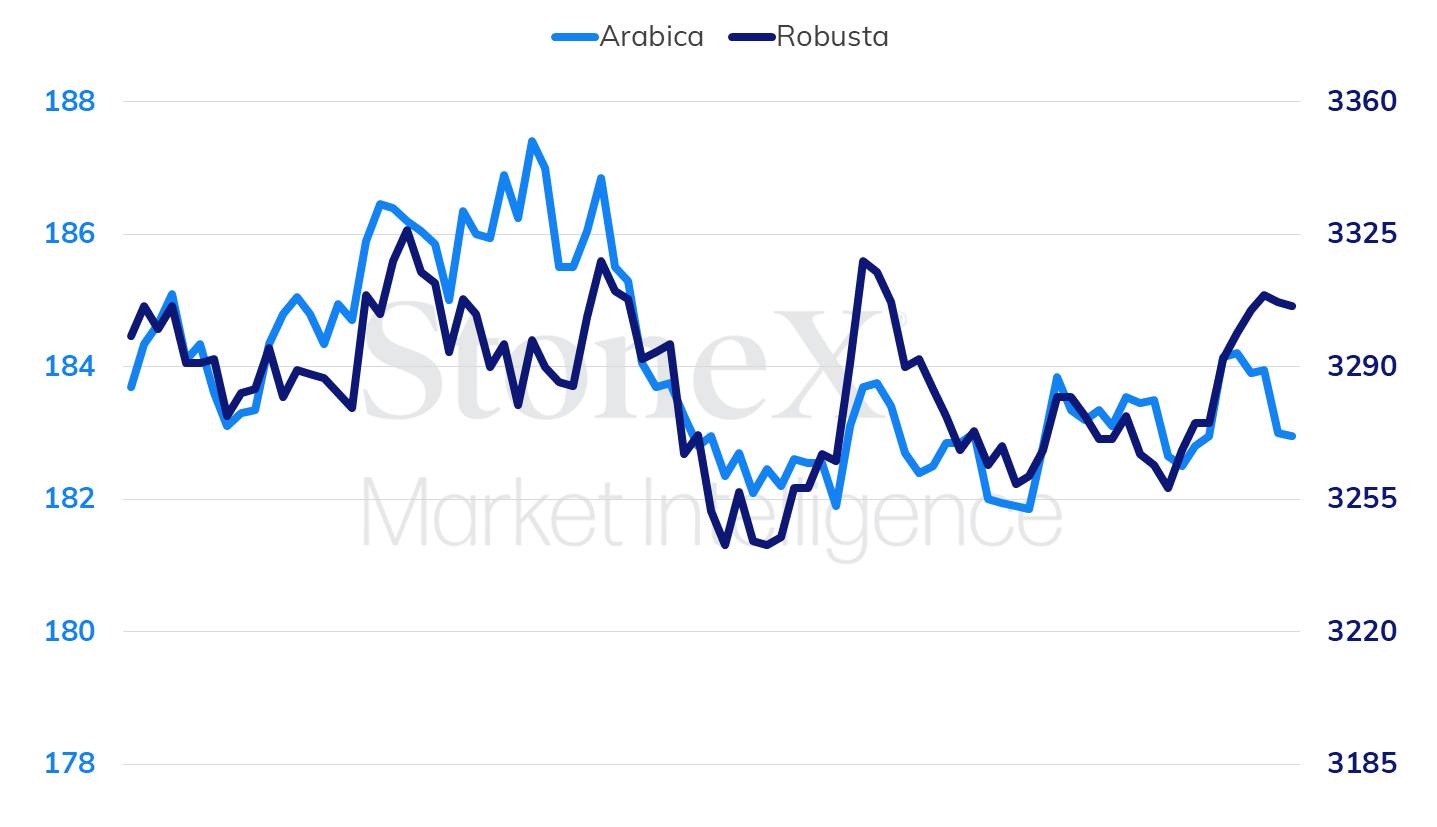
Weekly intraday (most active contract) - March 11 to March 15
From a fundamentals point of view, the progress of the 2024/25 crop in Brazil could act in a bearish way for coffee prices, especially for Arabica, whose supply and demand balance is likely to have a greater surplus next season. Despite the discrepancy between crop estimates in Brazil, there is a consensus that production will be substantially higher next year. Considering the impact this will have on the global supply and demand balance, most agents expect there to be a larger surplus in 2024/25. However, when analyzing the coffee varieties separately, the scenario would be of a greater surplus for Arabica coffee, while Robusta coffee will continue to be in tight supply, given the production problems in the main producers in Asia.
Despite the weakening of El Niño and a return to neutral conditions in the coming months, rainfall in Vietnam in recent months has been below average. The Asian country's crops are going through the flowering period, a critical stage of development that requires suitable weather conditions and directly affects the country's production potential.
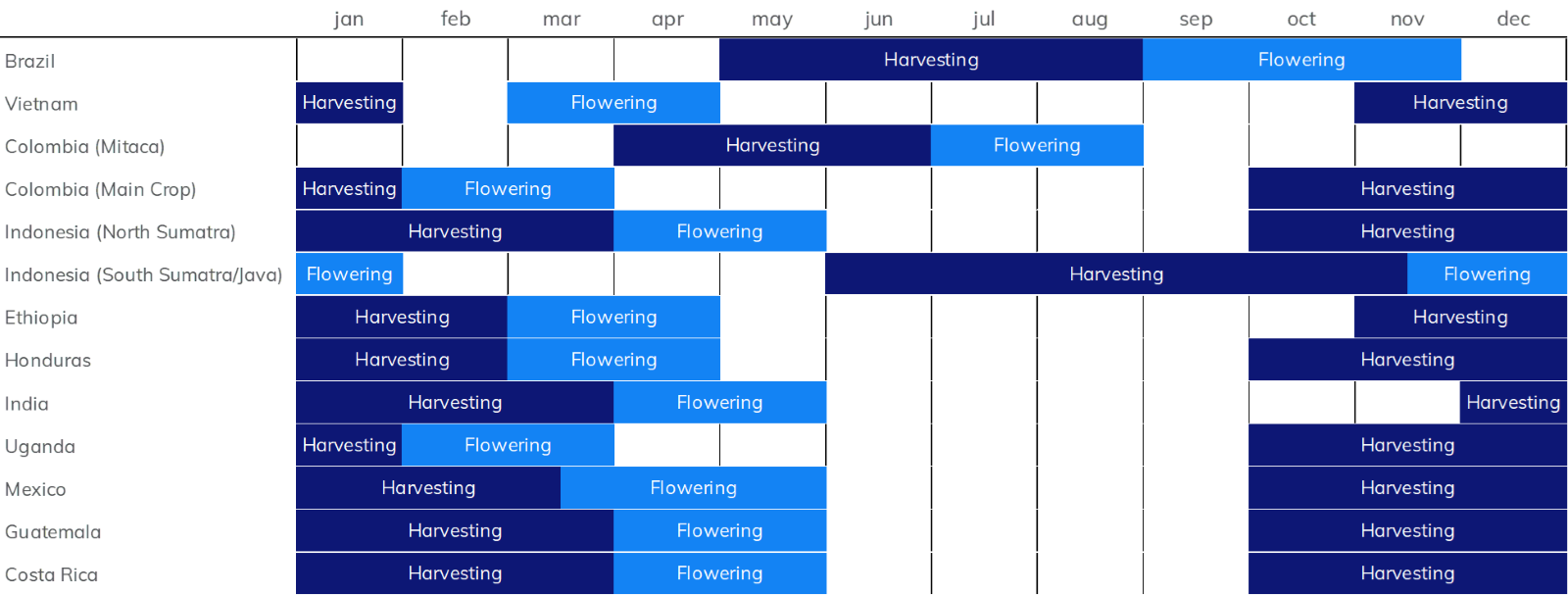
Coffee production cycle in the main producing countries
Anomaly: % of rainfall compared to historical average in Vietnam, last 90 days (%)
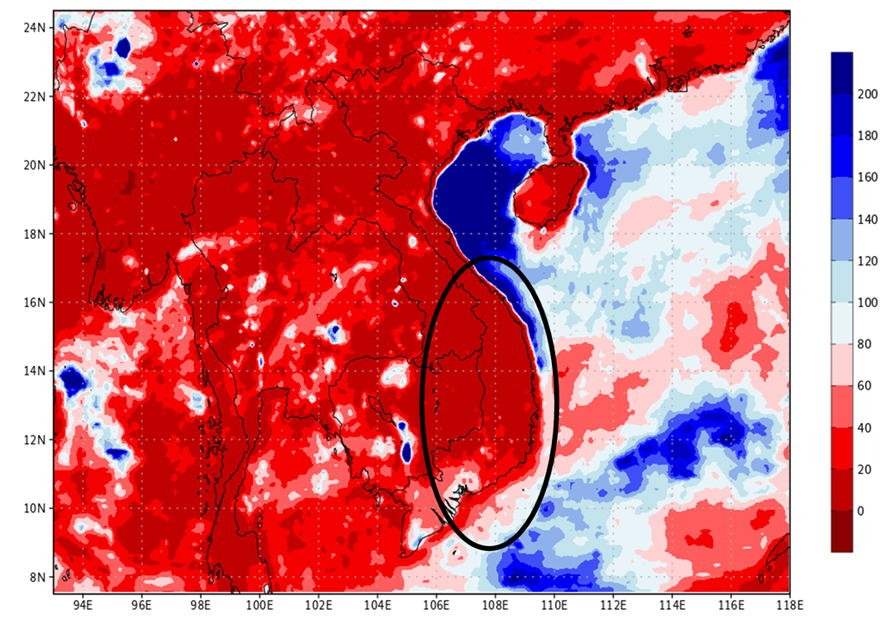
Source: StoneX, with data from NOAA/NCEP/EMC (GFS: Global Forecast System), 2024.
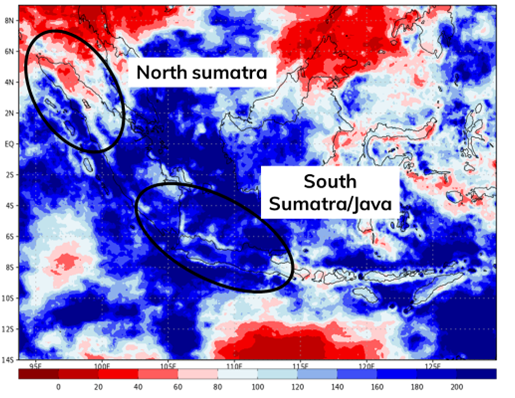
In addition to Vietnam, Indonesia's production has been severely impacted, with the USDA's estimate pointing to a drop of more than 2 million bags (-18%) in the country's production, to 9.7 million bags in 2023/24. For next season, there is concern among agents that production could be reduced for another year in a row due to the weather problems caused by El Niño. Looking at the country's production cycle, flowering in the northern region of the island of Sumatra is expected to take place between April and May, but the country's rainfall anomaly map shows that the volume in recent months has been below average in that region.
Anomaly: % of rainfall compared to historical average in Indonesia, last 90 days (%)
In addition to the factors mentioned above, there are still some uncertainties linked to the weather in Brazil, which could contribute to increased price volatility. Although the progress of the harvest in Brazil has a bearish bias for prices, the arrival of winter and the possibility of cold waves could support coffee prices. In addition, the models of the US agency NOAA already indicate a high probability, above 60%, of a La Niña returning from the June, July and August quarters. The phenomenon is associated with delayed rainfall in Brazil's coffee belt in the second half of the year and, if the phenomenon is of strong intensity, there is a possibility of impacts on the Brazilian Arabica coffee flowering, as was the case in 2020 and 2021.