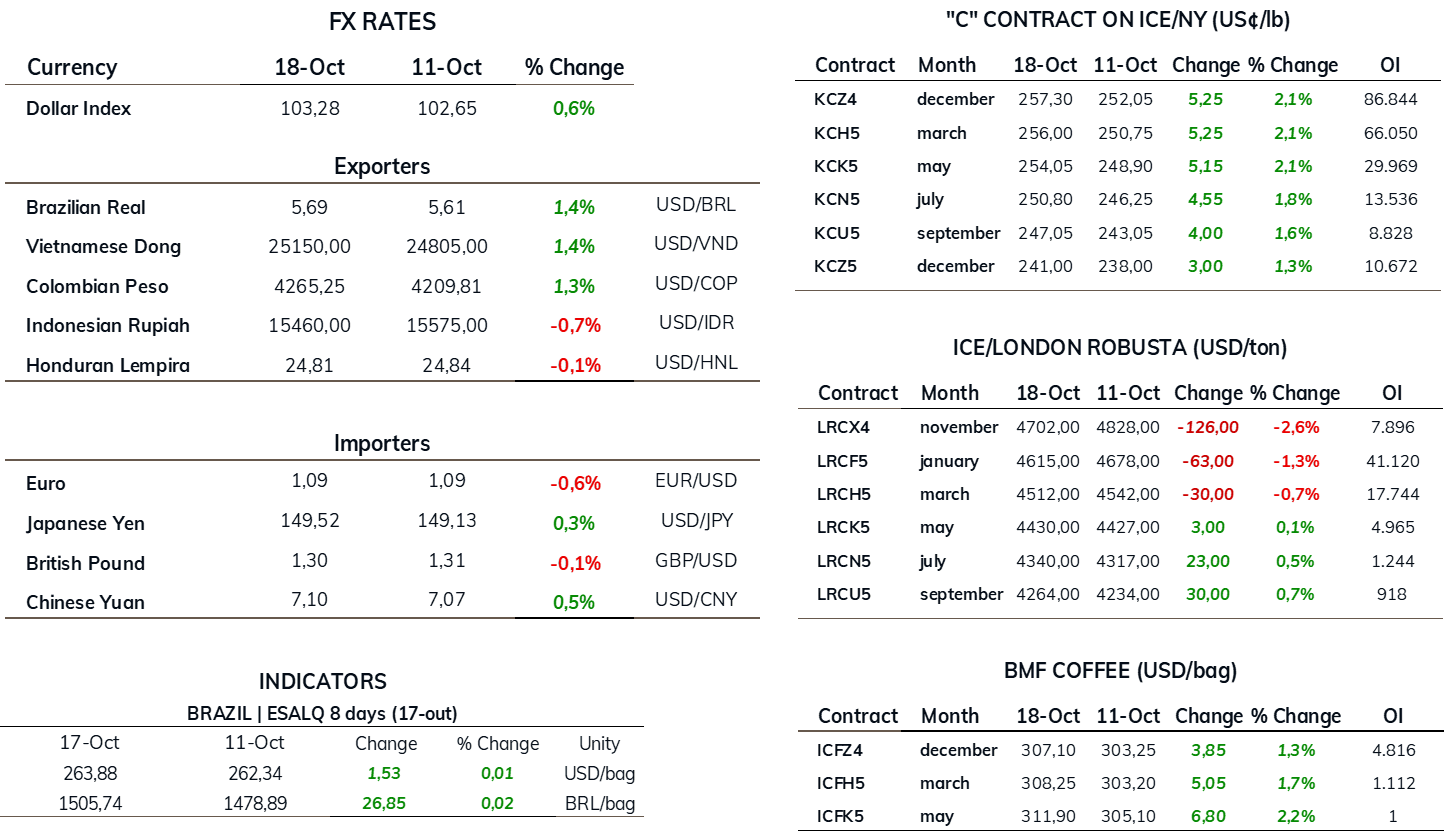
• Arabica coffee rises 2.1% on the New York exchange, quoted at US¢ 257.30/lb
• Robusta coffee prices fell 1.3% to USD 4615/t on the London exchange
• The dollar rose 1.5% in the week, reaching USDBRL 5.70
• On the domestic market, Arabica rose 3.3% and Robusta 2.4%
• Return of rains improves crop conditions in Brazil
• Coffee flowering to reach almost 100% in October
• Forecast points to accumulations of up to 200 mm over the next 15 days
• Cecafé: more than 2.15 million bags accumulated in ports until September
• Coffee price inflation reached 6.3% in the US and almost 23% in Brazil
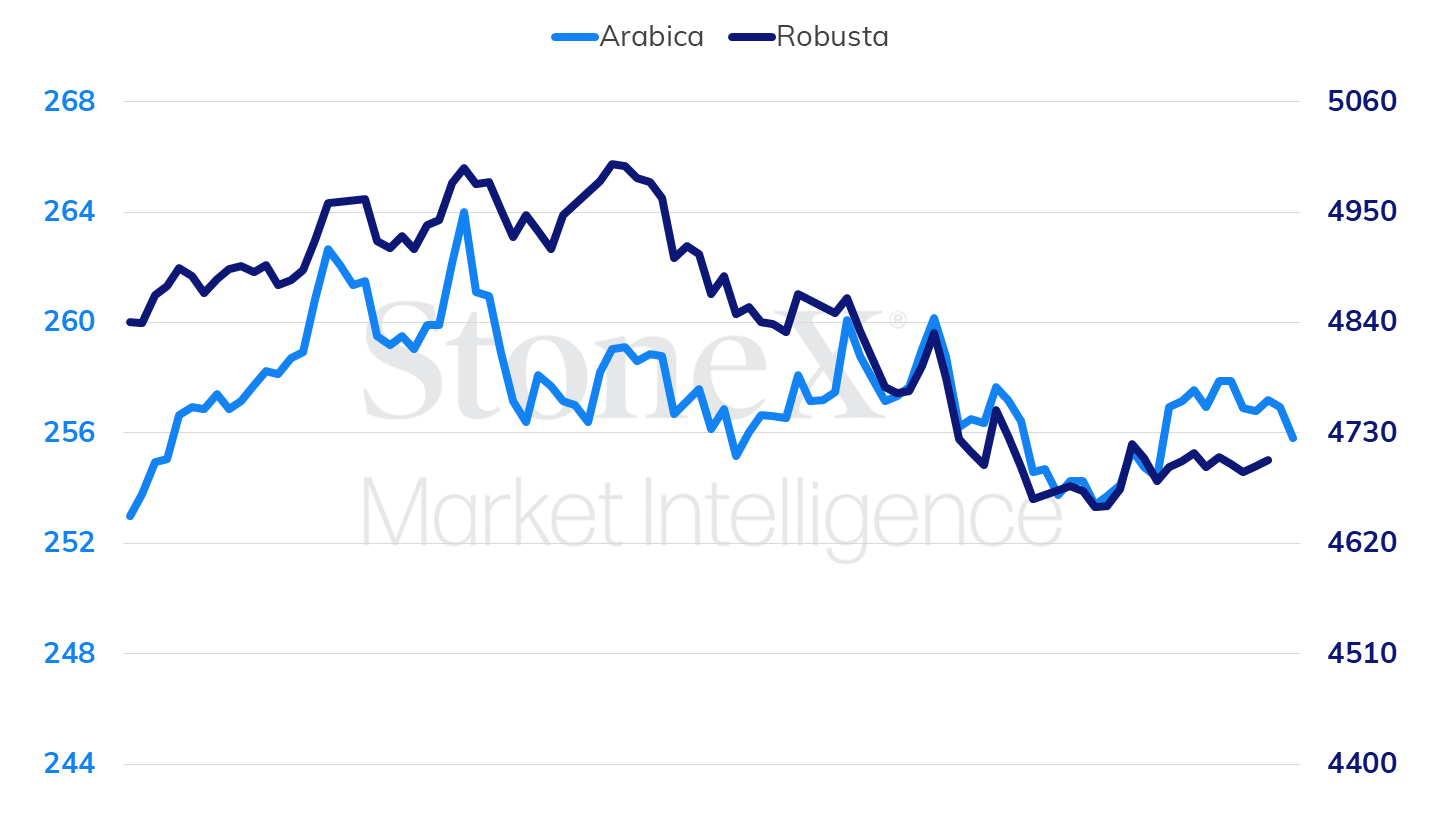
With no major changes in fundamentals, coffee futures prices ended last week with mixed results. In New York, the most active Arabica coffee contract, expiring in December, ended the week with an increase of 525 points (2.1%), closing Friday (18) quoted at US¢ 257.30/lb. On the other hand, in London, the Robusta coffee contract expiring in January fell by USD 63/t (-1.3%) to USD 4615/t. Robusta coffee prices remain under pressure due to the start of the crop harvest in Vietnam.
On Monday (21), prices remain under pressure at both terminals due to the arrival of rain and the improvement in weather conditions and, above all, the opening of Arabica coffee flowering in Brazil. In addition, the start of the harvest in Vietnam has acted as a bearish factor for Robusta prices. At the time of writing, New York was down 730 points (2.8%) and London was down USD 141/t (-3.0%).
Weekly intraday (most active contract) - October 14 to October 18
On the Brazilian domestic market, coffee prices advanced amid the sharp rise in the dollar this week. The Cepea indicator for Arabica coffee ended the week with an increase of 3.3% to BRL 1,527.54/bag. For Robusta, the indicator rose 2.4% to BRL 1,428.02/bag. During this period, the USDBRL pair increased by 1.5%, ending the week quoted at BRL 5.70.
According to StoneX's Weekly FX Outlook, the dollar appreciated for the third week in a row due to surprising retail growth in the US and expectations about monetary policy with a possible Trump victory, while the Brazilian real was pressured by fiscal uncertainties in that country and the lack of significant stimulus in China.
From the point of view of fundamentals, the weather in Brazil, the start of flowering in Arabica and the development of the next crop continue to be the main focus for agents. The formation of a moisture corridor brought significant volumes of rain to a large part of the coffee belt and lowered maximum temperatures, favoring the development of the crops. According to INMET data, several cities in the states of São Paulo and Minas Gerais have received rainfall accumulations of over 60 mm in recent days. In addition, models point to accumulated volumes of up to 200 mm over the next 15 days.
In Brazil, the return of the rains has improved crop conditions and spurred the beginning of the main Arabica coffee flowering. There have been several reports of a broad, uniform flowering over the last few days. In addition, other waves of flowering should break out by the end of the month. Field data collected by StoneX's field team indicates that practically 100% of the flowering stage will have concluded by the end of October, a faster pace than the historical average for the regions.
Percentage of flowering opening by the end of October (%)
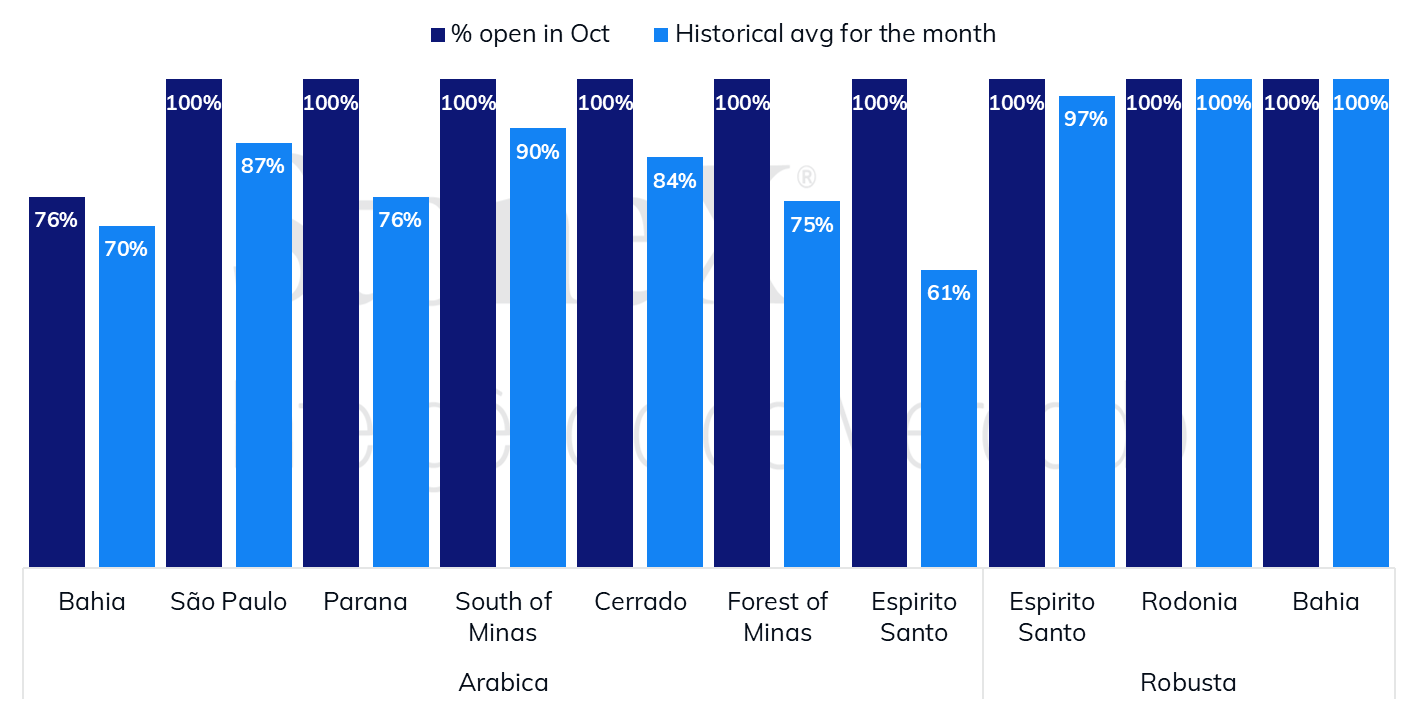
Source: StoneX.
One of the challenges facing companies in the sector is the logistical bottleneck in Brazil, which has led to delays in the country's coffee exports. According to an article recently published by Cecafé/ElloX, in September almost 70% of ships had a schedule change or were delayed in exporting coffee from Brazilian ports. As a result, there was a backlog of more than 2.15 million bags of coffee in those ports up to September.
With the rise in prices on the international market, the coffee industry began to pass on part of the rise in prices to the end consumer, as indicated by inflation data on coffee prices paid by the consumer. According to the BLS, the average price of roasted and ground coffee paid by the consumer reached USD 6.47/pound, representing an increase of 6.3% compared to September 2023 and the highest value in the historical series, which began in January 1980. In Brazil, inflation was even higher, with accumulated inflation over the last 12 months reaching almost 23%. The increase in inflation could have a negative impact on coffee consumption.
12-month accumulated retail coffee price inflation (%)
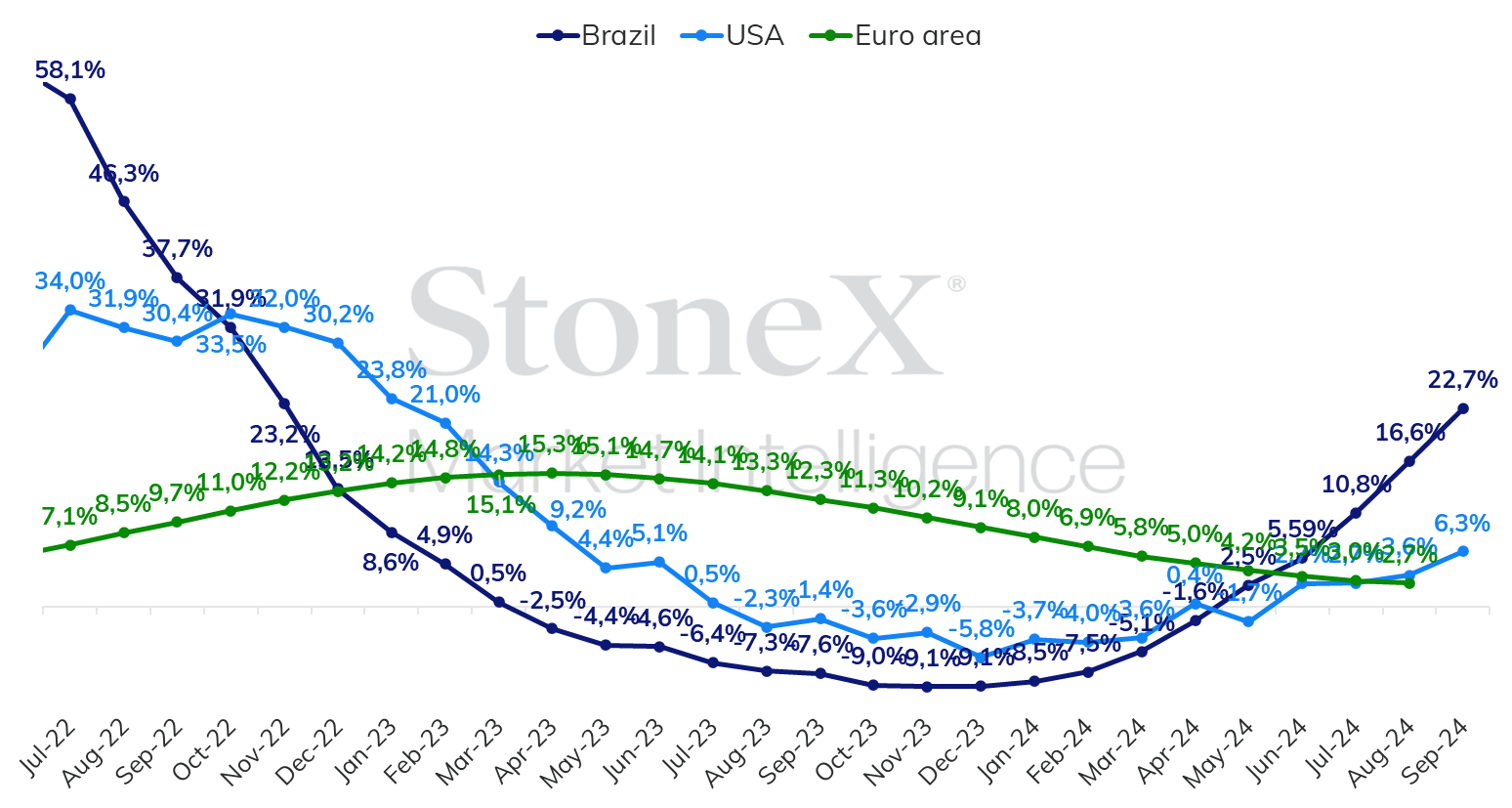
Sources: IBGE, BLS and Eurostat. Design: StoneX.
INDICATORS