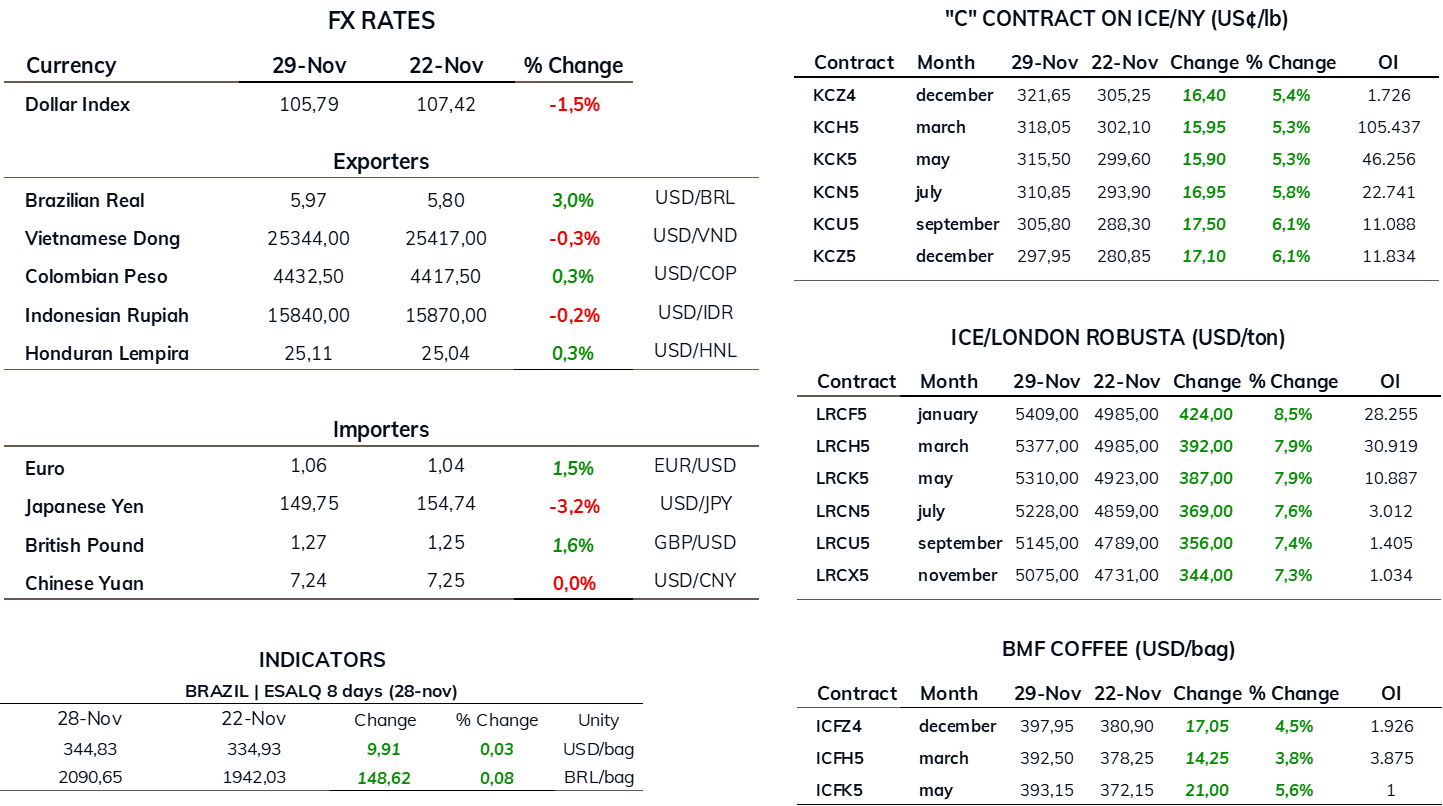
• Arabica coffee rose 5.3% during the week and 29.6% over the month, reaching US¢ 318.05/lb
• Robusta futures increased 9.2% during the week and 25.6% over the month, reaching USD 5377/ton
• The Cepea indicator for Arabica coffee rose 8% during the week and 37.5% over the month
• The Robusta indicator jumped 10.5% during the week and 23% over the month
• The market reacted to the prospect of a decline in Arabica production
• A 3% rise in the dollar contributed to higher prices in the domestic market
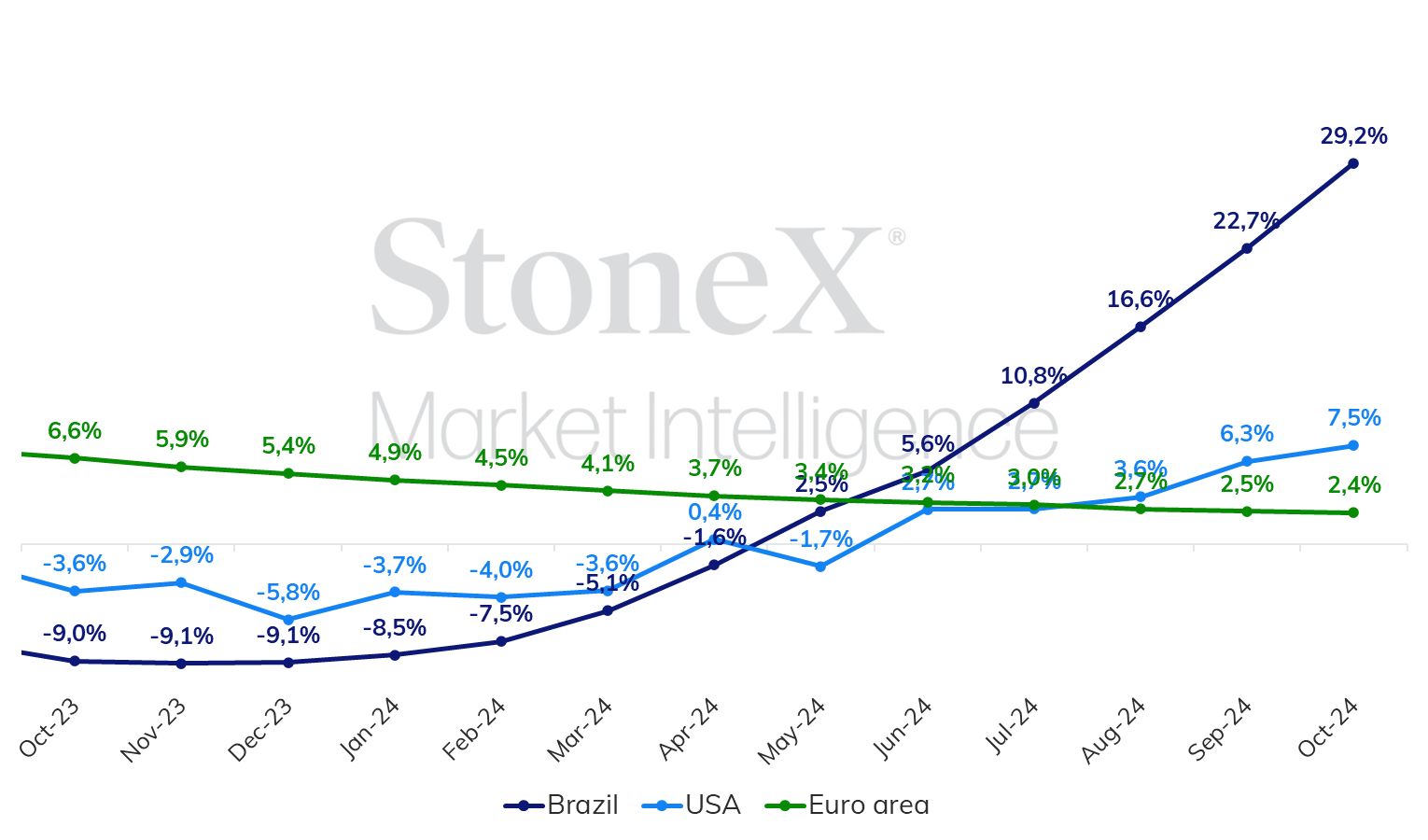
• Coffee price inflation for consumers continues to rise in Brazil and the US
• The coffee market is keeping an eye on November export data
• Brazil exported 41.45 million bags in the first 10 months of the year
Last week, coffee futures continued to rise amid concerns about the 2025/26 Brazilian crop, reduced USDA estimates for the 2024/25 crop, uncertainties surrounding the new EUDR legislation, and falling exports from Vietnam, where the ongoing harvest has been affected by excessive rain.
As in recent weeks, concerns about the Brazilian crop remain at the forefront. There are fears that global availability next year may be significantly lower, especially for Arabica coffee. Preliminary estimates from StoneX indicate a 10.9% drop in Arabica production in Brazil in 2025/26.
Additionally, delays in export shipments due to reduced container availability have increased freight costs, worried market participants and contributed to price hikes.
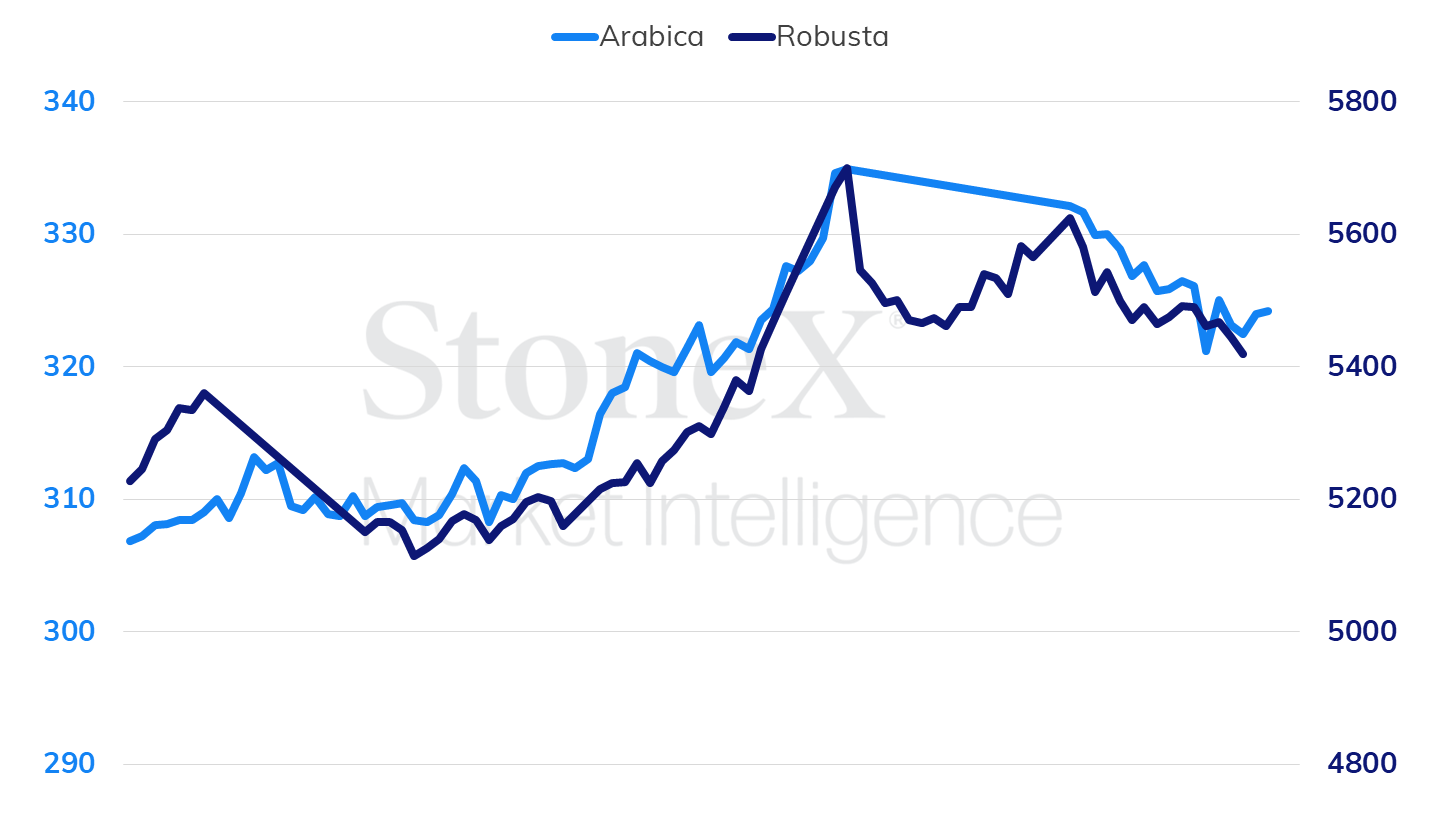
On a weekly basis, Arabica coffee futures rose 5.3%, reaching US¢ 318.05/lb for the most active contract. In London, the weekly increase was even more significant, at 9.2%, reaching USD 5377/ton. On Monday’s session (02), prices in both markets showed a sharp correction, with a 7.17% decline to US¢ 295.25/lb in New York and a 9.28% drop to USD 4878/ton in London at the time of writing.
Weekly Intraday (most active contract) – 25/11 to 29/11
In the Brazilian domestic market, prices followed the upward trend seen in international markets. The Cepea indicator for Arabica coffee increased 8.0%, reaching R$ 2098.06/bag. For Robusta, the indicator rose 10.5%, reaching R$ 1784.02/bag. Prices in both markets hit their historical highs last week.
It is worth noting that the sharp increase in the US dollar against the Brazilian real last week pushed prices higher in the domestic market. The breaking of expectations regarding the federal government’s promised fiscal adjustments led to a significant rise in investor perception of fiscal risks in the country. In this context, the dollar surpassed R$ 6.00 for the first time in history at the end of the week.
12-Month Accumulated Consumer Coffee Price Inflation
Sources: IBGE, BLS, and Eurostat. Design: StoneX.
Although price increases have been intense, it is worth highlighting that consumer price inflation continues to rise in the Brazilian market, with a 12-month accumulated rate through October reaching 29%. These cost transfers from the industry are likely to persist, which may negatively impact consumption next year – a factor that could provide some relief to the supply & demand balance if production indeed falls.
In the coming weeks, the November coffee export data for Brazil and the year-end export outlook will be analyzed. Despite logistical problems, including 1.7 million bags stuck in Brazilian ports in October, Brazilian exports saw a strong increase in 2024.
According to Cecafé data, Brazil exported a total of 41.45 million bags in the first 10 months of the year, representing a 35% increase compared to the same period in 2023. Exports of industrialized coffee grew 8.6% during this period, reaching 3.36 million bags, with soluble coffee increasing by 8.8% and roasted & ground coffee falling by 9.6%. Meanwhile, green coffee exports rose 38%, exceeding 38 million bags. Robusta exports surged an impressive 140%, reaching nearly 7.9 million bags, while Arabica exports increased by 24.3%, totaling 30.2 million bags.
TABLE OF INDICATORS