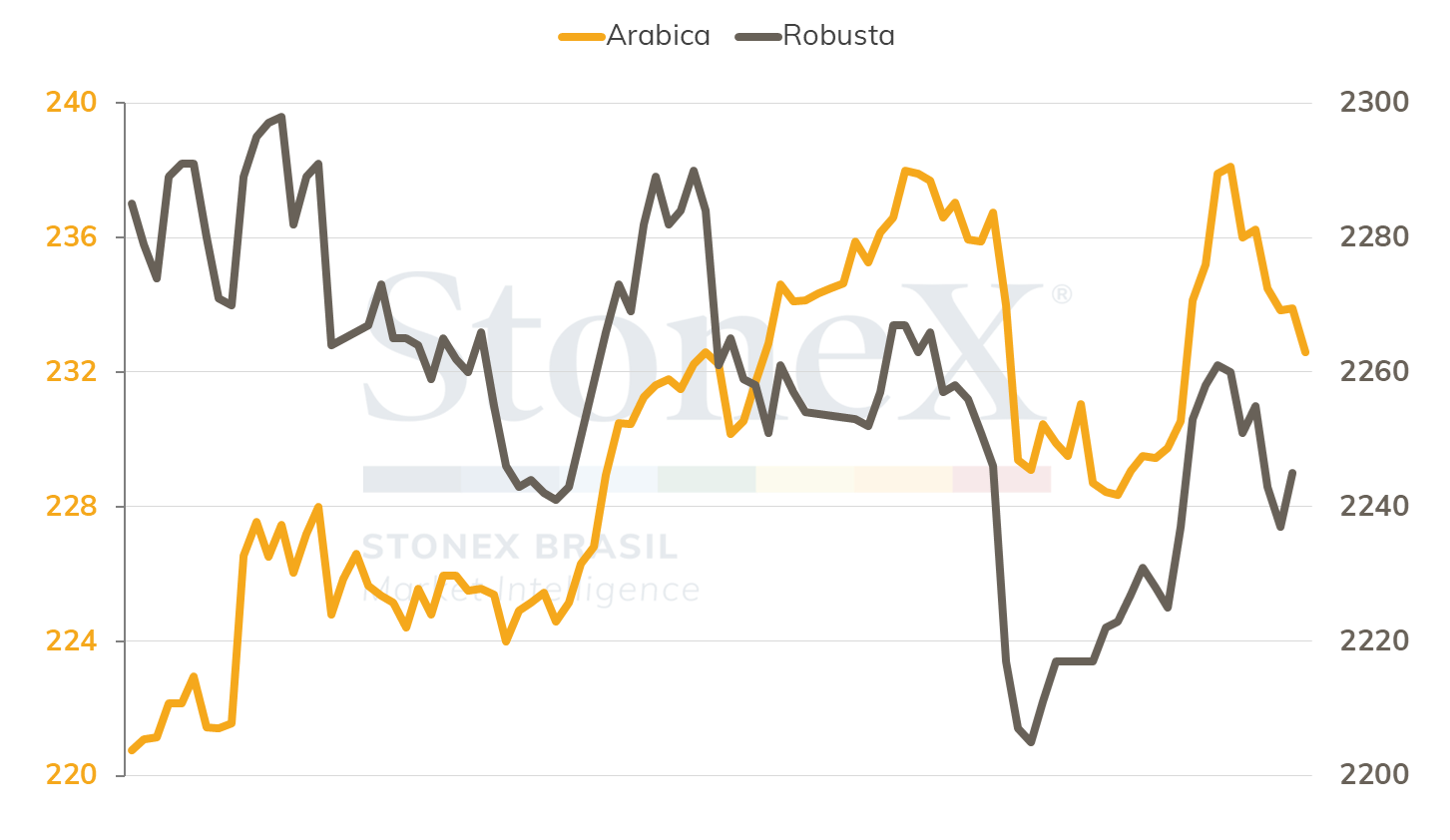
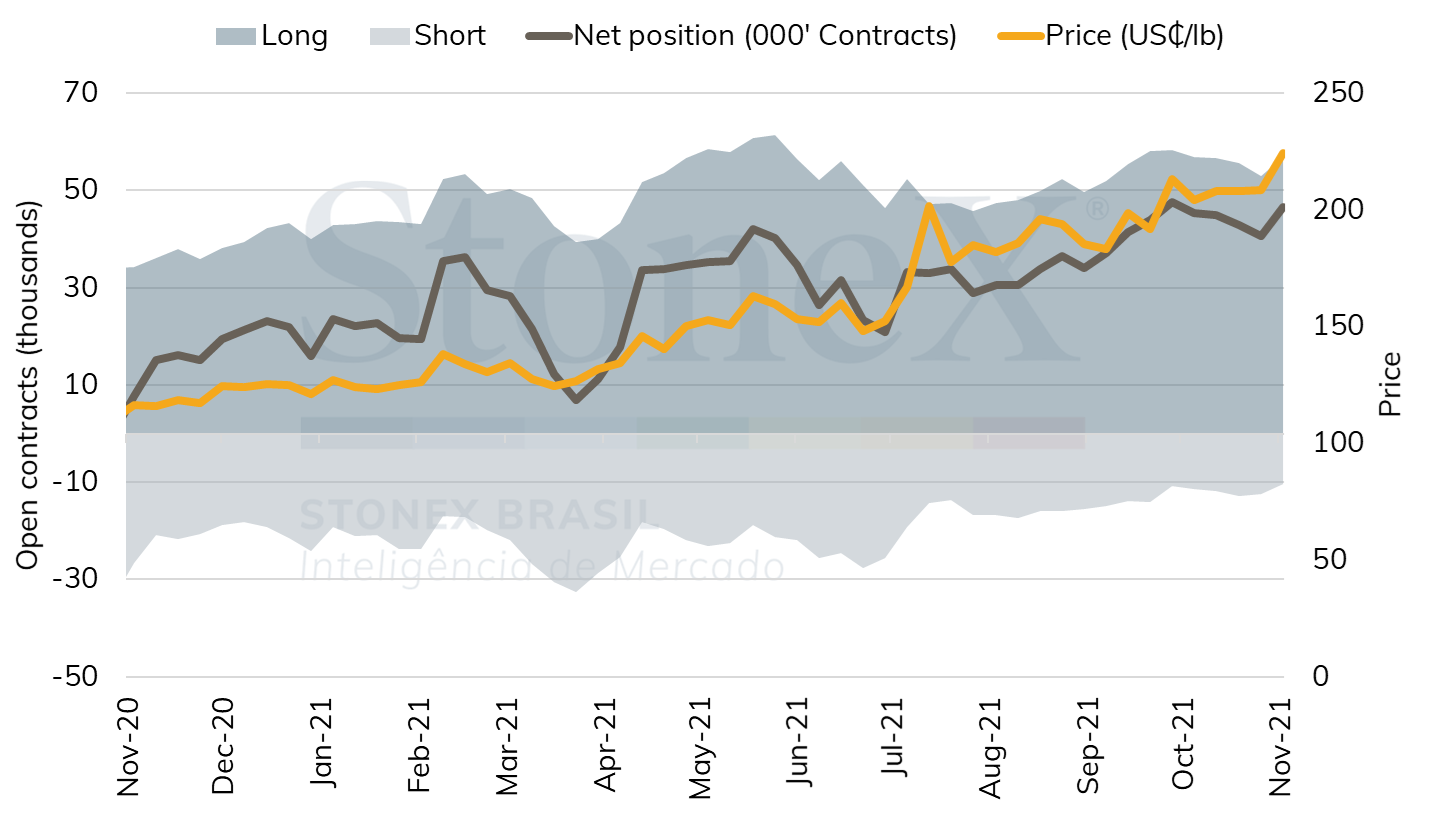
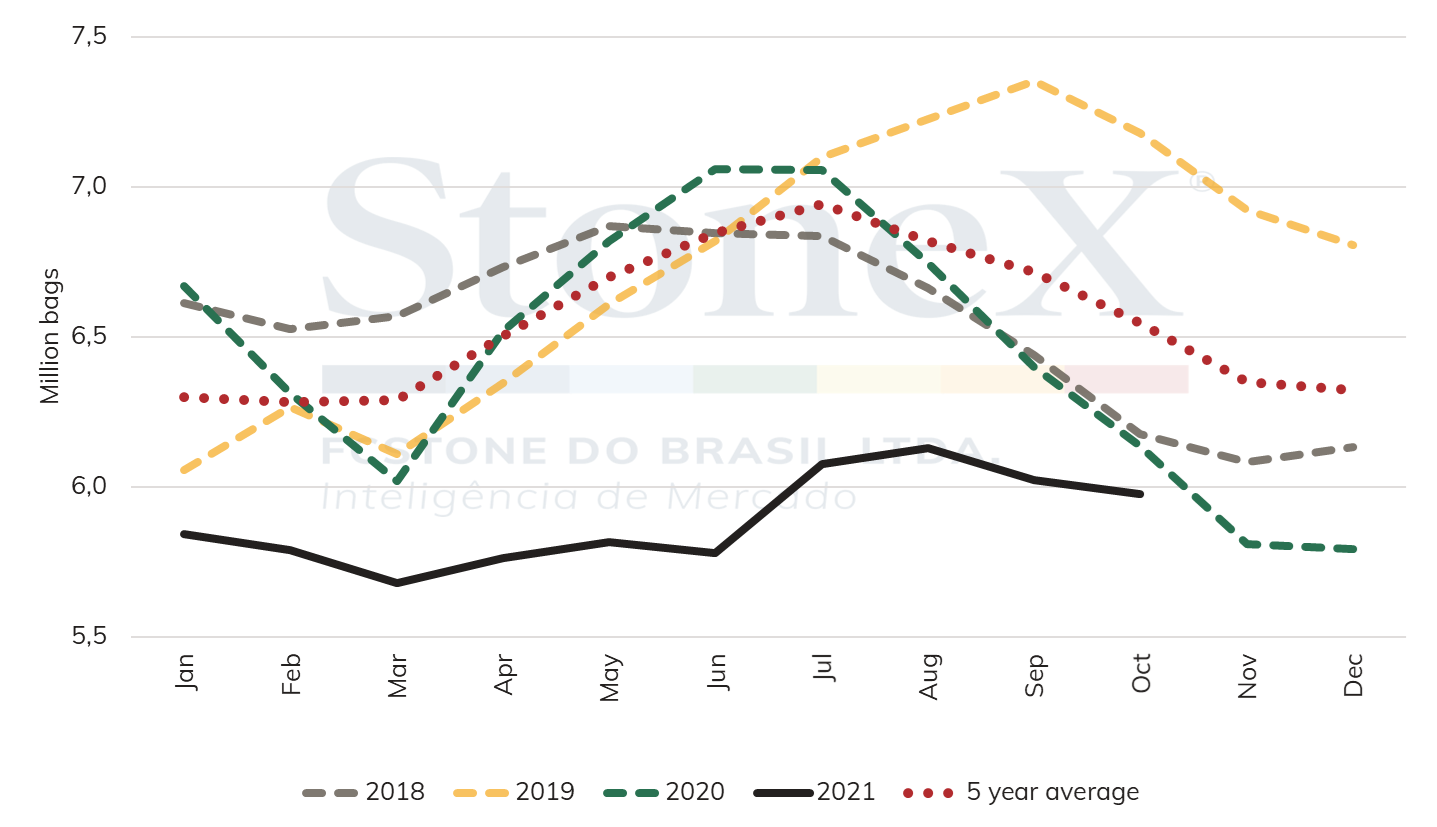
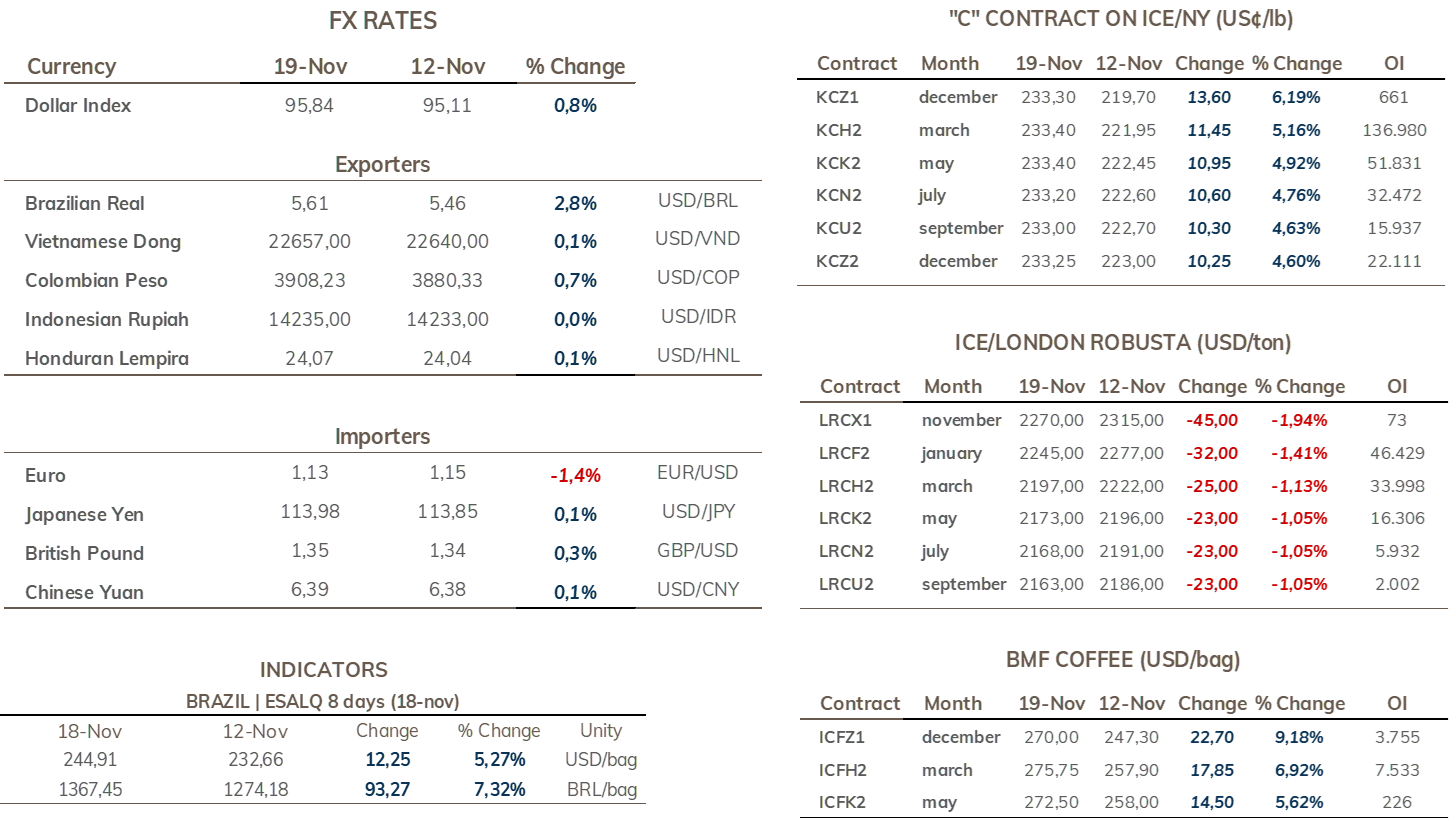
Next week, the market will closely follow the release of the USDA Attaché reports for coffee production this crop year, which started to be released at the end of last week. Furthermore, the market continues to have a positive sentiment amidst a negative S&D balance and all the other factors mentioned above.
USDA Attache Reports Shed Light on Ongoing Logistical Problems
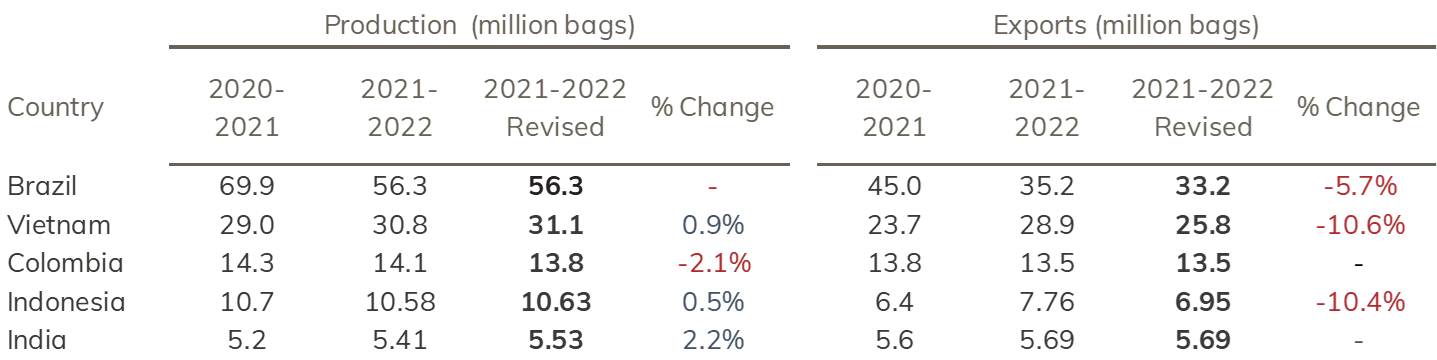
The USDA have begun to publish their coffee Attache report. The reports are published twice a year; the first in June and the final in December. Below is a chart of the revised production and export figures for the reports that have been released thus far. At the completion of the Attache reports, the USDA will publish their biannual World Coffee Report on December 17th.
One thing that is highlighted in the new reports is the decline in exports from the initial forecast. While Colombia and India’s export forecast remained unchanged, Brazil, Indonesia and Vietnam will see a combined decline of 26.6% compared to the June forecasts. The fall in exports is especially noteworthy amid the expectation of unchanged production in Brazil from the June estimate and higher production from Vietnam. This reaffirms the issues with logistics that have been observed globally and how this has impacted green coffee shipments.
Taking into account that the revised attache reports have already been published for the three largest coffee producers (Brazil, Vietnam and Colombia), it is possible that overall global coffee production could be revised slightly lower in December’s report. In June, the USDA pegged global production at 164.8 million bags. Exports will seemingly also be revised lower from the 136.3 million bags forecast in June.
Estimativas do usda para produção e exportação
Source: USDA. Design: StoneX.
Next month, we will publish a special report detailing all the main points of the USDA updates for production, exports and stocks in the main producing countries, along with an analysis of the final balance sheet.
ROBUSTA COFFEE PRICES RETREAT IN THE WEEK
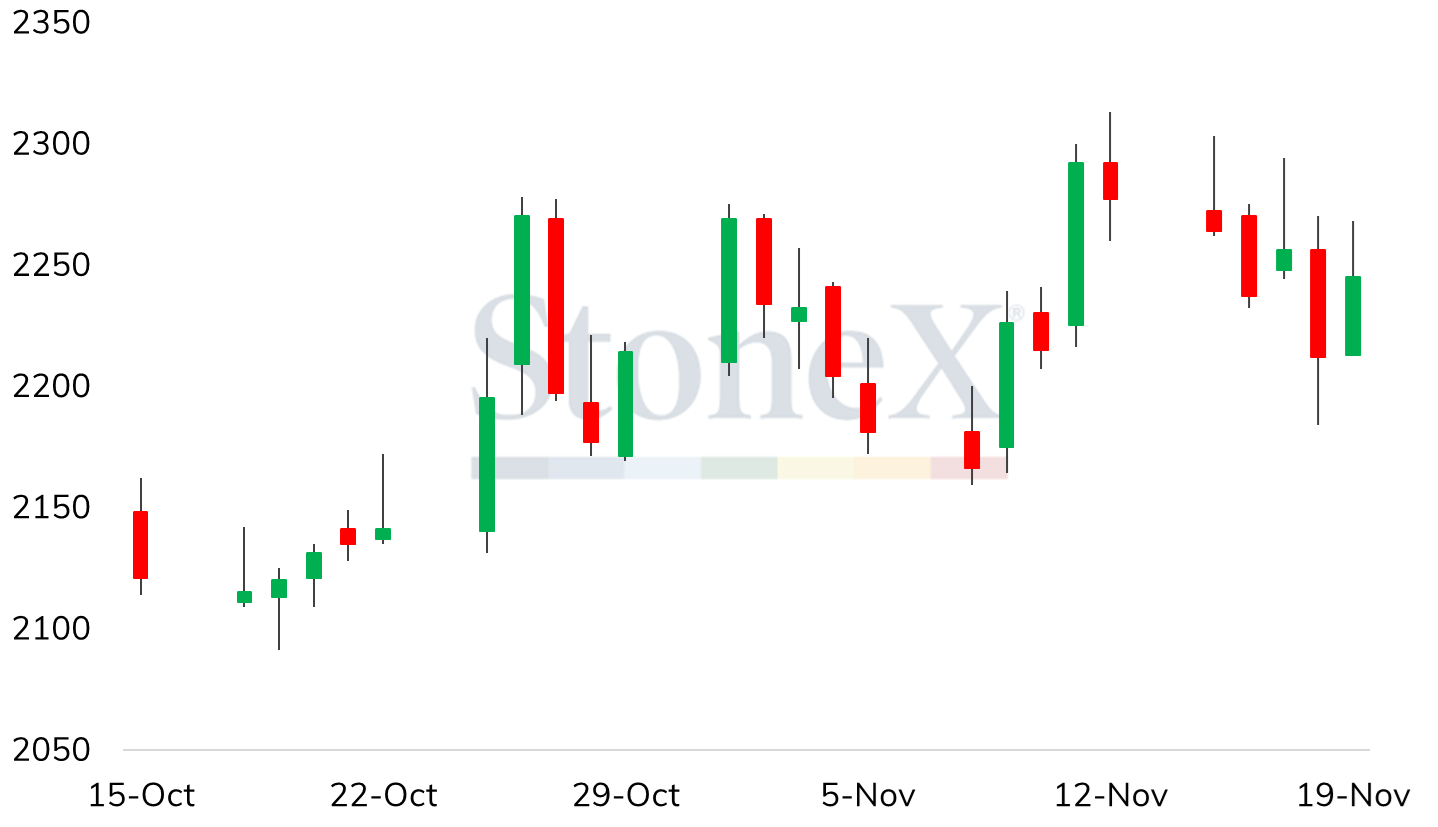
The most active January contract in the Robusta complex fell by 1.4% over the course of the past week, amid a lack of fresh fundamental headlines to maintain an upward drive, a contrasting story to that of Arabica’s over the past week. Reports indicate that there is a level of easing concern of supply availability for Robusta, with fresh supplies from the Vietnamese harvest coupled with a backlog of coffee built up from the logistical issues that were present throughout the 20/21 marketing campaign. This now comes amid a decline in freight costs in recent weeks, as reflected by the Baltic Dry Index which continued its downward trajectory last week to settle the week 9.1% lower and at its lowest level since mid-June. The WCI Composite Container Freight Benchmark (40 foot) has also lost ground in recent weeks.
Easing freight rates are likely to encourage greater demand for Vietnamese supply with the declines in benchmarks a likely reflection of steadily improving availability. Meanwhile, trading activities in Vietnam are reported to be slow amid a slow developing crop on erratic weather conditions that are slowing the harvest. Some reports do suggest that Covid cases are causing issues in securing workers to pick the cherries, although others reject these reports stating that farms are having no issues in securing workers.
Robusta 2ndContinuation Candlestick
Source: ICE. Design: StoneX.
The USDA published its attaché report for Vietnam last week, estimating 21/22 production at 31.1M bags on improved weather conditions. The report also highlighted the potential for a late end to the rainy season, with precipitation between November and December expected to be around 5 to 25% higher than normal. Domestic consumption for 21/22 is forecast at 3.14M bags while exports are forecast at 25.8M bags for the new season. Ending stocks for 2020/21 were forecast at 3.81M bags with 21/22 carryover estimated at 6.58M bags.
The USDA also published the equivalent report for Indonesia last week with production for the new season estimated at 10.58M bags due to lower Arabica yields in northern Sumatra and lower Robusta yields in the southern Sumatra. Domestic consumptions for the new season is estimated at 4.75M bags, up 300,000 Y/Y. Exports for the new season are estimated at 5.9M bags, down 9% Y/Y.
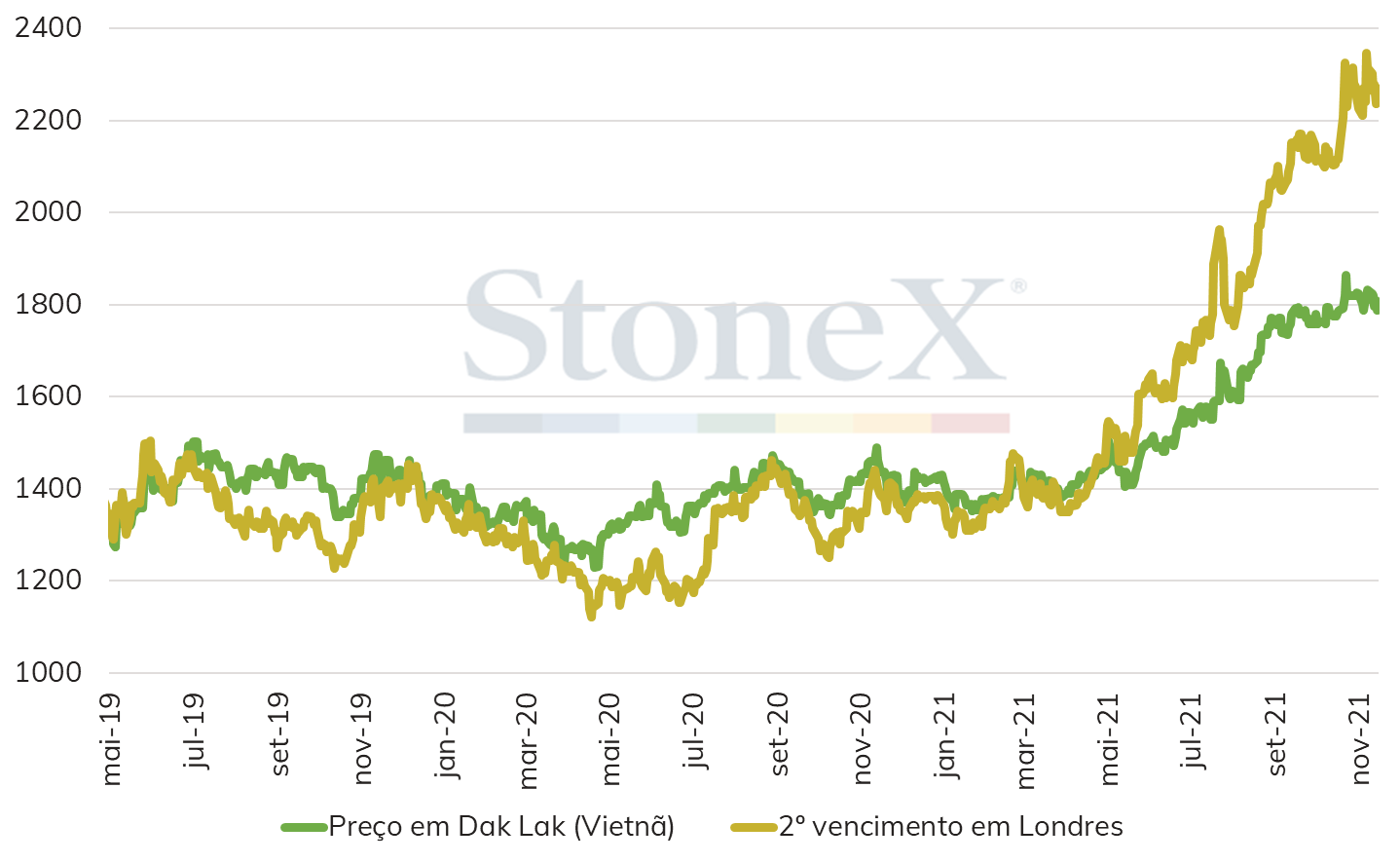
Domestic prices in Dak Lak also declined marginally over the course of the past week (down 1.9%), hovering around $1,790/t marking an approximate discount of $480/t against the London 2nd continuation.
Robusta 1stContinuation vs Dak Lak Price
Source: Giacaphe, Bloomberg. Design: StoneX.