StoneX logo

Coffee Weekly Report

By: StoneX Intelligence Brazil, StoneX Intelligence Brazil

Arabica trades near US₵ 240/lb again
 
Fernando Maximiliano
Leonardo Rossetti
Alexis Rubinstein
 
Concerns about production in Brazil and Colombia and a drop in certified stocks contributed to the appreciation
HIGHLIGHTS

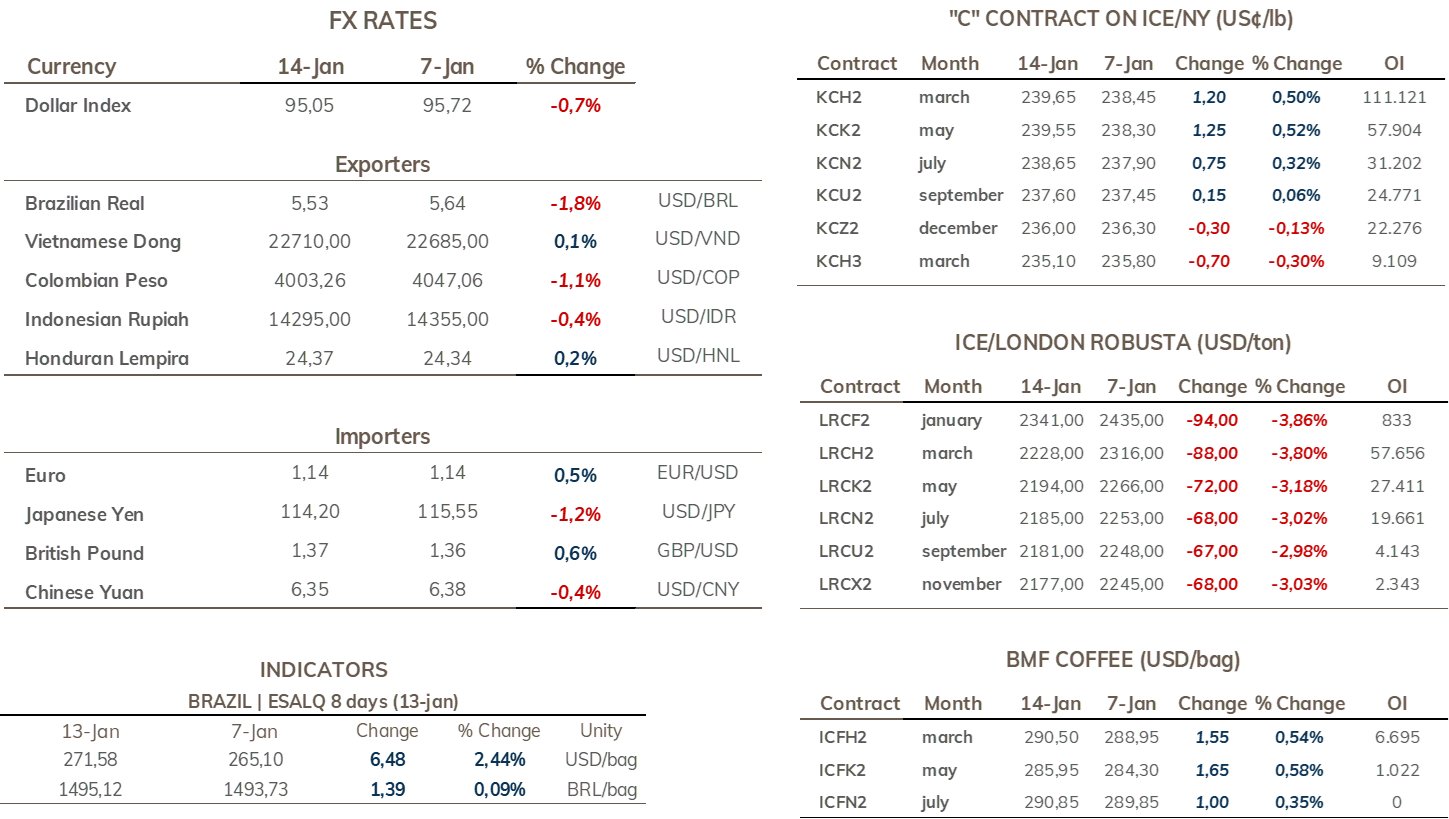
•    Arabica prices increased by 120 points (0.5%) in NY during the week, ending the week quoted at US₵ 239.65/lb. 
•    Cepea Arabica indicator increased by 0.3%, closing at BRL 1498.14/bag.
•    In London, Robusta prices dropped by USD 88 (-3.8%) to USD 2228/ton last Friday.
•    Cepea Robusta indicator remains stable, quoted at USD 822.92/bag.
•    Weather in early 2022 will be crucial for cherry development
•    Rainfall should intensify again at the end of the month 
•    StoneX Brazil coffee team is in the field visiting producing the country's regions; official estimates for 2022/23 production are to be released in the first half of February
•    Cecafé to release December export data this Monday
•    Green Coffee Association to publish December US stocks this week 
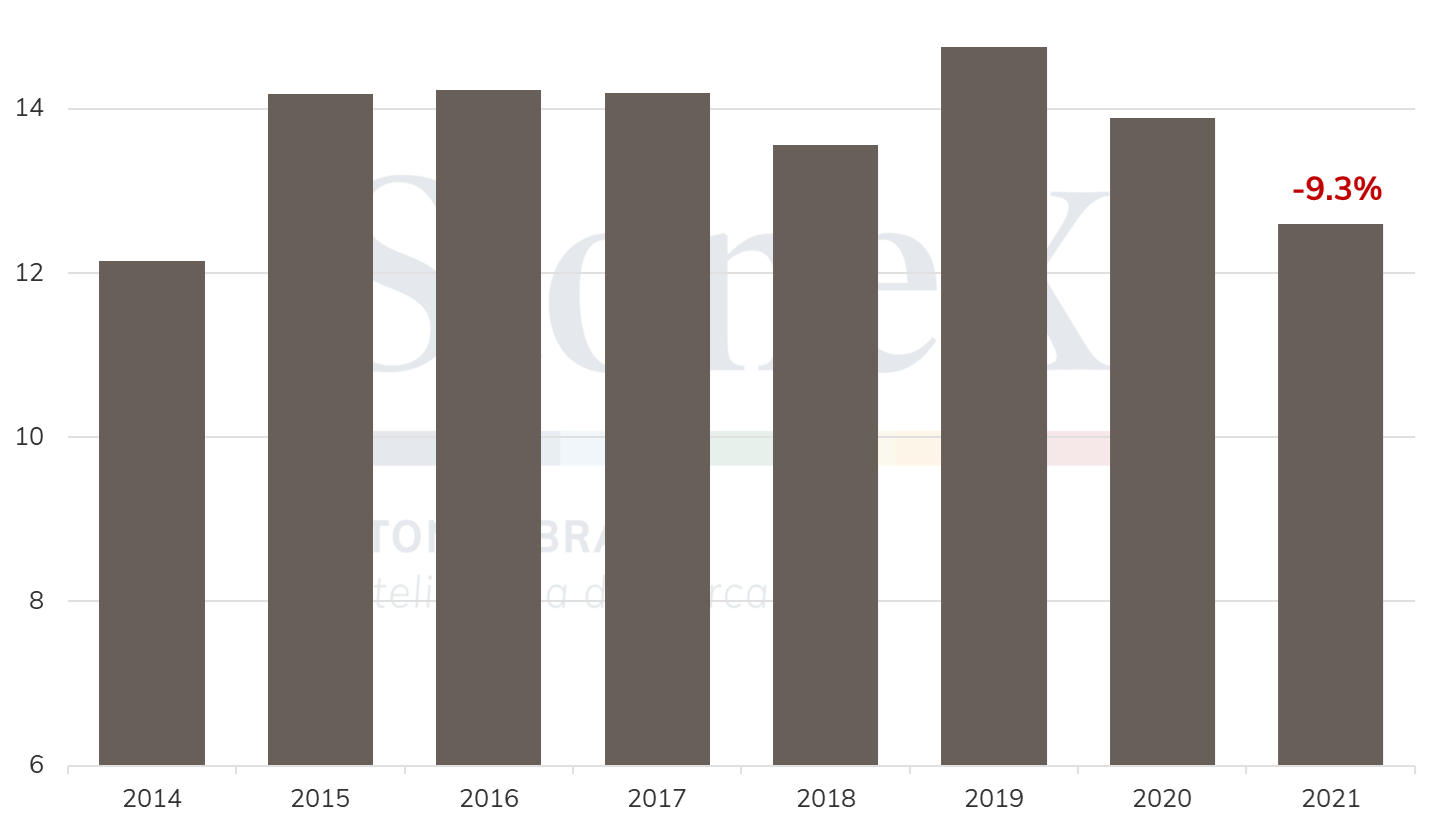
•    Colombia's 2021 production is 9.3% lower than a year ago 
•    A new ICE certified stocks drop helped support prices
•    ICE stocks have been the industry's alternative to short term supply constraints
•    Coffee prices accumulate a 50.2% increase for Brazilian consumers in 2021 
•    Increase of 8.24% in the December IPCA was the year's biggest monthly one

   Bearish Factors       Bullish Factors


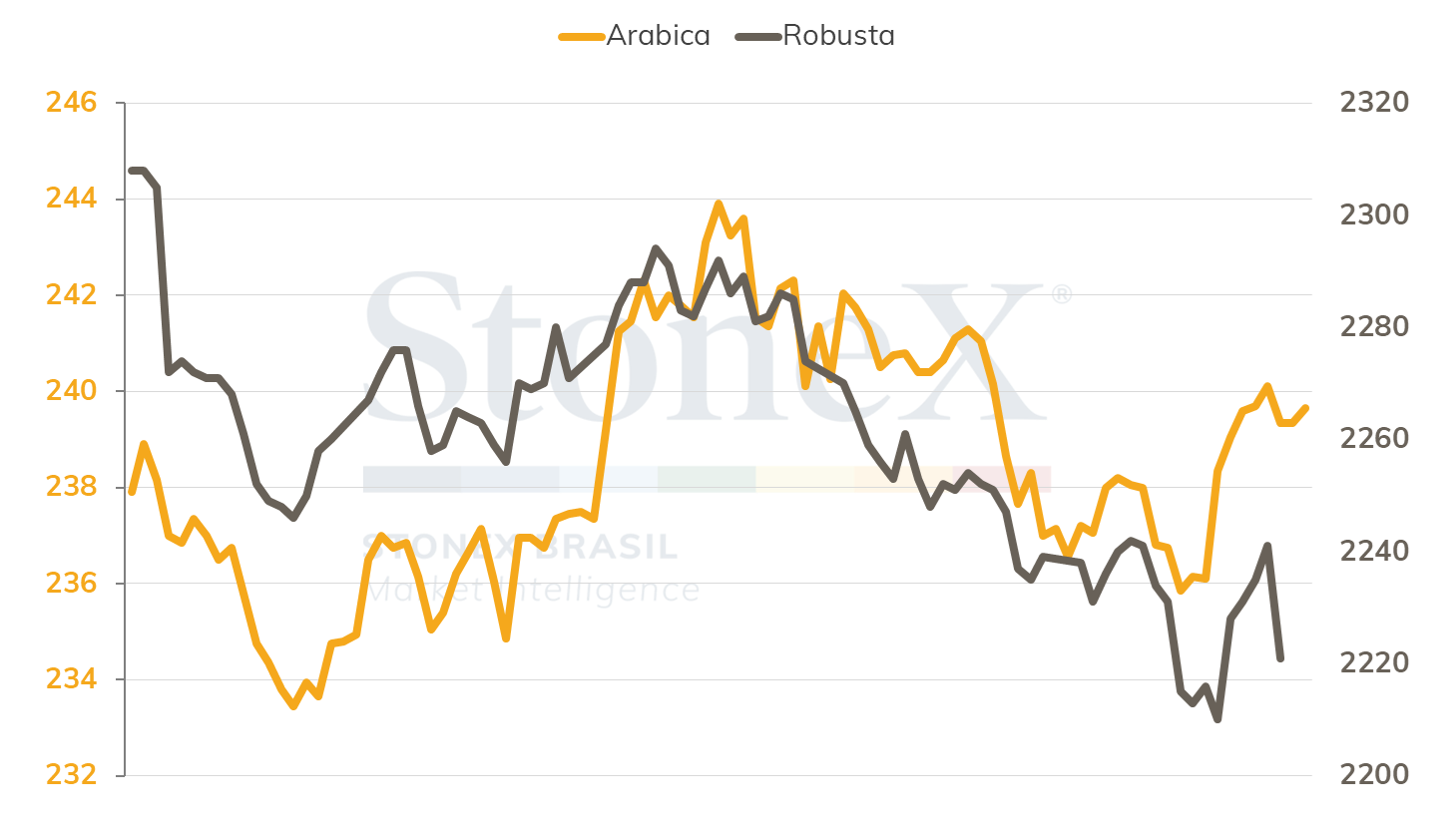
In a week of high volatility, Arabica prices recorded their second consecutive weekly advance on the ICE in New York. Amid concerns about Brazilian and Colombian production and the drop in certified stocks, the most active contract (Mar/22) closed quoted at US₵ 239.65/lb, an increase of 120 points (0.5%) compared to the previous Friday (7). Throughout the week, agents again tested the US₵ 240/lb resistance when prices reached highs at US₵ 244.4 on Wednesday (12), a session in which they ended at US₵ 240.85, the highest close since December 8. In Brazil, the CEPEA indicator for Arabica coffee renewed its highs on Wednesday, exceeding the BRL 1500 level to end the session at BRL 1502.91/bag. However, it dropped to end Friday at BRL 1498.14/bag, a weekly appreciation of only 0.3%.

EVOLUTION OF ARABICA AND ROBUSTA COFFEE PRICES IN 2021
image 26560
Source: CommodityNetwork Traders’ Pro. Design: StoneX.

On the other hand, Robusta fell for the second consecutive week, with prices pressured by signs of increased availability of coffee in Vietnam, with the harvest nearing its end and the Lunar New Year approaching in the country, and by technical signs of long positions selloff by funds, after reaching historical highs in the week ended January 4.
The most active Robusta contract (March/22) retreated USD -88 (-3.8%) to close the week quoted at USD 2228/ton, its lowest since late November. The Cepea Robusta indicator ended the week at BRL 827.92/bag, practically stable.
Indications of a successful harvest in Vietnam, despite difficulties with rainfall, a lack of workers at times, and an increase in supplies over the last two weeks, have contributed to pressure on Robusta prices. In the first month of the year, exports in Vietnam tend to intensify, as Vietnamese producers and trade, in general, try to increase their earnings for the Lunar New Year (Tet), the most important holiday of the year for the country, which will take place in early February. Thus, the increase in supply, without the counterpart of a similar increase in demand for Robusta coffee from the country's main trading partners, has been one of the factors putting pressure on prices in recent weeks.
The Arabica market is still waiting for new information about the Brazilian production and following the weather in the country's producing regions. Despite the consensus that the 2022/23 season will not present the expected yield potential due to the various weather events that damaged crops last year, the weather in early 2022 remains a key factor in mitigating crop losses. Adequate precipitation volumes in the first months of the year, when plants are in the fruit formation period, would ensure good productivity of crops little damaged by dry weather and frost, reducing the potential for production drop.
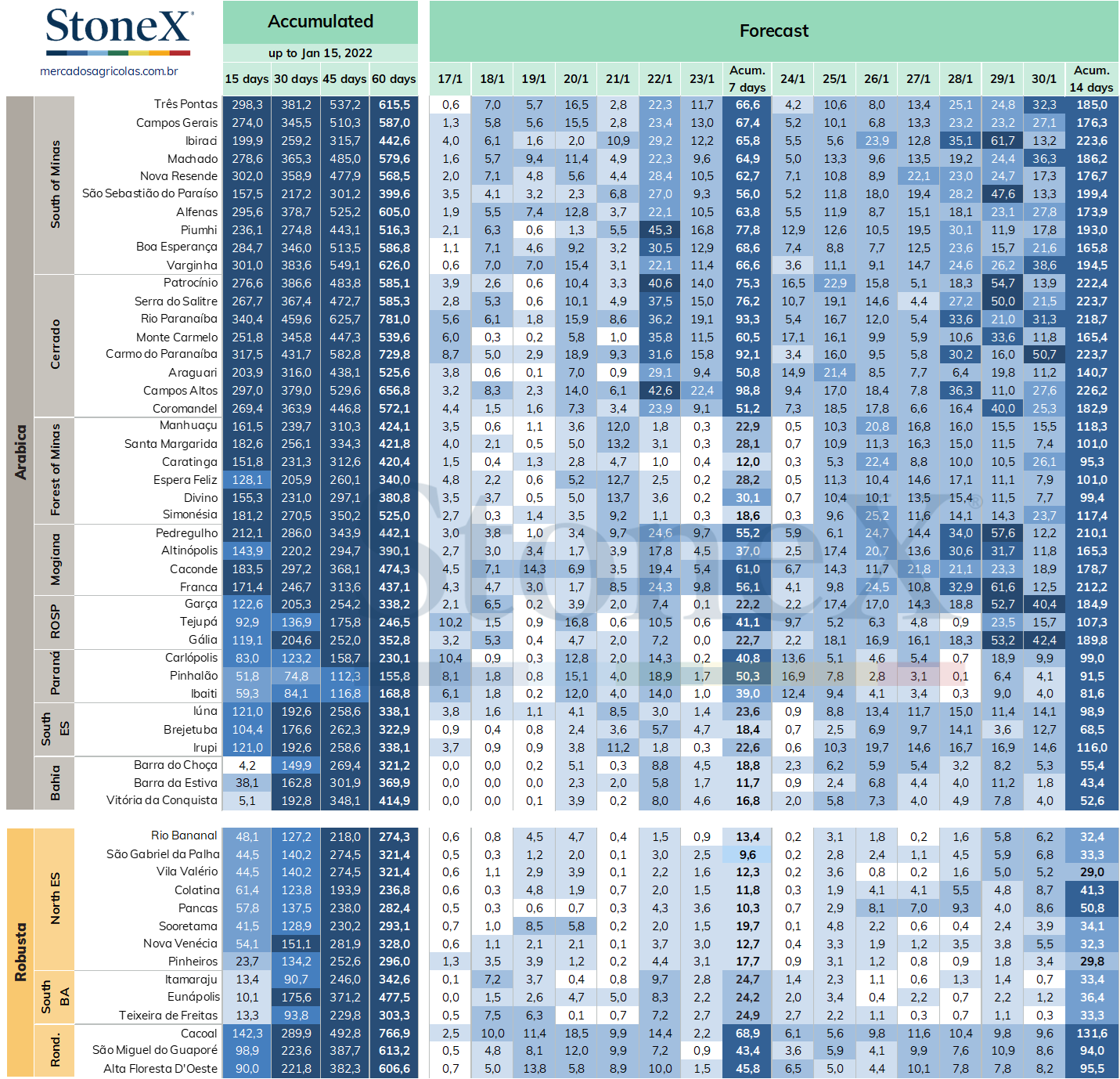
The StoneX weather forecast model points to volumes of around 50mm to 90mm over the next seven days in the southern Minas, Cerrado and Mogiana regions, with projections of more intense rainfall at the end of the week. The prospect is that the volumes will intensify in the last week of the month in all Arabica producing regions.

HISTORY AND PRECIPITATION FORECAST (MM) for COFFEE PRODUCING REGIONS
image 26561
Source:  StoneX, NOAA/NCEP/EMC (GFS: Global Forecast System) data, 2021.

The market expects new estimates in the first months of 2022 to bring new information about crop conditions, which should help agents "rebalance" their expectations. At present, it is already possible to ascertain the crops that have succeeded in the stages of setting and expansion, which helps to assist the accuracy of the estimates. On Tuesday (18), Conab will release the first version of its estimates for the Brazilian 2022/23 crop. StoneX's Brazil coffee team is currently conducting a field study, where it will go through all the country's main coffee-producing regions. The special Crop Tour report will be released in the first half of February, together with StoneX's official estimates for the next season.
This Monday (17), Brazilian export data for December will be released by the Brazilian Coffee Exporters Council (Cecafé). Preliminary export figures have already pointed to a decline in December – according to Secex, coffee exports in December totaled 3.4 million bags and were 18.4% lower than in December of the previous year. Besides Cecafé's official figures, it will be important to follow how the Council has observed the evolution of logistical problems that have hindered shipments in recent months and expect some improvement in the coming months.
Colombia’s yield could also be lower than expected in 2021/22. This is because the impacts of La Niña for two consecutive years in a key period of the country's main crop have negatively impacted production.

PRODUÇÃO DE CAFÉ NA COLÔMBIA POR ANO FISCAL (MILHÕES DE SACAS)
image 26562
Source: FNC. Design: StoneX.

Continued concerns over the two main global Arabica producers tend to support prices at the higher levels seen last year.

Certified stocks continue to decline 

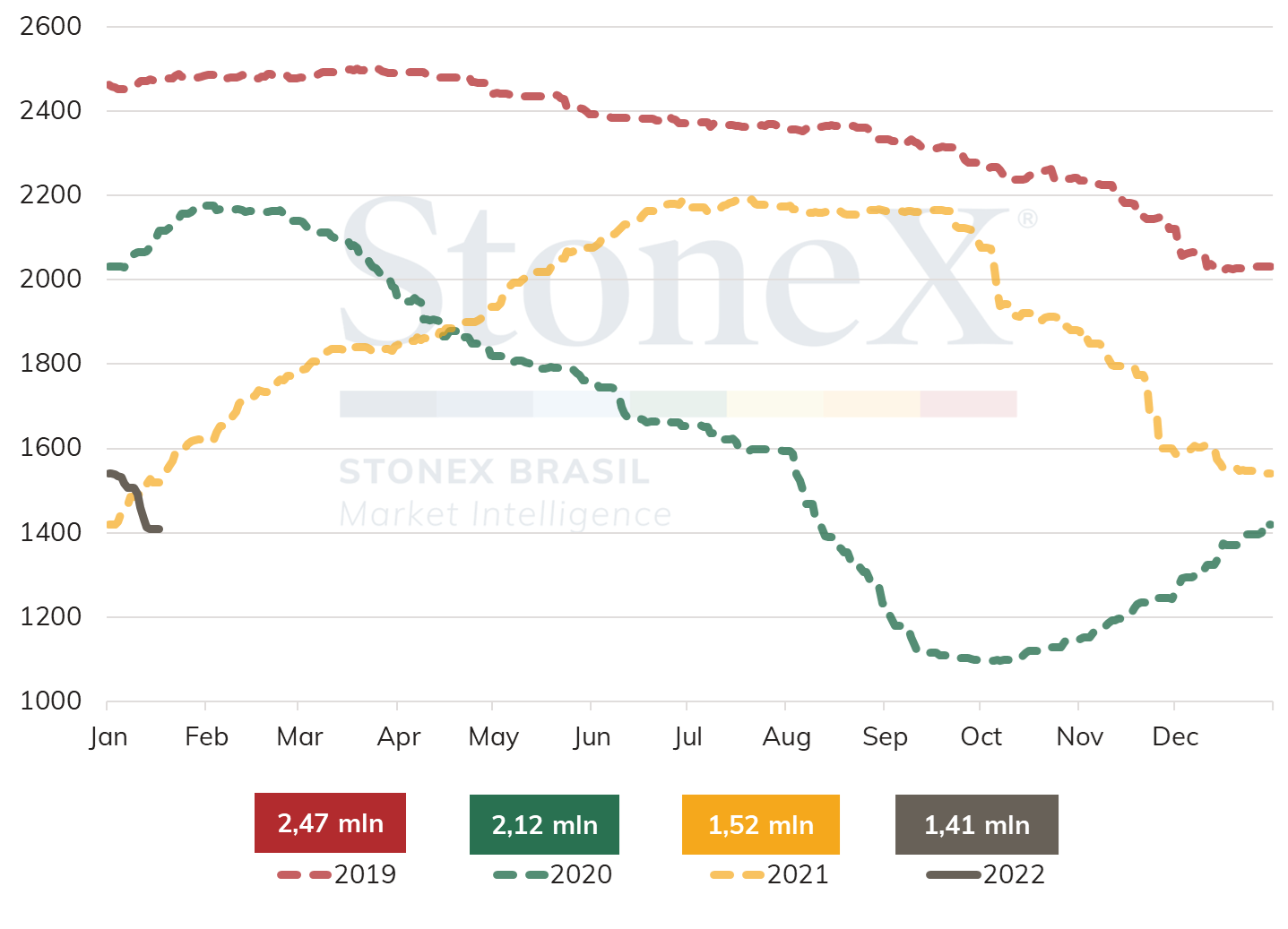
The drop in certified stocks also continues to be a factor of concern for the coffee market in general and has contributed to boosting prices in recent sessions. Last week, the ICE NY recorded a reduction of 97,466 bags in its certified stocks, a drop of about 6.5%. Since the beginning of the year, losses have accumulated to over 132,000 bags or a variation of -8.6%. With the variation and approximately 1.409 million bags, stocks have reached their lowest level in just over a year, already below the lows recorded in 2021.

EVOLUTION OF ARABICA CERTIFIED STOCKS on the ICE NY
image 26563
Source: ICE/NY. Design: StoneX.

The current problem the world faces with logistical bottlenecks affecting a large part of global trade, with low stocks, lack of ships and containers hindering the flow of various goods, seems to be far from completely solved. For coffee, the lack of ships and containers and congestion at ports continues to be a major problem for both exporters and major consumers. The travel time from loading to unloading in the United States, for example, went from weeks to months, which has compromised the short-term availability of coffee for the industry in the main global consumer and other producing regions.
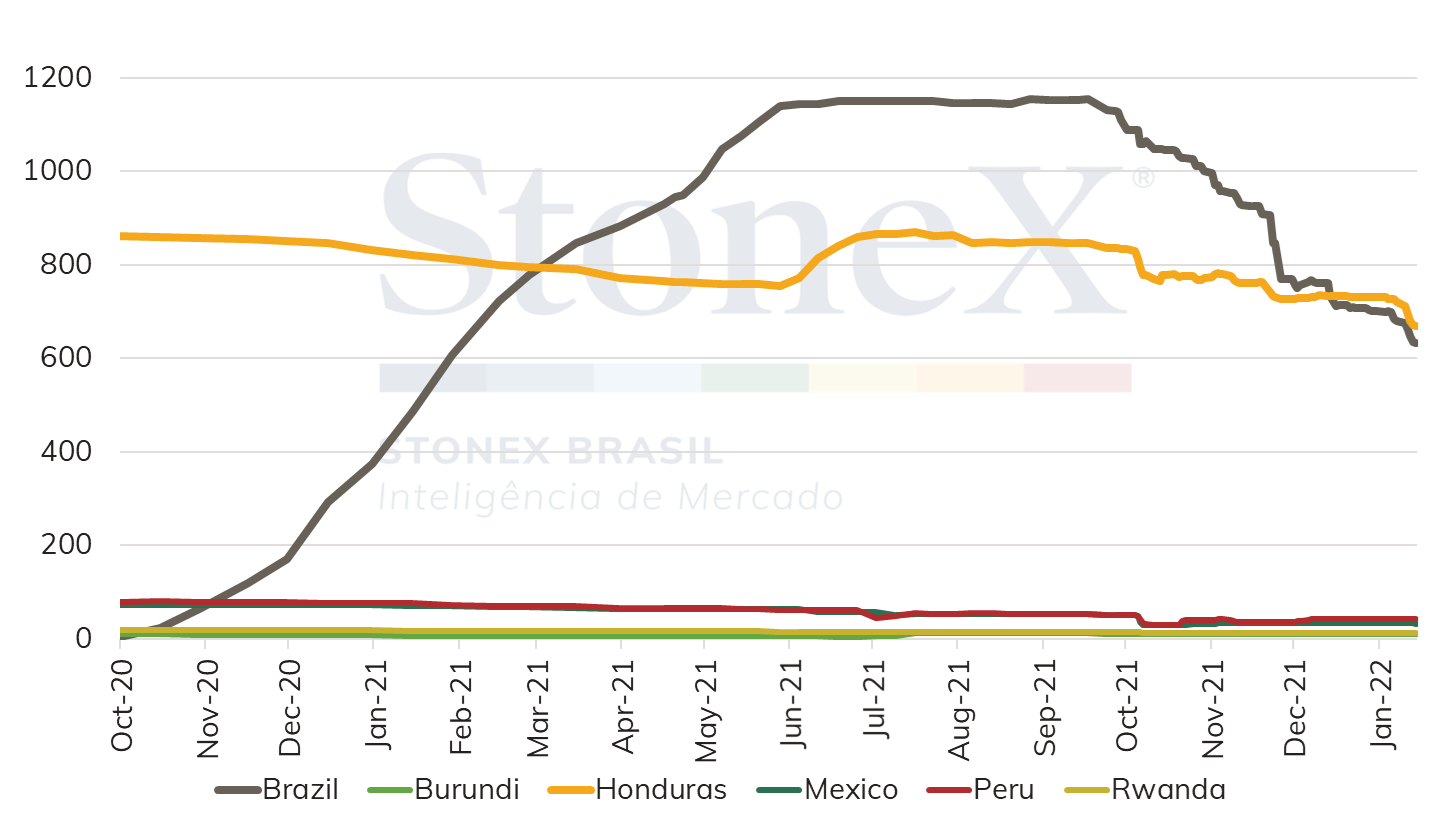
Thus, some agents continue to opt to receive ICE-certified stocks as an alternative to supply problems in the short term. Among the stocks that have been withdrawn, it can be noted that the withdrawal of coffee from Honduras has been slower, while the withdrawal of Brazilian coffee has been more intense.
As we commented in the last coffee weekly report, the increase in Brazilian stock certification has occurred due to a narrowing of differentials, making it very profitable for producers to deliver their coffee to the exchange for a period. 
If the differentials weaken compared to the New York market price, that is, if there is a devaluation of coffee in a given region, it makes sense for the exporter to buy the product and deliver it to the exchange to certify it. However, when differentials are stronger, the producer gains more by selling coffee FOB rather than delivering it to the exchange.
Currently, the differentials in the main Brazilian markets remain at relatively attractive levels, ranging between US₵-30/lb and US₵-40/lb, significantly low levels compared to the last 3-year average. However, the reduced coffee supply of the quality standards required by the exchange, the sharp increase in freight costs and the difficulties in delivering coffee to the exchange's warehouses in the required time have discouraged the certification of new Brazilian coffee by the exchange.
 

CERTIFIED STOCKS on the ICE NY NY BY COUNTRY 

image 26564
Source: ICE/NY. Design: StoneX.

Since mid-December, Honduras has overtaken Brazil, and its coffees have regained the largest share in ICE warehouses. However, the current scenario of high FOB prices and logistical problems indicates a trend that coffee of Brazilian origin will continue to decline in the coming weeks and that there will be few deliveries of coffee from Brazil, with the prospect that beans from Honduras will once again dominate as the largest share in ICE warehouses. 

Prices of ground coffee accumulate a 50.2% increase for the Brazilian consumer in 2021


Last week, the IBGE released the National Broad Consumer Price Index (IPCA) for December, which showed an increase of 0.73% last month. Thus, the index ended 2021 with an increase of 10.06%, the highest indicator since 2015, when it registered an advance of 10.67%. The recovery in demand, production bottlenecks and high logistics costs, the water and energy crisis, the increase in commodity prices, and the devaluation of the Brazilian real were among the main factors that contributed to the price index closing almost twice the upper limit of the Central Bank's inflation target of 5.25%.
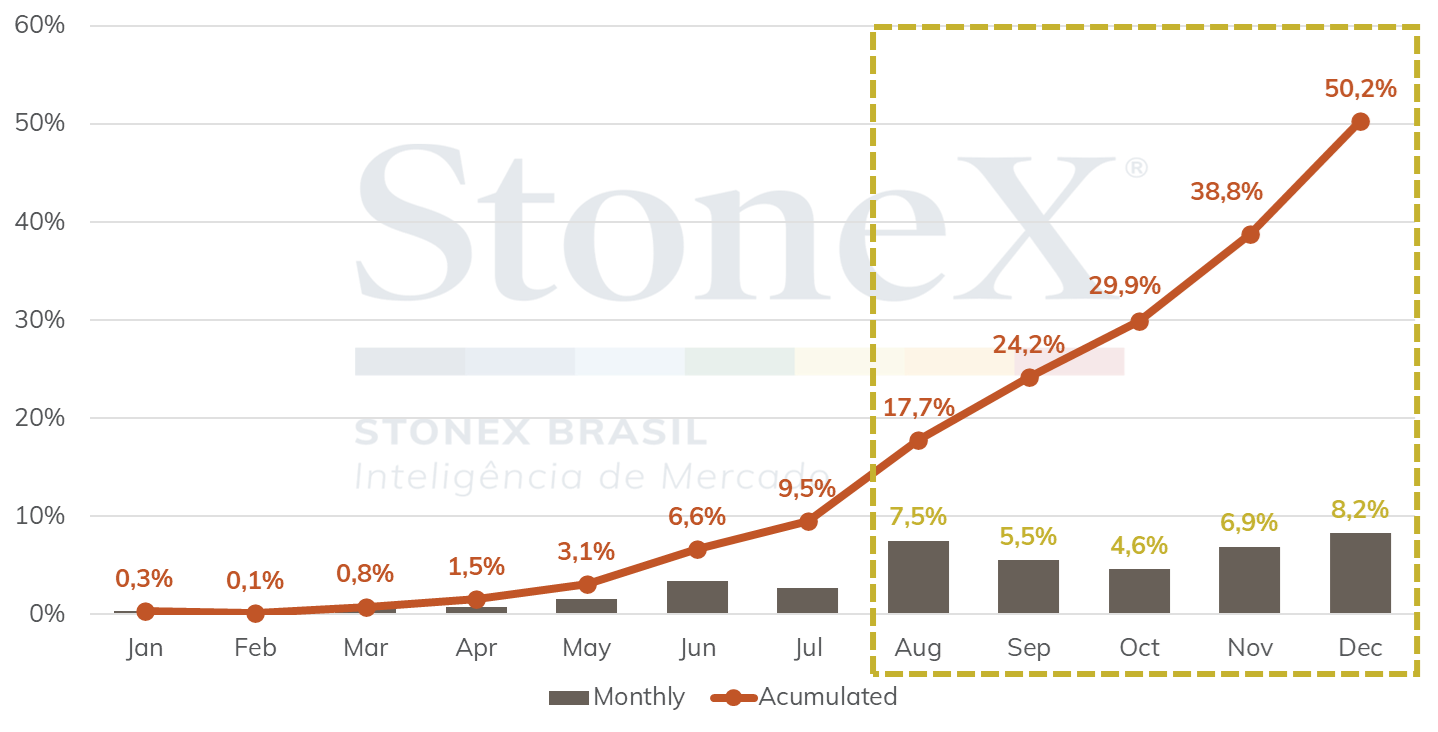
Among the two coffee items that make up the IPCA, soluble coffee's price increase slowed down, rising 1.26% in December, after having advanced 2.33% and 3.57% in October and November, respectively, ending the year with an accumulated 12.77%, relatively close to the index. Roasted and ground coffee, on the other hand, registered an 8.24% variation in its price last month, beating August (7.51%), which had registered the highest monthly increase of the year until then. As a result, roasted and ground coffee accumulated 38.81% in November to end the year with a significant increase of 50.24%. It is worth considering that the 50.24% growth is an average among all products and all locations surveyed, with some locations registering even more intense increases than the general index. Among the highlights of the locations surveyed by the IBGE, the Greater Vitória region, in the state of Espírito Santo, indicated the highest rise, accumulating 65.15% in the year.

EVOLUTION OF ROASTED AND GROUND COFFEE prices IN BRAZIL
image 26565
Source: IBGE. Design: StoneX.

The chart below shows that most of the increases began to occur with greater intensity from the second half of the year, specifically in August. Until July, while the Arabica domestic prices accumulated about 67% and Robusta 41%, the values on the shelves, according to IBGE data, accumulated an appreciation of only 9.5%. However, after the frost events at the end of July, which encouraged strong advances both for Arabica and Robusta coffees, roasters, which had already been working for some months with lower profit margins since the beginning of the year, started to pass on their higher costs to supermarkets and, ultimately, to the final consumer.
Amid this scenario, a concerning factor is a possible reduction in consumption in the domestic market, which could lead prices to a downward trend since Brazil is the second-largest global consumer. It is expected that before a significant demand reduction, Brazilian consumers should opt to replace their consumption patterns with cheaper coffee alternatives, for example, since coffee consumption in the country is very intrinsic to Brazilian culture and has a low correlation with changes in price and income levels. However, this remains a point of attention for the next consumption level surveys in the country.
On the other hand, a doubt remains to what extent these transfers will occur. At first, the expectation is that in 2022 inflation in the country as a whole will be able to be more controlled compared to 2021, since the Central Bank has already used several tools to contain the strong acceleration in prices, such as the subsequent hikes in the Selic basic interest rate, which should continue to occur in the first meetings of the Monetary Policy Committee (Copom) this year. However, considering that part of the rise in domestic coffee prices was due to factors specifically linked to weather impacts on coffee crops, the trend is that price pass-throughs will continue to occur with some intensity, at least in the first months of 2022.
 

image 24562
 
ECONOMIC INDICATORS
image 26566
Sources: ICE/NY; ICE/EU; B3; Commodity Network Trader’s Pro.
 
 
  • Coffee

The StoneX Group Inc. group of companies provides financial services worldwide through its subsidiaries, including physical commodities, securities, exchange-traded and over-the-counter derivatives, risk management, global payments and foreign exchange products in accordance with applicable law in the jurisdictions where services are provided. References to over-the-counter (“OTC”) products or swaps are made on behalf of StoneX Markets LLC (“SXM”), a member of the National Futures Association (“NFA”) and provisionally registered with the U.S. Commodity Futures Trading Commission (“CFTC”) as a swap dealer. SXM’s products are designed only for individuals or firms who qualify under CFTC rules as an ‘Eligible Contract Participant’ (“ECP”) and who have been accepted as customers of SXM. StoneX Financial Inc. (“SFI”) is a member of FINRA/NFA/SIPC and registered with the MSRB. SFI is registered with the U.S. Securities and Exchange Commission (“SEC”) as a Broker-Dealer and with the CFTC as a Futures Commission Merchant and Commodity Trading Adviser. References to securities trading are made on behalf of the BD Division of SFI and are intended only for an audience of institutional clients as defined by FINRA Rule 4512(c). References to exchange-traded futures and options are made on behalf of the FCM Division of SFI . StoneX is a trading name of StoneX Financial Ltd (“SFL”). SFL is registered in England and Wales, Company No. 5616586. SFL is authorized and regulated by the Financial Conduct Authority [FRN 446717] to provide to professional and eligible customers including: arrangement, execution and, where required, clearing derivative transactions in exchange traded futures and options. SFL is also authorised to engage in the arrangement and execution of transactions in certain OTC products, certain securities trading, precious metals trading and payment services to eligible customers. SFL is authorised & regulated by the Financial Conduct Authority under the Payment Services Regulations 2017 for the provision of payment services. SFL is a category 1 ring-dealing member of the London Metal Exchange. In addition SFL also engages in other physically delivered commodities business and other general business activities which are unregulated and not required to be authorised by the Financial Conduct Authority. StoneX Group Inc. acts as agent for SFL in New York with respect to its payments services business. StoneX APAC Pte. Ltd. acts as agent for SFL in Singapore with respect to its payments services business. ‘StoneX’ is the trade name used by StoneX Group Inc. and all its associated entities and subsidiaries.
 
Trading swaps and over-the-counter derivatives, exchange-traded derivatives and options and securities involves substantial risk and is not suitable for all investors. Past performance of any futures or option is not indicative of future success. Indicators are not a trading system and are not published as a specific trade recommendation. The information herein is not a recommendation to trade nor investment research or an offer to buy or sell any derivative or security. It does not take into account your particular investment objectives, financial situation or needs and does not create a binding obligation on any of the StoneX group of companies to enter into any transaction with you. You are advised to perform an independent investigation of any transaction to determine whether any transaction is suitable for you. No part of this material may be copied, photocopied or duplicated in any form by any means or redistributed without the prior written consent of StoneX Group Inc.
 
© 2026 StoneX Group Inc. All Rights Reserved.

Satellite view of Earth at night showing illuminated cities across Asia and the Middle East

Discover more insights

Our subscribers have access to comprehensive market analysis from StoneX spanning commodities, equities, currencies and more.

StoneX: We open markets

Our market expertise, advanced platforms, global reach, culture of full transparency and commitment to our clients’ success all set us apart in the financial marketplace.

Reach

With access to 40+ derivatives exchanges, 180+ foreign exchange markets, nearly every global securities marketplace and numerous bi-lateral liquidity venues, StoneX’s digital network and deep relationships can take clients anywhere they want to go.

Transparency

As a publicly traded company meeting the highest standards of regulatory compliance in the markets we serve, our financials and record of accomplishment are matters of public record. StoneX’s commitment to “doing the right thing over the easy thing” sets us apart in the industry and helps us build respect, client trust and new partnerships.

Expertise

From our proprietary Market Intelligence platform, to “boots on the ground” expertise from award-winning traders and professionals, we connect our clients directly to actionable insights they can use to make more informed decisions and achieve their goals in the global markets.