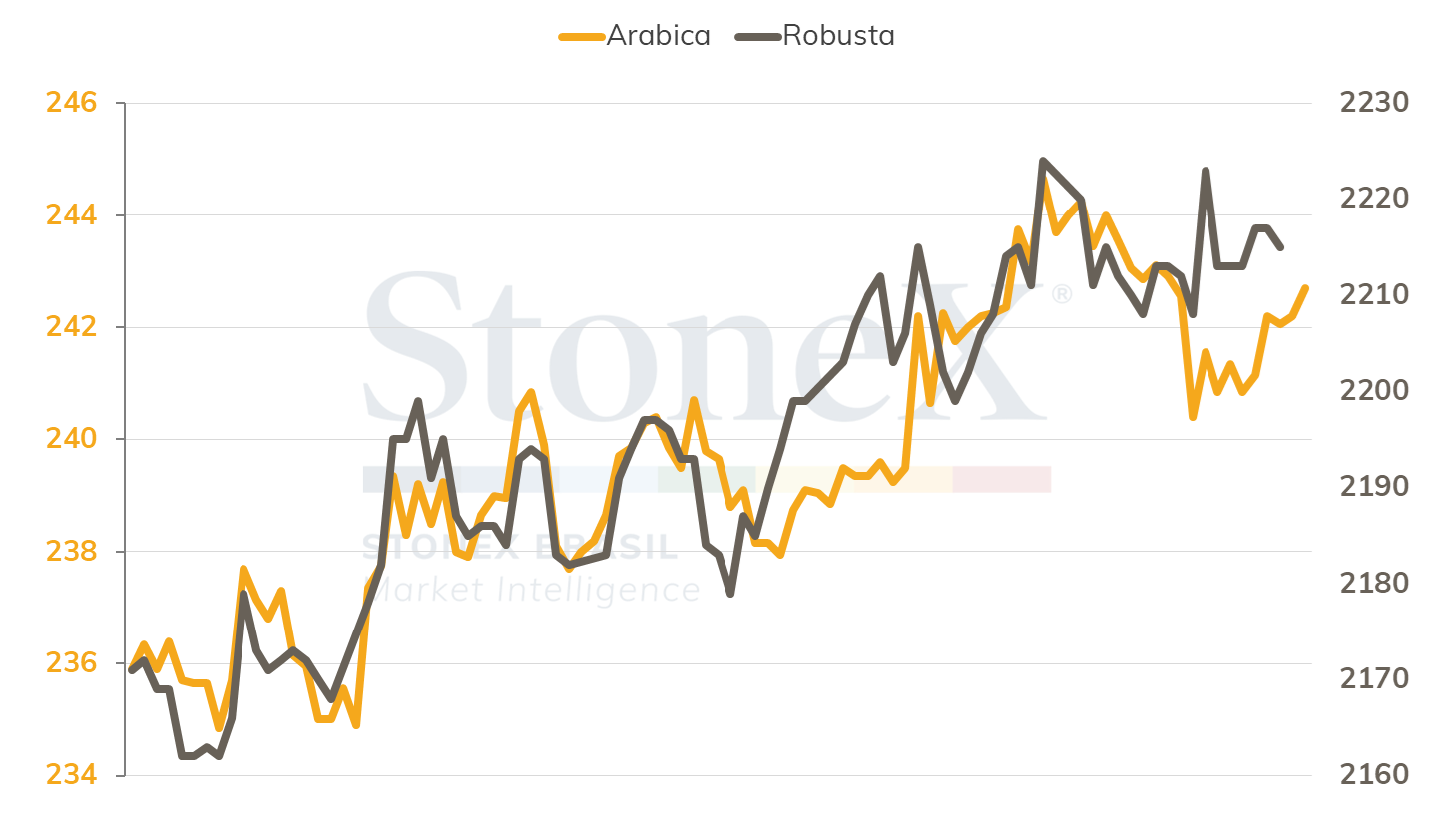
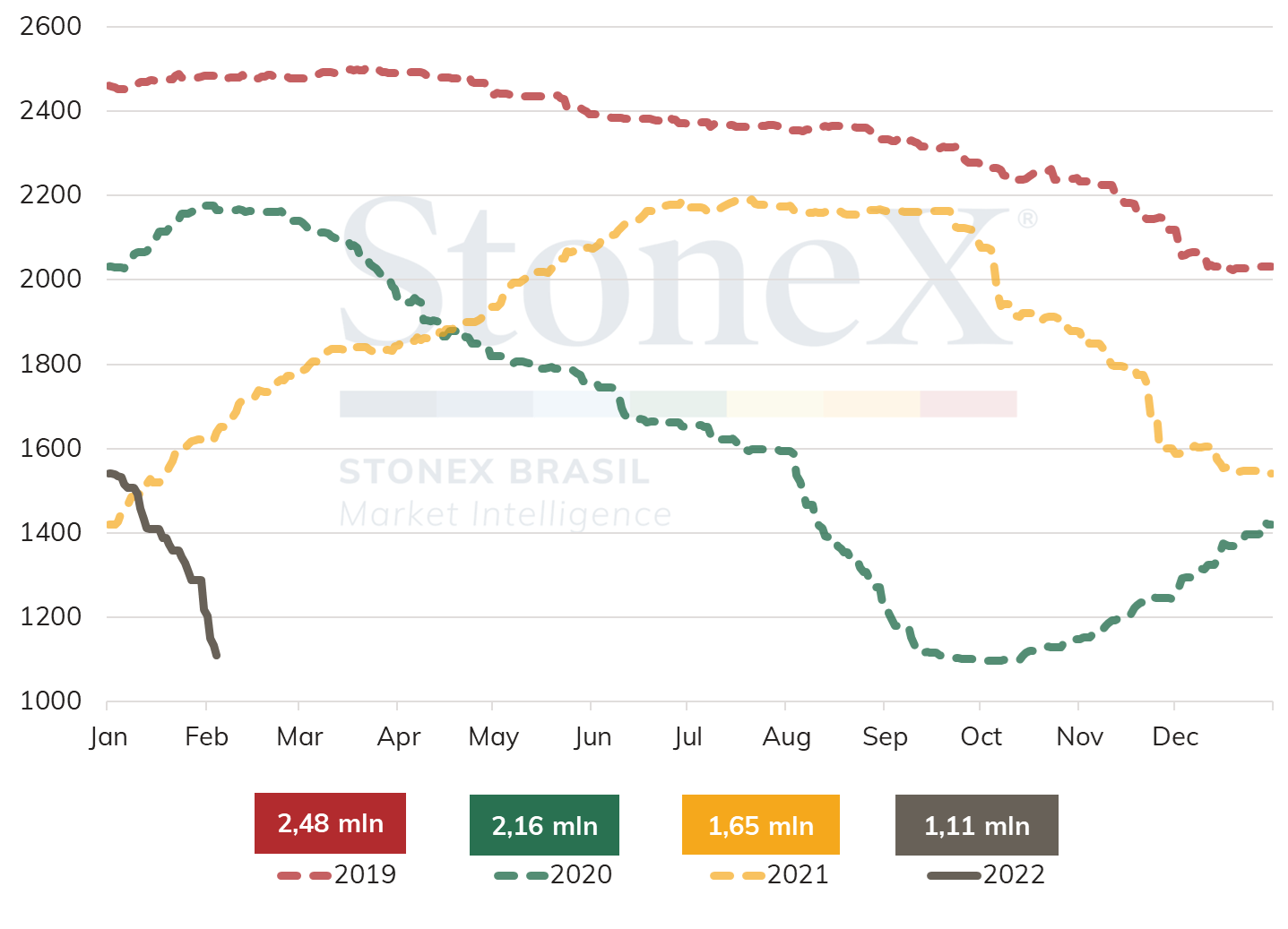
During the week, in addition to the support due to the falling dollar, the sharp decline in certified stocks and preliminary data from Brazilian exports endorsed the upward trend. Between January 28 and February 4, Arabica certified stocks fell by 177,000 bags, down by 13.8%. As already mentioned in other StoneX publications, the strengthening of differentials and high logistics costs discourage companies from certifying coffee on the exchange, while this same scenario encourages the withdrawal of this coffee from certified stocks in consuming countries.
Besides the drop in stocks, preliminary data from the Secretariat of Foreign Trade (Secex) indicated that Brazilian coffee exports fell 19.7% in January, with 2.97 million bags exported, confirming the perspective of limited supply and logistical support problems. The official data for Brazilian exports to be released later this week by Cecafé.
EVOLUTION OF ARABICA CERTIFIED STOCKS
Source: ICE – Intercontinental Exchange. Design: StoneX.
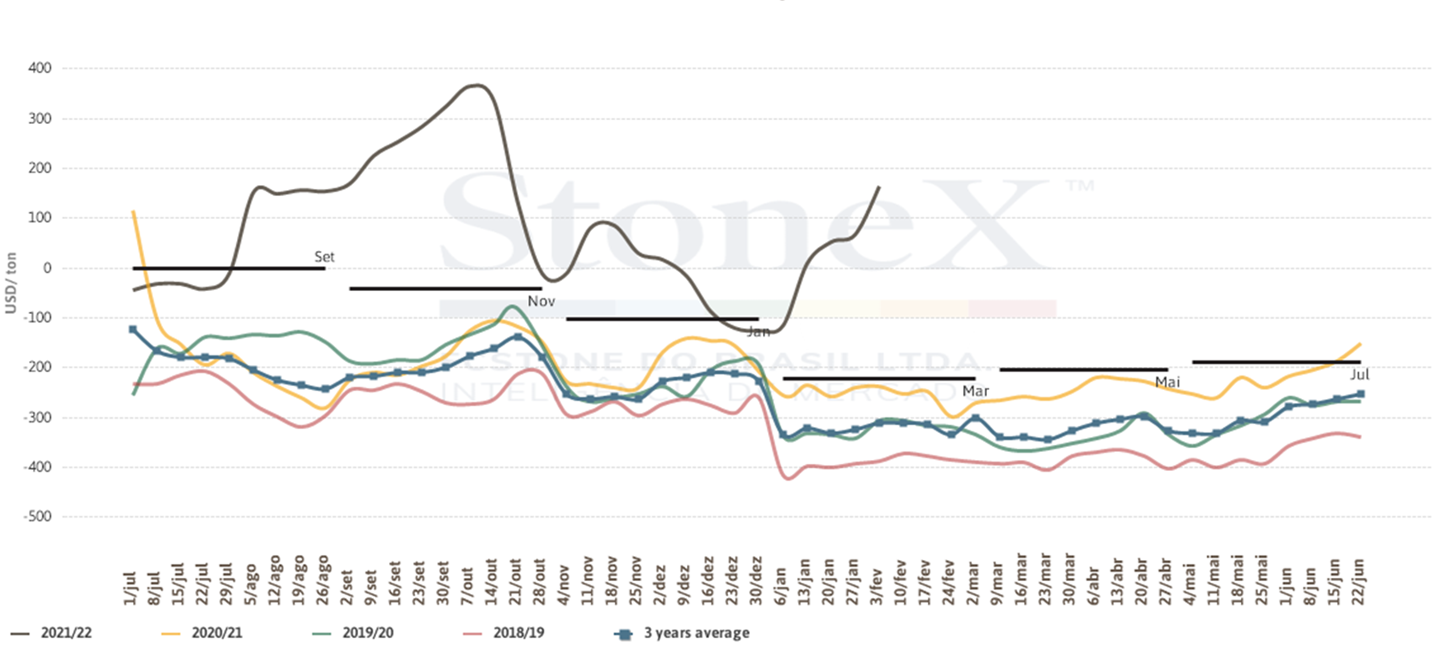
For the Robusta market, the price decrease observed in January - reflecting the greater availability of the variety in Vietnam, which could be noticed by the 57% increase in exports in December and 9% in January -, associated with the drop in the USDBRL, contributed to the differentials in Brazil. While the market retreated in London, prices remained firm in Brazil, supported by the firm demand for the variety in the domestic market. Thus, since the beginning of the year, the differentials had an upward trend and from mid-January onwards became positive, closing the last week around USD 160/ton; that is, the Brazilian domestic market paid a premium of USD 160 to the most active contract in the London market.
ROBUSTA PRICE DIFFERENTIAL | ESPÍRITO SANTO - LONDON (USD/TON)
Source: ICE/London, CEPEA. Design: StoneX.
Besides the above factors, the estimates for Brazilian production and the global coffee balance are still the focus of market participants. As presented last week, some estimates for Brazilian production have already been released and showed a strong divergence, highlighting the market's uncertainties about Brazilian production.
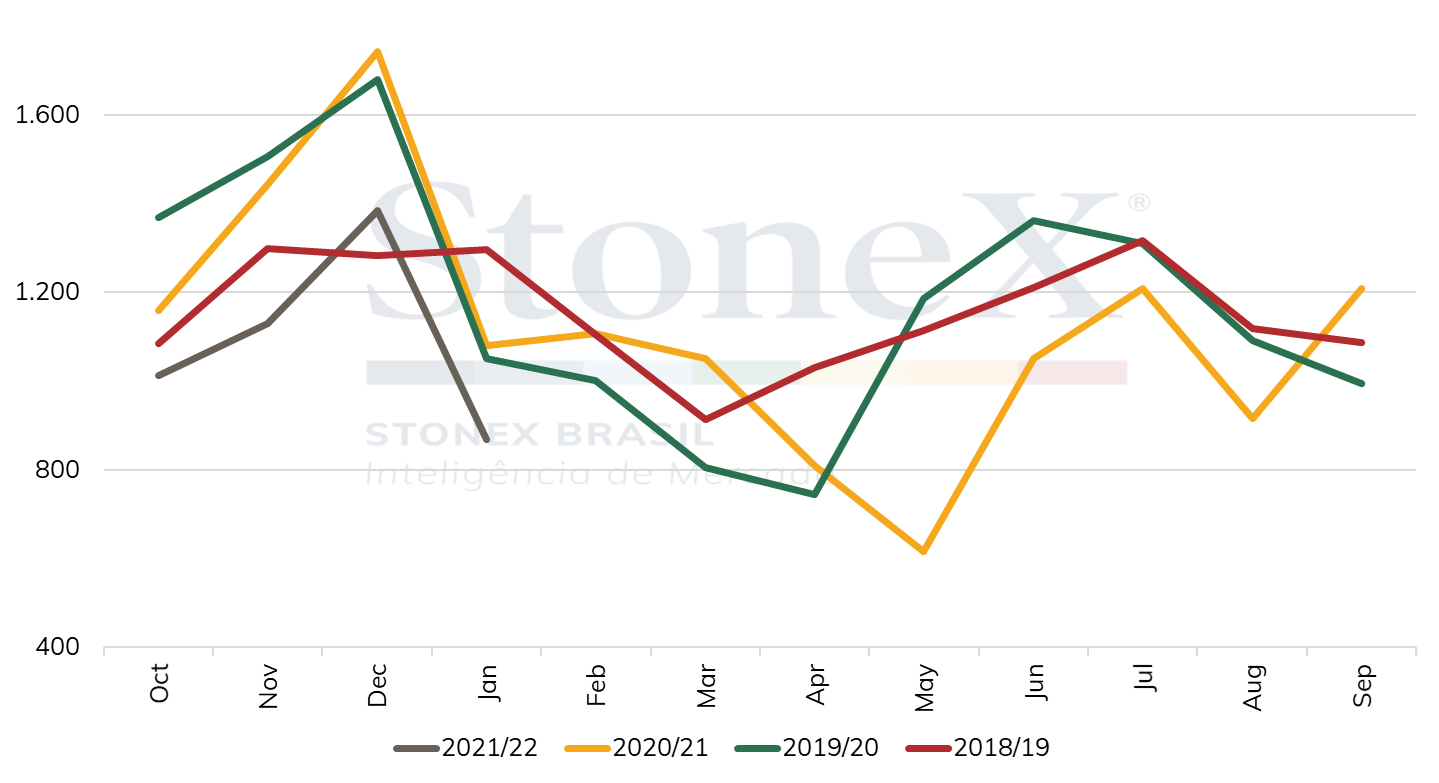
In terms of weather, data from weather agencies indicate the continuation of La Niña until the beginning of autumn in the southern hemisphere, which continues to be a problem since this event has caused significant amounts of rain in Colombia and affected the country's production. FNC data indicate that the country produced 868,000 bags in January, a volume 20% lower than in January 2021, due to the impact of excessive rain on the country's production.
MONTHLY COFFEE PRODUCTION IN COLOMBIA (THOUSAND BAGS)
Source: FNC. Design: StoneX.
In Central American countries, coffee exports have been increasing. According to the Guatemalan National Coffee Association (Anacafe), the country's exports advanced 36% in the crop year in October until mid-January, totaling almost 366,000 bags. The Costa Rican Coffee Institute (ICafe) indicated that the country exported more than 87 thousand bags in January, a volume 75% higher than the same month last year. According to the National Coffee Institute of Honduras (IHCAFE), the country's exports totaled almost 523,000 bags last month, 12.3% higher than in January 2021.
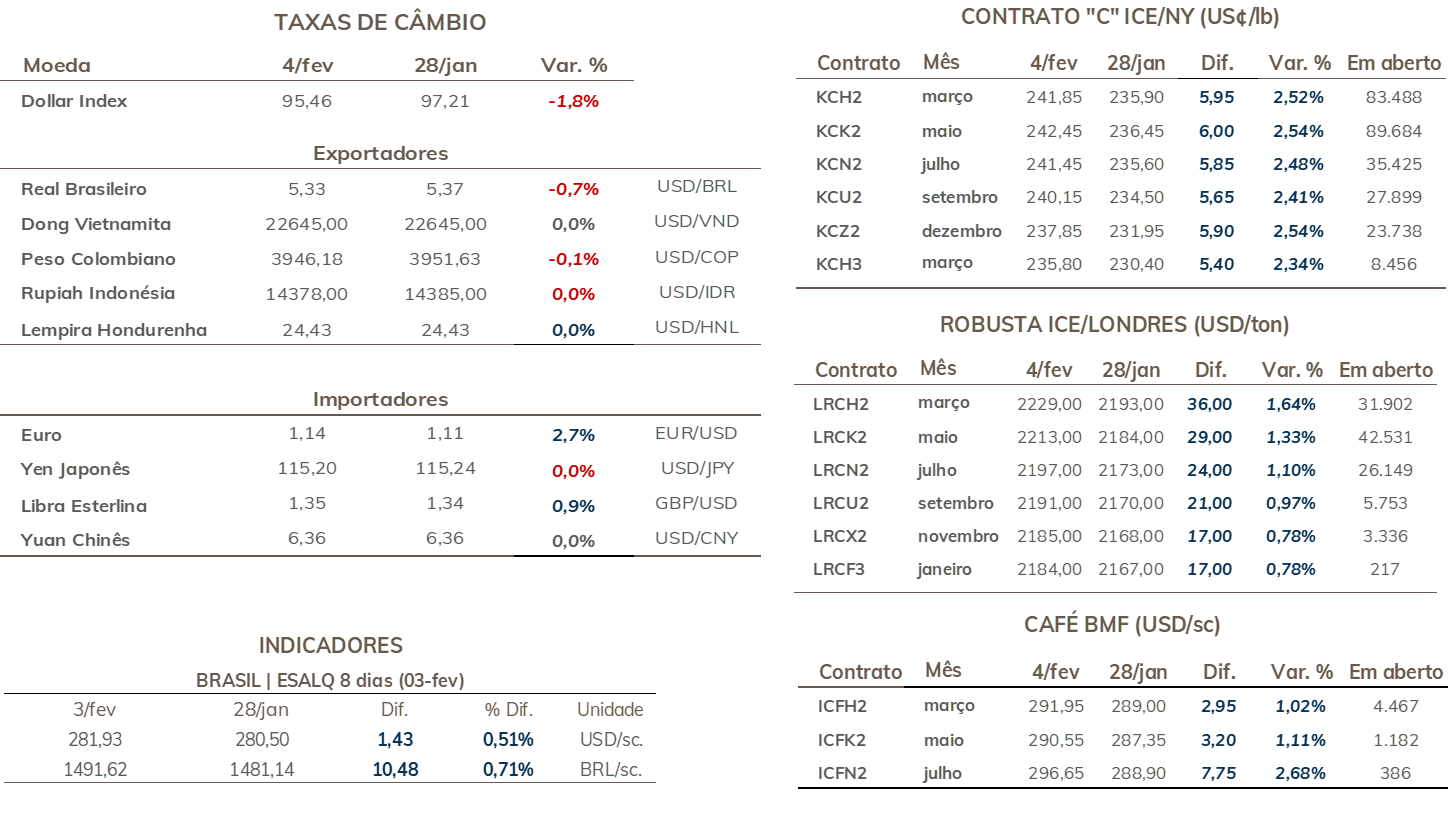
The real/dollar pair closed last week quoted at BRL 5.325, showing a drop of 1.2% in the week and accumulating a variation of -4.5% in the year. Differently from the previous week, when the BRL appreciated despite the strong rise in the USD abroad, this week the external environment helped the exchange rate in Brazil to depreciate, with the dollar index moving in a similar direction to end with a strong retraction of 1.9%, quoted at 95.4 points. Global agents showed a greater appetite for risk despite the geopolitical conflict on the Russia-Ukraine border. They reacted to the decision to raise interest rates by the Central Bank of England and the firm statement by the president of the European Central Bank, which raised expectations that interest rate hikes in the eurozone could occur as early as 2022.