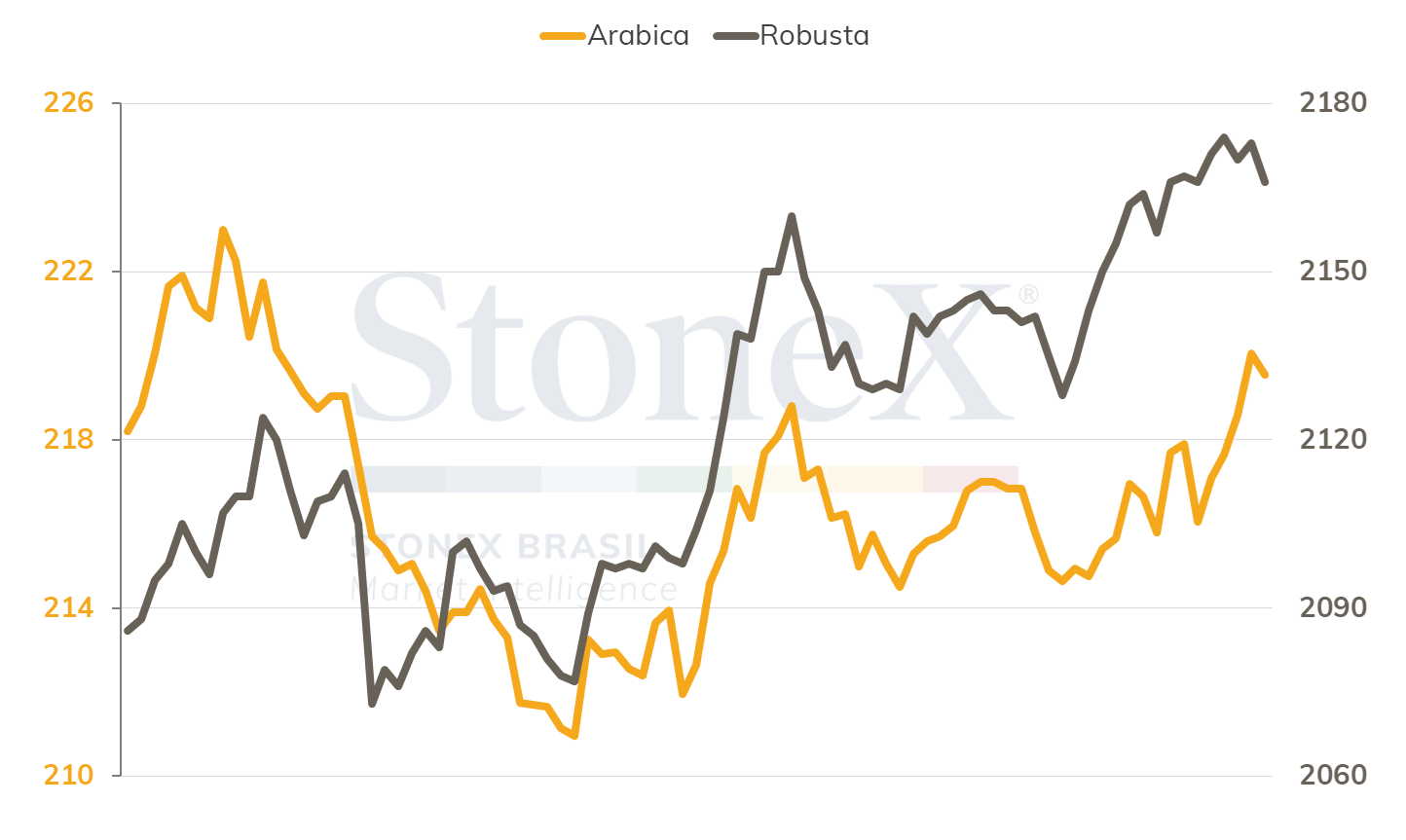
The coffee market is under pressure without much news in terms of fundamentals due to the impacts and uncertainties linked to the armed conflict between Russia and Ukraine. In addition to the risk aversion sentiment, concerns about the impact of the war on coffee consumption in countries involved in the conflict contribute to putting pressure on prices; in a recent article published on the Notícias Agrícolas website, the President of the Vitória Coffee Trade Center, Marcio Cândido, pointed out that negotiations of soluble coffees with Eastern Europe have been paralyzed for more than 20 days, as a reflection of the war taking place in the region.
Despite this uncertain scenario, other bullish factors are still present in the current context. Estimates for Brazilian production in 2022/23 vary from 55.7 million bags by Conab to 66.5 million bags by Rabobank. However, most estimates are around 60 million bags, which corroborates the expectation of heavy losses in the 2022/23 season – Brazilian production could reach volumes close to 70 million bags had the weather been favorable. In the previous study released by StoneX, Brazilian coffee production was estimated at 58.9 million bags for the season.
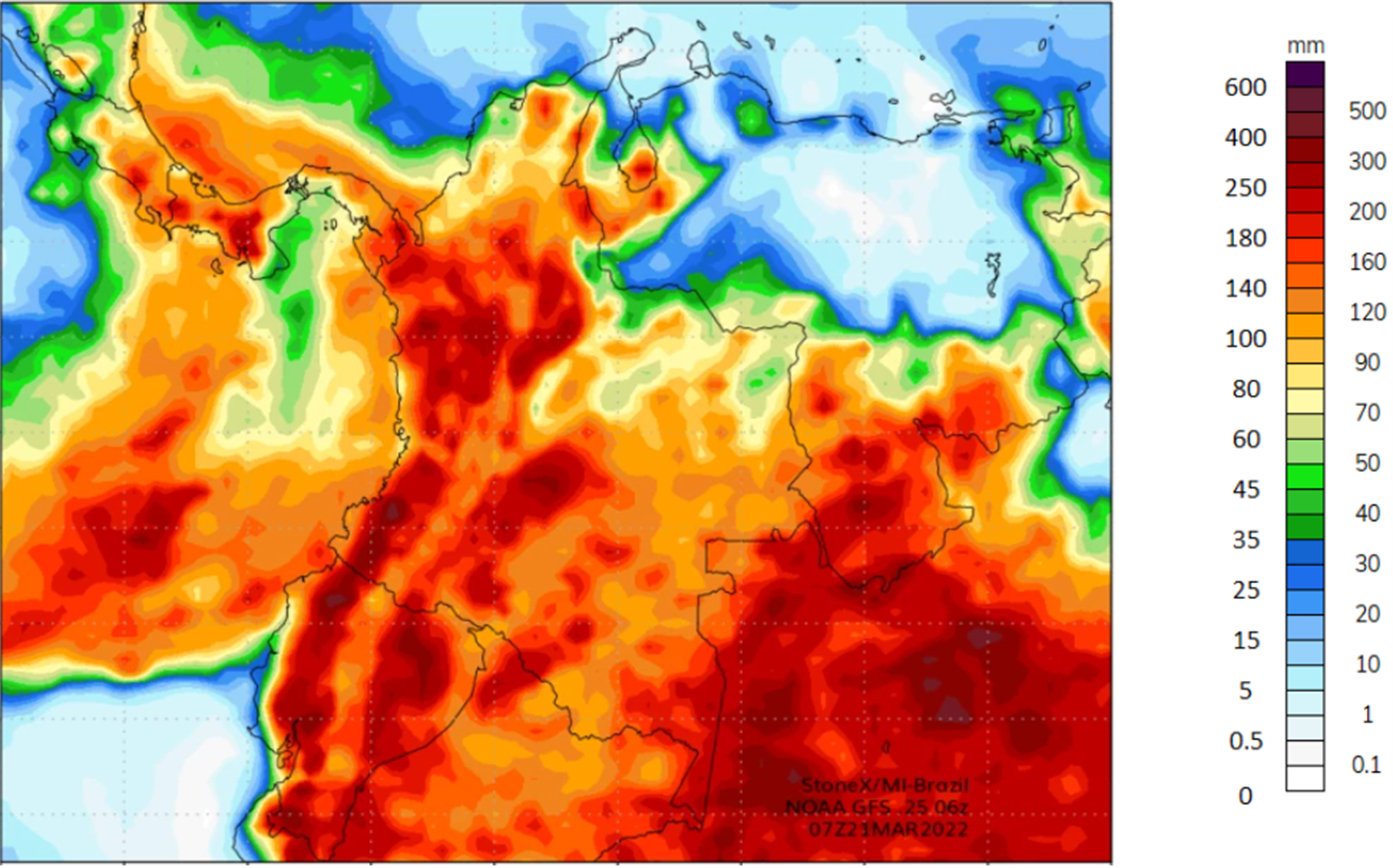
Excessive rainfall continues to affect coffee production in Colombia. As has been commented on in other editions of this report, excessive rainfall in Colombia has caused flooding and landslides, which has hurt the country's coffee production. According to the FNC, coffee production was 16% lower in February due to excessive rainfall. In addition, there is an expectation that the production for the first half of this year will be reduced by more than 10%.
Cumulative precipitation forecast for the next 14 days in Colombia
Source: StoneX, with NOAA / NCEP / EMC (GFS: Global Forecast System), 2021.
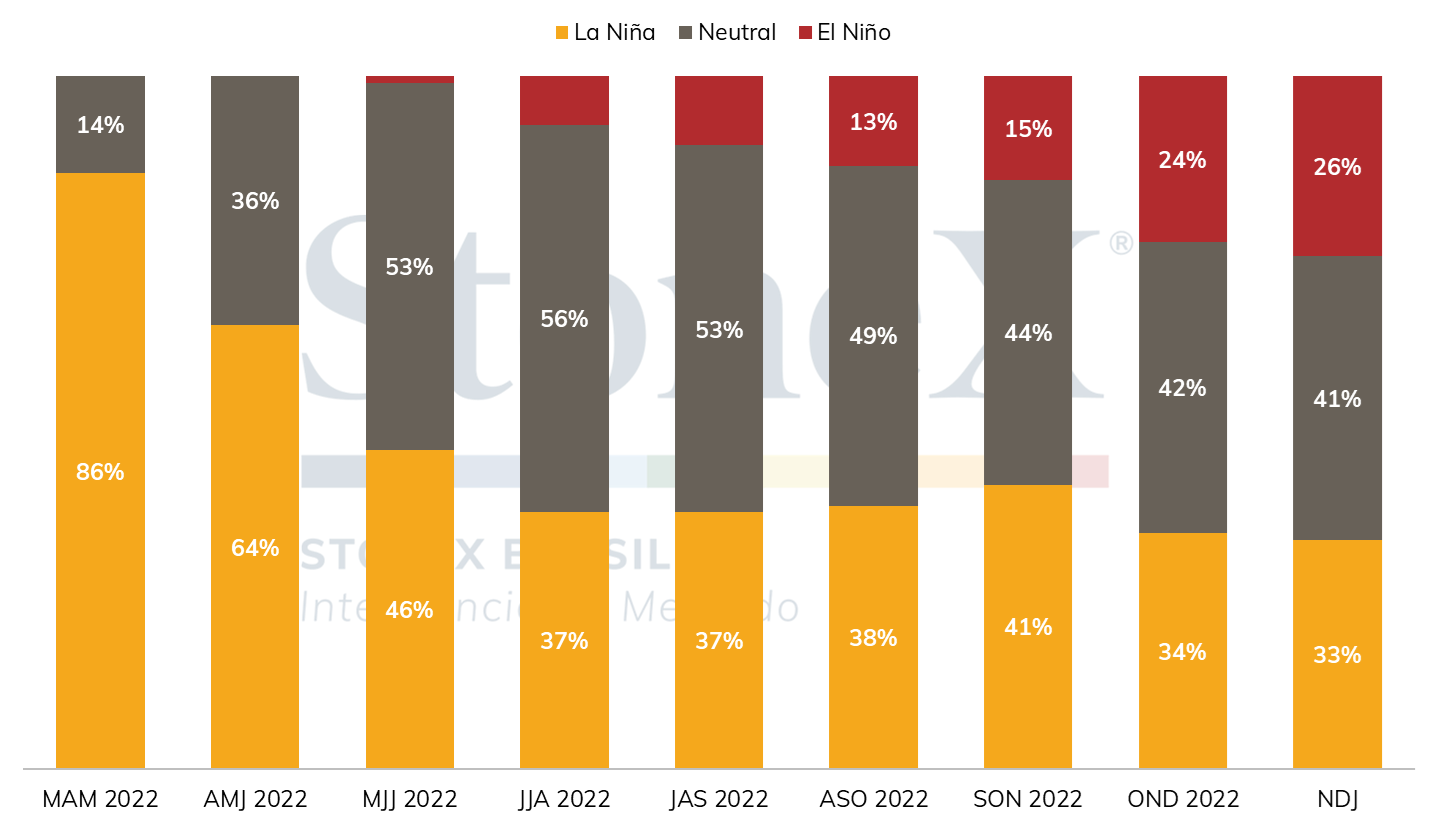
The excessive volume of rainfall in Colombia reflects the La Niña condition, which has affected the climate in the world since the second half of last year. Concerning this phenomenon, the great discrepancy in the models generates a feeling of uncertainty regarding this scenario. A few weeks ago, the NOAA model indicated that La Niña would end in early fall in the southern hemisphere. However, the probabilistic analysis released by the agency on March 10 showed a strong increase in the probability of La Niña to 53% between June and August. In the latest update released on 03/18, the models again pointed to the end of La Niña in the coming months, with the probability of La Niña between June-August dropping to 37%. The data from the Australian agency BOM, on the other hand, points to a neutral scenario starting in June. In addition to the problems of excess rainfall in Colombia, in Brazil, the occurrence of La Niña may be associated with a delay in the arrival of rainfall in the coffee belt in the second half of the year, which could be a problem for the development of the next harvest. Therefore, monitoring this situation becomes critical to anticipate weather conditions in the second half of the year.
Probability of El Niño/La Niña occurrence
Source: NOAA. Design: StoneX.
For Robusta, one factor that has positively impacted prices has been the new wave of Covid-19 infections in China. Following the increase in cases, the Chinese government has again taken measures to prevent the spread of the disease. Although China is not directly linked to the Robusta market, the concerns revolve around the possible impacts of this new wave in Vietnam. As in China, the Vietnamese government adopts strict policies to prevent the spread of the disease, which can cause problems in the country's supply chain, as already observed last year.
GCA: stocks at US ports down by 30,500 bags in February
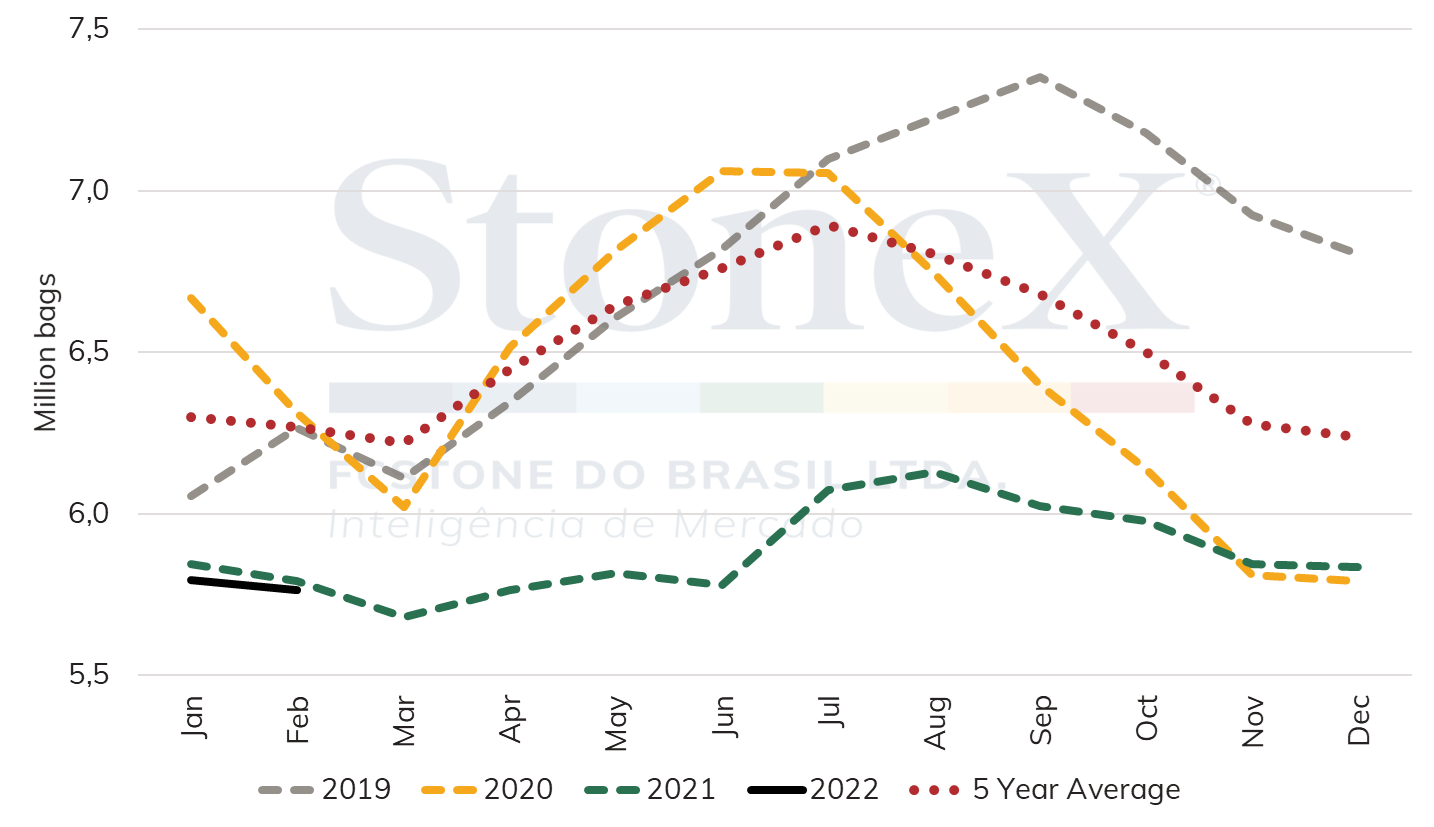
The latest report released by the Green Coffee Association on March 15 indicated that coffee stocks at US ports fell by 30,493 bags (0.5%) in February compared to the previous month to 5,765,348 bags. The volume observed in February is still 0.4% lower compared to stocks in the same month last year. The average stock level for February is 6,131,581 bags when stocks have advanced 63,000 bags on average over the past five years.
Coffee stocks at US ports (gca)
Source: GCA. Design: StoneX.
On March 15, GCA initially announced the advance of more than 357,000 bags, pulled mainly by the increase in stocks at the Jacksonville, Florida port. However, analysts disagreed and questioned GCA, which noted the error regarding Jacksonville stocks and released adjusted figures in February.
BRL continues to benefit from the search for commodity-related assets
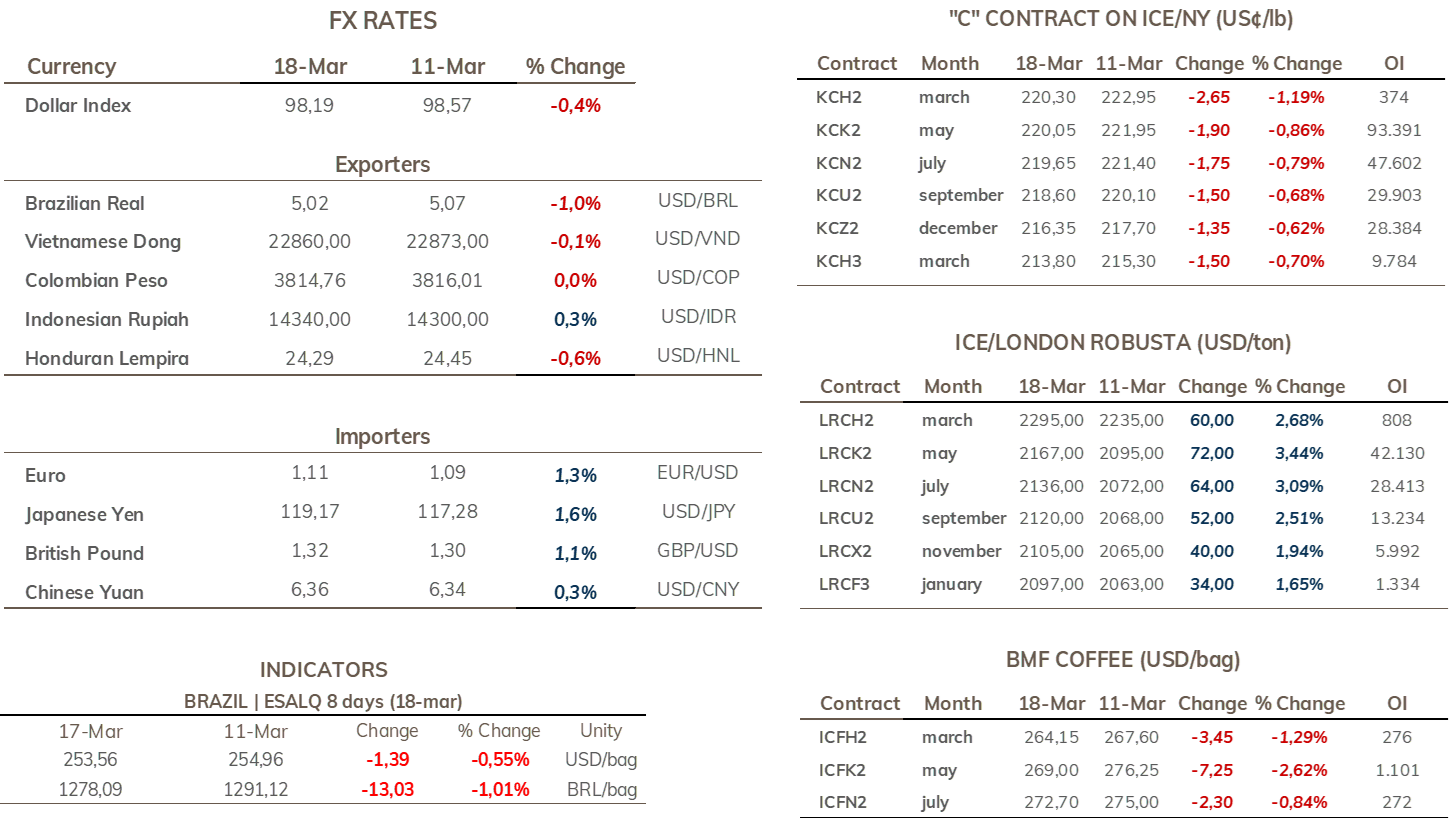
Still supported by the movement of the search for Brazilian assets related to commodities and the new increase in the basic interest rate (Selic) in the country, the Brazilian real appreciated again last week. However, the real/dollar pair dropped 0.7% in the period, ending Friday (18) quoted at BRL 5.017. In the foreign scenario, the US currency followed a similar direction. It retreated against a basket of currencies of advanced economies, pressured by signs of small advances in negotiations between Russia and Ukraine to end an armed conflict that, despite no concrete definition, generated a reduction in risk aversion among investors. Thus, the dollar index registered a drop of 0.9%, closing quoted at 98.2 points.