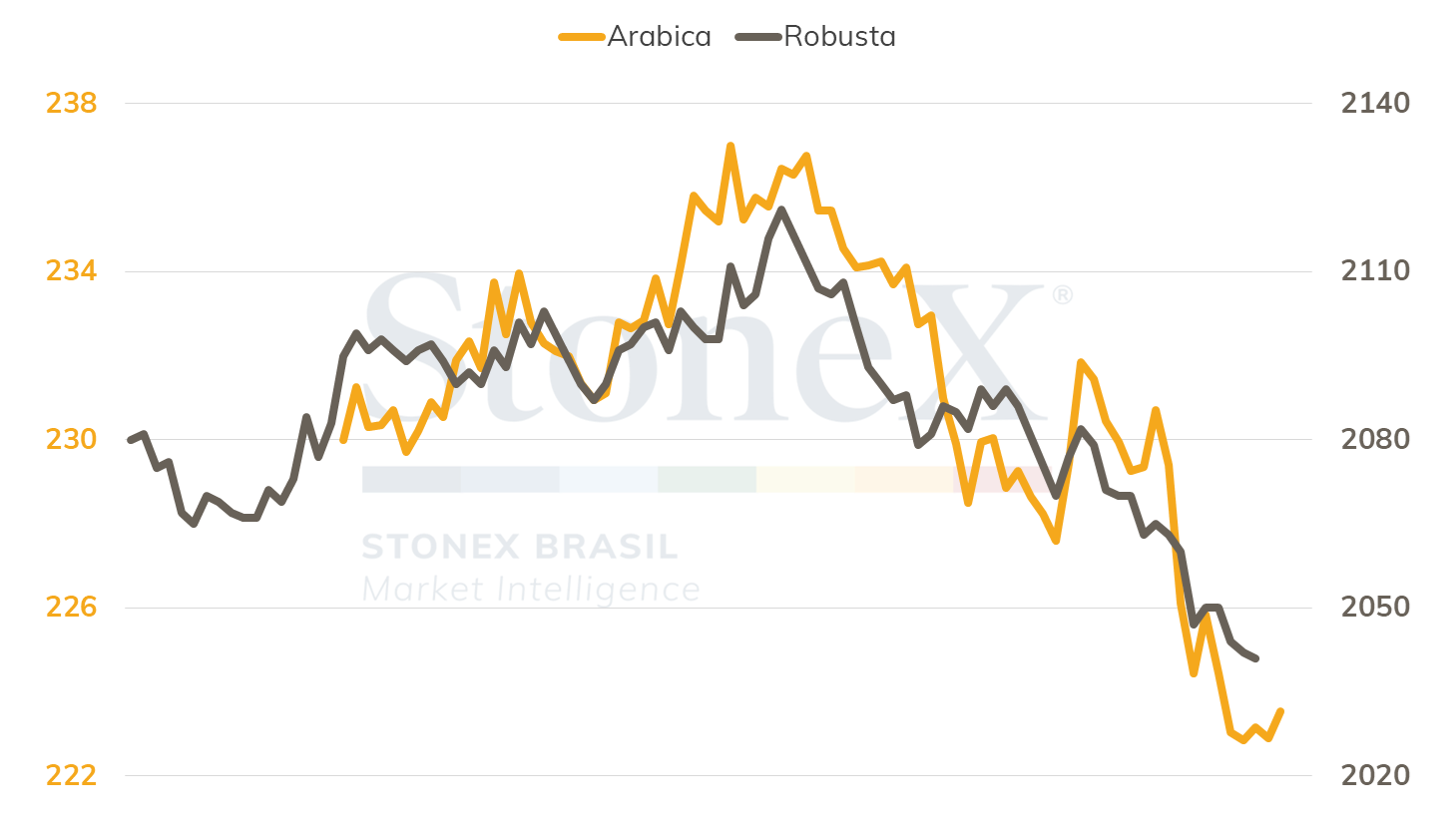
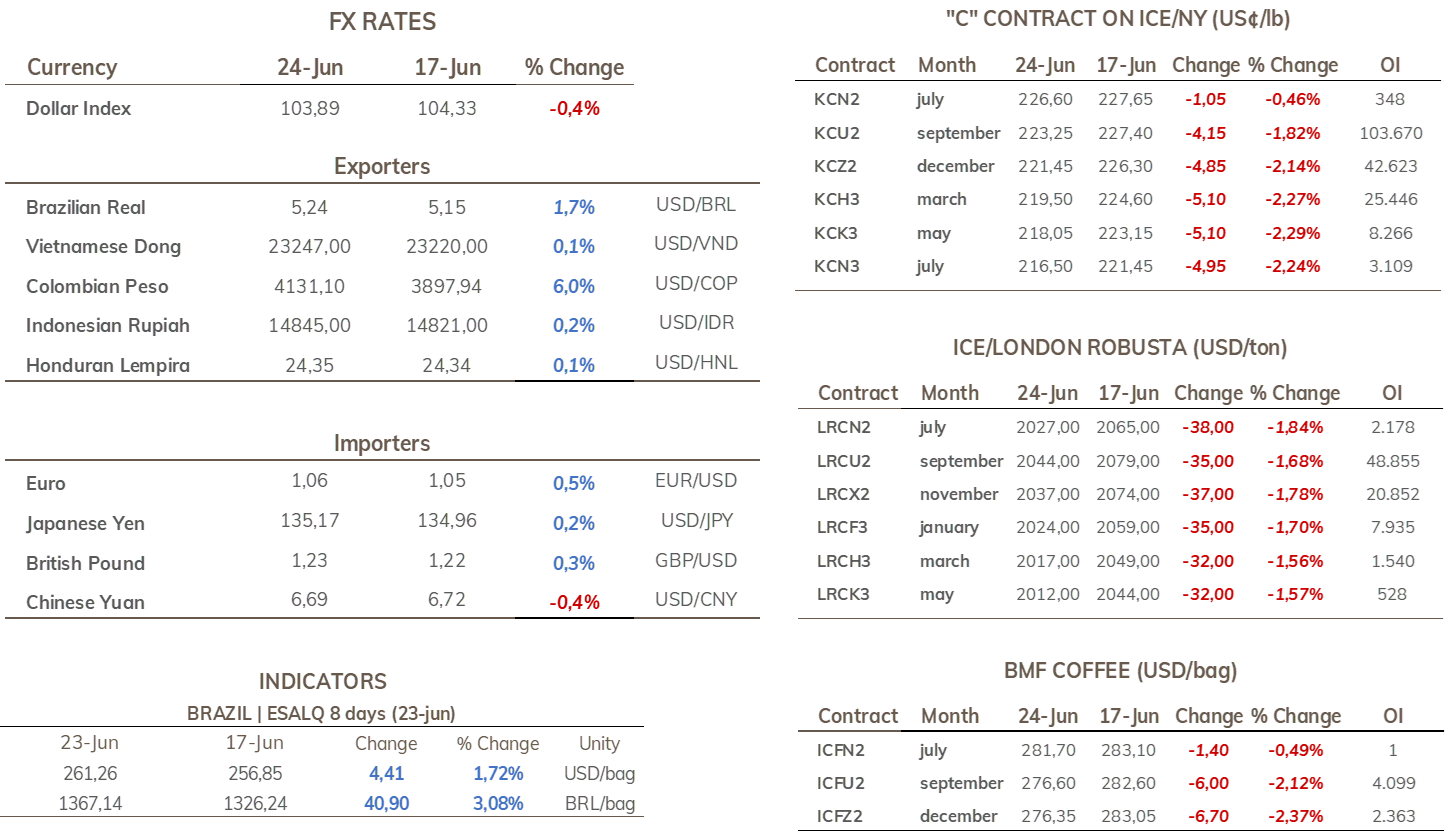
Despite the losses in New York, with the advance of the USDBRL, the Arabica coffee prices paid to the Brazilian producer ended the week HIGHER. The Cepea’s Arabica indicator ended the week quoted at BRL 1351.56/bag, high by 1.9%. On the other hand, Cepea’s Robusta indicator ended high by 1.0% to close at BRL 698.25/bag.
During the week, market participants should analyze and interpret the USDA's data last week, indicating a surplus of almost 8 million bags for 2022/23. In addition, the attention will be turned to the data on coffee exports, which will start to be released at the end of this week and next week. Furthermore, possible further falls in certified coffee stocks should contribute bullishly to market direction.
USDA’s S&D balance estimate was in line with CoffeeNetwork/StoneX figures released the day before
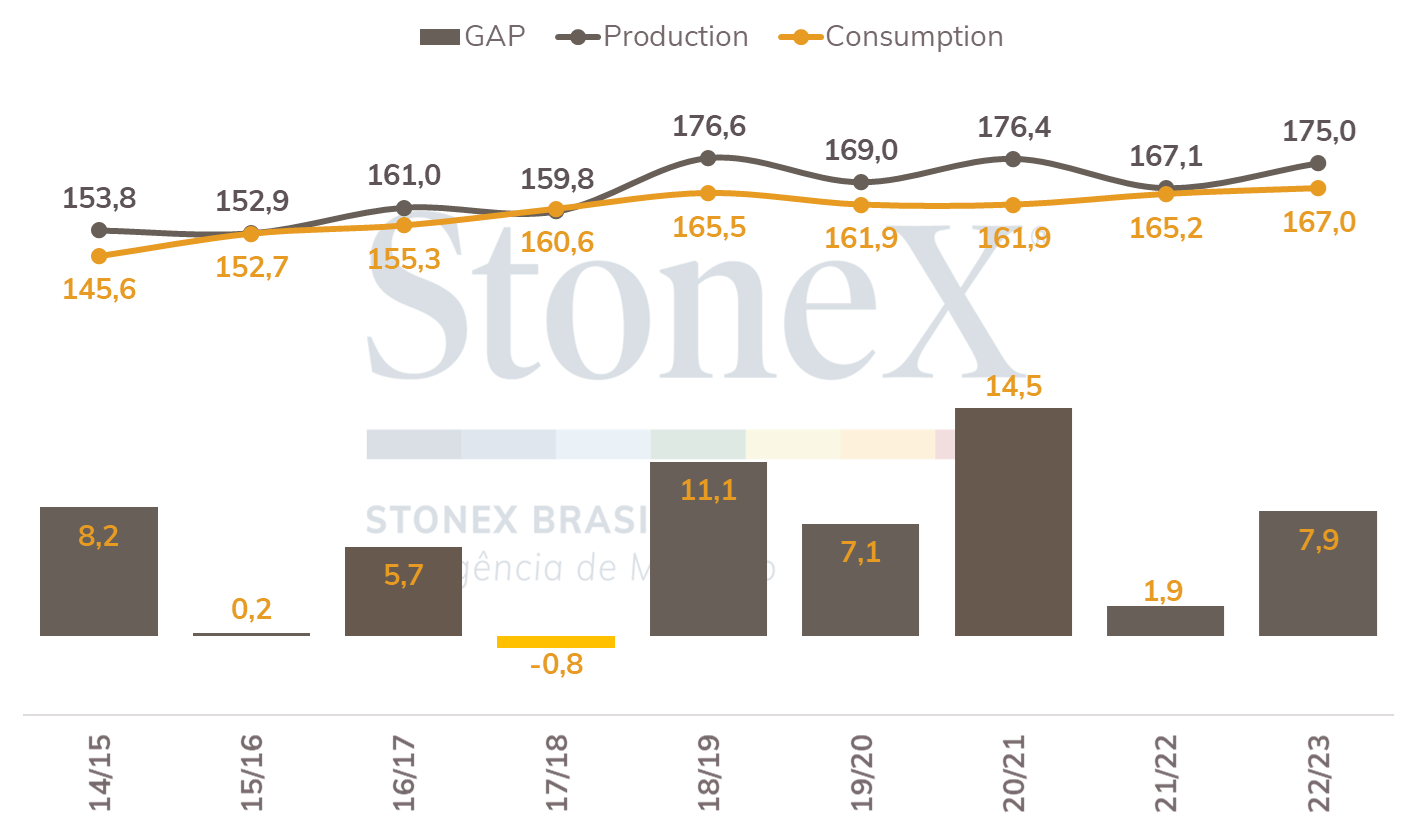
Last week, the USDA released on June 23 its global coffee report, which indicated its expectations for the S&D balance in 2022/23. The report indicated that the S&D balance is expected to have a surplus of 7.9 million bags in 2022/23, a figure in line with the CoffeeNetwork/StoneX report, which was published on June 22 and indicated a surplus of between 5 and 8 million bags.
USDA estimates for the global supply and demand balance (million bags)
Source: USDA. Design: StoneX.
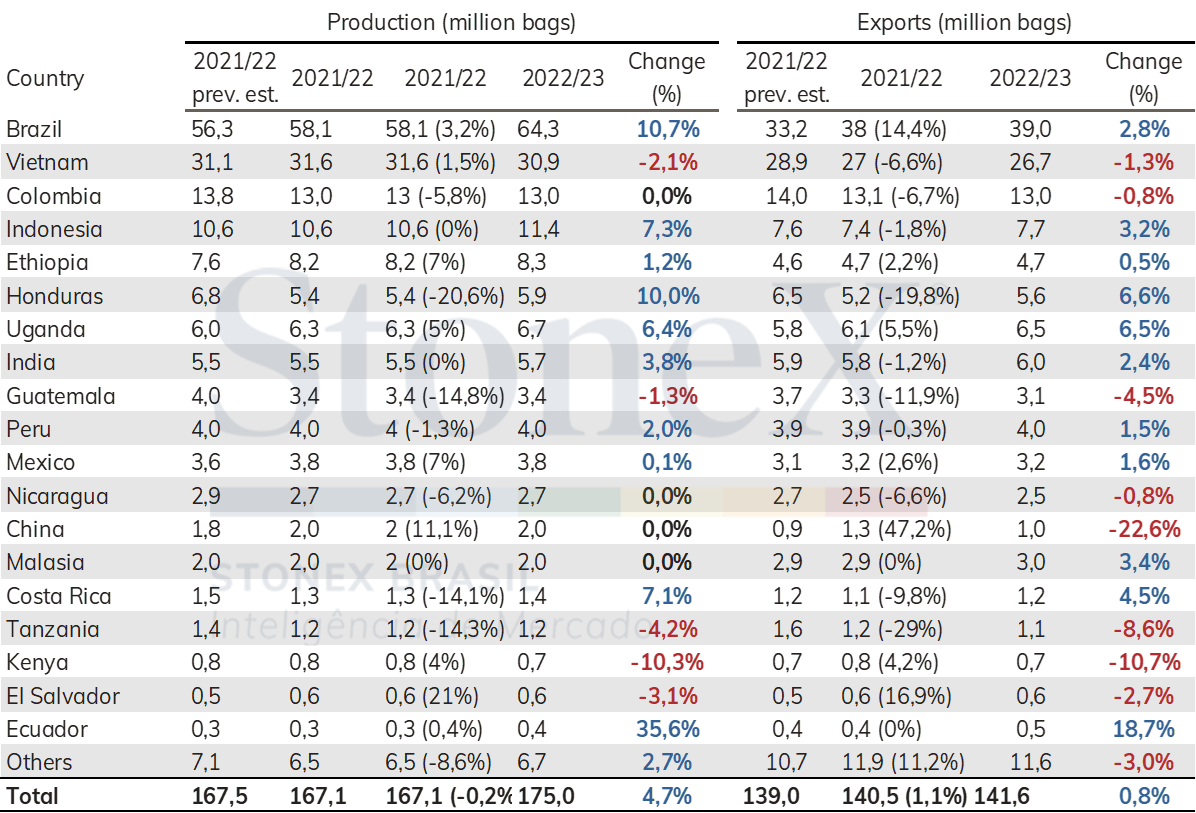
According to the USDA, world coffee production is expected to increase by 4.7% in 2022/23 to 174.95 million bags, supported mainly by increased production in Brazil, Indonesia, Honduras, Uganda, and India. As a result, world exports should increase by 0.8% to 141.6 million bags and consumption by 1.1% or 1.8 million bags to 167.4 million bags.
Summary of estimates from USDA Attaché reports
Source: USDA. Design: StoneX.
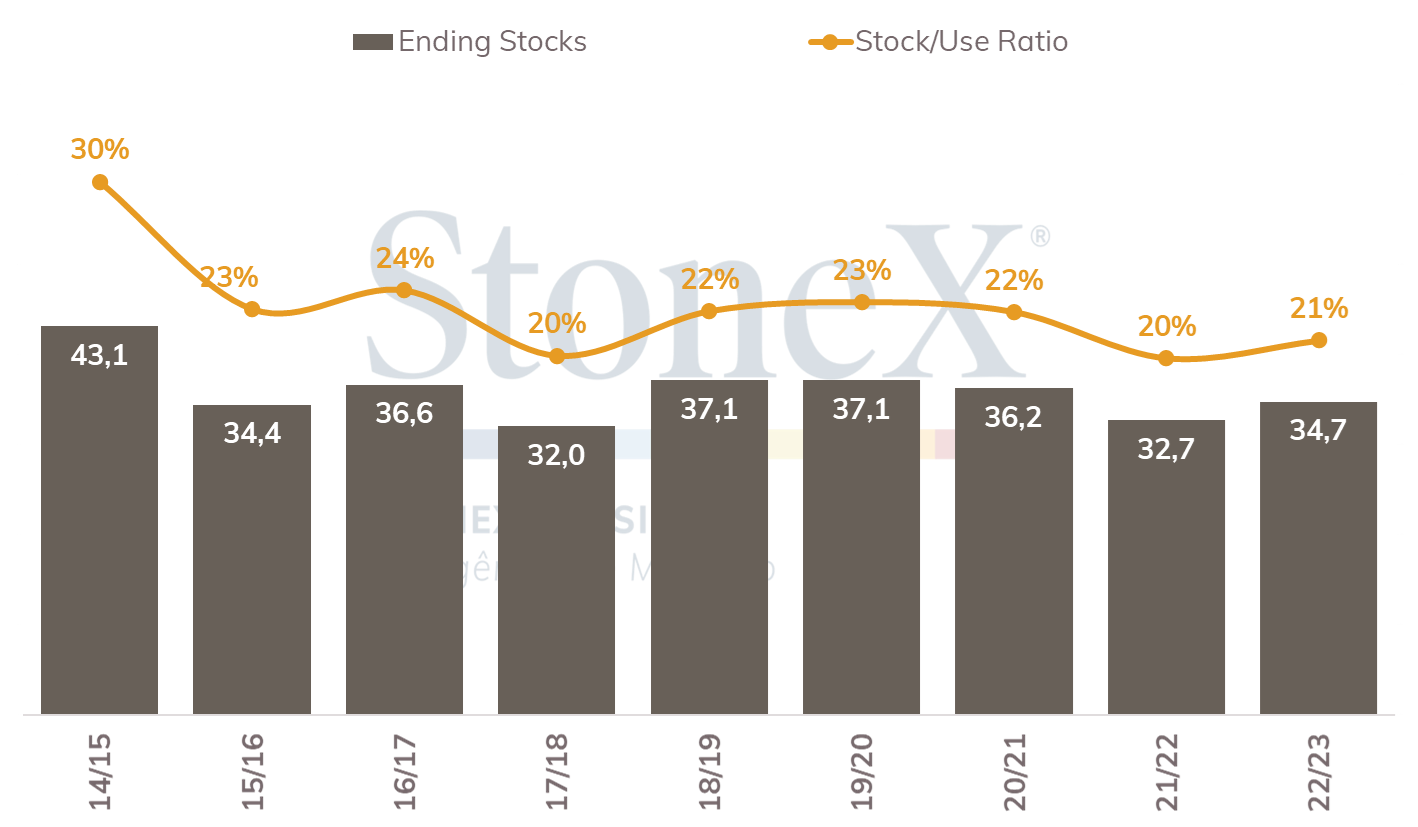
Also, according to the USDA, global ending stocks are expected to advance by 2 million bags (6.3%) in 2022/23 to 34.7 million bags. With a stronger increase in stocks compared to the advance in consumption, the stock-to-use ratio is expected to advance to 21% in 2022/23 from 20% in 2021/22.
Evolution of world ending stocks and stock/use ratio (%)
Source: USDA. Design: StoneX.
USDBRL appreciation continues to weigh on coffee prices
Last week, the USDBRL appreciated the fourth week in a row. The USDBRL closed Friday's (24) session at BRL 5.25, accumulating a 10.5% advance in June. Despite the persistence of the global risk aversion environment, the dollar index retreated by 0.6% in the week to close at 103.9, in an adjustment movement after renewing its highs this month in almost 20 years.
The global outlook remains unchanged, with fears of an economic recession increasingly dominant among investors, while high-frequency economic indicators have not been showing progress as expected, increasing the chances that the measures needed to control inflation will interrupt, at least in the short term, the growth of the global economy.
Markit's release of the PMI forecasts contributed to the perception of a reduction in the pace of economic activity growth last week. For the United States, the consolidated PMI forecast, which weights the indicator for industry and services, pointed to a performance of 51.2 points in June. For the United States, the consolidated PMI forecast, which weights the indicator for industry and services, pointed to a performance of 51.2 points in June. In addition, Markit divulged that the consolidated PMI was 51.9 points for the eurozone, the lowest number since February 2021, when the region registered a contraction result of 48.8 points.
The agents also followed the statements of Jerome Powell, chairman of the Federal Reserve, to the US Congress during the week. As highlighted in the FX Weekly Report, Powell set a very strict scenario for the conduct of monetary tightening by the central bank, stating that the institution's commitment to fighting inflation is "unconditional" and that interest rates will be raised to a restrictive level quickly and that an economic recession is "certainly a possibility."
In Brazil, the focus should continue mainly on the political scenario, which has increased the flight of foreign currency from the country. The noise generated by the resignation of the president of Petrobras last week has raised concerns about the government's interference in the company's pricing policy. In addition, the frequent public statements of the President of the Republic and legislative leaders against the price parity policy adopted by the state-owned company and the decisions of changes in management positions at the company usually contribute to the apprehension of investors in the country and harm the foreign exchange market.
Besides this, the agents must follow the change of strategy of the government, which abandoned the proposals to zero the state taxes on fuel, a theme that had been worked on for weeks, to follow with a proposal to extend the benefits of the Auxílio Brasil and Auxílio Gás, and a voucher for truck drivers.
According to Senator Fernando Bezerra (MDB-PE), the proposal's rapporteur, the new initiatives will be valid until the end of 2022. They would have a financial impact of BRL 39.8 billion for the Union. The current government's measures, expanding spending and disrespecting the spending cap law on the eve of presidential elections, raise the perception of fiscal risk in the country and contribute to a greater demand for risk premiums by investors, which tends to drive investors away from Brazil.