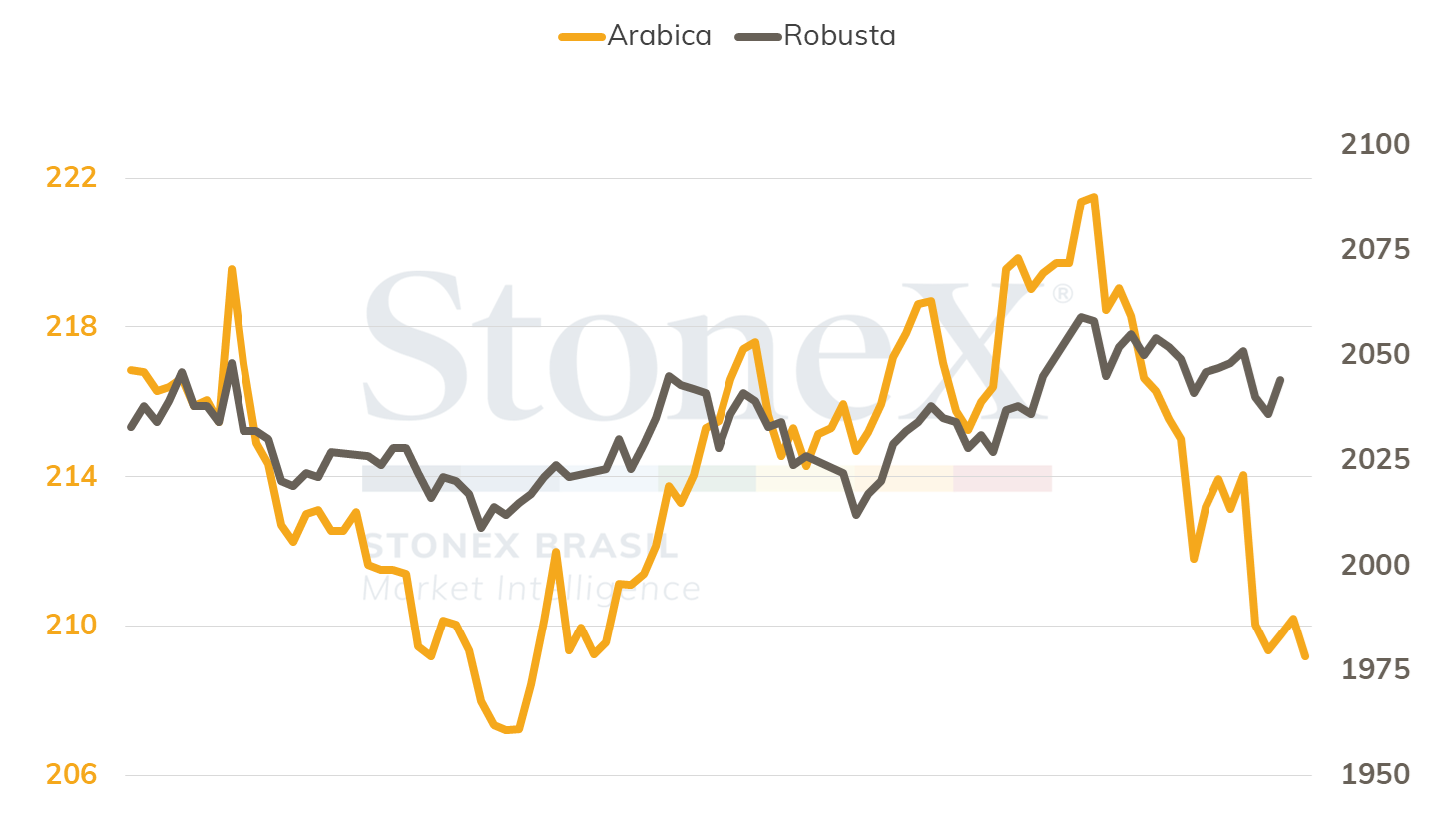
Following the trend observed in the international market, the week was quite volatile for prices, with the prices of Arabica coffee in the Brazilian domestic market ending the week lower. Cepea’s Arabica indicator ended the week at BRL 1,261.57/bag, a decrease of 3.0%. On the other hand, Cepea’s Robusta indicator ended higher by 0.5% to close at BRL 719.22/bag.
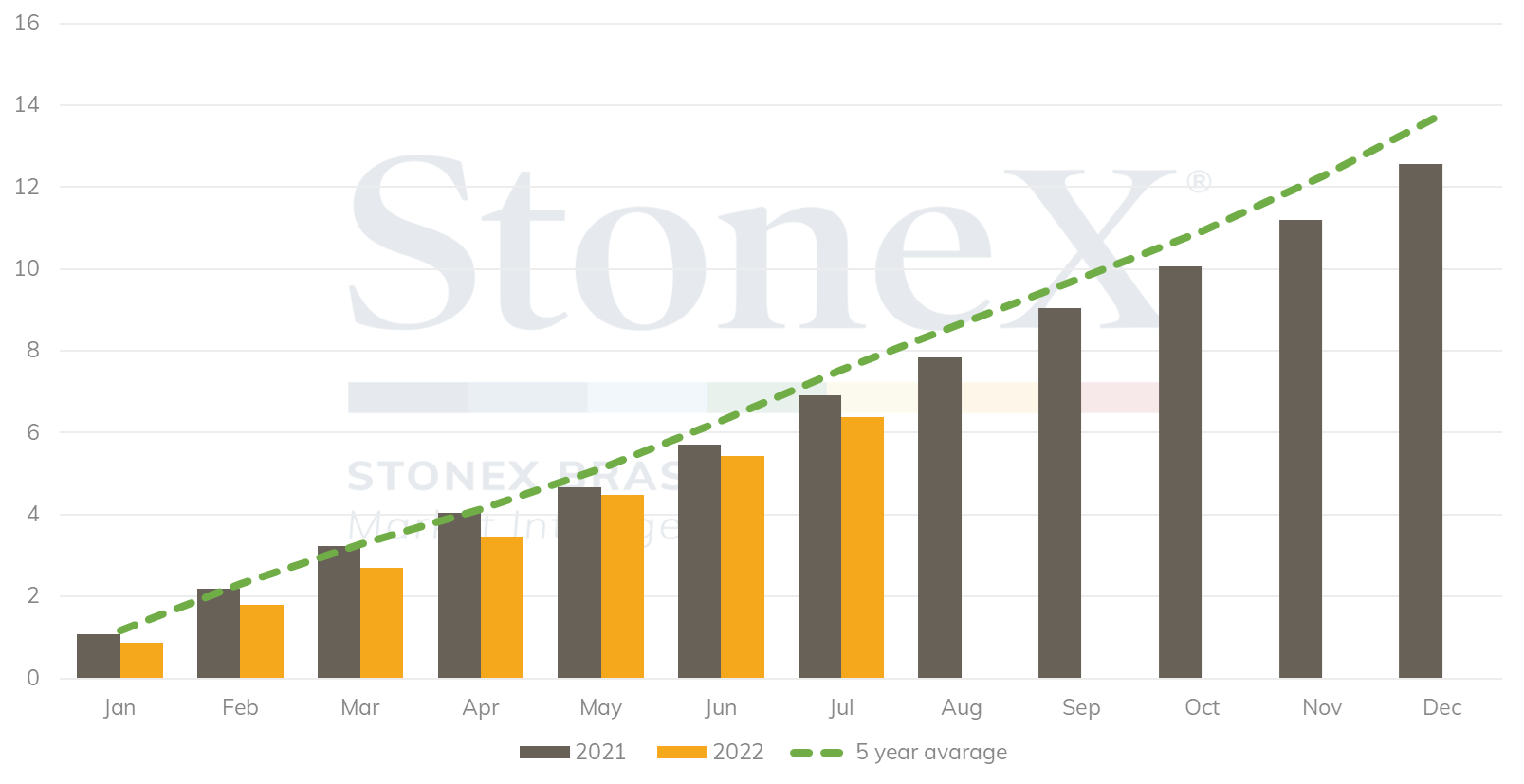
While issues related to global demand remain under great uncertainty and present greater difficulties to be monitored frequently, the agents followed the signs of lower availability of mild coffee in the market during the week. In addition to the drop in certified stocks, a supporting factor in recent weeks, significantly weaker export data in Colombia and Honduras highlights the lower supply of higher quality standards coffees. Data from the Colombian Coffee Growers Federation (FNC) showed that production in July totaled 944,000 bags, a significant drop of 22.0% from the 1.209 million bags recorded in the same month last year. In cumulative terms, Honduras has produced 6.372 million bags in the first seven months of the year, 8.0% below last year (6.9 million) and 15.5% below the average of the last five years (7.5 million).
Colombia's coffee acumulated production (million bags)
Source: FNC. Desiogn: StoneX.
Difficulties due to adverse weather faced by Colombian coffee growers have also impacted production in Honduras. According to the Honduran Coffee Institute (Ihcafe), exports from the fifth largest global coffee producer accounted for 409,000 bags in July, down 38.1% compared to the same month in 2021. According to the Institute, the lower shipments reflect the weaker production that, in the case of Honduras, has been affected by rust.
This week, besides the attention of agents continuing on macroeconomic and exchange rate factors, certified stocks and weather in Brazil, the market will keep an eye on Brazilian export data, which should be released in the coming days.
Although the trajectory of consumption is still uncertain, the companies’ results indicate a positive scenario
Since the pandemic's beginning and more recently, much has been said about the possible impacts of macroeconomic factors on coffee consumption. Although it has proven to be quite resilient and inelastic, a possible drop in demand for the beverage has started to be emphasized in market analyses, given the unique conditions of the current pandemic, economic crisis, and war scenario. Therefore, to study the issues related to consumption, besides the follow-up of stocks, exports and imports, it is necessary to follow the financial results of the companies linked to the sector.
Recently, JDE Peets' financial results for the first half of 2022 were released, which indicated a 19.7% increase in sales revenues to a total of 3.896 billion euros. Furthermore, Keurig Dr Pepper, a company also active in the coffee sector, indicated a 13.2% increase in total sales revenues in the year's second quarter, to a total of $3.55 billion. Also, according to Keurig Dr Pepper, sales revenues of the company's coffee-related products (Coffee Systems) had an 8.5% increase to $1.2 billion.
US coffee imports increased 18% in June
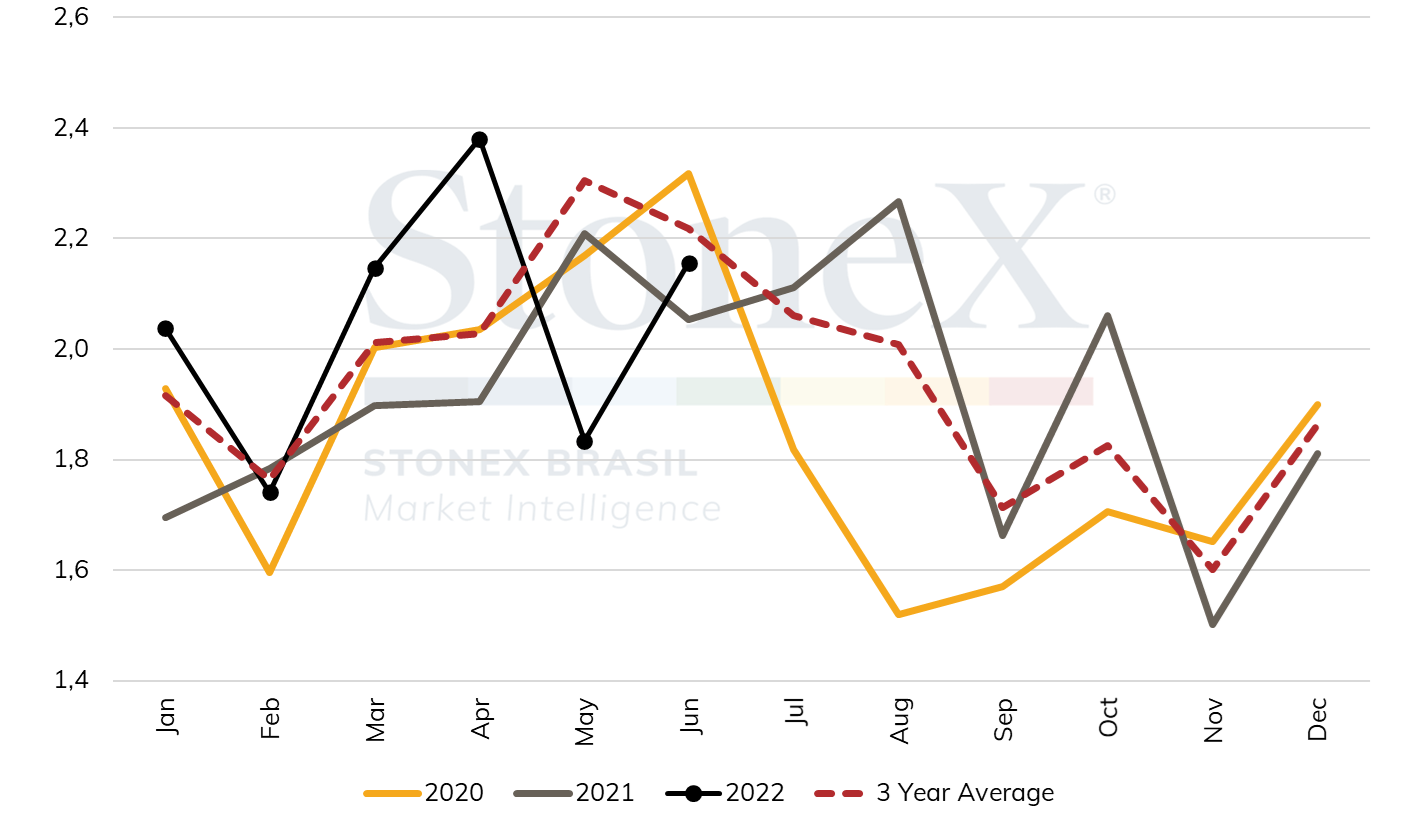
Data released last week by the USDA indicated that coffee imports in June totaled 2.155 million bags, an increase of 18% compared to the previous month and 5% compared to June 2021. Considering the cumulative volume, the US imported 12.3 million bags in 2022, an increase of 6.5% compared to last year.
US coffee imports seazonality (million bags)
Source: USDA. Design: StoneX.
When we analyze the estimates of demand at the ports, which balances the coffee coming in through imports and the coffee remaining at the ports, through the GCA, the scenario is not so different. The data show a 21.5% increase in the indicator in June compared to May and a 1% increase compared to June 2021. As a result, the accumulated number for 2022 (Jan-Jun) totaled 12.1 million bags, 4.5% higher than last year.
Apprehension in the macroeconomic scenario remains bearish for coffee futures
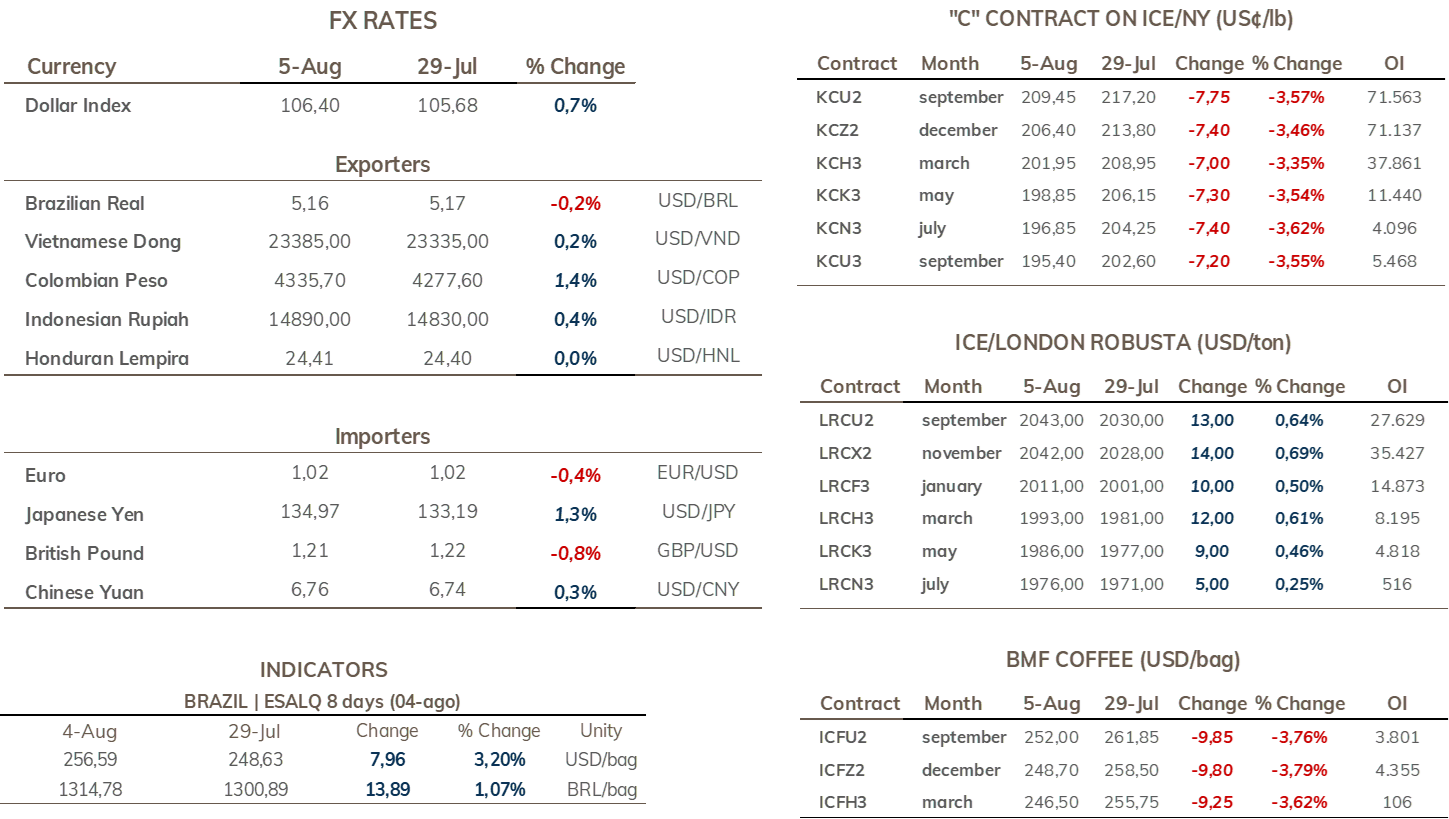
After oscillating without a defined trend, the USDBRL closed last week near unchanged, quoted at BRL 5.169, a marginal decrease of 0.1%. In the foreign scenario, the dollar index advanced 0.6%, closing at 106.4 points.
Abroad, the week was marked by a realignment of expectations for monetary policy in the United States, in addition to other events and announcements that contributed to increasing risk aversion in global markets and attracting investment in dollar-denominated assets in the American market. Both, in different ways, tend to crowd out investments in riskier currencies and commodities in general. As a result, the CRB index, composed of a basket of energy, food, and metal commodity futures featuring coffee, marked a 3.7% drop from the previous Friday (29).