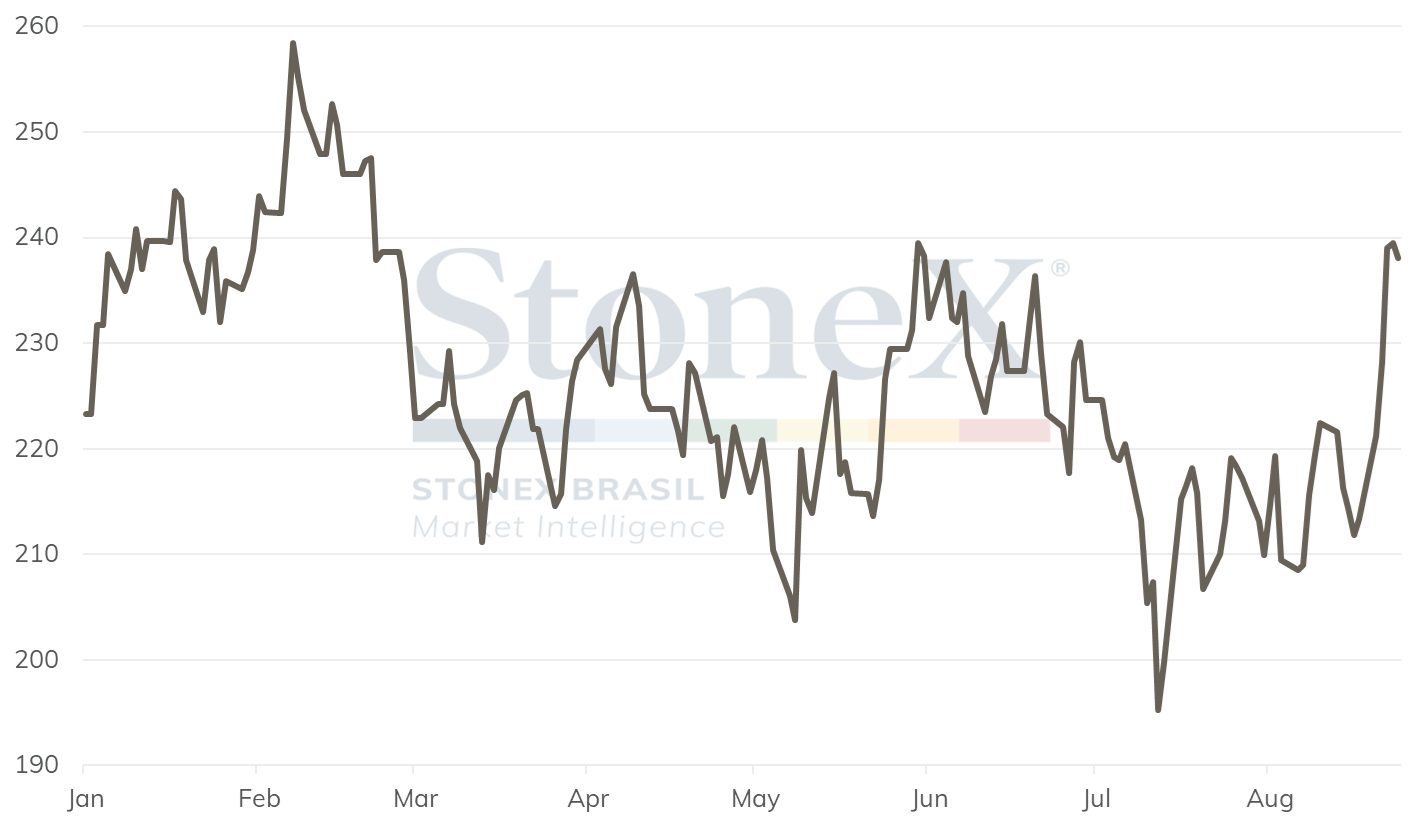
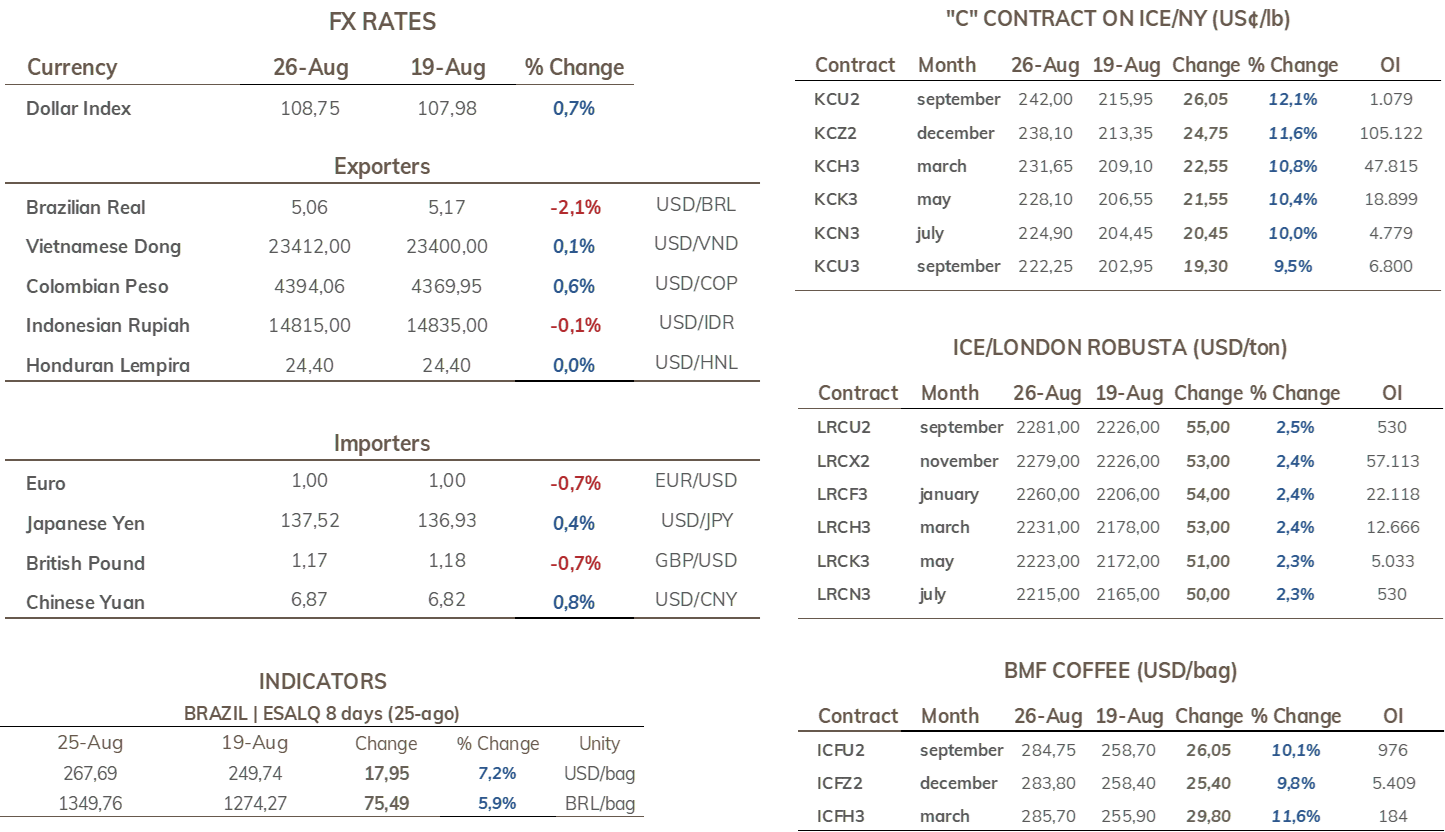
Following the trend observed in the international market, the prices of Arabica coffee in the domestic market ended the week with a strong increase, but with less intensity, due to the USDBRL depreciation. Cepea’s Arabica indicator ended Friday (19), quoted at BRL 1,351.64/bag, an increase of 5.95%. On the other hand, Cepea’s Robusta indicator ended high by 1.3% to close at BRL 747.21/bag.
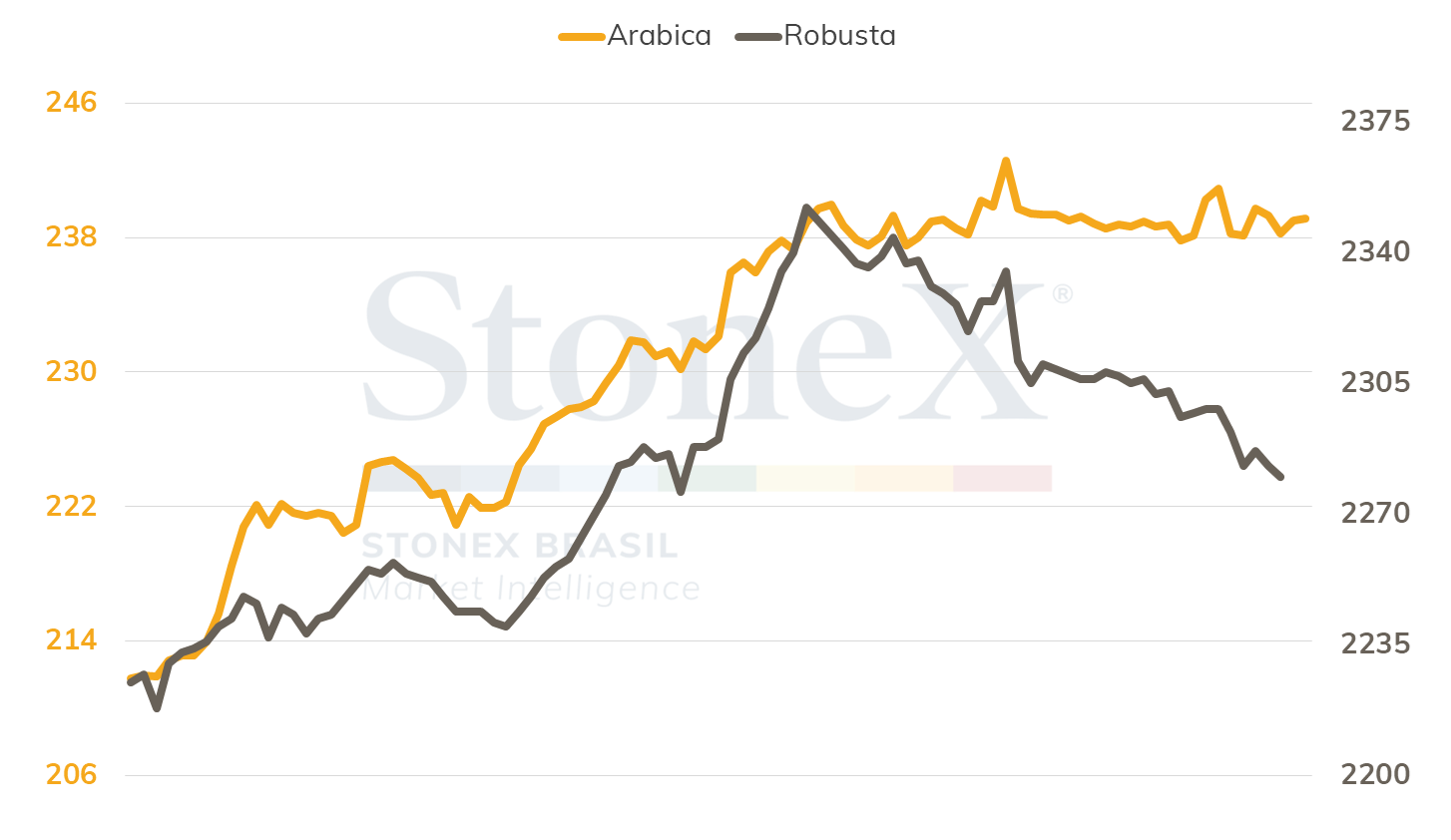
Coffee trend in 2022 - New York
Source: ICE. Design: StoneX.
As already presented in other editions of this report, the US NOAA attributes a high probability for the maintenance of La Niña until the end of the year, which may impact the rainfall in the coffee belt during the second half of the year, the period when the flowering of coffee occurs, a critical moment for the development of the next crop in Brazil. The weather in the country has been a concern for agents since the rainfall volume has been well below average in the last 60 days in Minas Gerais, as seen in the anomaly map.
Part of the market reaction this week was linked to the precipitation forecast models, which still indicated dry weather for the next few days. However, today's StoneX precipitation forecast report indicated important rainfall volumes starting September 6 and 7, which may cool the agents' worries and, if it occurs, contribute to the development of flowering. It is important to mention that a continuous rainfall regime is necessary for a successful blooming, and drought after the first rains has great potential for damage.
Another factor that has drawn agents’ attention is the possibility of a shortfall in the current Brazilian coffee crop. Many players, including cooperatives, have indicated that the Arabica coffee production in the Cerrado, Sul de Minas and Mogiana regions would be below expectations. The scenario of an even lower production, which is already below potential due to frost and dry weather, further accentuates concerns about the supply of coffee in the current crop year and acts high on coffee prices.
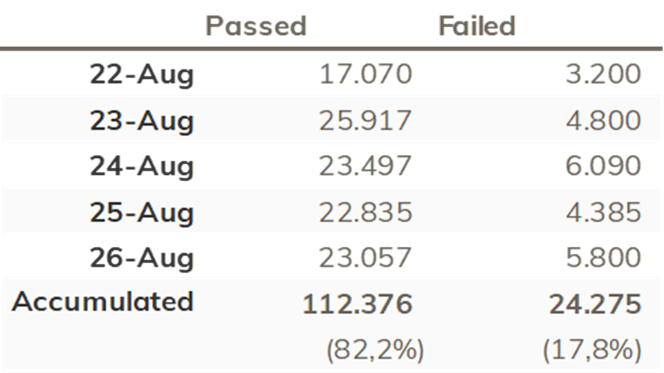
Oscillations in certified stocks also tend to continue as a sensitive topic in the sentiment of market participants. On the New York futures market, Arabica coffee stocks ended Friday with a weekly increase of 48,000 bags (7.9%), reaching 658,000. The strong variation in coffee pending to be graded, which registered a reduction of almost 96 thousand bags (-41.9%) to 132 thousand, was noteworthy. However, a total of 136.6 thousand bags were sent for grading to be incorporated into stocks during the period. Of these, 82.2%, or 112 thousand bags, were approved, the main reason for increases in official stocks, while 17.8%, or 24 thousand, were disapproved. Considering that 112 thousand bags were approved, but the stock increase was only 48 thousand, we can conclude that while 112 thousand bags were being included, a large volume was withdrawn from certified stocks.
Grading of coffees on the exchange’s certified Arabica coffee warehouses
Source: ICE. Design: StoneX.
In the coming days, the attention will turn to the export data of the countries, which will be released in the next two weeks. In addition, the market will keep an eye on Brazil's weather and certified Arabica coffee stocks. In addition, macroeconomic factors, including the Brazilian currency and concerns about the global economy, may contribute to coffee price volatility.
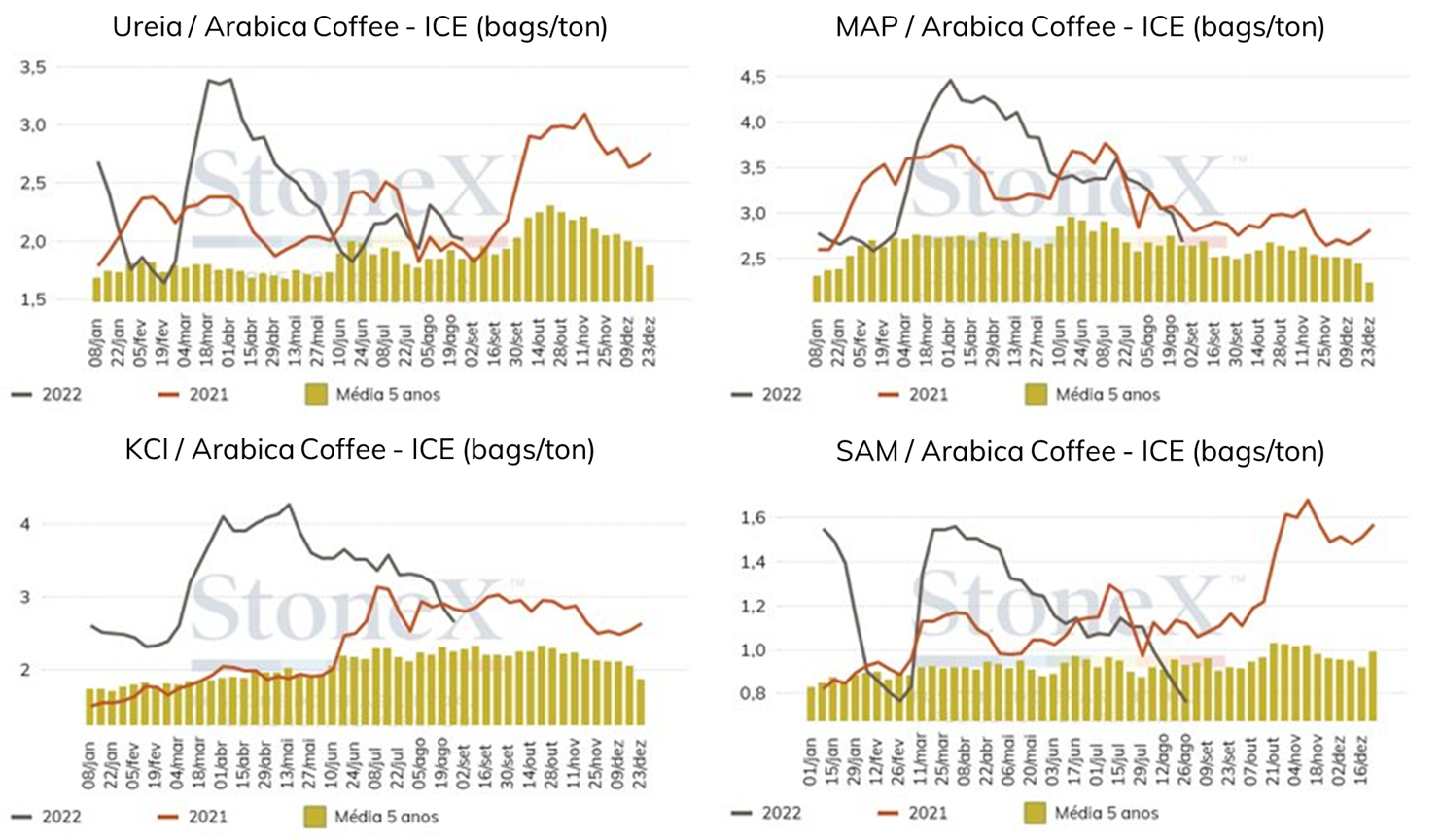
Fertilizer/coffee exchange ratio retreated in recent weeks
In addition to concerns about the weather, the fertilizer issue has great relevance in the second half of the year since coffee fertilization is concentrated in this period of the year. Furthermore, after the outbreak of the Russian-Ukrainian war, many doubts have been raised regarding the availability and price of fertilizers in Brazil. However, the exchange ratio – an indicator of how many coffee bags are necessary for the acquisition of 1 tonne of fertilizers – of Urea, Potassium Chloride, and MAP are still above the average of the last five years but close to or below the level observed last year and in better conditions than the levels observed in the first semester.
Coffee/Fertilizer exchange ratio (bags/TMT)
Source: StoneX. Design: StoneX.
SAM has an exchange ratio below that observed in 2021 and below average in the last five years. Therefore, as we can see, ratio levels for most fertilizers are still above average but far from historical highs. This indicates that, despite the not-so-favorable scenario, crop fertilizer levels should be maintained if this condition remains.
Despite greater risk aversion in the world, the Brazilian real strengthens during the week
Going against the majority of the global currencies, the USDBRL ended last Friday (26) lower in the Brazilian exchange market, supporting the strong increases in coffee prices during the week. The real/dollar pair registered a weekly drop of 1.7%, ending the week quoted at BRL 5.079, the lowest value in the last two weeks. On the other hand, the dollar index increased by 0.6% to close at 108.8 points, renewing in the last sessions its highest levels in nearly 20 years.