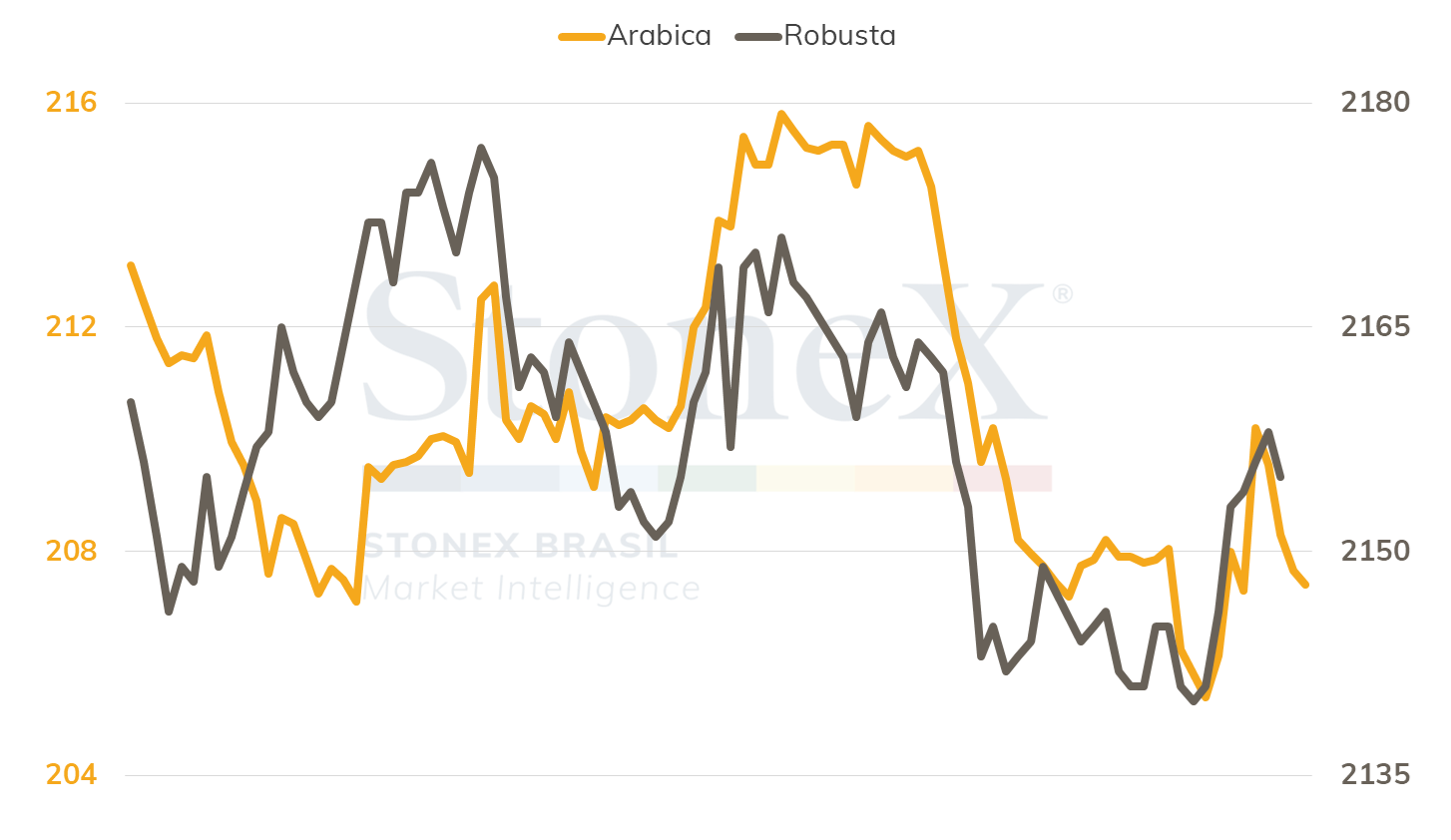
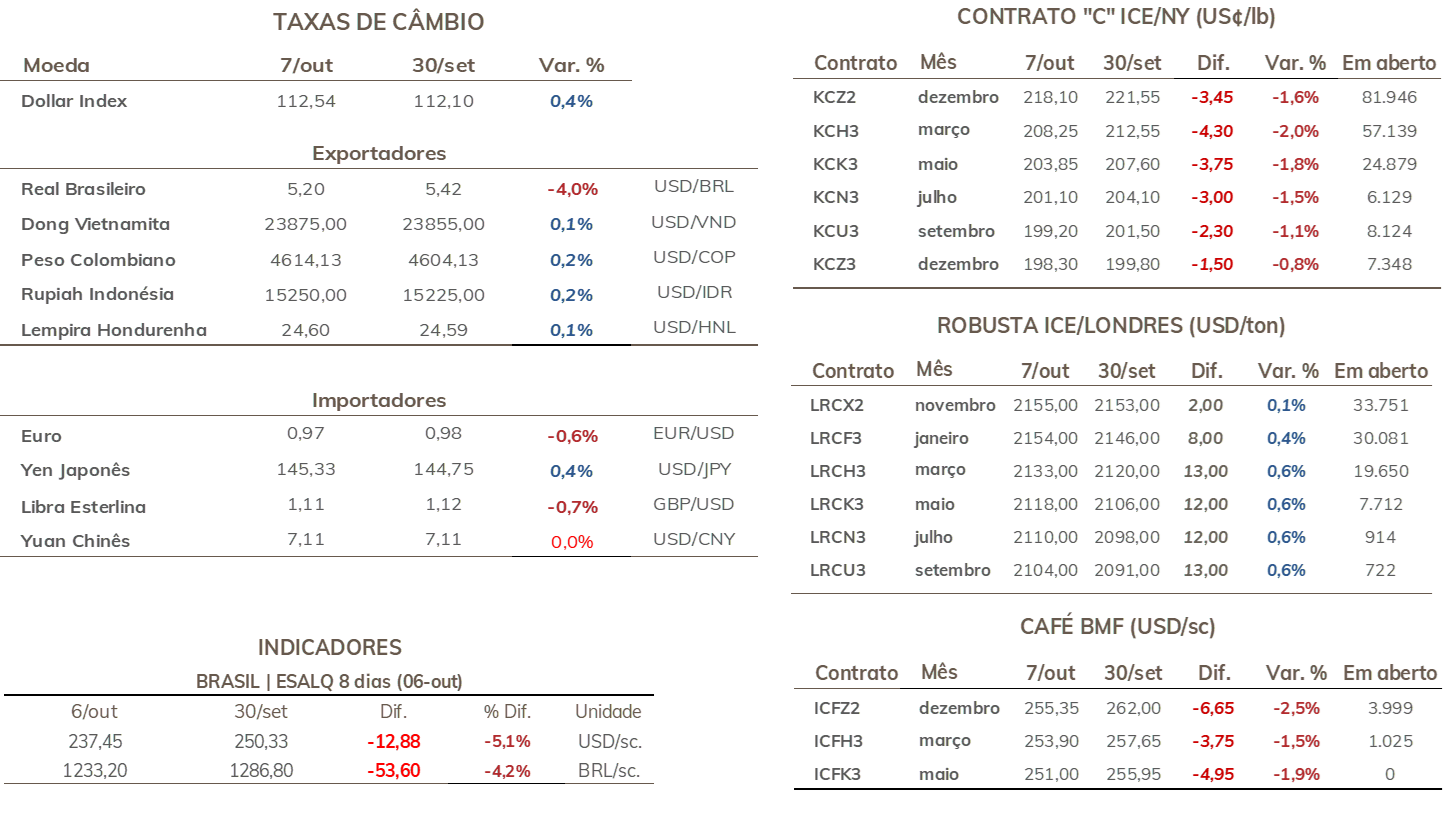
In Brazil, Cepea’s Arabica indicator fell 4.5% and ended the week quoted at BRL 1,229.18/bag, reacting to the fall in New York and the sharp drop of the dollar. Following the trend of Arabica coffee, Robusta coffee saw a 5.5% drop, closing Friday quoted at R$696.75/bag.
Last week, certified stocks of Arabica coffee fell by 9,461 bags (2.2%) to 416,700 bags, the lowest volume in more than 23 years. Certified stocks are related to the level of coffee differentials in the origins, so stronger differentials discourage the certification of new coffees, as in the current scenario.
The Robusta market continues to follow Vietnamese coffee exports. According to the country's customs, exports in September totaled 1.54 million bags, a drop of 17.8% compared to the previous month and 7.8% compared to September 2021.
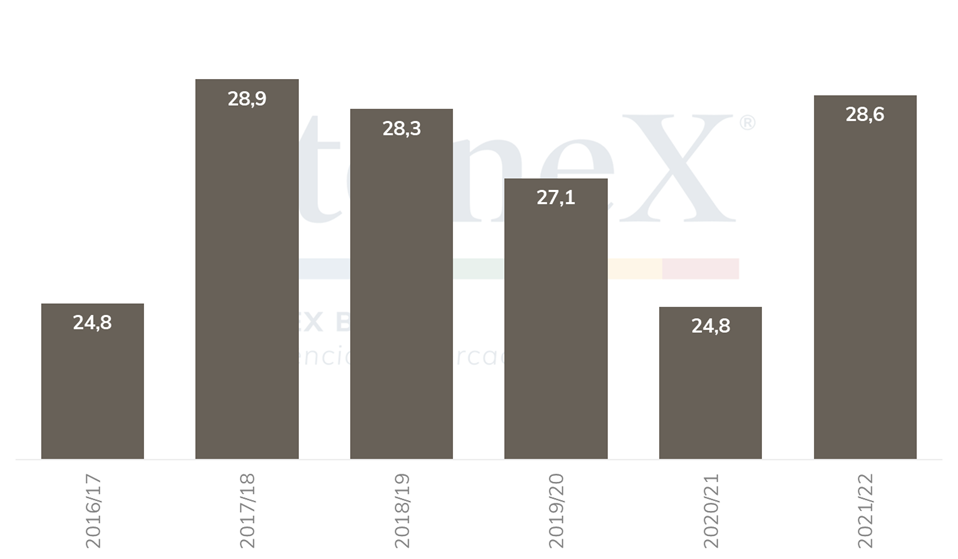
However, considering the crop year (Oct-Sept), the country exported 28.6 million bags, a volume 15.4% higher than the total exported during the previous crop year, which totaled 24.7 million bags. In addition, the decline in exports occurs while the country is still in its inter-crop period, with the next harvest scheduled to begin in mid-November.
Evolution of coffee exports by Vietnam (million bags)
Source: Vietnam Customs. Design: StoneX.
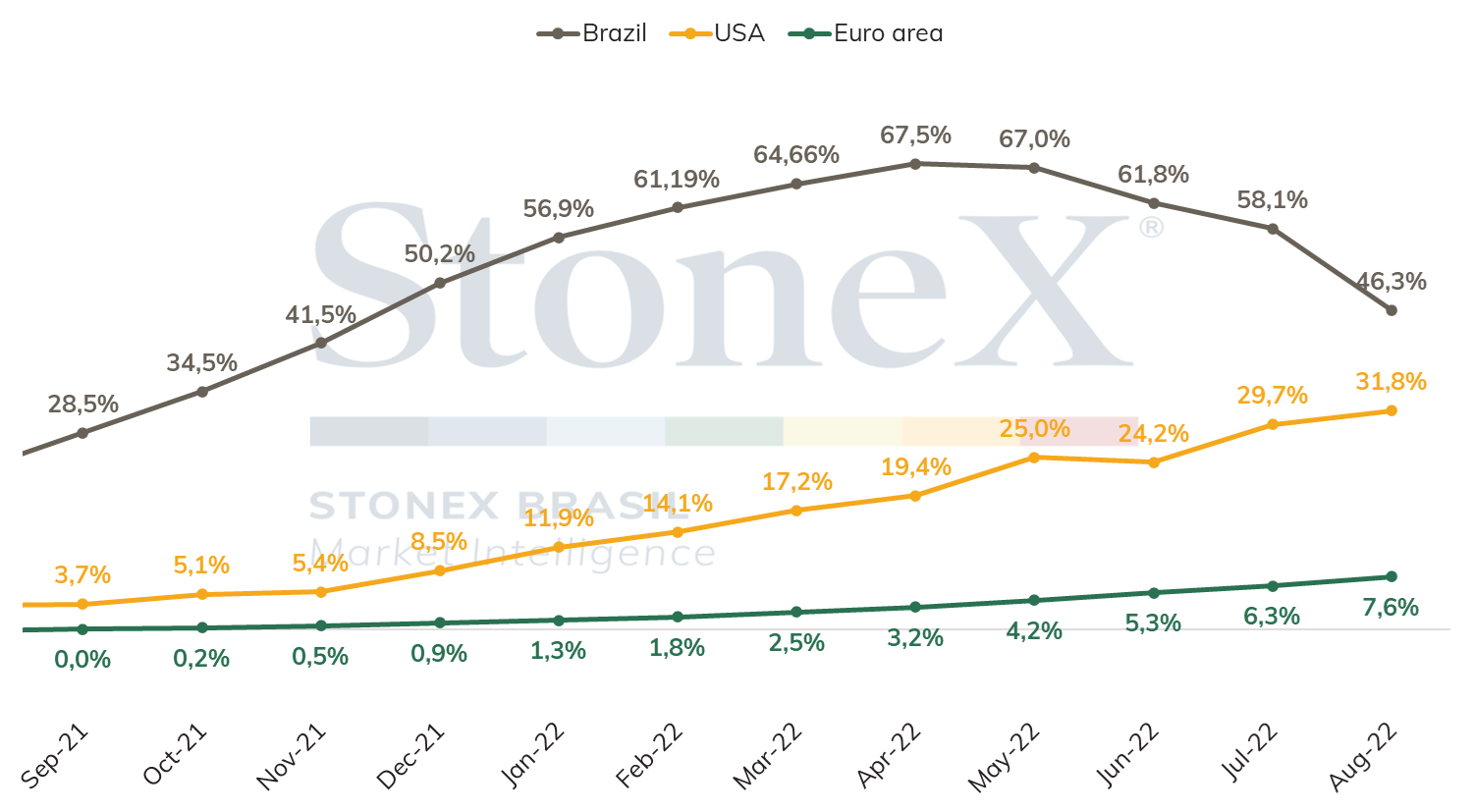
Strong coffee price inflation raises the alarm about the possible impact on coffee consumption. Despite proving to be a rather inelastic commodity, strong price inflation in the US and Europe has worried agents. According to Eurostat data, coffee prices were 17% higher in August than in 2021. Moreover, coffee price inflation has been advancing in the US, while it continues to decline in Brazil after peaking in April.
In an interview published by Reuters, the director of the International Coffee Organization, Vanusia Nogueira, indicated that consumers are switching from coffee shops to home consumption. However, she stressed that "there should not be impacts in terms of volume, but rather in the way coffee is consumed and in the quality."
Consumer prices 12-month accumulated inflation in roasted and ground coffee
Source: IBGE, BLS, Eurostat. Design: StoneX.
This week, the market should reflect the release by Cecafé of Brazilian coffee exports in September. The first two months of the 2022/23 crop showed numbers below the average of recent years; however, they were impacted mainly by lower exports of Robusta coffee, reduced due to higher demand and better prices in the domestic market.
On Thursday (13), the NOAA will update its La Niña/El Niño probability forecast. Agents should also maintain some caution while awaiting data on coffee stocks at US ports, which will only be published on Monday (17).
Inflation indicators should dominate this week's macro scenario.
Following a greater appetite for risk after the first round of elections in the country, the USDBRL posted a drop of 3.3% in the Brazilian exchange market last week, ending at BRL 5.214. The dollar index reacted to sessions of greater global apprehension amid the continuing trend of monetary tightening by the world's main central banks and registered an increase of 0.5%, closing at 112.7 points.
The sentiment in the Brazilian market was of great relief in tensions after the 1st round of the elections on Sunday (2), when a strong repositioning movement by agents was observed on Monday (3). In that session, the exchange rate showed a retraction of 4.0% from levels near BRL 5.40 to around BRL 5.17, the largest daily drop since June 2018. The adjustment resulted from relief by investors after verifying a configuration of the Chamber of Deputies and the Senate with more conservative characteristics.