Global markets did not show many directions, oscillating between moments of risk aversion with the uncertainties regarding the fall in activity and the high inflation in the global scenario and moments of recovery of some risk appetite, as observed after the resignation of British Prime Minister Liz Truss after a troubled period of only 44 days in power. Investors continued to show a good appetite for Brazilian assets, reacting positively to updated polls that showed a more even presidential race.
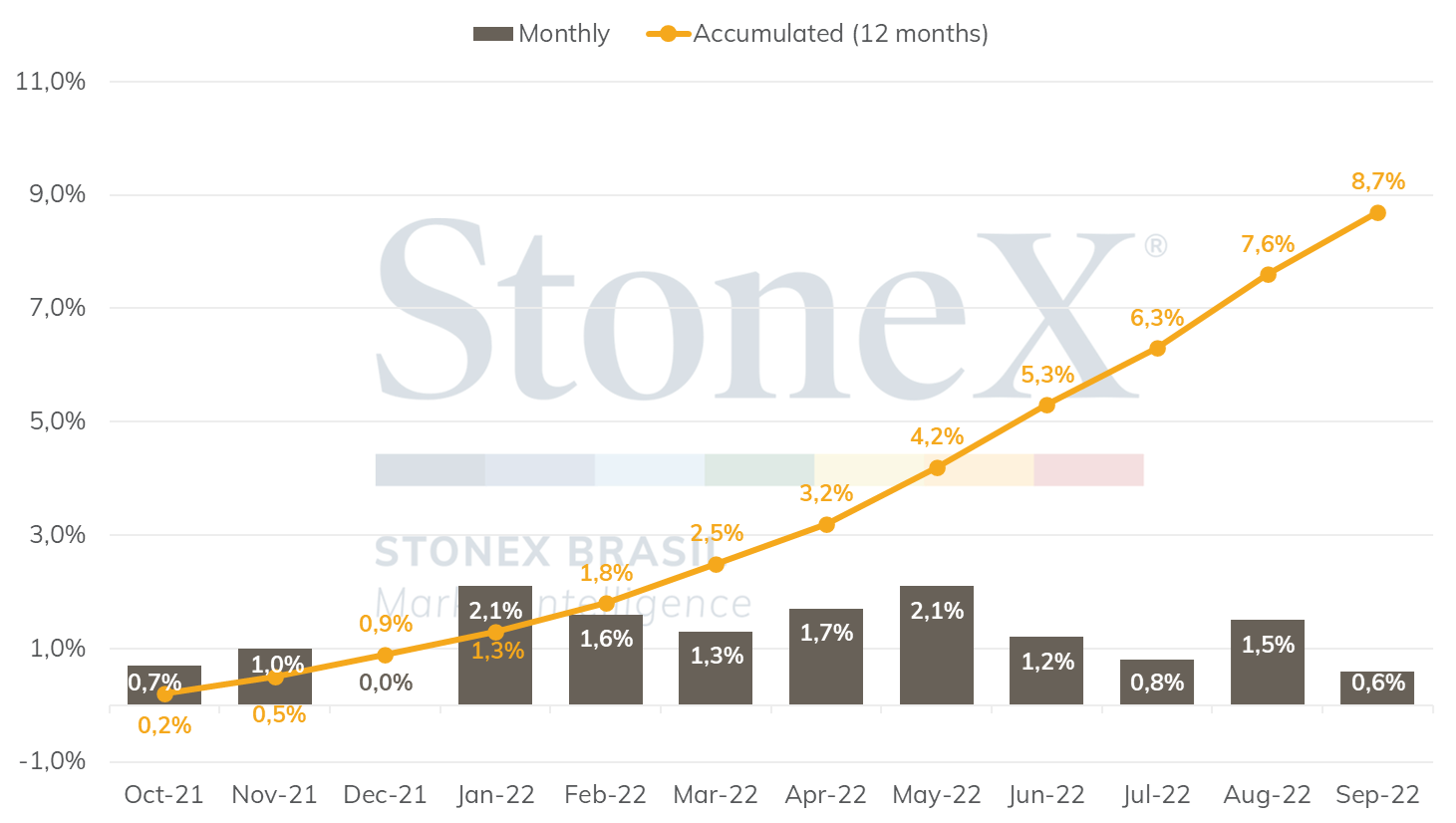
Besides the improved weather in Brazil and supply-side factors, the September inflation data for the eurozone released by Eurostat is one of the main bearish factors linked to demand. Even with the 0.6% increase from August to September not being among the largest monthly increases, there is still no evidence that there should be a continued deceleration, with the accumulated over 12 months from 7.6% to 8.7%.
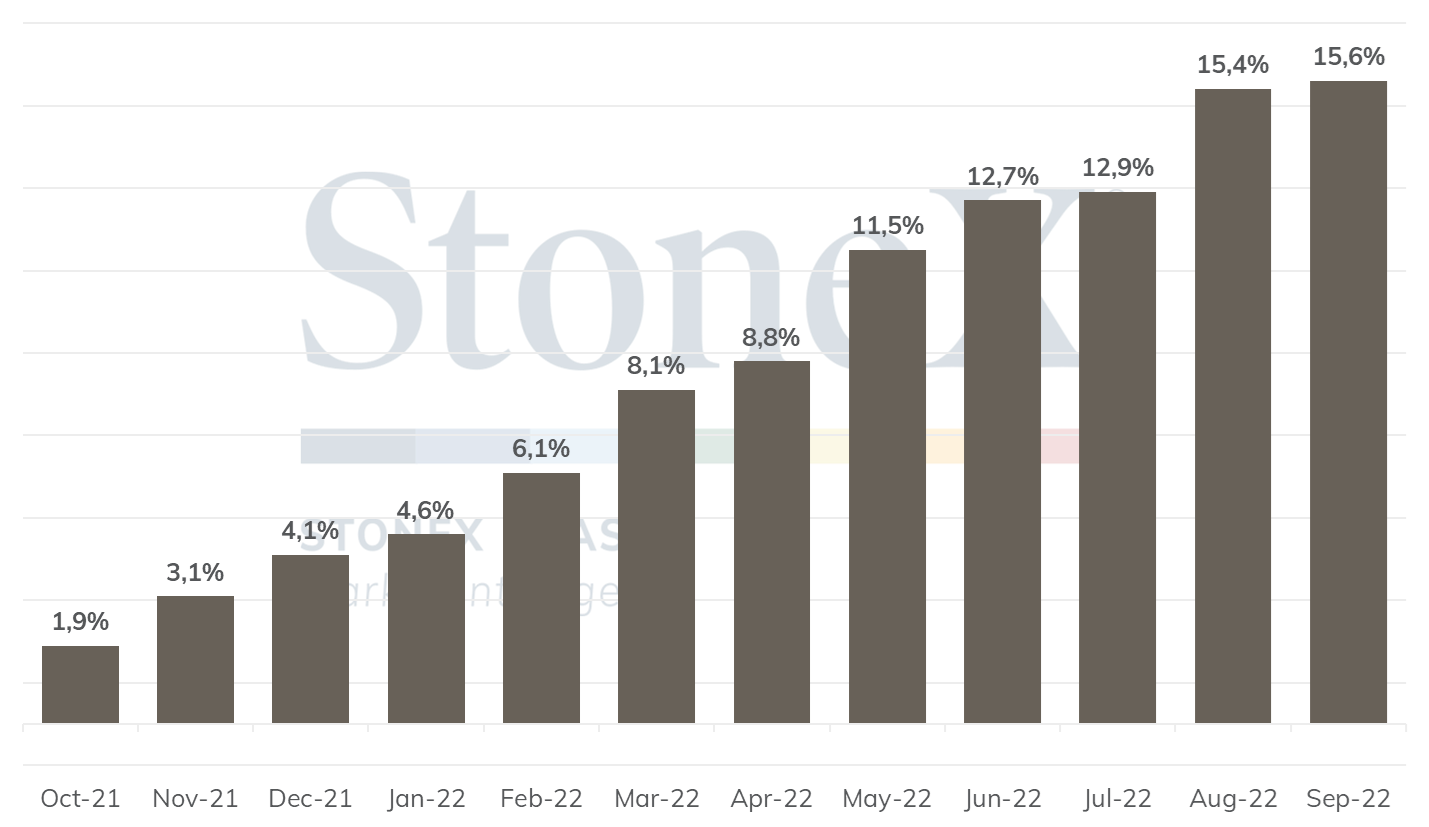
Evolution of consumer coffee inflation in the eurozone over the last 12 months
Source: Eurostat. Design: StoneX.
The year-on-year comparison for each month shows the criticality of the European picture even more. For example, September this year compared to the same month in 2021 points to coffee prices 15.6% higher for consumers in the eurozone.
It is worth remembering that in the case of Europe, a region that in recent years has had to deal at various times with a rate of inflation growth below the target set by the European Central Bank (ECB), the current context is quite atypical, which has increased the fear that the population will be discouraged from maintaining an annual increase in consumption. Last Thursday (20), Citi bank reported that it estimates that a global recession could reduce total coffee consumption by 3 million bags. New estimates in this sense and the release of new pessimistic data in major consuming economies tend to contribute as an element of pressure on prices.
This Monday (28), the PMI forecasts contribute to this scenario. According to S&P Global, the preliminary result of the consolidated PMI for the eurozone varied from 48.1 points in September to 47.1 points in October, staying below analysts' projections (47.5 points) and indicating that the activity level in the economic block should stay for the fourth consecutive month below the 50-point threshold that separates an expansion and contraction condition.
Annual change in consumer coffee prices in the eurozone
Source: Eurostat. Design: StoneX.
Decisions of the European and Brazilian central banks and Brazil’s elections stand out in a busy week
This week's economic calendar also features a series of indicators that should impact the global markets. In the United States, the Federal Reserve will release the September Personal Consumption Expenditure Price Index (PCE), the main inflation indicator used by the monetary authority. It is worth noting that Fed members will begin the required quiet period for the November 2 monetary policy decision. The Bureau of Economic Analysis (BEA) will also release the preliminary result for the Q3 GDP, with the median projection of analysts betting on a 2.4% expansion of the world's largest economy after having registered retraction in the first two quarters of the year.
In the eurozone, the highlight is the ECB's monetary policy decision on Thursday (27). In Brazil, the IPCA-15, released by the IBGE, and the IGP-M, published by the FGV, should give the first indications about inflation in the country this month. On Wednesday (26), there will be a monetary policy decision by the Monetary Policy Committee (Copom) of the Central Bank of Brazil (BC). The Central Bank is expected to maintain the basic interest rate (Selic) at 13.75% p.a., with the agents paying attention to how Copom plans its next decisions after deflation results in recent months and relatively positive indicators for economic activity. Moreover, the last week before the decision of the second round of the presidential elections in Brazil, with the latest polls indicating a tighter dispute between Jair Bolsonaro and Luís Inácio Lula da Silva should contribute to greater volatility in the Brazilian exchange market.
Sources: ICE/NY; ICE/EU; B3; Commodity Network Trader’s Pro.