After closing higher two weeks ago, coffee futures prices fell again last week and in the first few sessions of this week. On the fundamentals side, coffee futures prices have been pressured amid the prospect of a large crop in 2023/24 amid possibly weakened demand due to macroeconomic issues such as inflation and lower global economic growth or possible recession - for more details on the current macroeconomic and exchange rate scenario access: FX Weekly Summary. The recent increase in certified stocks has also contributed to the current trend.
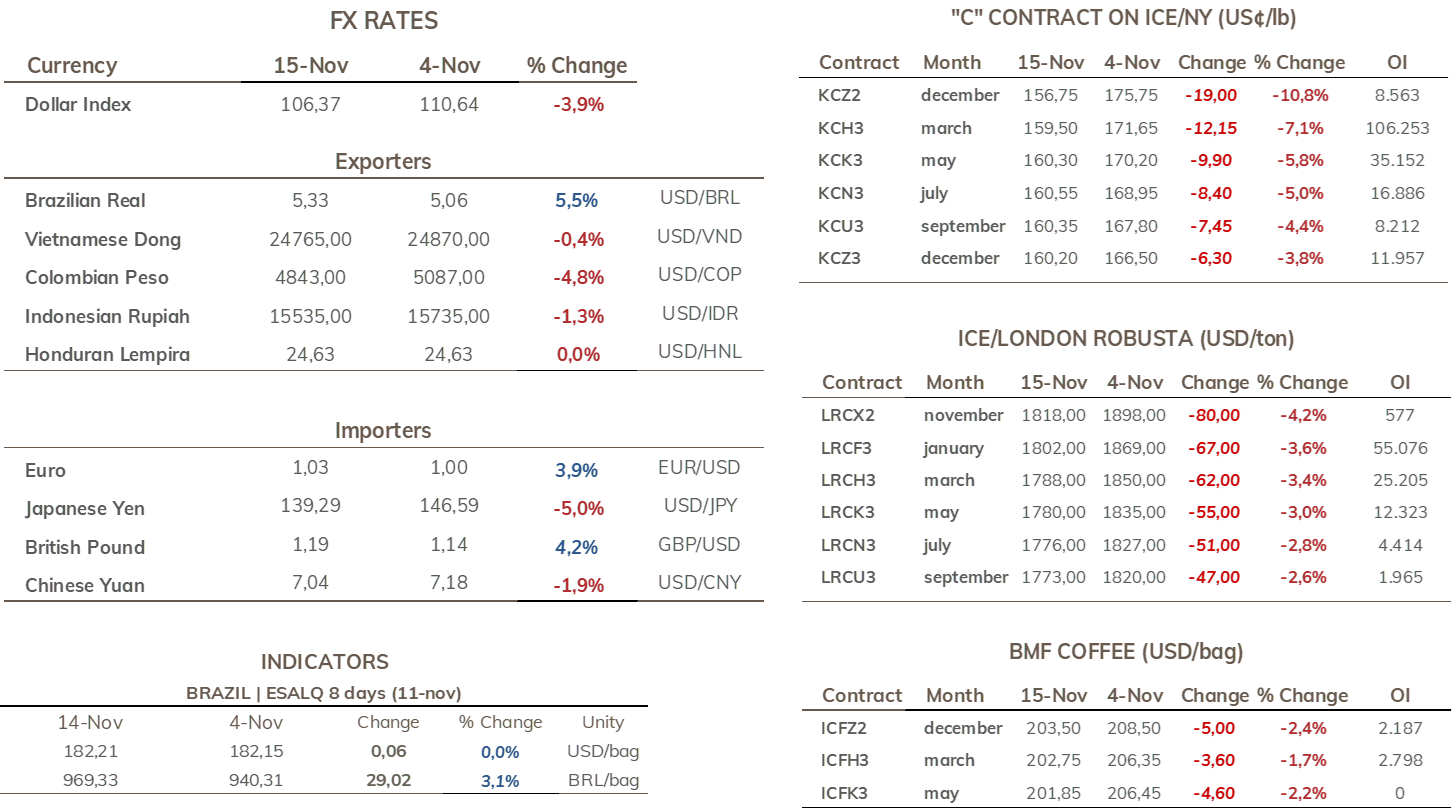
In New York, the most active contract (Mar/23) ended yesterday's session (15), quoted at US₵159.50/lb, a drop of 1215 points (7.07%) compared to Friday's close (04). In London, the most active contract (Jan/23) closed at USD 1802/t, down by 3.6% over the same period.
In Brazil, the USDBRL appreciation by 5.06% between Friday (04) and Monday (14) contributed to mitigating the drop in coffee future prices abroad. Cepea’s Arabica indicator posted a drop of 0.5%, ending Monday (14) at BRL 956.77/bag. The Robusta coffee showed a decline of 1.3%, closing Monday (14), quoted at BRL 550.67/bag.
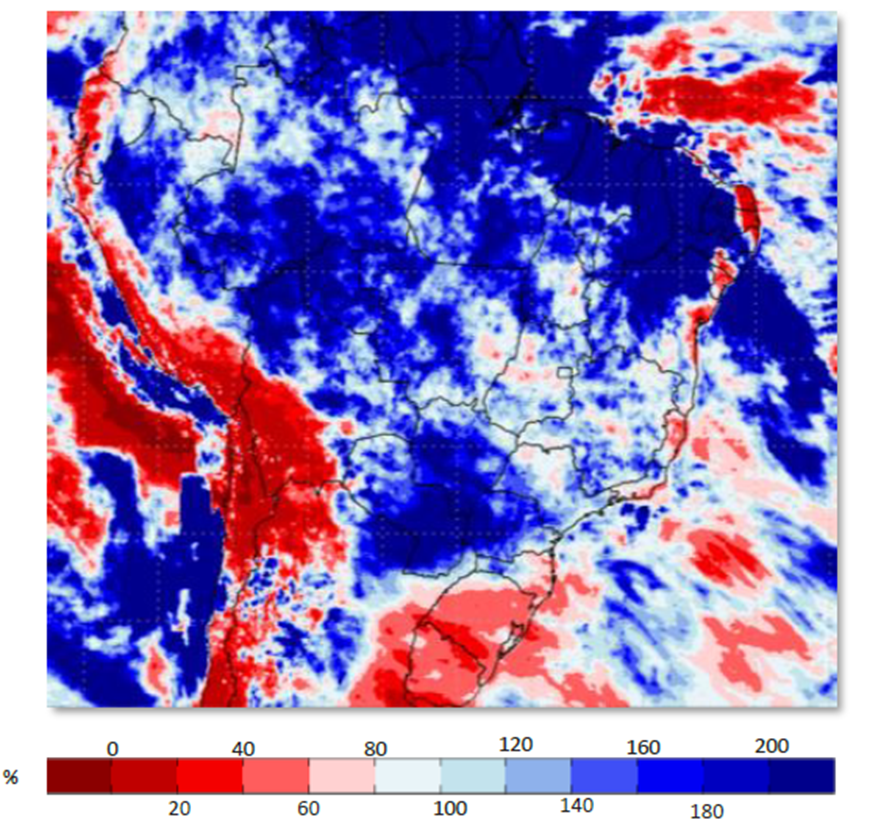
As mentioned, the prospect of a large crop in 2023 has been one of the major factors behind the bearish trend observed in recent weeks, as it reflects the prospect of ample supply amid a possibly weakened demand. The return and continuation of rainfall throughout the coffee belt endorse this sentiment. StoneX's precipitation report, which uses data from the US NOAA, indicates that all coffee-producing regions in Brazil have received volumes between 125 and 280 mm over the past 60 days. In addition, the model predicts accumulated volumes of up to 200 mm for the next 15 days - access here the latest report with historical and forecast precipitation in the producing regions (link).
Rainfall anomaly in Brazil in the last 60 days compared to the average of the last 20 years