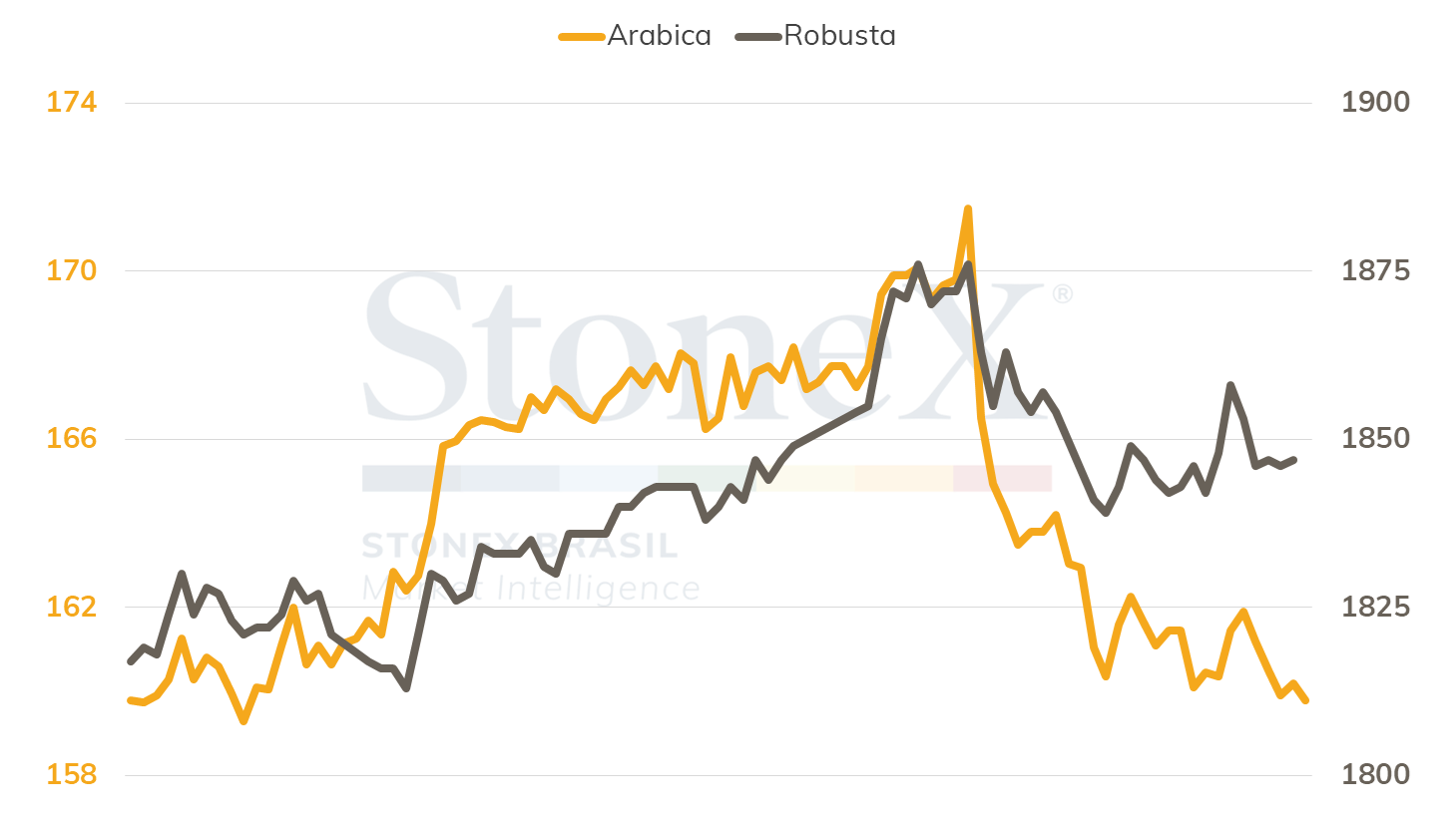
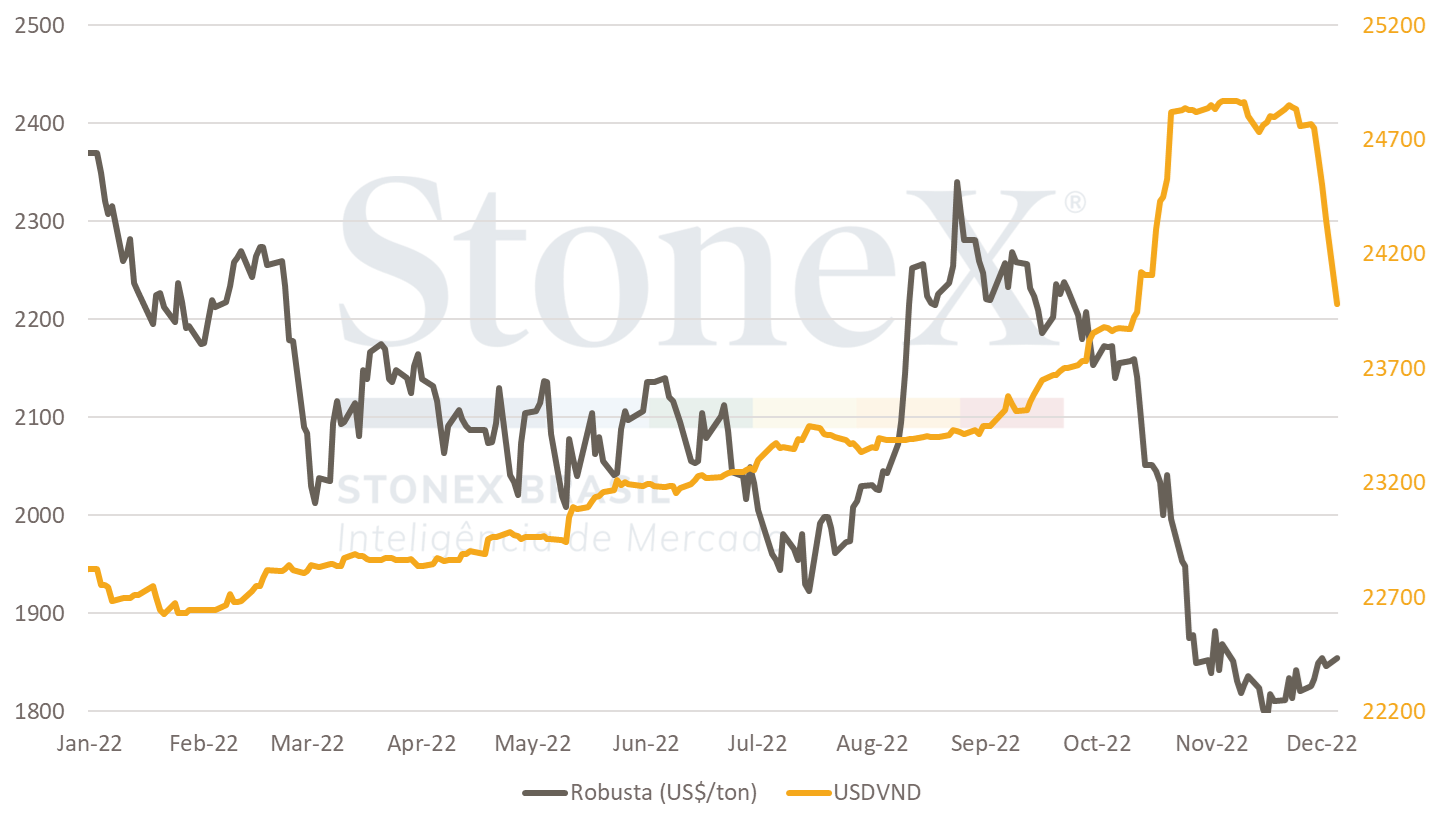
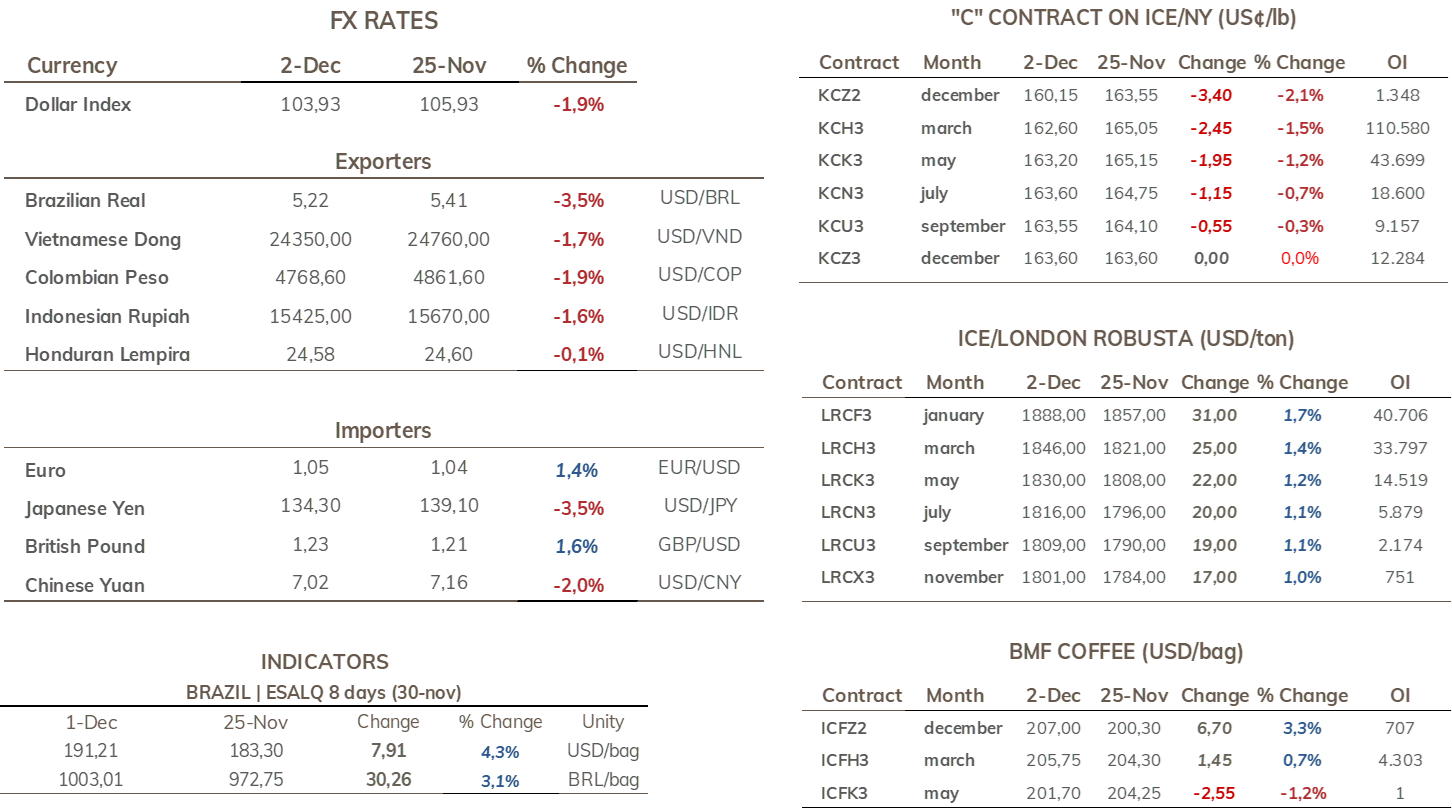
The Cepea's Arabica indicator marked a marginal reduction of 0.2% in Brazil, ending the period quoted at BRK 982.38/bag. On the other hand, Robusta coffee posted a significant advance of 6.4% during the week to end Friday at BRL 633.65, the highest level since mid-October.
The weather outlook in Brazil continues to contribute with the greatest weight to keep the Arabica prices under pressure in the stock exchange. The forecasts of almost constant rainfall in most coffee areas until mid-December should support a great crop in 2023/24. However, it is still early to make concrete statements, and it is necessary to wait for fruit expansion to see if this stage and the set of buds after flowering have been successful. It is worth mentioning that the hot weather and delayed rainfall for flowering this year, caused by La Niña, and reports from producers that flowering was not as good as it could have been under normal conditions, remain a point of attention.
Additionally, preliminary data released on Thursday (1) by the Brazilian Foreign Trade Secretariat (Secex) suggested strong results for coffee exports in November. The published document points to an export of 3.613 million bags of coffee last month, an advance of 23.6% compared to the 2.923 million recorded by Secex for November 2021. Now the market is waiting for Cecafé's official data, which should be released between the end of this week and the beginning of next week. If similar numbers are confirmed, showing an increase compared to last year and volume close to the average of recent years, the perception of a more comfortable supply in the international market this year tends to remain acting in a downward way for prices.
Market participants are also waiting for the biannual revision of the United States Department of Agriculture (USDA) estimates for the 2022/23 season, an important reference for the market, which may give signs of the Department's prospects for next year's crop. Preliminary reports already released by the USDA showed a revision of high estimates for Brazilian production from 64.3 million bags to 62.6 million, as well as downward revisions for production in Vietnam and Colombia. The details of the partial figures can be followed in our special report. Thus, in the final report, the USDA will likely reduce its surplus estimates for the current crop, which could support prices.
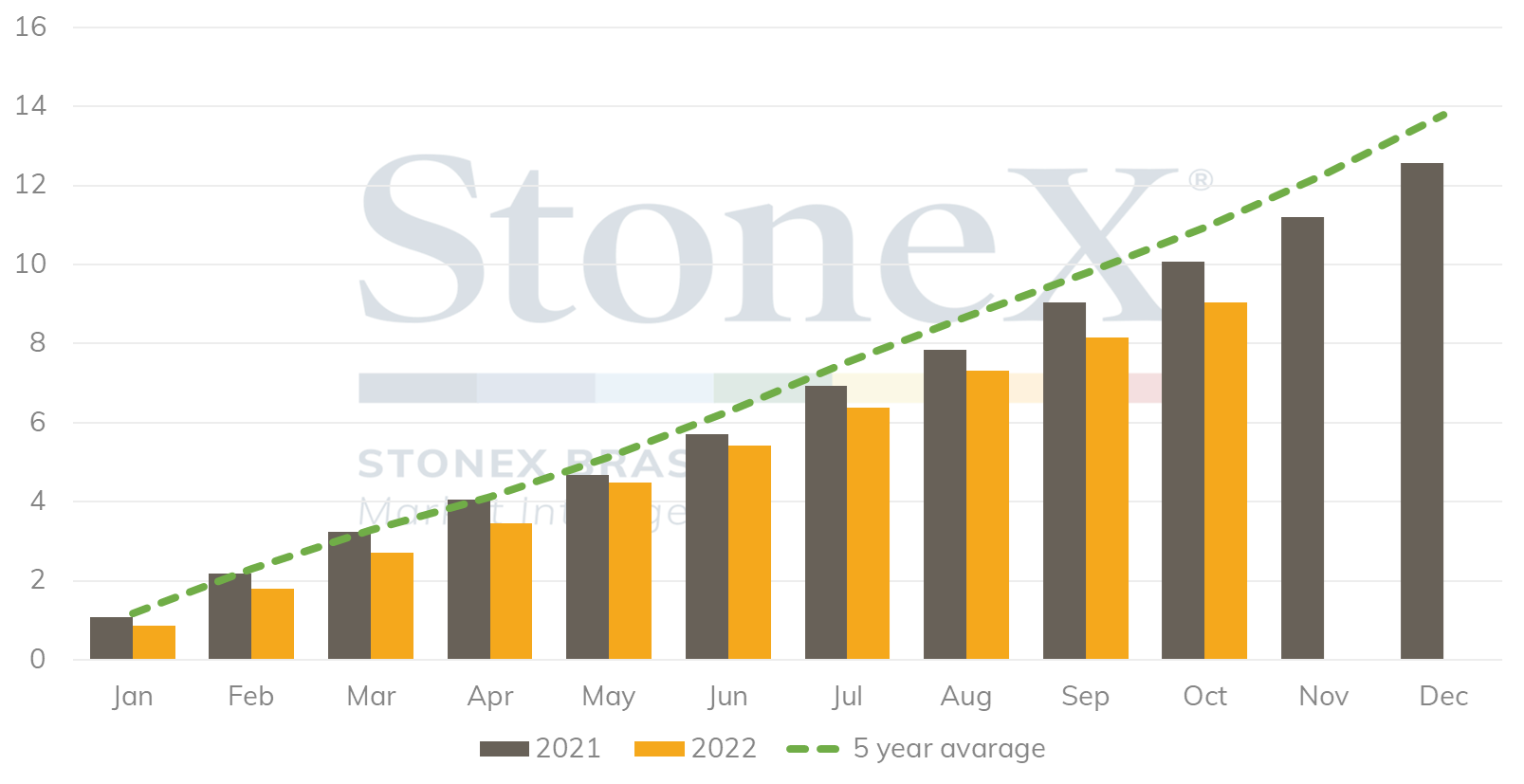
In Colombia, the production, which is already below the averages of previous years, may present a result even lower than expected this year. Roberto Velez, manager of the National Federation of Coffee Growers of Colombia (FNC), stated that the country's coffee production, which had been projected between 12 million and 12.2 million bags this year, should be below this level. Velez also anticipated that the permanence of excessive rainfall, due to the effects of La Niña, did not allow the flowering to occur as desired, which tends to impact production next year. From January to October this year, Colombian production accumulated 9.043 million bags produced, 10.1% below the same period last year and 17.3% below the average of the last five years.
Total production by Colombia (million bags)
Source: FNC. Design: StoneX.