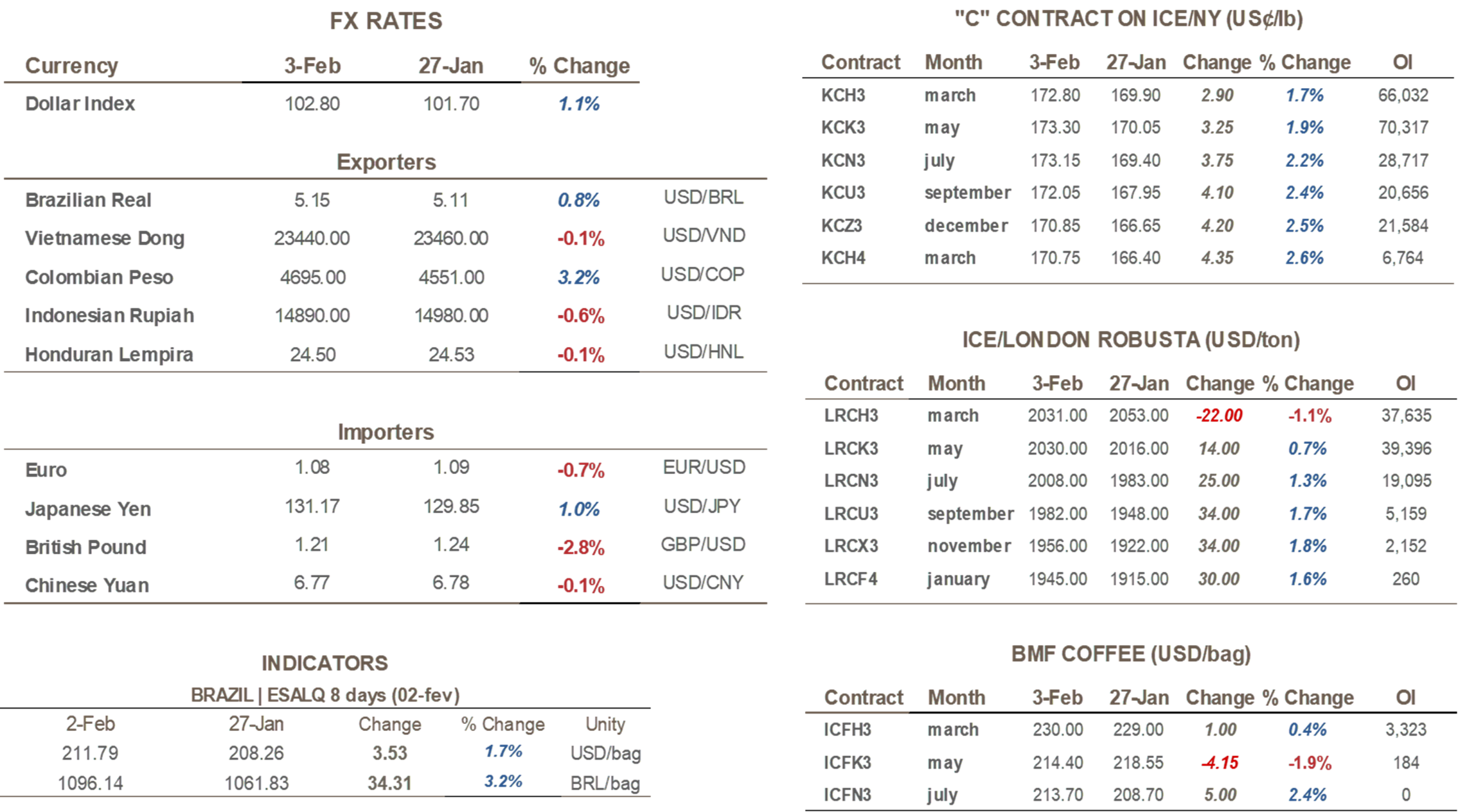
Abroad, the decisions of the Federal Reserve in the United States, the European Central Bank (ECB) and the Bank of England (BoE) came within expectations of continued monetary tightening, but to a lesser extent. In the US, the Fed raised the rate to the range between 4.50% and 4.75% per annum, an increase of 25 basis points, after increases of 75 basis points in November and 50 points in December. The lower increase confirms the market's view that the country is going through a process of inflationary slowdown, which has allowed the US central bank to be softer in its adjustment. However, Fed Chairman Jerome Powell warned that many components of the economy are yet to show an inflationary slowdown, particularly the services sector.
On Friday, the January Labor Situation Report showed 517 thousand jobs created, well above expectations of 185 thousand. The services PMI also brought a positive surprise, rising from 49.2 points in December to 55.2 points, significantly above the 50-point threshold that separates a contraction and expansion condition. If, on the one hand, the recovery of the economy decreases the fear of a recession, on the other, it shows that the heated demand increases the difficulties of the Monetary Authority in regaining stability. In practice, the results raise the perception that the Fed may have to seek more increases or keep the rate high for longer than previously anticipated, which attracts greater foreign exchange flow to the US currency and puts pressure on risky assets such as emerging currencies or commodities.
In Brazil, the Monetary Policy Committee (Copom) of the Central Bank (BC) maintained the basic interest rate (Selic) at 13.75%, presenting a firm tone, signaling the intention to postpone rate cuts to ensure the disinflationary process in the country and stating that it remains alert to the risks and uncertainties concerning the fiscal policy of the new government. This Tuesday, the minutes of last week's meeting should have new information regarding the debate among committee members to postpone the rate cuts. In addition to the minutes, this week's agenda highlights the National Broad Consumer Price Index (IPCA) for January, which IBGE will publish on Thursday (9). Furthermore, the Monthly Survey of Trade and the Monthly Survey of Services for December, which will be released on Thursday and Friday, respectively, will help in reading about the performance of the Brazilian economy at the end of 2022 and in forming expectations for the GDP result in the last quarter and the year.
Fontes: ICE/NY; ICE/EU; B3; Commodity Network Trader’s Pro.