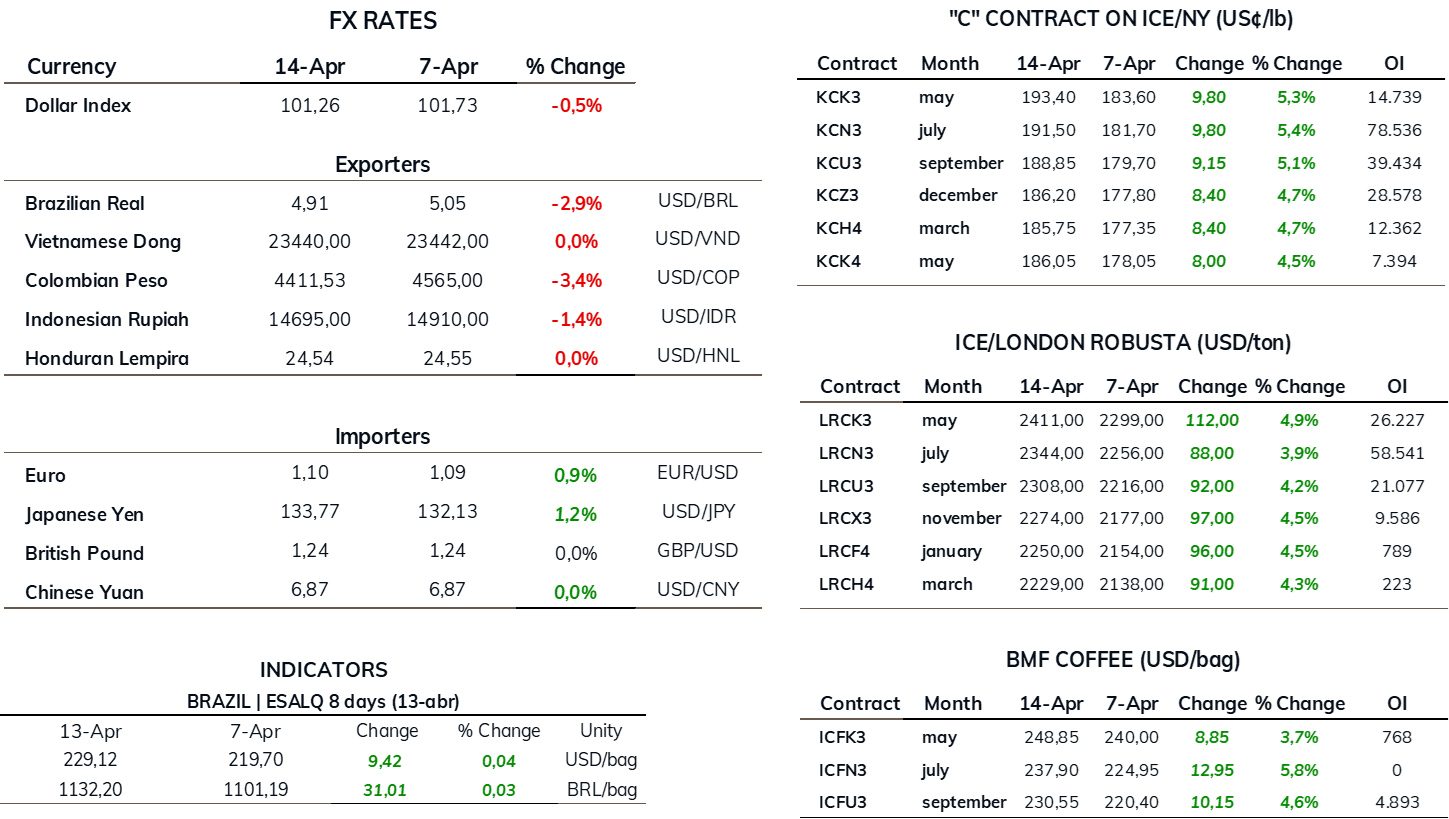
In addition to the exchange rate factor, the macroeconomic environment has influenced prices. In addition to softer activity data for the US economy, the country's Producer Price Index (CPI) for March registered an increase of only 0.1%, below the expectations of 0.2% and slowing significantly compared to the previous month (0.4%). Slowing indicators of the economic activity level have contributed to the perspective that the Federal Reserve is expected to end its cycle of interest rate hikes in the country in its next decision on May 3.
Although Fed members assure that the key rate will not be reduced until the end of the year, most market bets expect the Fed to promote a reduction from September to avoid the risk of a recession after the historically rapid increase in the benchmark rate. This scenario has contributed to an outflow of investment flow from American fixed-income assets towards riskier assets, has watered pressures on the dollar index and favored commodities and currencies of emerging countries, such as the real and the Colombian peso.
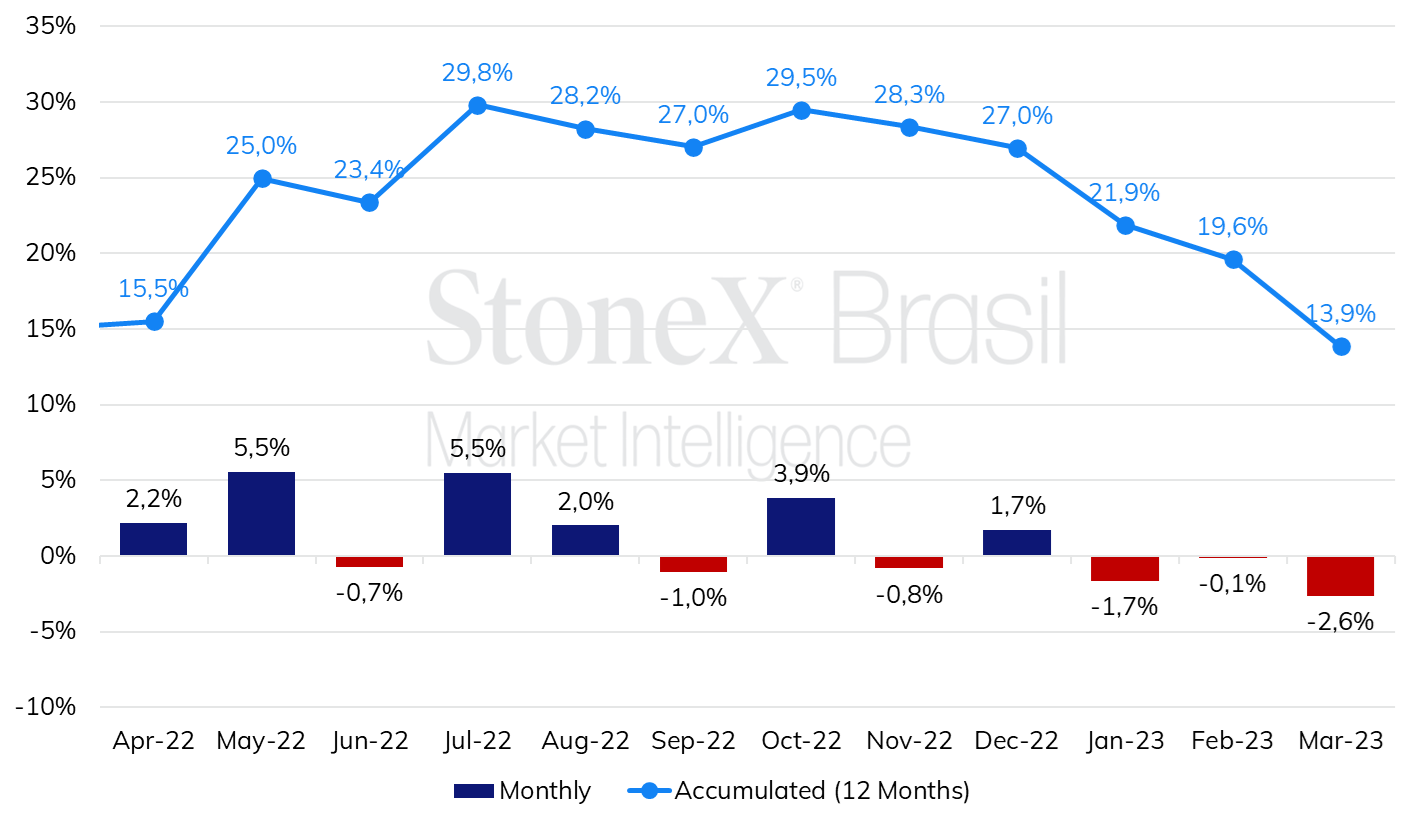
An interesting factor also revealed by the CPI data in the United States was the 2,6% drop in prices of roasted and ground coffee to the American consumer. This was the largest one-month reduction since May 2021, leading to 12-month cumulative inflation falling from 19.6% in February to 13.9% in March, the lowest level since April last year. Although doubts about demand still surround the market, the cooling of inflation in the world's largest coffee consumer may bring some optimism about the consumption of the product.
Consumer roasted and ground coffee inflation in the United States
In Brazil, the National Broad Consumer Price Index (IPCA) for March, released by IBGE, showed an increase of 0.71%, below the 0.77% expected by the market. With this, accumulated inflation was 4.65%, the lowest result since January 2021 (4.56%), staying within the Central Bank's inflation target and contributing to the attractiveness of the BRL. On the other hand, the result for consumer roasted and ground coffee was -1.41%, with the accumulated in 12 months going from 4.9% in February to 0.5% in March.
On this week's economic calendar, Eurostat will release the consolidated result of the CPI of the eurozone next Wednesday (19), the only region among those analyzed in which coffee has not yet shown a slowdown in the rise in consumer prices.
Sources: ICE/NY; ICE/EU; B3; Commodity Network Trader’s Pro.