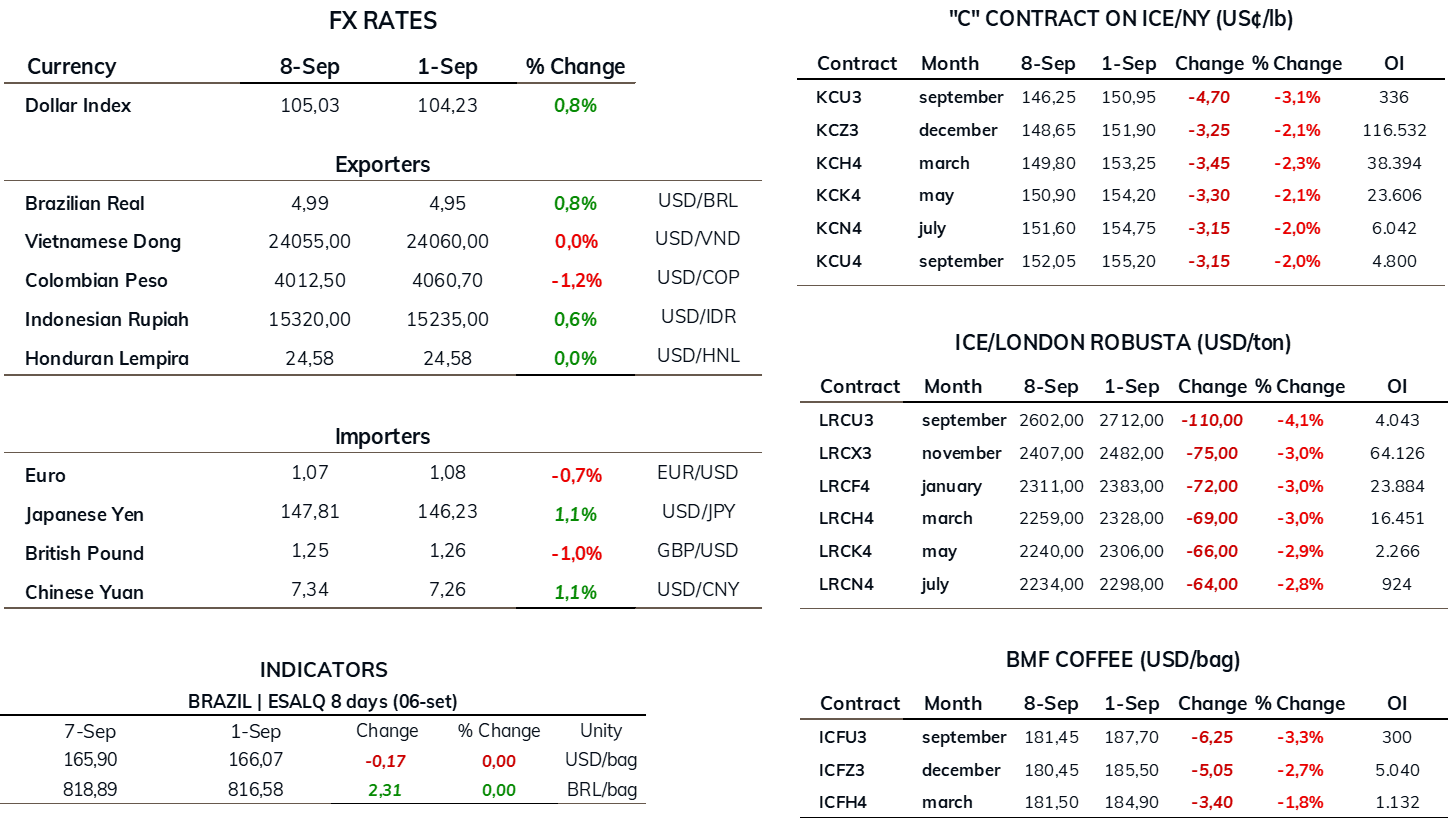
• Arabica coffee ends the week at 148.65 c/lb, down 2.1%
• Robusta coffee prices fall 3.0% to USD 2407/t
• Cepea indicator for Arabica coffee down 1.6% to USD 804.89/bag
• Cepea indicator for Robusta coffee up 1% to BRL 649.78/bag
• Dollar rise continued to put pressure on coffee prices on the exchange
• Market continues to keep an eye on the prospects for flowering. There are reports of a first wave of flowering in regions of Minas and São Paulo
• Sign of slower consumption is the main factor limiting price recoveries
• US registers 18% year-on-year drop in green coffee imports in July
• Cecafé to announce August exports on Wednesday (13). Expectations are for increase
• ICE registers Brazilian coffee pending classification
Coffee futures prices ended the last week down, reflecting the progress of the harvest in Brazil, which is nearing its end and, consequently, leads to greater availability of coffee on the market. In addition, last week's movements were considered calm, given the September 7th holiday in Brazil. Prices were also pressured by the rise in the dollar during the week, which rose 0.8% to USDBRL 4.99 at the close of the week.
In New York, the most active contract, for December, ended the period down 325 points (2.1%), closing Friday (08) at 148.65 c/lb. At the London terminal, Robusta coffee futures fell by USD 75/ton (3%) for the most active contract, for November, which closed at USD 2407/ton.
Weekly Intraday (most active contract) – September 4 to 8
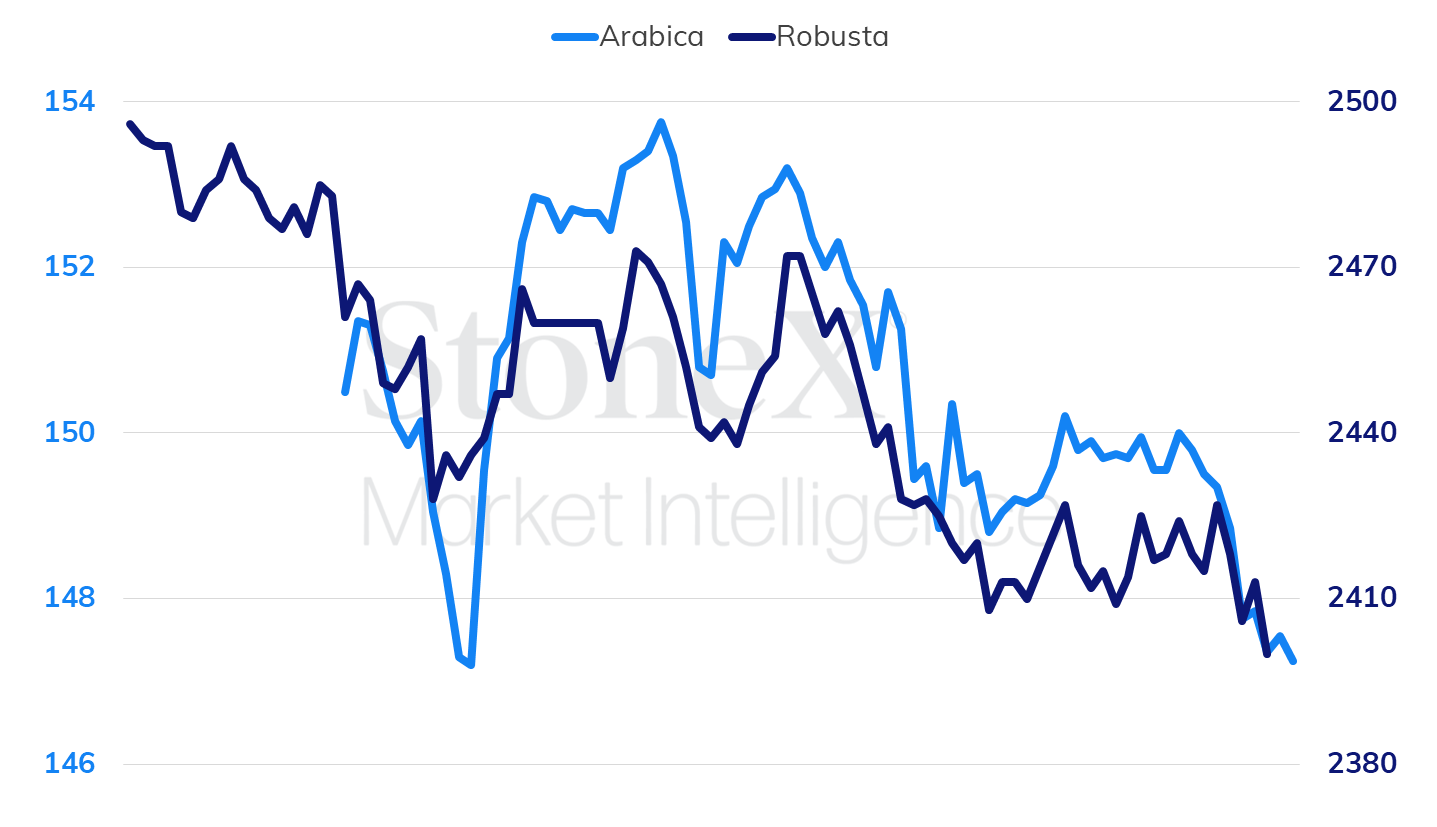
On the Brazilian domestic market, Arabica and Robusta coffee prices followed the movements on the New York and London exchanges, ending the period down. However, the rise in the dollar during the week offset some of the decline on the futures markets. With this, the fall in the Brazilian market was less intense. The Cepea indicator for Arabica coffee ended the week down 1.6% at BRL 804.89/bag. For Robusta coffee, the Cepea indicator pointed to a fall of 0.7%, closing the week at BRL 649.78/bag.
From the point of view of fundamentals, the scenario remains unchanged. The focus is now on Brazil’s main flowering. There have been reports that the first wave has unexpectedly already taken place in some regions of Minas Gerais and São Paulo. As mentioned in other weekly reports, from the start of flowering onwards, it is necessary to maintain suitable weather conditions in order for the beans to satisfactorily set. While a wide flowering with favorable weather could fuel optimism about the 2024 crop and be bearish for prices, an irregular flowering interspersed with periods of hot and dry weather could contribute to a feeling of pessimism about the crop and act in a positive way for prices.
In addition, a possible slowdown in consumption, reflecting inflation in the United States and Europe, remains a worrisome factor that could put pressure on coffee prices. For a better understanding of the current situation regarding coffee consumption, we recommend reading the special report published by Coffee Network, a StoneX group company, on the impact of inflation on global coffee consumption ("We Aren’t Afraid to Admit It…We Have A Demand Problem").
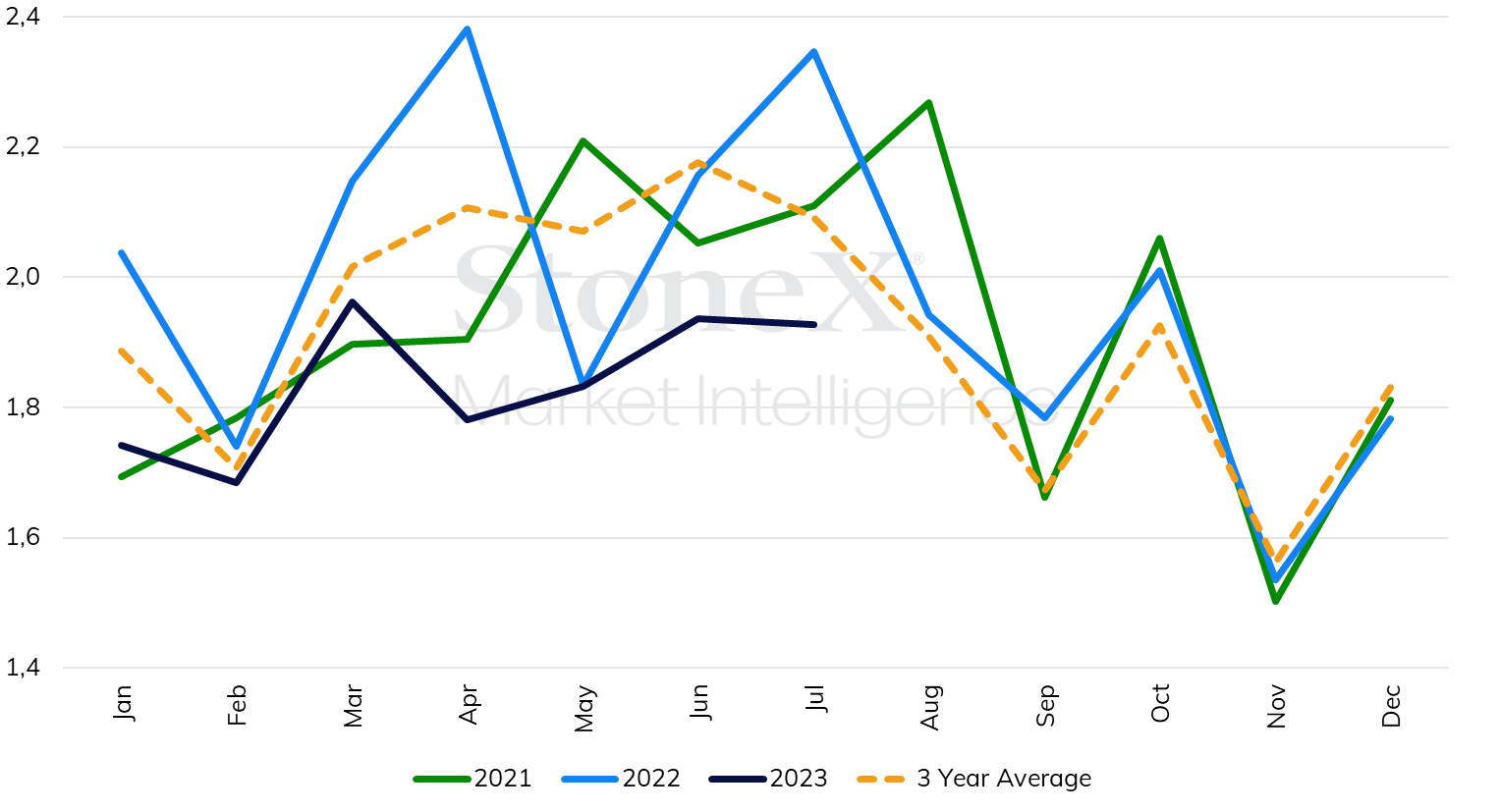
While it is believed that demand may pick up again between the end of this year and the beginning of 2024, especially in the United States, due to a number of factors, such as the inflation of roasted and ground coffee that has been falling in the country and the approach of winter in the Northern Hemisphere, the records so far have not indicated any signs of a reaction. The most recent figures for US imports of green coffee, for July, show that purchases continue at a slower pace. In the month, imports totaled 1.928 million bags, 18.0% below July 2022 and 7.8% lower than the average for the last three years for the month. So far this year, all months have been below average, with the accumulated total of 12.8 million bags being 12.1% and 10.6% lower than the same period last year and the three-year average.
Seasonality of green coffee imports into the United States (million bags)
This week will also see the release of data on Brazilian exports by Cecafé, which is due to show the performance of shipments in August on Wednesday (13). As mentioned last week, the expectation is for strong progress, with preliminary data from the Foreign Trade Secretariat (Secex) indicating a total shipped volume of 3.3 million bags, an annual increase of 41%. Although an increase of 41% does not occur seasonally, August usually begins to show an influx of larger volumes of Brazilian coffee onto the international market, a pace that tends to gain even greater traction in the following months until December. If there are no major surprises in Wednesday's release, the result will tend to help keep prices under pressure.
Another factor that also caught the attention of participants is the probable entry of Brazilian Arabica coffee into ICE's certified stocks. While the volume of stocks has been falling throughout the year, from 814,000 bags at the beginning of January to 442,000 in Monday's update (11), since last week we have seen the entry of Brazilian coffee to be rated and, if approved, added to the exchange's warehouses. Currently, 18,500 bags are waiting to be graded and added to the exchange. It is still difficult to say whether this is a case of new coffee or a recertification of coffees, but a continuation of these entries would tend to alleviate concerns about approaching the historically low levels seen at the end of 2022.