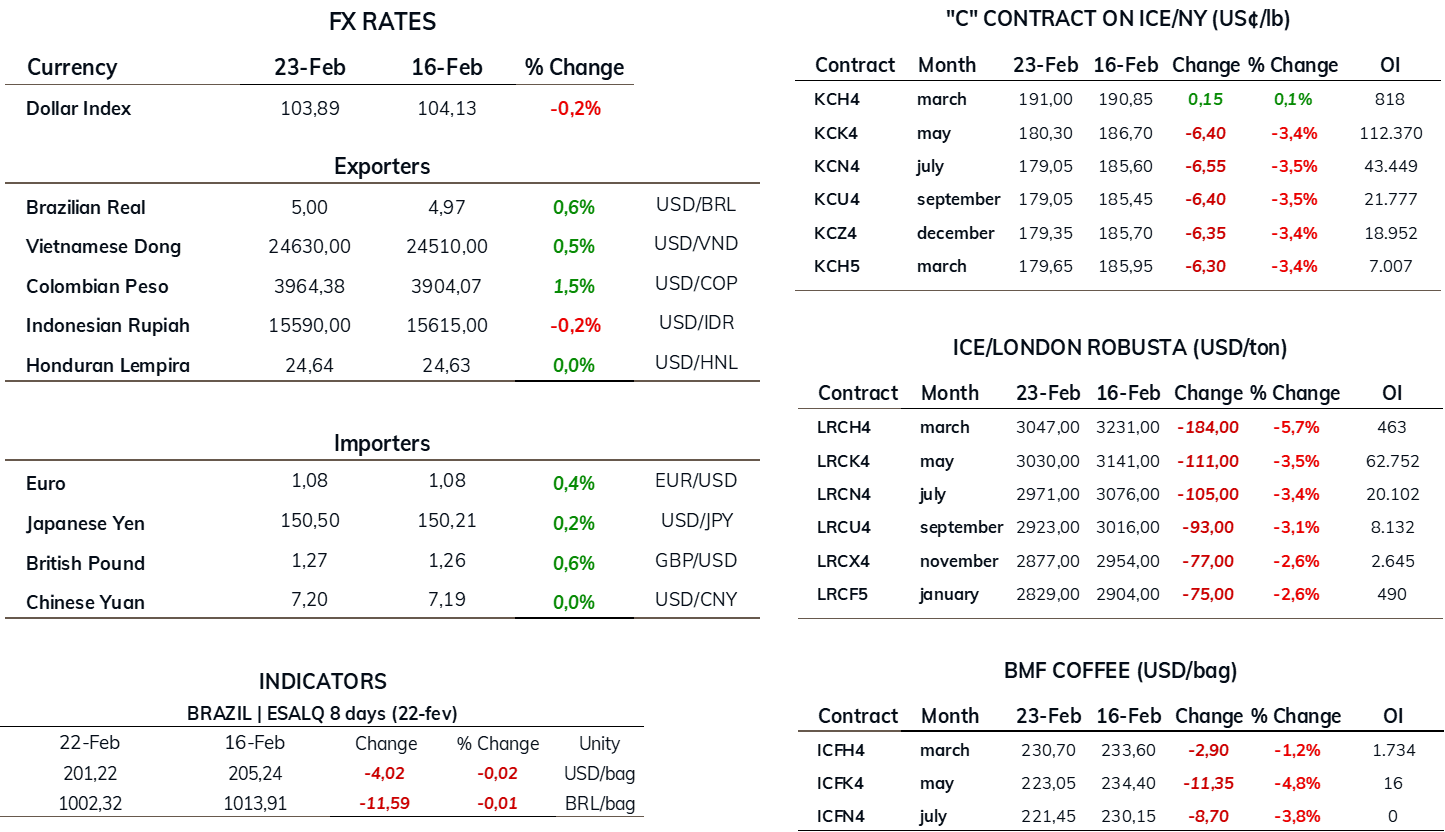
• Arabica coffee down 3.4% on the week in New York, closing at US₵ 180.30/lb
• On the London exchange, Robusta coffee dropped 3.5% to USD 3030/t
• Cepea indicator for Arabica coffee down 1.8%
• Cepea indicator for Robusta coffee down 1.7% to R$833.76/bag
• Dollar up 0.6% on the week to USDBRL 5.00
• Certified stocks of Arabica rose 5.5% last week
• Robusta certified stocks up 14.5%
• Optimism about the 2024 crop fuels expectations of a more comfortable S&D balance sheet
• StoneX estimates Brazilian production at 67 million bags in 2024
Last week, coffee futures prices posted significant losses amid a number of fundamental and technical factors. Among the main factors was the 0.6% rise in the dollar, which closed the week at USDBRL 5.00. In addition to the dollar, speculative agents liquidated their positions during the week. Furthermore, from the point of view of fundamentals, the prospect of higher production in Brazil in the 2024/25 season led to a perception that the supply/demand balance will be more comfortable, at least for Arabica coffee. In addition, a report released by the Coffee Network showed that, according to the National Coffee Growers Federation, Colombian production is expected to rise by 15.5% in the first half of 2024, to 5.8 million bags.
For Robusta, despite increased production in Brazil, lower supplies in Asia will continue to be a supporting factor for future coffee prices. Another aspect that contributed to the fall in prices was the increase in certified stocks of Arabica and Robusta coffee. Certified stocks of Arabica rose by 5.5% during the week and by 29.8% since the beginning of the month, totaling 324,200 bags. In addition, the volume of stocks pending classification also rose, which indicates that, if approved, new coffees could be included in certified stocks. In addition to Arabica stocks, certified Robusta stocks also rose amid deliveries of Brazilian Robusta coffees, up 14.5% on the week to 383,300 bags.
In New York, the most active contract, for May, ended the week with losses of 640 points (3.4%), closing Friday (23) quoted at US₵ 180.30/lb. In London, the equivalent contract posted losses of USD 111/t (3.5%), closing the period quoted at USD 3030/t. In Brazil, prices followed the trend seen abroad and ended the period down. The Cepea indicator for Arabica coffee showed losses of 1.8% to R$995.67/bag. The indicator for Robusta had losses of 1.7% to R$833.76/bag. However, the fall in prices was less intense than abroad, reflecting the dollar's rise in the period.
Weekly intraday (most active contract) - Feb. 19 to Feb. 23
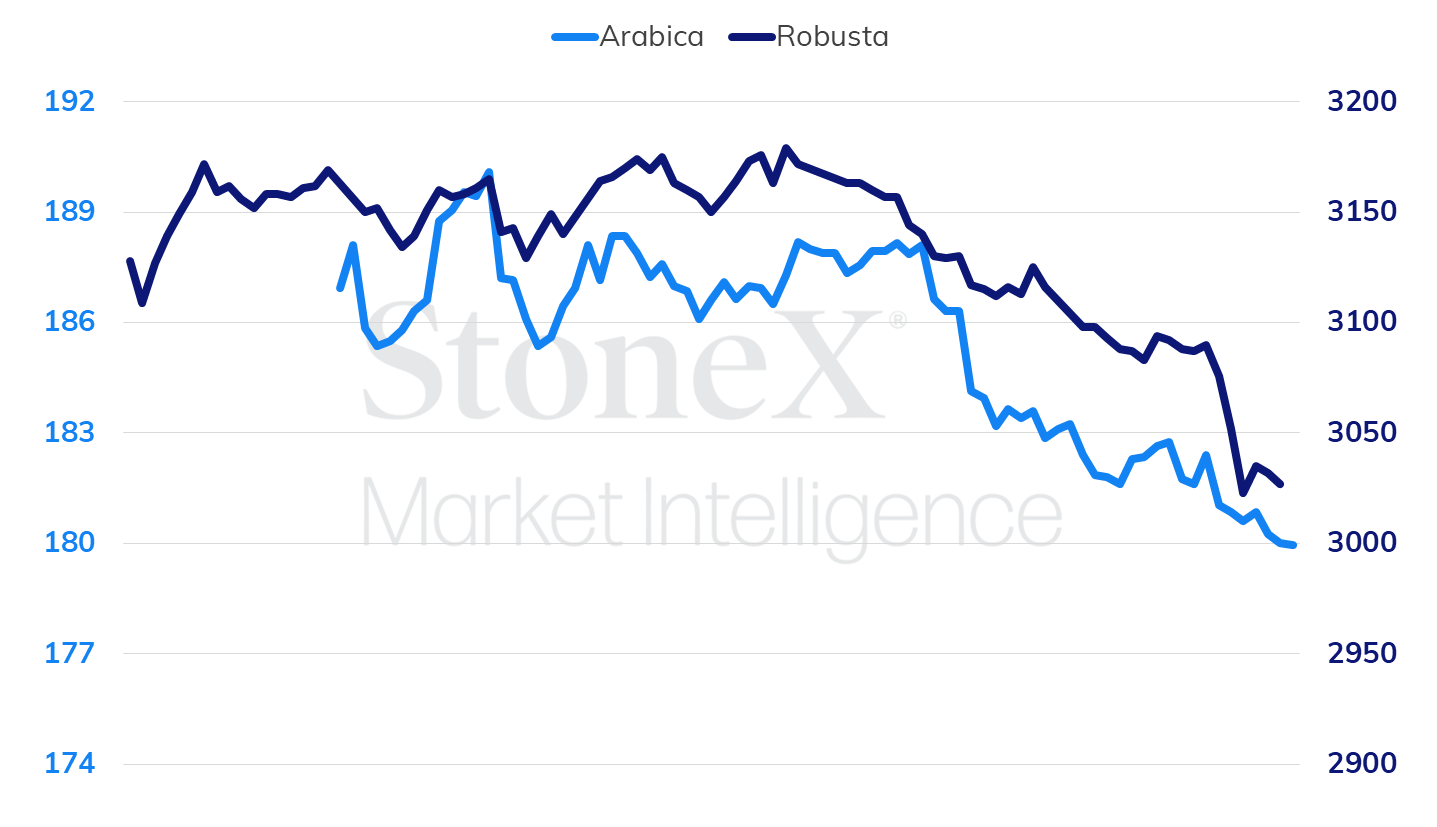
In the coming weeks, traders will be paying close attention to movements in certified stocks of Arabica and Robusta coffee, and if these continue to increase in volume, this could have a bearish effect on coffee prices. In addition, the Brazilian coffee export report for February, which will be released by Cecafé in the coming weeks, will be debated. Overall, Brazilian coffee exports are expected to remain strong, at least for Robusta. Finally, the weather also remains an important factor for the market.
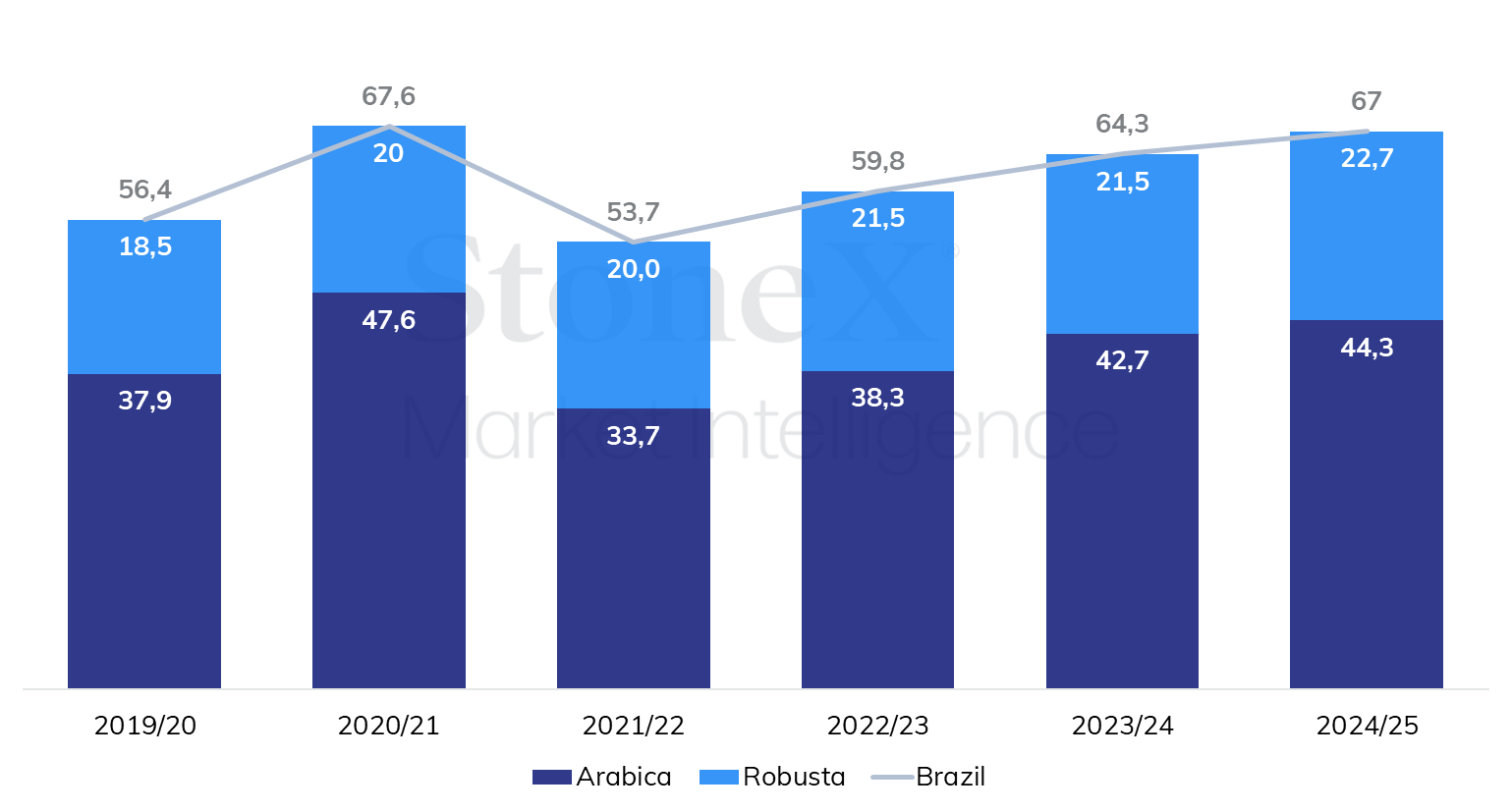
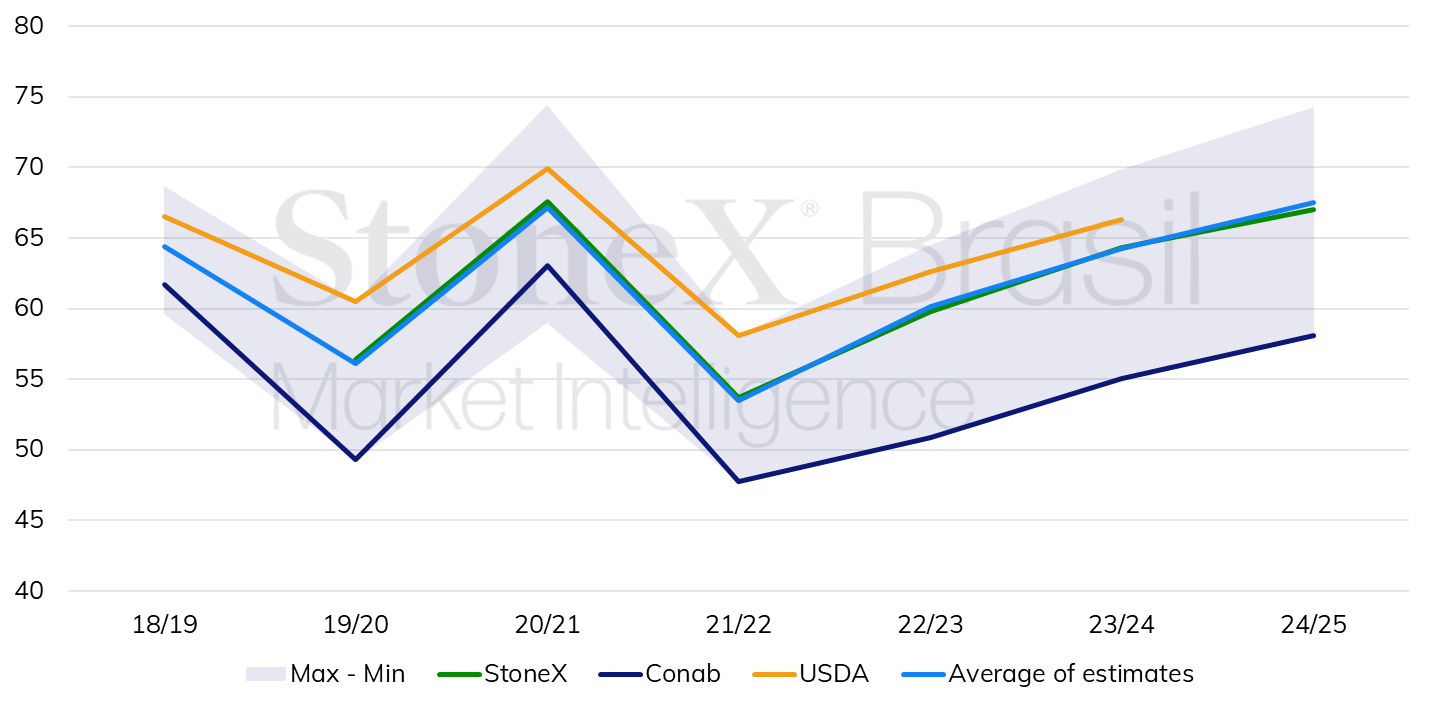
One of the major challenges with regard to the Brazilian coffee crop is the large discrepancy between production estimates, the range of which has exceeded 16 million bags for the 2024/25 crop, ranging from 58 million bags, according to Conab, to more than 74 million bags, from private organizations. The average of the projections available so far is 67.5 million bags, representing an increase of 5.1%. Despite the discrepancy, all projections point to an increase in production in 2024/25, which should contribute to a more comfortable S&D balance next season, at least for Arabica coffee, since for Robusta this scenario will continue to be tighter due to lower production in Asia.
Range of estimates for Brazilian coffee production (million bags)