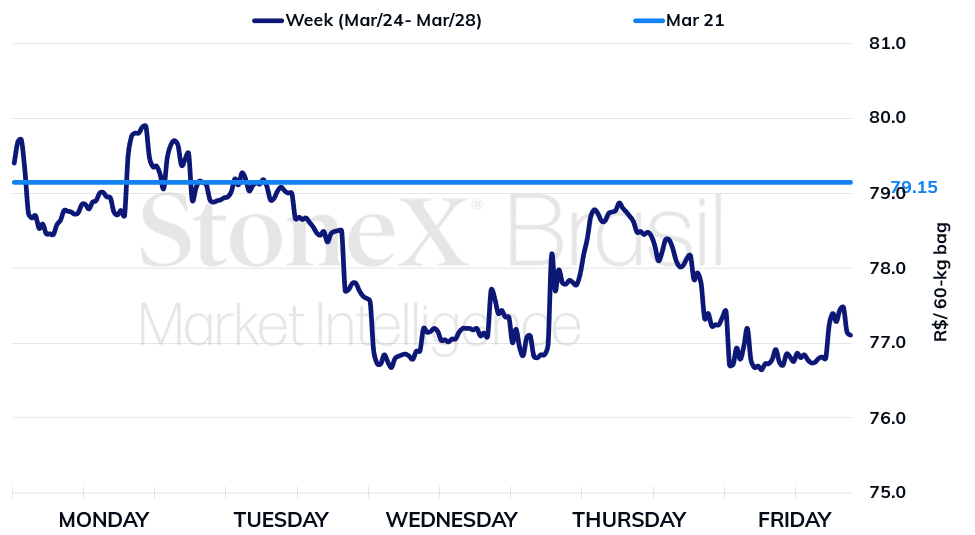
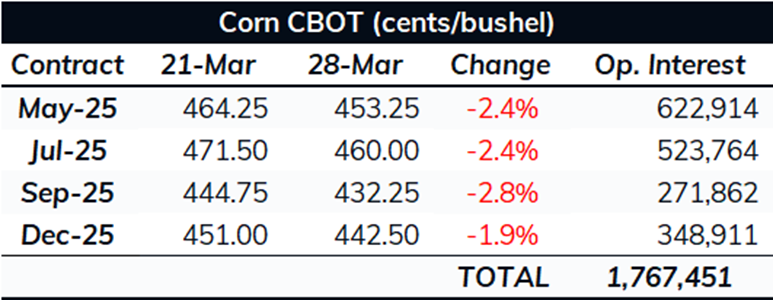
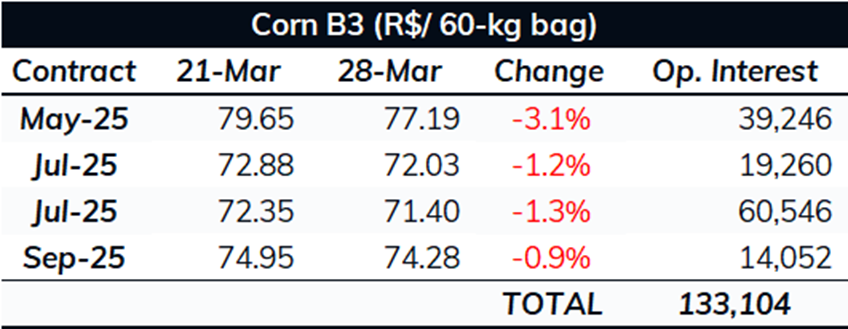
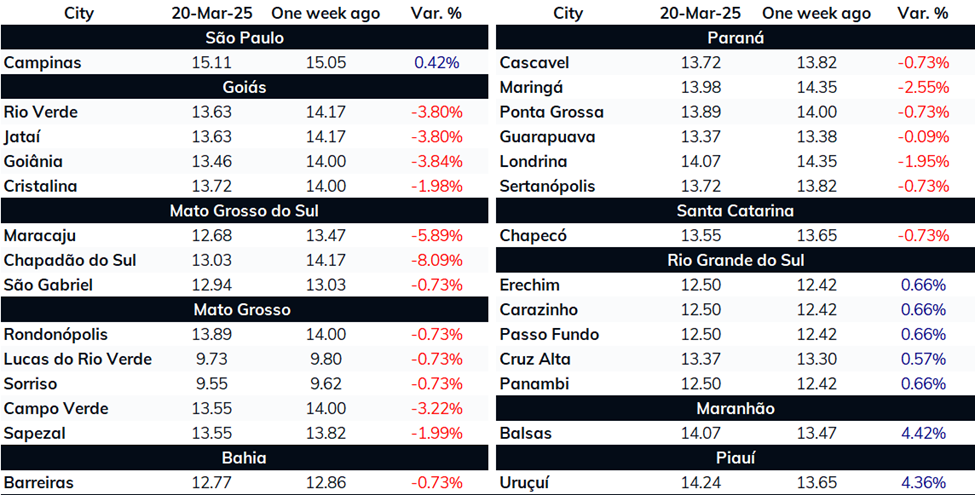
Weekly Summary | Corn futures in Chicago experienced a decline last week, with the May/25 contract closing on Friday traded at US¢453.25/bu (-2,4%). Besides concerns regarding the tariffs set to take effect in early April, the market appears to be operating well in anticipation of the Planting Intentions Report, which will be published today (03/31).
Intraday (15 min) May/25 Contract - CBOT
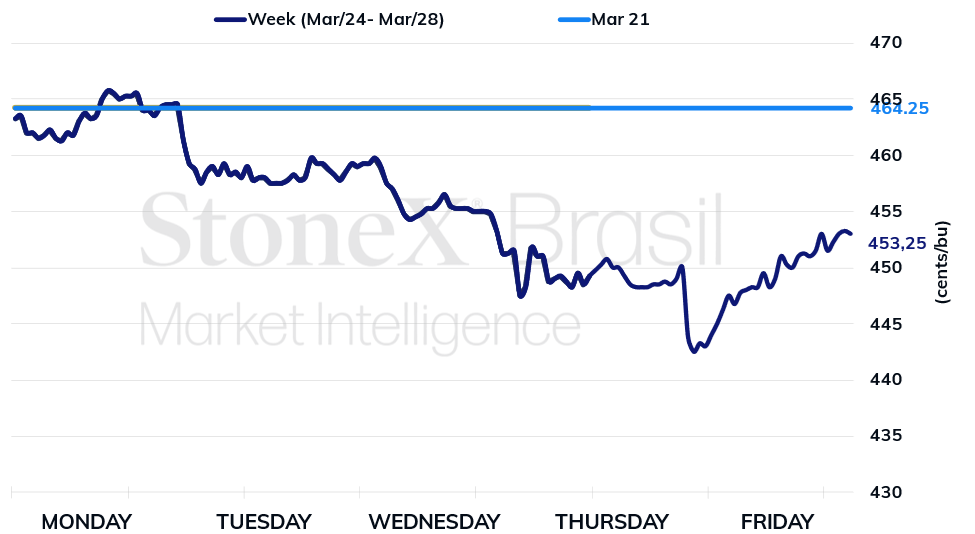
Source: CBOT. Preparation: StoneX.
Planting Intentions | It is almost a consensus that today's report, which brings the first number on US planted area, should indicate an increase in corn acreage in the country, the world's largest corn producer. However, the magnitude of this increase is what has made the market cautious. Initially, estimates pointed to a figure close to 38 million hectares. However, market participants are now talking about numbers closer to 38.5 million hectares. This May expectation has helped keep corn futures prices under pressure. The numbers presented today should be accompanied by a productivity figure (usually calculated from the trend) to form the initial estimates for the 2025/26 crop in the May WASDE report.
Tariffs | Last month, US President Donald Trump postponed the implementation of 25% tariffs on Canada and Mexico for another 30 days. This period ends next Wednesday (04/02), promising to move the market. The details regarding the tariffs, as well as the retaliatory effects they may – and likely will – have, are unknown, which has generated great concerns in the financial market as a whole. News outlets are very focused on the effects of these tariffs on the energy and automotive markets. However, they could also have effects on the corn market, since, as has been discussed for weeks, Mexico is the largest buyer of US corn, and Canada is the main destination for US-exported ethanol.
Demand | Last week, both US export sales data and ethanol production data came in lower than the previous week. Even so, the pace of corn consumption remains brisk in the country. Market participants continue to expect an adjustment in the US balance, which may occur in the next updates of the USDA Supply & Demand estimates. However, a downward adjustment in corn usage for feed, in light of lower livestock numbers in recent months, may offset part of that adjustment in ending stock levels.