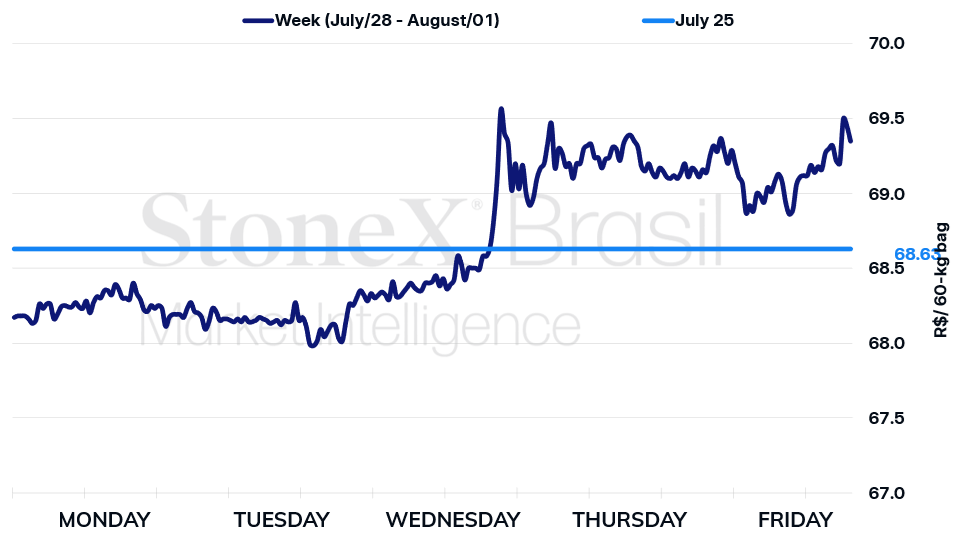
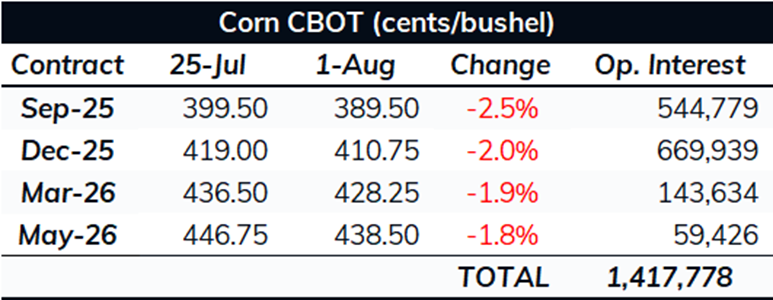
Weekly summary | Corn futures had another week of decline in Chicago. December/25 ended the week trading at US¢419.00/bu, the lowest value in the history of this contract. The market continues to reflect the good development of the American crop. Scattered rumors suggest frustration with the productivity of the crops in some areas, but overall we should see an excellent crop coming from the world's largest producer this year. Cattle data in the United States also suggested lower feed consumption this year, which may signal a downward revision in the corn consumption estimates by the U.S.
Intraday (15 min) Dec/25 contract - CBOT
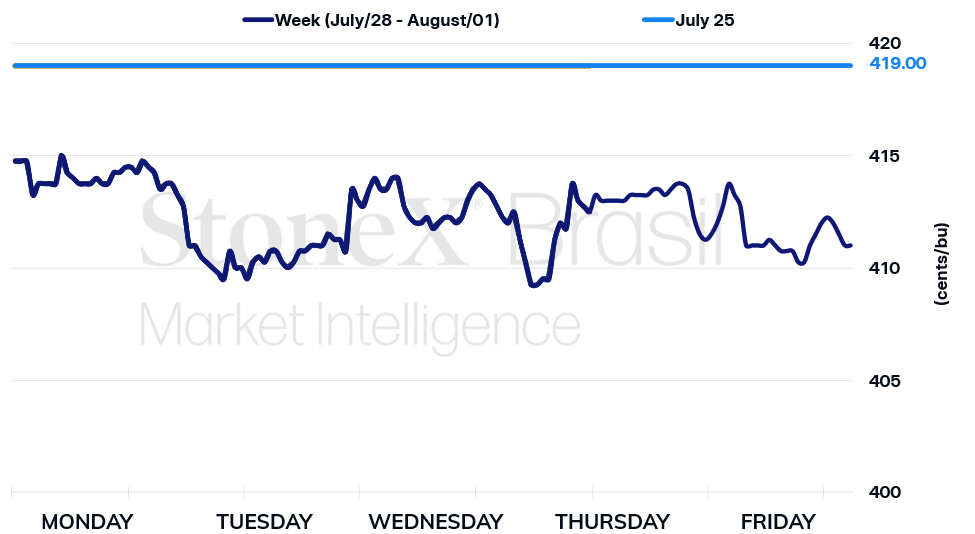
Source: CBOT. Design: StoneX.
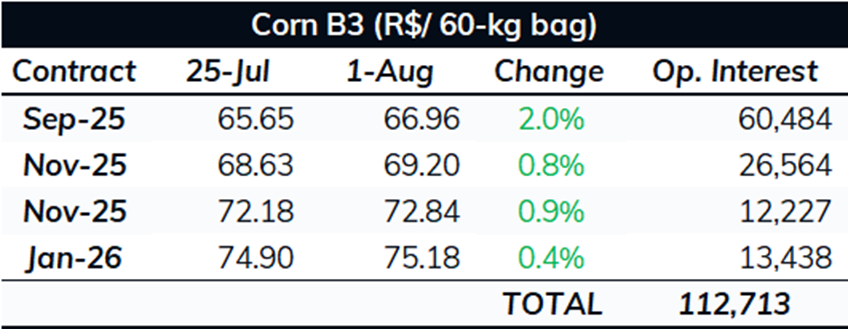
Global export market | The month of July usually marks the beginning of a seasonal increase in Brazilian corn exports, which traditionally intensify throughout the second half of the year. In 2025, however, this movement has been more contained. Although production is robust, the pace of internal sale remains lagging, which has contributed to the support of domestic prices. Furthermore, occasional delays in the harvest and the resilience of domestic consumption, especially the growth of the corn-based ethanol sector, help explain the lower share of exports at this time.
In the United States, the scenario is different. The exports remain strong, defying the seasonal pattern of slowdown. Last week, sales of 1.9 mmt were recorded for the 2025/26 crop, while shipments reached 1.5 mmt in the week. American corn has benefited from more competitive prices in the face of a relatively comfortable supply and demand balance, which supports its greater share in international markets. Given this performance, the possibility of new bullish revisions for exports in the 2024/25 season is not ruled out.
In Argentina, the government recently announced the reduction of retenciones on corn (from 12% to 9.5%), as another sign of encouragement for exports. The measure, implemented the week before last, may improve the competitiveness of the Argentine product in the short term, especially considering the recovery of the crop after the severe impacts of the last climate cycle.
In summary, the export market remains fierce. With the exception of Ukraine, the three main origins (Argentina, Brazil and the United States) should remain competitive. In the US and Brazil, robust productions ensure a more advantageous position in the export market, although the US is riding this wave more favorably, since Brazilian prices still offer greater resistance. In Argentina, the incentive for exports, beyond the balance, comes in the form of a reduction in export taxes, making the country's corn more attractive in the eyes of importers.
Spec funds position | Last week, the funds continued expanding their short positioning in the corn market. The scenario of a loose balance continues to justify, in the view of these agents, a bearish tone for the cereal. Specific problems in the crop have been attributed to excessive rainfall. At this point, the theses that these specific problems represent large-scale issues in the American crop have not been reflected in the positions of market agents.